Yes, you can eat pasta after a workout. More importantly, you probably should not be afraid of it if the meal is doing an actual recovery job: pasta for carbohydrates, a lean protein for muscle repair, vegetables for volume and micronutrients, and a sauce that makes the bowl satisfying without turning it into a nap.
That is the useful version of a healthy pasta recipe for post-workout recovery. Not dry noodles with guilt on the side. Not a giant cream-heavy bowl that leaves you sluggish. A balanced pasta bowl eaten within about two hours of training is a practical way to replace the carbohydrate your session used and give your body protein while it is ready to use it.
The International Society of Sports Nutrition recommends pairing carbohydrates with protein after endurance exercise, with a 3:1 to 4:1 carbohydrate-to-protein ratio within 30 minutes described as a way to maximize glycogen resynthesis; the same position stand notes that adding protein to carbohydrate can stimulate insulin release and support greater glycogen storage than carbohydrate alone. It also cites research from Ivy showing that delaying carbohydrate intake by 2 hours after exercise can reduce muscle glycogen resynthesis by 50%.[1]
That does not mean you need to sprint from your yoga mat to a pasta pot like a timer is about to explode. It means the first couple of hours after training are a smart time to eat a real meal, especially if your workout was sweaty, long, intense, or strength-focused. If dinner is coming soon, pasta can be dinner. That is allowed.
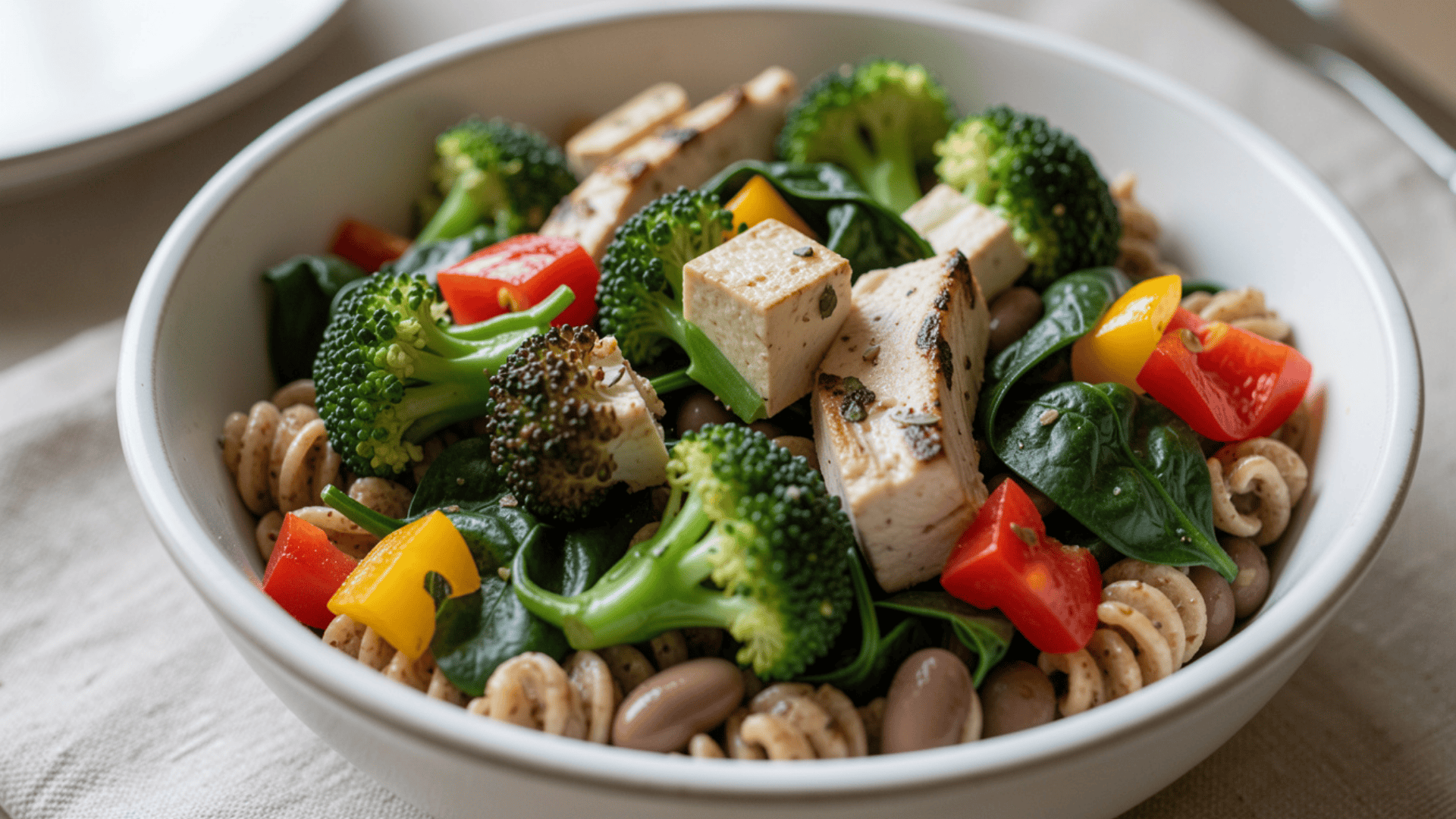
Why Pasta Works After Training
Most home workouts use a mix of muscle glycogen and blood glucose, whether the session is dumbbell squats, a bodyweight circuit, a treadmill run, or a 25-minute HIIT video that seemed friendly until the third round. Carbohydrate is not a reward you earn after that work. It is part of replacing what the work used.
Pasta is simply a familiar carbohydrate base. The recovery value improves when it is paired with enough protein. NASM gives a practical post-workout target of 15 to 25 grams of protein within 1 hour after exercise to maximize muscle rebuilding.[2] That range is much easier to hit with chicken, tuna, turkey, tofu, beans, Greek-yogurt-based sauce, or legume pasta than with plain noodles alone.
There is some nuance around timing. Harvard Health published sex-specific timing advice from a dietitian, suggesting women may benefit from refueling with about 20 grams of protein within 30 to 45 minutes after exercise, while men may have up to 3 hours.[3] That is useful context, not a universal kitchen law. A 2025 meta-analysis discussed by Healthline suggests the post-exercise protein window may be wider than older fitness lore made it sound.[4]
So the sane middle ground is this: if you can eat a balanced meal within about two hours after training, do that. If life gets in the way, do not write off the whole day. Eat the next solid meal well.
The Recovery Pasta Formula
A good post-workout pasta bowl does not need a macro spreadsheet. It needs four parts that earn their place.
- Pasta base: whole wheat pasta, regular pasta, chickpea pasta, or lentil pasta, depending on taste, digestion, and protein needs.
- Lean protein: chicken breast, tuna, turkey, tofu, beans, shrimp, eggs, or a higher-protein pasta.
- Vegetables: spinach, tomatoes, peppers, broccoli, zucchini, peas, mushrooms, or whatever will actually get eaten.
- Sauce and fat: tomato sauce, olive oil and lemon, pesto used lightly, broth-based sauce, or Greek yogurt stirred in off heat.
Whole wheat pasta is a dependable default because it brings more fiber than standard refined pasta and still behaves like pasta in the pan. A standard 2-ounce serving of whole wheat pasta provides about 7 grams of protein, while chickpea or lentil pastas such as Banza-style products are commonly listed around 13 to 15 grams per serving, though the actual number varies by brand and serving size.[5][6]
That variability matters. If you use chickpea pasta plus chicken, the protein climbs quickly. If you use regular pasta with vegetables and tomato sauce, you still need a clear protein source. The bowl should not rely on a sprinkle of Parmesan to do the work of dinner.
| Workout you just did | Plain recovery math | How to build the bowl |
|---|---|---|
| Long cardio, running, cycling, or a hard sweat session | Lean closer to a 3:1 or 4:1 carb-to-protein pattern | Use a full pasta serving, add lean protein, keep sauce lighter, and include salty or juicy vegetables if you sweated heavily |
| Strength training, dumbbells, resistance bands, or bodyweight circuits | A 2:1 carb-to-protein pattern is a useful starting point | Use pasta plus a clear protein portion such as chicken, tofu, tuna, turkey, beans, or legume pasta |
| Light mobility, easy walk, or short low-intensity session | You probably do not need to force a large recovery meal | Use a smaller pasta portion, more vegetables, and enough protein to make the meal satisfying |
Peloton's nutrition discussion translates the same ratio idea into workout-type guidance: 3:1 to 4:1 carbohydrate-to-protein for endurance-focused recovery and about 2:1 for strength-focused recovery.[7] Treat those numbers as a compass, not a dinner inspection.
Main Recipe: Chicken, Spinach, Tomato, and Broccoli Recovery Pasta
This is the bowl I would point someone toward after a normal home strength session or sweaty cardio circuit: warm, simple, salty enough to taste like food, and built around ingredients that do not require a specialty grocery trip.
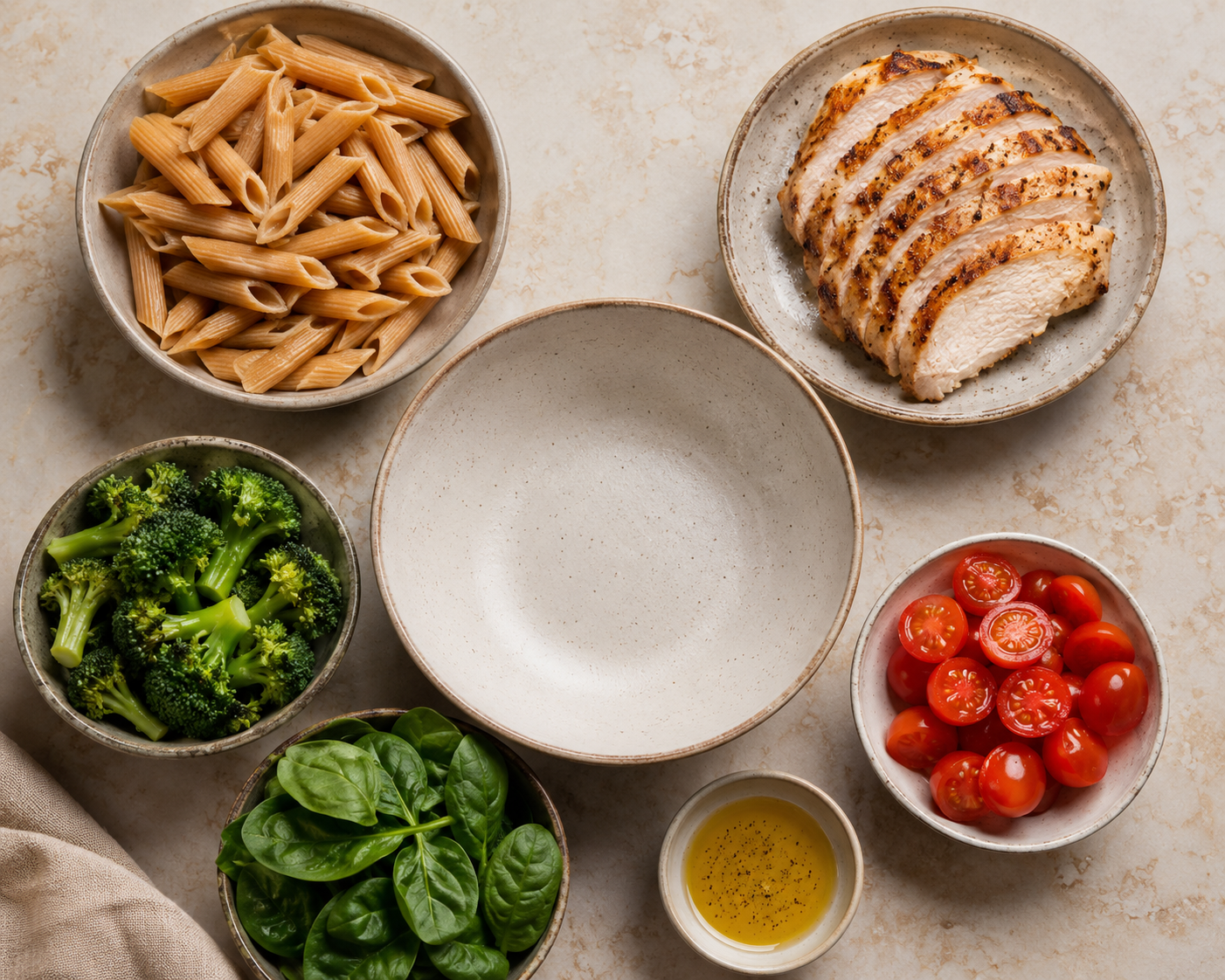
Ingredients
- 2 ounces dry whole wheat pasta, chickpea pasta, or lentil pasta
- 1 cooked chicken breast or a generous portion of sliced cooked chicken
- 1 to 2 cups broccoli florets
- 1 big handful spinach
- 1/2 cup cherry tomatoes, halved
- 1 teaspoon to 1 tablespoon olive oil, depending on appetite and goals
- Lemon juice, garlic, black pepper, red pepper flakes, and a pinch of salt
- Optional: Parmesan, basil, parsley, or a spoonful of tomato sauce
How to Make It
- Boil the pasta in salted water. Add the broccoli during the last 2 to 3 minutes so it cooks without becoming gray and sad.
- Reserve a splash of pasta water, then drain the pasta and broccoli.
- Return the pot to low heat. Add olive oil, garlic, tomatoes, spinach, and a splash of pasta water.
- Stir until the spinach wilts and the tomatoes soften slightly.
- Add the cooked chicken, pasta, and broccoli. Toss with lemon juice, black pepper, and red pepper flakes.
- Taste before adding more salt, especially if your chicken was seasoned or you add Parmesan.
The rough macro direction depends on the pasta and chicken portions. With whole wheat pasta and chicken, this usually lands comfortably in the post-workout protein range. With chickpea or lentil pasta, the pasta itself contributes more protein, so you may be able to use less meat or make the bowl vegetarian with tofu or beans. Because brands differ, read the pasta label if you are trying to be precise.
Swaps That Still Make Sense
The formula holds even when the ingredients change. That is the point. You should be able to finish a workout, look in the fridge, and build something decent without needing the exact bowl from a photo.
| If you have | Use it like this |
|---|---|
| Canned tuna | Toss with pasta, spinach, tomatoes, lemon, olive oil, and black pepper for a fast high-protein bowl |
| Ground turkey | Cook with garlic and tomato sauce, then add peppers or spinach before tossing with pasta |
| Tofu | Cube and pan-sear it, then pair with broccoli, peppers, and a light soy-ginger or garlic sauce |
| Beans | Use white beans or chickpeas with tomato sauce, spinach, and whole wheat pasta for a budget-friendly bowl |
| Chickpea or lentil pasta | Let the pasta carry more of the protein load, then add vegetables and a lighter protein if needed |
| Leftover roasted vegetables | Reheat them with pasta water and sauce so they become part of the bowl, not a side chore |
Vegetables should not be confetti. A few spinach leaves on top of a mountain of noodles is decoration. A real recovery bowl has enough broccoli, peppers, tomatoes, mushrooms, zucchini, or greens to add volume and make the meal feel complete. That matters more than making the plate look virtuous.
If Your Goal Includes Fat Loss
You do not need to ban pasta to keep a fat-loss goal intact. You need the portion to match the day. Precision Nutrition supports the general post-workout pattern of combining carbohydrate and protein, while also showing that lighter meals can still fit when total intake matters.[8]
On a lighter training day, use a smaller pasta serving, double the vegetables, and keep a solid protein source. On a hard training day, especially after intervals, a longer cardio session, or heavy lower-body strength work, a fuller pasta portion makes more sense. The mistake is not eating pasta. The mistake is eating a bowl that is all pasta, barely any protein, and no plan for fullness.
When a Drink Makes More Sense Than a Bowl
Sometimes the right answer after training is not pasta yet. Maybe you finished a workout before a meeting, your stomach is not ready for a full meal, or dinner is still hours away. In that case, a drink can bridge the gap, and a full meal can come later.
For that situation, the site's Fairlife post-workout recovery drink comparison is a better next stop than pretending everyone wants to cook immediately. If you want the whole sequence around cooling down, eating, stretching, and sleep, use the broader post-workout recovery routine at home as the bigger frame.
Match the Bowl to the Workout
The meal does not have to be identical after every session. A pasta bowl after a hard dumbbell leg workout can be larger and more protein-forward than the one you eat after a short mobility day. A sweaty HIIT workout may call for more carbohydrates and fluid. A slow upper-body strength session may need less pasta and more protein.
Use pasta as the fuel companion to the session you actually did: strength workouts, HIIT sessions, and bodyweight routines in the workout routines category will not all leave you with the same appetite or the same recovery needs.
A practical rule: the harder and longer the session, the more the pasta portion earns its place. The more strength-focused the session, the more obvious the protein source should be. The lighter the day, the more vegetables can take up space in the bowl.
The Kitchen-Level Verdict
Pasta after a workout is not a loophole or a failure. It is a carbohydrate base. Build it with lean protein and vegetables, eat it within a reasonable post-workout window when you can, and adjust the portion to the workout instead of treating every bowl like a test.
If you remember only the formula, remember this: pasta plus protein plus vegetables plus a sauce you enjoy. That is enough structure to recover well tonight without turning dinner into a lab assignment.
References
- International Society of Sports Nutrition position stand: Nutrient timing. Journal of the International Society of Sports Nutrition, 2008. https://pmc.ncbi.nlm.nih.gov/articles/PMC2575187/
- What To Eat After a Workout. NASM Blog. https://blog.nasm.org/what-to-eat-after-a-workout
- What and when you should eat to build muscle. Harvard Health Publishing, 2024. https://www.health.harvard.edu/exercise-and-fitness/what-and-when-you-should-eat-to-build-muscle
- Post-Workout Nutrition: What to Eat After a Workout. Healthline, updated March 2026. https://www.healthline.com/nutrition/eat-after-workout
- Is Pasta Good After a Workout? Eat the Gains. https://eatthegains.com/is-pasta-good-after-workout/
- Is Pasta Good for Runners? Runstreet. https://www.runstreet.com/blog/is-pasta-good-for-runners
- What to Eat After a Workout, According to Dietitians. Peloton, 2025. https://www.onepeloton.com/blog/what-to-eat-after-a-workout/
- Workout nutrition explained. Precision Nutrition. https://www.precisionnutrition.com/workout-nutrition-explained
Comments
Join the discussion with an anonymous comment.