
Jelly Roll's 300-Pound Weight Loss Began With Mailbox Walks
Jelly Roll's documented loss is closer to 275 lb than 300 (about 540 lb in 2020 to 265 lb by late 2025), and it began with short mailbox walks in January 2024. Get his reported milestones as an apartment-friendly walking-first plan, with the chef, clinic, and medication support clearly labeled as non-transferable.
- Equipment tier required
- none
- Duration
- 5-30 min
- Difficulty
- beginner
- Target area
- cardio
- Space footprint needed
- minimal (hallway or outdoor route)
- Noise level
- low
The most useful part of Jelly Roll’s weight-loss story is not the biggest number. It is the mailbox.
Men’s Health reported that he went from roughly 540 pounds in 2020 to 265 pounds by November 2025, which is about 275 pounds lost, not a clean 300-pound figure.[1] PEOPLE and E! have both used “nearly 300” language around the transformation, which is understandable headline math, but it is still worth separating from the more documented number.[2][3] By August 2026, even the late-2025 and early-2026 figures need a small caution label: after a December 2025 ATV accident broke his collarbone, he said he avoided the scale and estimated he was 40 to 60 pounds away from a new maintenance goal.[3]
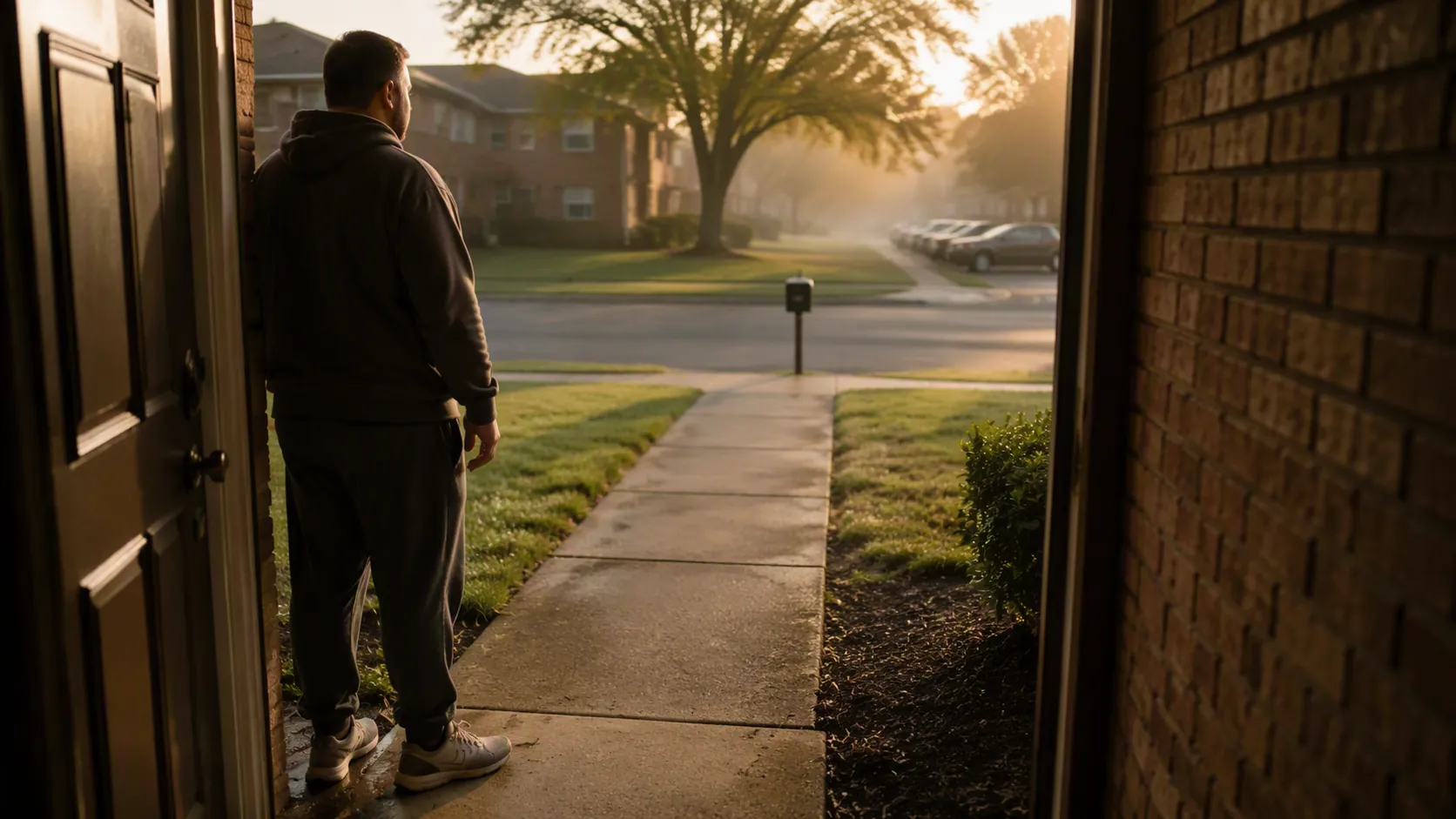
That honesty matters because the part a 300-plus-pound beginner can actually copy did not begin with a celebrity training montage. In January 2024, Jelly Roll reportedly could not get a full mile done in 30 minutes, so the starting point was walking to the mailbox.[1] That is not glamorous. It is also the part that sounds most like real life.
The actual walking arc, without turning interview snapshots into a fake program
Jelly Roll has not published a formal beginner workout plan. What exists is a set of dated snapshots: where he started, what he was doing several months later, and what his cardio looked like after a much larger base had been built. Those snapshots are still useful if they are treated as checkpoints rather than commandments.
| Checkpoint | What was reported | What a beginner should take from it |
|---|---|---|
| January 2024 | He could not complete a full mile in 30 minutes and started with mailbox walks.[1] | The first target is repeatability, not distance. |
| May 2024 | Before the 2 Bears 5K, he was reportedly walking 2–3 miles a day, 4–6 days a week, and was about 70 pounds down; the same period also included daily sauna and cold plunge routines.[2][4] | The walking volume had grown, but it did not start there. |
| Late 2025 | His reported pattern included 4-mile mornings, running 1.5 miles, walking 0.5 miles, then alternating 0.2-mile run and 0.2-mile walk segments, with a 12:25 mile-loop time mentioned in coverage.[1][4] | Run/walk intervals belong after walking is no longer the limiter. |
That sequence is the whole point. A person who struggles to get to the mailbox does not need a couch-to-5K identity on day one. They need a route that ends before their knees, low back, feet, or embarrassment end the habit for them.
The 5K is a nice milestone, but the quieter middle matters more: 2–3 miles most days, reached after the mailbox phase. That is where many large-bodied beginners get misled. They see the later mileage and assume it was the starting prescription. It was not.
The apartment-friendly version starts smaller than most plans admit
For a heavier beginner, the first walk can be almost laughably short on paper: to the mailbox, to the end of the hall, around one parking-lot row, down the sidewalk to one tree, or across the apartment complex and back. The standard is not whether it looks like exercise to someone else. The standard is whether you can do it again tomorrow without needing two recovery days.
Here is a practical walking-first ramp based on Jelly Roll’s reported arc and general public-health guidance, not on a published Jelly Roll program:
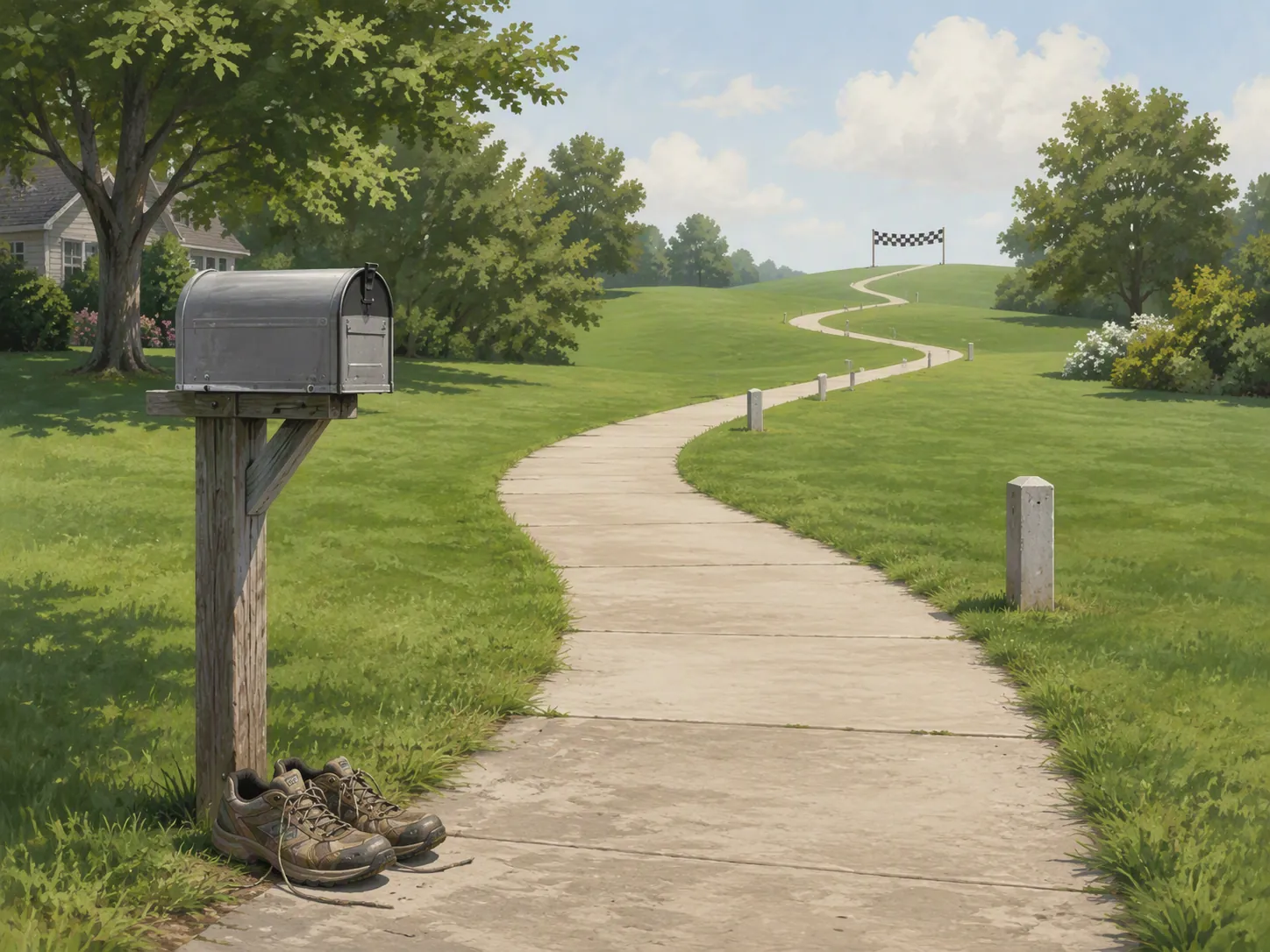
- Start with one repeatable out-and-back walk. Pick a point you can reach even on a low-confidence day: mailbox, lobby, elevator bank, courtyard, dumpster, leasing office, or first corner.
- Repeat it for several days before adding more. The early win is not intensity; it is proving that walking has a place in the day.
- Add time before chasing distance. If one mailbox walk becomes easy, do two loops or extend the turn-around point by a small amount.
- Build toward most-days walking. Jelly Roll’s later 4–6-days-a-week walking pattern is a useful direction, but it should be earned gradually rather than copied whole.[2][4]
- Use distance goals only after time-on-feet feels stable. A mile, then 2 miles, then 3 miles can be motivating, but distance is not the first gate.
- Save run/walk intervals for later. If walking still hurts, spikes breathlessness too quickly, or makes the next day worse, jogging is not the upgrade yet.
For pace, use the talk test. You should be breathing harder than at rest but still able to speak in short sentences. That same moderate-intensity idea is the backbone of a heart-healthy home workout routine, and it keeps walking from turning into a punishment session.
How this matches real exercise guidance
Walking is not a magic loophole. It is simply one of the most transferable ways to accumulate enough movement for weight loss without needing a gym, floor work, jumping, or equipment.
The American College of Sports Medicine position stand concluded that 150–250 minutes per week of moderate physical activity is associated with only modest weight loss, while more than 250 minutes per week is associated with clinically significant weight loss.[5] The CDC’s adult baseline is at least 150 minutes per week of moderate-intensity aerobic activity plus 2 days of muscle-strengthening activity, with additional benefits beyond that floor.[6] Mayo Clinic’s walking guidance also points beginners toward starting short and light, building gradually, and notes that 30 minutes of brisk walking may burn about 150 extra calories per day.[7]
Those numbers explain why a mailbox walk is not the whole destination. They also explain why it is a legitimate first step. A beginner who can only tolerate 3–5 minutes may be far from 150 minutes a week, but trying to leap straight to the weekly target is often how the plan ends.
A workable progression might look like this:
| If this is your current limit | Your next useful target | Do not rush to |
|---|---|---|
| Mailbox, hallway, or one short sidewalk segment | Repeat the same route most days | A mile |
| 5–10 minutes without needing a long recovery | Add a second short walk later in the day | Fast walking |
| 15–20 minutes several days a week | Build toward 30 minutes on some days | Jogging intervals |
| 30 minutes feels normal | Gradually aim for more weekly minutes | Daily hard workouts |
| 2–3 miles most days feels manageable | Consider a 5K walk or gentle run/walk segments | Running through pain |
Bad weather does not have to cancel the habit. An apartment hallway, covered parking level, big-box store perimeter, or quiet indoor loop can keep the pattern alive. If storms, heat, ice, or air quality regularly break your streak, use a simple storm-day indoor workout as a fallback rather than replacing the whole plan.
The part to copy, and the part with an asterisk
The transferable part of Jelly Roll’s routine is plain: start where walking is possible, repeat it, extend it slowly, and let consistency create the right to do more. That part costs nothing and works in a hallway, parking lot, apartment complex, or quiet neighborhood loop.
The non-transferable part is also real. His reported transformation included a personal chef, Ian Larios, who made higher-protein versions of favorite foods, including Waffle House-style hash brown bowls, and coverage has described a heavier-phase baseline around 6,000 calories per day.[4][8] Men’s Health also reported Ways2Well clinical oversight, bloodwork showing very high insulin, A1C and cholesterol, testosterone of 57 ng/dL compared with a stated normal range of 300–900, metformin, testosterone replacement therapy, later IV exosomes, a daily physiotherapist, and an editor’s note that he briefly tried weight-loss medication for two weeks early on.[1]

That does not make the walking fake. It means the walking should not be sold as the only lever behind a 275-pound change. Food, medical care, recovery support, and supervised treatment can change the whole environment around a person. A renter on a tight budget deserves to know which pieces are free behavior and which pieces came with a celebrity support system.
This is where celebrity weight-loss adaptations can be useful if they stay honest. The same filter applies to a Chrissy Metz weight loss workout plan or a John Goodman weight loss workout plan: look for the repeatable movement pattern, then label the support system instead of pretending everyone has it.
Medication deserves the same plain treatment. A two-week weight-loss-medication note from an editor is not the same thing as a detailed public medication plan, and it should not be turned into one.[1] If you are trying to lose weight without medication, use a no-Ozempic 12-week home workout plan as a separate route. If you are using or considering GLP-1 medication, the training question shifts toward maintaining muscle and tolerating movement, which is why a GLP-1 diet and exercise plan belongs in a different conversation.
What to do this week if you are starting from the mailbox
Do not begin by buying equipment. Begin by choosing the route you can repeat when you are tired, self-conscious, or short on time. If the mailbox is too far, use the hallway. If the hallway feels too public, walk inside the apartment for a set number of songs. If standing for long stretches is the limiter, split the walk into more than one tiny session.
A simple first week can be almost boring:
- Day 1: Walk to your chosen turn-around point and back once.
- Day 2: Repeat the same route, even if you feel like you could do more.
- Day 3: Rest or do the same short route again.
- Day 4: Add one small extension only if the first route no longer feels intimidating.
- Day 5: Return to the original route if the extension was too much.
- Day 6 or 7: Repeat the route that felt most sustainable, not the one that sounded most impressive.
The rule is simple: finish with enough left that tomorrow still seems possible. For many heavier beginners, this is the missing skill. Plans often teach effort before they teach repeatability.
When to add strength work
The CDC baseline includes 2 days of muscle-strengthening activity, but that does not mean you need to kneel, jump, or get on the floor right away.[6] For an apartment beginner, strength can start with sit-to-stands from a sturdy chair, wall push-ups, supported calf raises, countertop rows if your setup is safe, or light resistance-band pulls.
Keep it quiet and joint-friendly. One or two sets after a short walk is enough at first. If strength work makes the next day’s walk disappear, reduce the strength work before blaming your motivation.
When equipment becomes useful
No source describes Jelly Roll’s actual home-gym setup, so equipment advice here is only an apartment-training add-on, not a claim about what he used. The strongest tier is still zero dollars: walking shoes you already own, a safe route, and a fallback loop.
| Tier | Possible add-on | Apartment caution |
|---|---|---|
| $0 | Outdoor walks, hallway loops, chair sit-to-stands, wall push-ups | Choose routes with railings, lighting, and places to pause. |
| Low budget | Resistance bands or a thick exercise mat | A mat helps with comfort and floor protection, but floor work is optional. |
| Later cardio add-on | Shadowboxing or low-impact boxing intervals | Skip jumping footwork if noise, knees, or downstairs neighbors are an issue. |
| Higher budget | Heavy bag or larger boxing setup | A bag can be loud, space-hungry, and rough on floors; renters should be careful. |
If boxing sounds more appealing than walking, start with heavy-bag-free drills like the kind used in a Johnny Eblen knockout training adaptation before buying anything. If you do want gear, compare your space and budget first with a budget home gym by space guide and a spend-versus-save home equipment breakdown.
Food mattered, but this is still a walking-first plan
Jelly Roll has framed the food side bluntly, saying, “you got to fight that addiction at the dinner table.”[4] That line is important because it keeps walking in its proper place. Walking can build capacity, improve consistency, and help create energy expenditure, but it cannot erase an entire eating pattern by itself for most people.
Still, a workout-routine article should not quietly turn into a prescription for chef-cooked meals, lab-monitored treatment, or celebrity recovery tools. Those details explain the size of the transformation, but they are not the starting routine a beginner can reproduce at home.
The scale did not move in a straight line
The broken collarbone matters because it interrupts the clean transformation arc. In December 2025, Jelly Roll broke his collarbone in an ATV accident, training was halted, and he later said he had avoided the scale while estimating he was 40 to 60 pounds away from his maintenance goal; coverage also pointed to a New York City Marathon target for November 2026.[3]
That is a more useful model than a frozen before-and-after. Injuries happen. Maintenance targets change. Public numbers get stale. If your own walking plan gets interrupted by pain, illness, weather, caregiving, or embarrassment, the next move is not to restart at the fantasy version of yourself. Restart at the last route you can repeat.
Jelly Roll’s entire transformation is not reproducible from a small apartment. The beginning of it is. For a heavier beginner, that beginning is the part worth copying first.
References
- Jelly Roll Is Changing His Tune, Men’s Health, November 2025
- Jelly Roll Says He’s Lost Nearly 200 Lbs. as He Completes 5K, PEOPLE, May 2024
- Jelly Roll Reveals Where He Stands in His Weight Loss Journey After Breaking Collarbone, E!, January 2026
- Jelly Roll opens up about weight loss and training for a 5K, TODAY, 2024
- Appropriate Physical Activity Intervention Strategies for Weight Loss and Prevention of Weight Regain for Adults, American College of Sports Medicine, 2009
- Adult Activity: An Overview, Centers for Disease Control and Prevention
- Walking: Trim your waistline, improve your health, Mayo Clinic
- Jelly Roll’s Chef Shares the High-Protein Meals Behind His Weight Loss, EatingWell
What a small equipment investment adds
We don't have a build tagged to this exact tier yet. Browse all builds.
How often should you repeat this?
See our recovery and rest reference for citation-anchored rest-interval guidance.
Spot something off?
Tell us if a movement, tier assumption, or duration didn't match your experience.