You are dressed, the shoes are tied, and the sky looks only a little off. This is the moment when planning outdoor workouts around smoke clearing times either becomes useful or becomes guesswork. The first move is not deciding whether you feel okay. It is checking the pollutant that matters for wildfire smoke: PM2.5.
During smoke events, the familiar AirNow AQI dial can point to ozone rather than fine particle pollution, which means a tolerable-looking number may not describe the smoke you are about to breathe. AirNow’s wildfire guidance directs users to the AirNow Fire and Smoke Map for PM2.5-specific NowCast readings, fire locations, monitors, and temporary sensors during wildfires.[1]
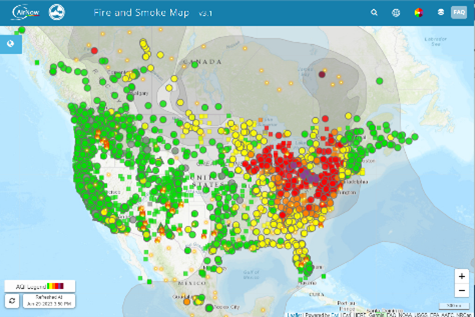
That correction changes the whole decision. A general AQI number can be good enough on an ordinary summer day. On a smoke day, the number you want before a run, ride, hike, or outdoor circuit is the local PM2.5 NowCast, checked as close as possible to the place and time you plan to train.
Start With The PM2.5 Reading, Not The Sky
Smoke does not always announce itself cleanly. It can sit as a visible brown layer, arrive as a faint smell, or drift overhead while the ground-level reading is still changing. The AirNow Fire and Smoke Map is useful because it separates the smoke-relevant particle reading from the broader AQI presentation and updates through NowCast values designed to reflect current conditions.[1]
Use the map this way before an outdoor workout:
- Search your workout location, not just your home, especially if you are driving to a trailhead or park.
- Look for the PM2.5 NowCast value near that location.
- Compare nearby monitors and sensors rather than trusting a single dot when readings vary sharply.
- Recheck immediately before leaving if smoke is moving, winds are shifting, or a plume is visible.
The reason for being fussy here is physiological, not cosmetic. During strenuous exercise, an adult can breathe at least 10 times as much air as at rest, increasing the amount of PM2.5 pulled deep into the lungs during the same clock hour.[2] A number that might be acceptable for sitting on a porch does not automatically make sense for hill repeats.
Turn The AQI Tier Into A Workout Decision
Once you have the PM2.5-specific reading, the decision gets simpler. The goal is not to preserve the exact workout at all costs. It is to preserve training continuity without pretending that smoke exposure is neutral.
| PM2.5 AQI range | Outdoor workout decision | What the modification looks like |
|---|---|---|
| 0-100 | Train normally if you are healthy and readings are stable | Keep the planned run, ride, walk, hike, or outdoor strength session; still watch for rapid smoke changes |
| 101-150 | Reduce exposure | Shorten the session, lower total volume, avoid long steady efforts, and keep the route easy to exit |
| 151-200 | Move the workout indoors | Use a treadmill, bike trainer, mobility session, strength circuit, or low-respiratory-demand routine in cleaner indoor air |
| Above 200 | Cancel outdoor training | Avoid outdoor exertion; choose rest or a carefully controlled indoor option only if the indoor air is genuinely cleaner |
Sports medicine guidance commonly places healthy athletes indoors once AQI exceeds 151, and recommends a more conservative cutoff above 100 for people with underlying conditions such as asthma, cardiovascular disease, or other respiratory risk factors.[3] That difference matters. A healthy runner deciding whether to shorten an easy loop and a cyclist with asthma deciding whether to ride through orange-zone smoke are not making the same decision.
Green And Yellow: Keep The Plan, But Keep The Tool Open
At 0-100, most healthy exercisers can usually keep the planned outdoor session if readings are stable and there is no obvious plume moving in. This is the range where a normal training day still makes sense: a base run, a bike commute, a moderate hike, a bodyweight circuit in the park.
The caveat is instability. If the map shows nearby sensors climbing, smoke is visible upwind, or a fire is active close enough that conditions are changing by the hour, treat the reading as temporary. The right answer may be to start shorter than planned or choose an out-and-back route that lets you turn around without negotiating with yourself.
Orange: Cut The Exposure, Not Just The Pace
The 101-150 range is where sloppy advice tends to sound comforting. “Just go easy” may reduce intensity, but it can also keep you outside longer. For smoke, total inhaled dose matters: how hard you are breathing, how polluted the air is, and how long you stay in it.
That is why a short, controlled workout can be a better compromise than a long easy one in orange-zone smoke. A 20-minute technique-focused run, a short walk with no hills, or a brief outdoor mobility session may keep the routine intact while limiting exposure. A 90-minute “easy” ride through smoky air asks the lungs to process a lot more air, even if the effort feels restrained.
Good orange-zone modifications are concrete:
- Shorten the session before you start, rather than deciding mid-workout.
- Avoid long climbs, tempo blocks, intervals, and group workouts that make it harder to back off.
- Choose a flat loop close to home instead of a remote trail.
- Switch from endurance work to mobility, balance, or light strength if you want outdoor time without sustained heavy breathing.
If you have asthma, heart disease, a recent respiratory infection, pregnancy-related concerns, or a history of smoke sensitivity, the orange zone deserves a lower tolerance. For those groups, moving indoors above 100 is the cleaner decision, not an overreaction.[3]
Red: Take The Outdoor Part Off The Table
At 151-200, the workout can still happen, but the outdoor version should not. This is where the decision becomes less about toughness and more about logistics. Move the training indoors, and make sure the indoor space is actually cleaner.
Indoor air is not automatically clean during a smoke event. One wildfire smoke map guide, citing EPA information, notes that indoor air can still hold about 55-60% of outdoor PM2.5 even when windows and doors are closed.[4] A garage with the door cracked open, a poorly sealed room, or a gym pulling smoky outdoor air through its ventilation system may not be the refuge it appears to be.
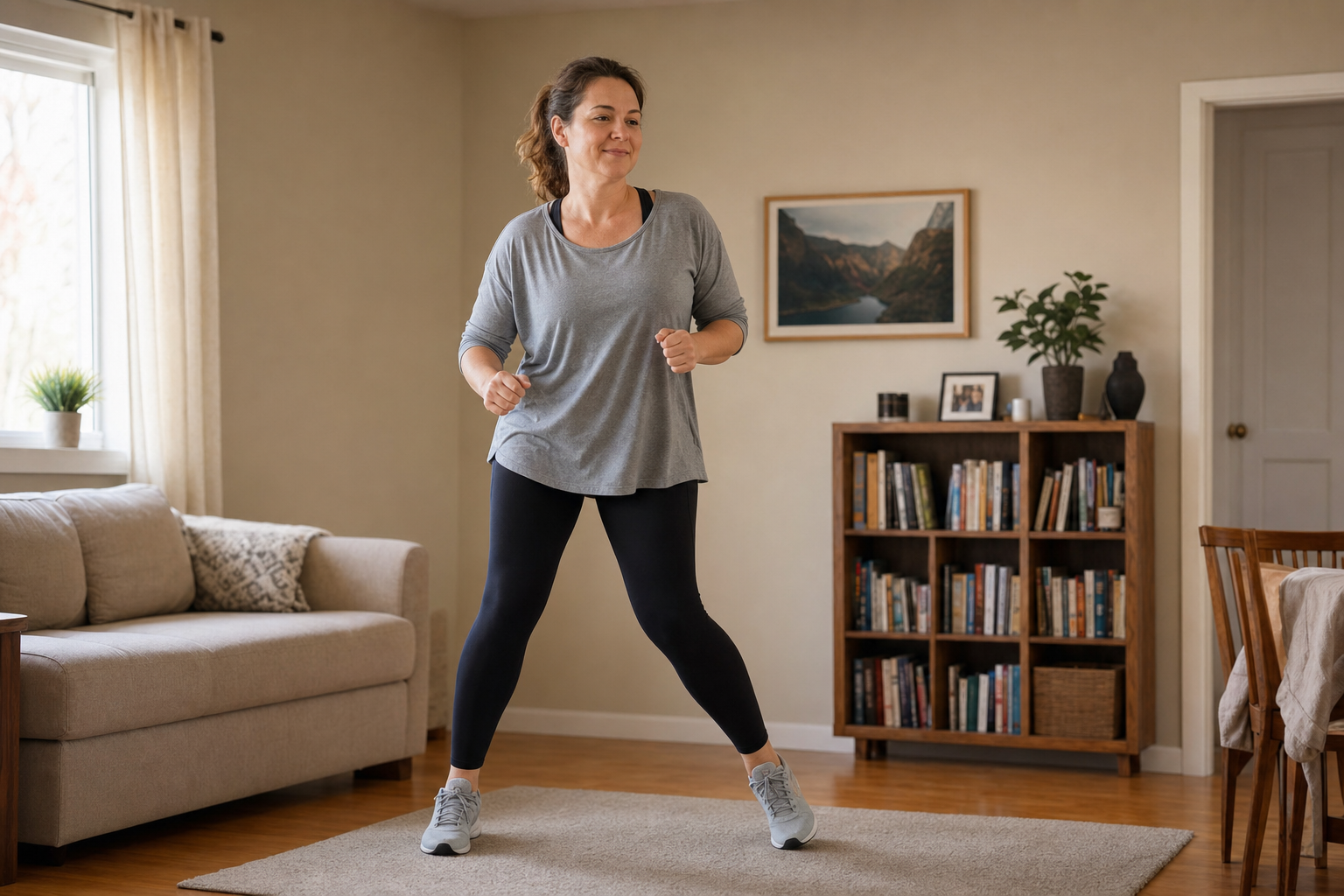
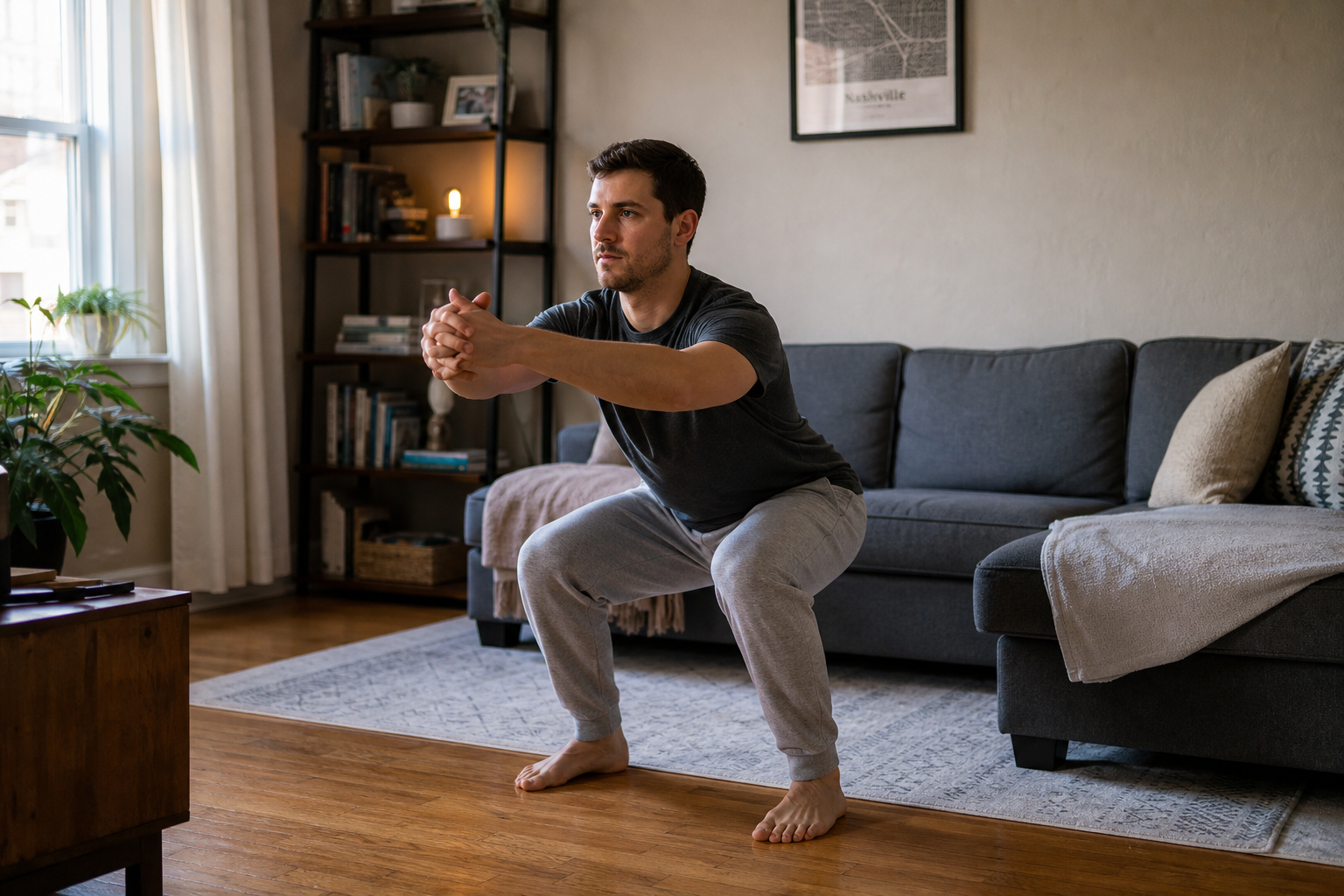
If red-zone readings send you inside, use a room with a HEPA air purifier or HVAC filtration such as MERV 13 where available. This is also the point to swap the day’s plan rather than mourn it: a strength session, treadmill walk, easy spin, yoga flow, or low-impact circuit can protect the training habit without forcing smoky ventilation. For options ranked by breathing demand, use safe indoor workouts for poor air quality days. For setup details, including filtration and room choice, see how to work out safely in poor air quality.
Above 200: Skip Outdoor Exertion
Above 200, outdoor training is not a modified workout; it is an unnecessary exposure. Cancel the outdoor session. If the indoor air is filtered and noticeably better, do something controlled and low-risk. If it is not, rest is a training decision too.
This is easier to accept when you stop treating smoke as only a comfort issue. Research summarized in endurance-sport reporting has associated PM2.5 exposure with slower race performance, including a 2024 Brown University analysis of more than 2.5 million marathon finish times in which each 1 µg/m³ PM2.5 increase was linked with slower finishing times, with the strongest effect among the fittest runners.[5] A separate study of 334 collegiate runners found that PM2.5 and ozone exposure during the 21-day training window before a 5K championship was associated with 11-13 second slower race times.[5]
Those studies do not turn every smoky jog into a disaster. They do make one point hard to dodge: training through bad air is not free. It can affect the work you are trying to build, not just how scratchy your throat feels afterward.
Use Clearing Times, But Verify Them
The usual hot-weather and urban-smog advice says to exercise early. That can be right when ozone is the main problem, because ozone often builds later in the day. Wildfire smoke PM2.5 can behave differently.
At night and into early morning, cooler air near the ground can sit under warmer air above it, creating a temperature inversion. When that happens, smoke particles can stay trapped close to the surface. As the sun warms the ground later in the day, the mixing layer can deepen, allowing smoke to dilute upward and reducing PM2.5 near breathing level. Exercise scientist John Quindry describes this pattern as one reason morning wildfire-smoke workouts can produce higher particle inhalation than afternoon or evening workouts in some conditions.[6]
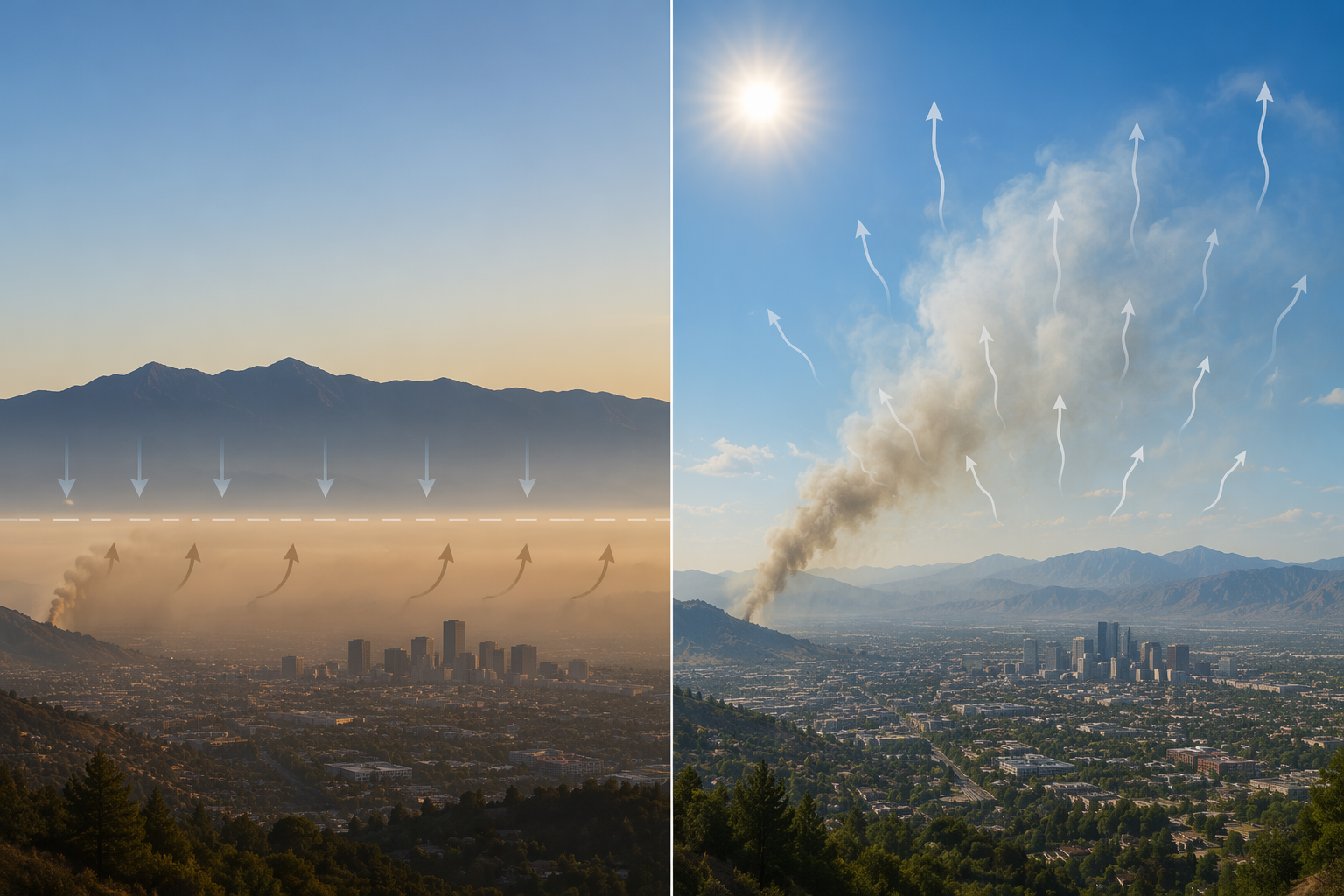
This is the useful counterintuitive move: during a regional wildfire smoke event, the best outdoor window may be afternoon or early evening, not dawn. If your PM2.5 readings regularly improve after lunch, put the harder outdoor sessions there and move easy indoor work to the morning.
Do not turn that pattern into a rule that outranks the map. Afternoon is not automatically safer if you are near an active fire, downwind of a fresh plume, or in a place where wind shifts push smoke into town later in the day. It also does not apply cleanly to ozone-heavy urban smog, where the pollutant pattern may favor morning exercise instead.
A Practical Timing Routine
For a normal training week during wildfire season, the timing routine can stay simple:
- Check the PM2.5 NowCast in the morning before assuming an early workout is best.
- Look again late morning or early afternoon to see whether the reading is actually dropping.
- Place quality outdoor work only in a confirmed clearing window.
- Keep an indoor backup ready for red-zone readings or unstable smoke.
The AirNow Fire and Smoke Map also includes Smoke Forecast Outlooks from the U.S. Forest Service when Air Resource Advisors are deployed, offering 2- to 5-day PM2.5 forecasts for affected areas.[1] Those outlooks are better for planning the week than for making the final go/no-go call. Use them to decide whether Tuesday’s intervals might fit better on Thursday, then still check the live PM2.5 reading before heading out.
What To Do When The Reading Improves
A clearing window is not an invitation to cram in everything you missed. If the PM2.5 AQI drops from red to yellow by late afternoon, you can train outside, but the body has still spent the day in a smoke event. The cleaner choice is to resume the plan proportionally.
For example, if the scheduled workout was a long run with fast finish miles, the better smoke-season version might be a shorter steady run. If the plan was hill repeats, choose a flat moderate session. If you already moved hard work indoors earlier, use the clearing window for a walk, easy spin, or relaxed jog rather than doubling up.
Quindry’s lab research found that blood vessel and nervous system function declined immediately after participants exercised in simulated wildfire smoke, then bounced back within an hour in clean air.[6] That finding supports a practical point: cleaner timing matters acutely, but recovery and restraint still belong in the decision.
The Repeatable Rule
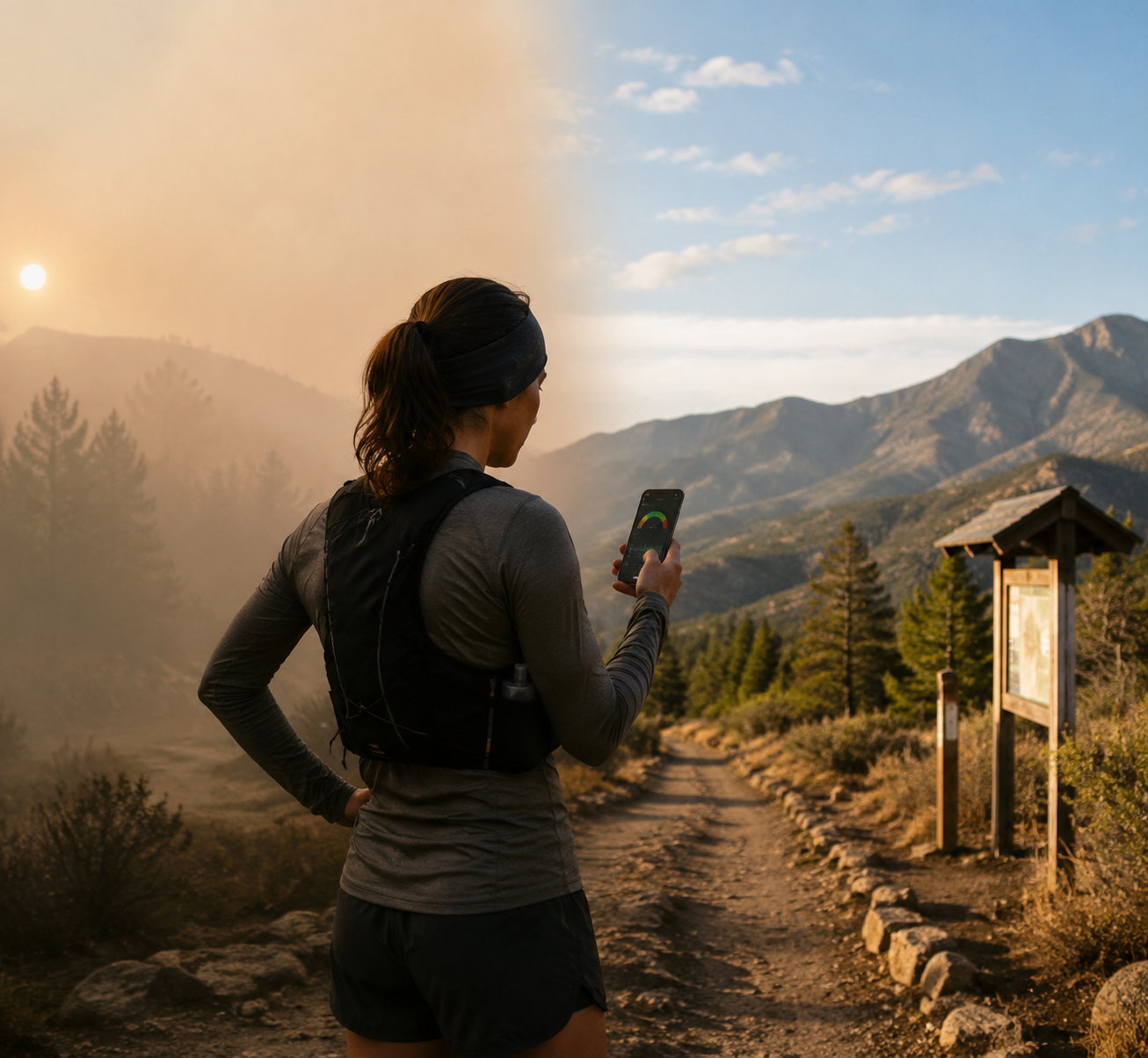
For wildfire season, use the same sequence every time: check PM2.5-specific data first, apply the AQI tier to decide whether to train normally, shorten, move indoors, or cancel, then use afternoon or evening only if real-time readings confirm that smoke is clearing.
That system keeps outdoor training possible without asking you to ignore the air you are breathing.
References
- Using AirNow During Wildfires, AirNow.gov
- Should You Use a Treadmill When Wildfire Smoke Is in the Air?, Runner's World
- When Is High AQI Too High to Exercise Outside?, TrainingPeaks
- How to Read a Wildfire Smoke Map, Filterbuy
- Wildfire Smoke and Running Performance, coachsaltmarsh.com
- Wildfire smoke can make your outdoor workout hazardous to your health: An exercise scientist explains how to gauge the risk, The Conversation, June 2025
Comments
Join the discussion with an anonymous comment.