A budget home gym under $500 is possible. The catch is that “under $500” has to mean the whole setup: training gear, floor protection, shipping, storage, and enough room to actually move. A lot of home fitness equipment guides quietly use a different definition. They recommend one affordable item at a time, then stack enough “nice to have” upgrades that the cart no longer looks beginner-friendly.
That distinction matters because cost is not a side issue for beginners. In one U.S. home fitness equipment data summary, 35.6% of exercisers cited cost as the main barrier to purchasing equipment, while 38.6% of buyers spent under $500 on a single piece of home fitness equipment.[1] Spending under $500 on one machine is not the same as building a full room under $500. This guide treats $500 as the full ceiling, not the first purchase.

Start With the Budget, Not the Equipment List
The safest way to stay under $500 is to decide what each phase must accomplish before looking at products. A beginner does not need a miniature commercial gym. They need a setup that covers basic strength training, conditioning, mobility, and repeatable workouts without turning the living room into a storage problem.
Here is the buying order I would use before comparing brands:
- Protect the floor and your joints enough for the kind of training you will actually do.
- Add resistance that works for many exercises, not one favorite movement.
- Buy one or two load options you can progress with for several months.
- Add a bench, pull-up bar, kettlebell, or heavier weights only after your training pattern proves the need.
If you want more product-by-product options at each spending level, use a companion budget home gym starter kit guide after you decide which phase you are in. The order matters more than the shopping excitement.
What Each Budget Tier Can Realistically Buy
| Total Budget | Realistic Setup | What It Does Well | What It Does Not Solve Yet |
|---|---|---|---|
| Under $100 | Exercise mat, jump rope, light resistance bands | Bodyweight training, mobility, low-cost conditioning, habit building | Progressive strength for legs and heavy pulling |
| $100–$250 | Mat or small flooring zone, better bands, one pair of medium dumbbells, optional jump rope | Full-body beginner strength, repeatable workouts, compact storage | Heavy loading, bench-supported pressing, large strength jumps |
| $250–$500 | Flooring allowance, dumbbell progression, pull-up bar or kettlebell, possible compact bench | More exercise variety and better long-term progression | Barbell training, full rack setup, premium adjustable systems plus accessories |
The middle tier is where most beginners get the best return. A mat, resistance bands, and one pair of medium dumbbells are a useful benchmark because they can cover roughly 90% of effective home training for under $200, according to Siwicki Fitness.[2] That does not mean every person should copy that exact bundle. It means the first serious setup should be boring enough to use three times a week and flexible enough to train squats, hinges, presses, rows, carries, core work, and warmups.

Under $100: A Starter Floor, Not a Finished Gym
Under $100 should buy a training surface and a habit, not the illusion of a complete gym. A basic mat gives you a place for floor work and stretching. A jump rope can handle conditioning if your ceiling height, neighbors, and joints allow it. Light bands can make warmups and high-rep accessory work easier to program.
This tier is best for someone who is still proving consistency. It supports bodyweight squats, split squats, pushups, planks, glute bridges, band pull-aparts, band rows, stretching, and short conditioning sessions. It does not solve progressive overload for stronger legs, heavier rows, or loaded carries. That is fine. The job of this phase is to stop the budget from being spent before the habit exists.
$100–$250: The Best Beginner Value Zone
This is where the setup starts to feel like a real home gym. The priority is not to own many items. It is to own a few items that overlap well: one floor solution, one band option, and one load option you can use for several movement patterns.
For most beginners, the first serious strength purchase should be one pair of medium dumbbells rather than a rack of light pairs. The right weight depends on the person, but the decision test is simple: can you use the pair for goblet squats, Romanian deadlifts, floor presses, rows, overhead presses, lunges, and carries without every exercise being either impossible or uselessly easy? If not, buy the pair that covers the most exercises now, then add a second pair later.
Bands fill the gaps dumbbells leave. They help with rows, pulldown-like patterns, assisted mobility, warmups, and higher-rep work that would be awkward with one dumbbell pair. They also store better than almost anything else in the room. A door-mounted pull-up bar can be valuable, but it should not automatically beat dumbbells or floor protection. It depends on the doorframe, bodyweight pulling ability, rental restrictions, and whether the user will actually train pulling movements consistently.
For a cramped apartment or spare bedroom, pair this section with a small-space home gym planning guide. The cheaper item is not always the better buy if it makes the room harder to live in.
$250–$500: Choose the Upgrade That Matches Your Training
Once the budget reaches $250–$500, the mistake is trying to add everything: adjustable dumbbells, a bench, flooring, kettlebell, pull-up bar, storage, and maybe a cardio gadget. That list can look reasonable one line at a time and still fail the full-budget test.
Adjustable dumbbells are the clearest example. A June 2026 Garage Gym Reviews snapshot listed REP QuickDraw adjustable dumbbells starting at $335.99 for a 30-pound pair. That may be a clever compact product, but it also consumes most of a $500 ceiling before floor protection, a bench, shipping, or any accessory is included. In the same kind of budget, fixed hex dumbbells priced by the pound can be less glamorous but easier to phase: buy one useful pair now, then add the next pair when your workouts demand it.
A bench has the same tension. It unlocks incline presses, supported rows, step-ups, seated work, and more comfortable dumbbell training. It also takes floor space, creates a storage problem, and can crowd out the money for weights heavy enough to use with it. If your current workouts are mostly floor presses, goblet squats, rows, and carries, a bench can wait. If you already know you will follow a dumbbell-and-bench plan, then make the bench part of the setup instead of pretending it is a harmless add-on.
A kettlebell is the upgrade I like when space is tight and conditioning matters. One sensible bell can support swings, goblet squats, deadlifts, carries, clean variations, and rows. It still has to be the right load. Too light becomes a warmup tool. Too heavy becomes an expensive doorstop.
The Hidden Costs That Break the $500 Promise
The hidden costs are not exotic. They are the boring items that make the setup usable: flooring, shipping, tax, storage, and sometimes assembly. They are also where budget guides get slippery, because leaving them outside the equipment total makes the setup look cleaner than the receipt.
Flooring Belongs Inside the Budget
Flooring is usually the first surprise. A 4-by-6-foot rubber stall mat from Tractor Supply is commonly treated as one of the most cost-effective home gym flooring options, at around $50 for a 3/4-inch sheet. One mat can be a smart buy, but in a $250 setup it is not a footnote. It is a visible part of the budget.
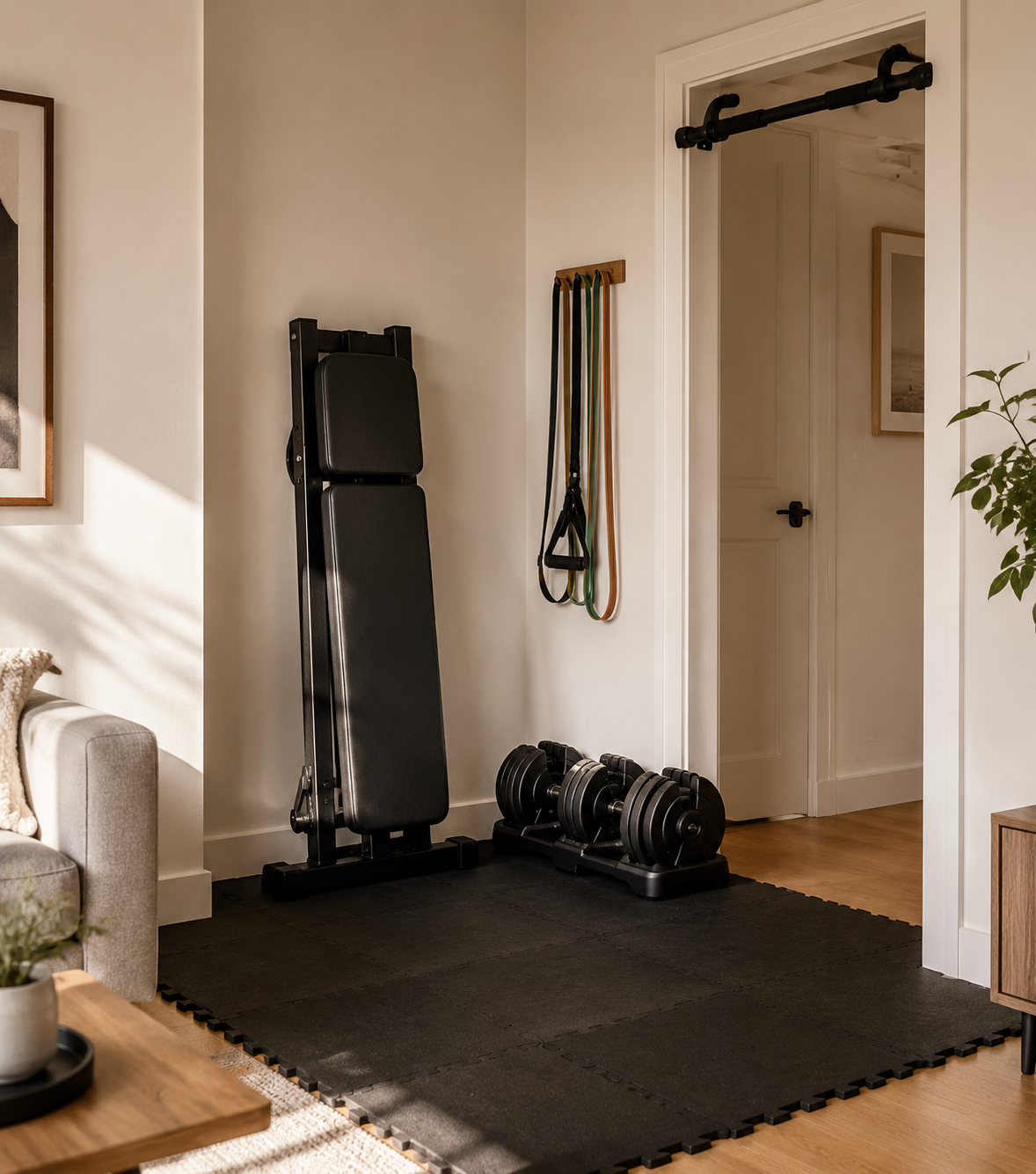
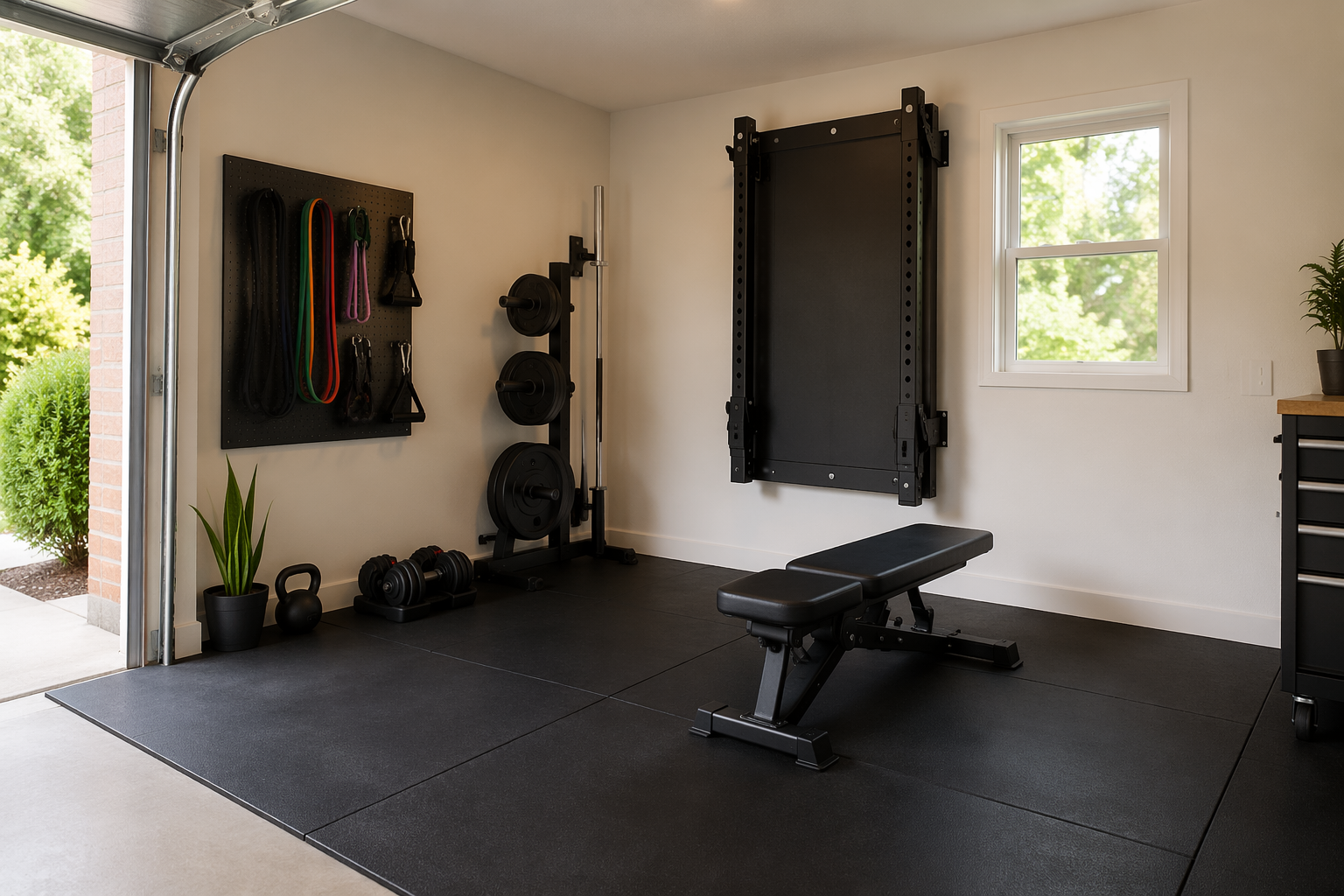
The fix is not to cover the whole room. Use zones. Put durable rubber where weights may touch down, use a mat for bodyweight and mobility work, and leave the rest of the floor alone. If you need help deciding how much surface to protect, start with zone-based home gym flooring or compare options in a flooring thickness guide before buying a roomful of tiles.
Shipping Can Change the Better Deal
Weights are cheap until they have to travel. A dumbbell price that looks good per pound can lose its advantage once shipping is added. This is why local pickup, used marketplaces, and nearby big-box stock matter more for weights than for bands or mats. Before choosing between adjustable dumbbells and fixed dumbbells, compare the delivered price, not the product-page price.
Storage Is a Cost, Even When It Is Not a Line Item
A pile of gear in the corner has a cost too: friction. If dumbbells block a closet, a bench has to be folded every session, or bands disappear into a drawer, the setup becomes easier to avoid. In small spaces, one versatile dumbbell pair you can reach quickly may beat three cheaper items that have to be unpacked every workout.
A Practical Purchase Order Under $500
Use this as a purchasing sequence, not a mandatory shopping list. If you already own a mat, skip it. If your building makes jump rope impossible, skip it. If your doorframe cannot safely hold a pull-up bar, do not buy one just because it appears in a roundup.
- Phase 1: Buy a mat or small flooring zone, resistance bands, and one conditioning option you can use without bothering neighbors.
- Phase 2: Add one pair of medium dumbbells that works across squats, hinges, presses, rows, lunges, and carries.
- Phase 3: Add the next load gap: heavier dumbbells, a kettlebell, or a pull-up bar, based on the exercises you are actually repeating.
- Phase 4: Add a compact bench only when your program needs bench-supported movements often enough to justify the space.
- Phase 5: Upgrade to adjustable dumbbells only if the delivered price still leaves room for flooring and the rest of your setup.
For a deeper version of this sequencing logic, use a phased home exercise equipment purchase guide. It is easier to stay under budget when each purchase answers a training problem you have already noticed.
What I Would Buy at Each Level
For under $100, I would buy a basic mat and bands first, then add a jump rope only if the space allows it. This gives the beginner a clean training area and enough resistance for warmups, mobility, core work, and light strength sessions.
For $100–$250, I would build around the mat, bands, and one pair of medium dumbbells. If there is money left, I would improve floor protection before adding a novelty item. This is the setup most likely to survive the first three months because it is simple, compact, and not dependent on one machine.
For $250–$500, I would decide between two paths. The strength path adds a second dumbbell pair, a heavier kettlebell, or a bench. The space-saving path saves for adjustable dumbbells but only after checking the delivered price against the full budget. The wrong move is buying the impressive centerpiece first and then discovering there is no money left for floor protection or enough loading variety.
Once the dumbbells-and-bench version is in place, the next useful step is not more shopping. It is a program. An 8-week adjustable dumbbell and bench workout plan will do more for results than another accessory bought out of impatience.
Where the Market Noise Comes From
The home fitness equipment market is large enough that every budget buyer is surrounded by confident recommendations. Fortune Business Insights projected the market at USD 13.57 billion in 2026, though market estimates vary by methodology and source.[3] That size helps explain the noise, but it does not help decide whether a beginner should buy a bench before a second dumbbell pair.
A real under-$500 home gym will usually look modest: a protected training zone, bands, one or two useful weights, and maybe one carefully chosen upgrade. That is not a failure. It is the version that leaves enough money for the boring things that keep the setup usable.
The Final Buying Rule
If the full cart total is under $500 only before flooring, shipping, tax, and storage are considered, it is not an under-$500 home gym. Buy less now, protect the space you train in, choose equipment that handles many movements, and upgrade only after your workouts show what is missing.
References
- Home Fitness Industry Statistics, PTPioneer, https://www.ptpioneer.com/statistics/home-fitness-industry-statistics/
- The Best At-Home Workout Equipment, Siwicki Fitness, 2026, https://www.siwickifitness.com/blog/the-best-at-home-workout-equipment
- Home Fitness Equipment Market, Fortune Business Insights, 2026, https://www.fortunebusinessinsights.com/home-fitness-equipment-market-105118
Comments
Join the discussion with an anonymous comment.