
How I Almost Wasted $8,000
I almost bought a Tonal. The screen looked amazing, the guided workouts seemed perfect for my small apartment. But when I added the $59.95 monthly fee to the $4,295 price tag, the total over five years came to $7,892. That’s more than a REP Ares 2.0 with a lifetime warranty, plus five years of a gym membership. The difference: I’d own the equipment.
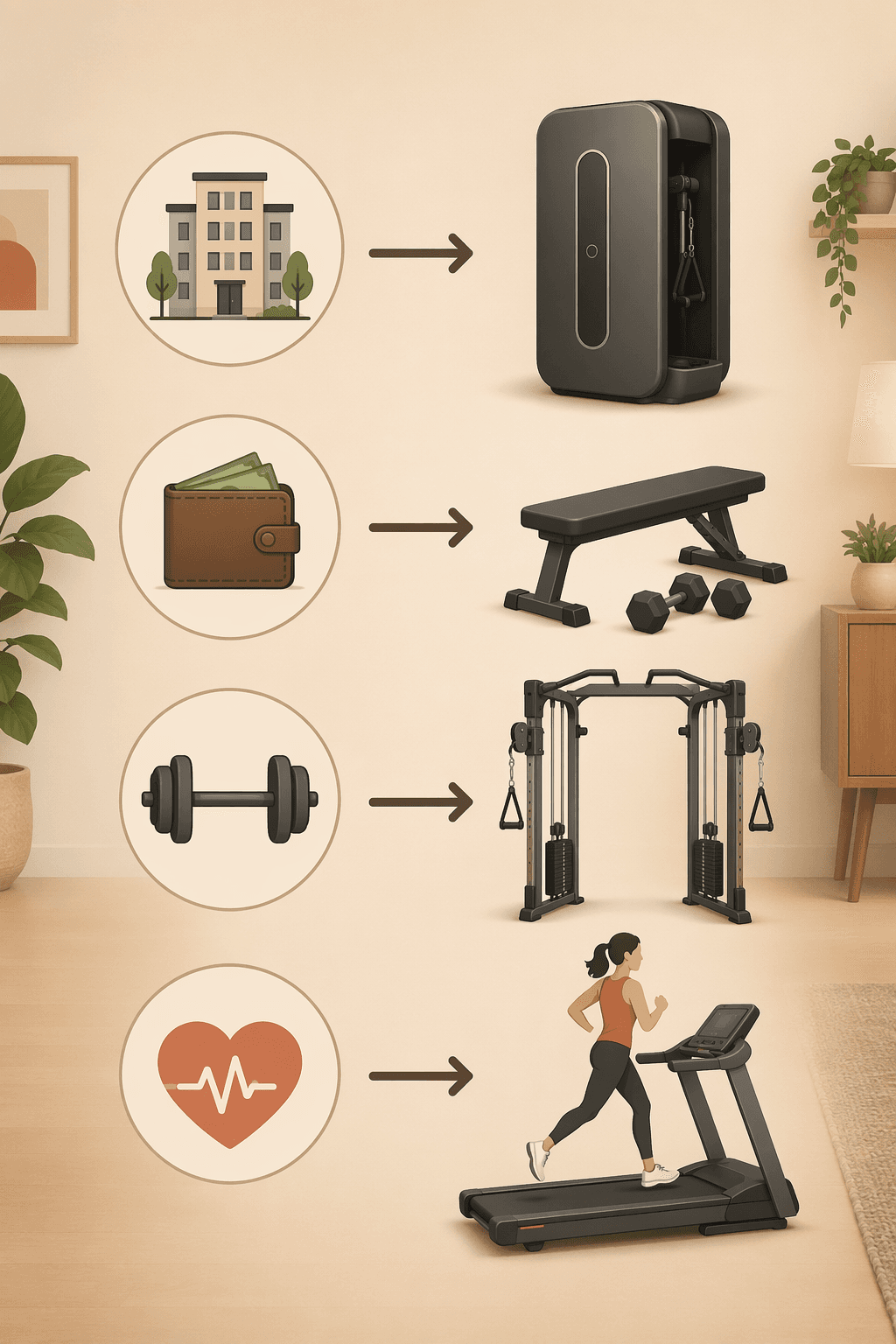
The mistake most people make is comparing models instead of categories. A Tonal and a Concept2 rower don’t compete. One is a digital strength system with a permanent subscription; the other is a rower with no recurring cost. The only thing they share is that they sit in your home.
The question isn’t “which machine is best.” It’s “which category fits my training, my space, and my tolerance for subscriptions and short warranties.” Get that right first.
The Real Cost of Each Machine Type Over Five Years
Four categories dominate home fitness: all-in-one strength stations, functional trainers, smart/digital resistance gyms, and standalone cardio. The average home gym machine costs $1,855 according to Garage Gym Reviews, but that number is meaningless across categories. The range runs from a few hundred for a basic cardio machine to well over four thousand for a loaded all-in-one. Here’s what representative models actually cost — not just upfront, but over the long run.
| Category | Representative Model | Price | Footprint | Resistance | Subscription | Warranty | Best For |
|---|---|---|---|---|---|---|---|
| All-in-one strength | Major Fitness B17 | $4,199 | 37+ sq ft | Weight stack (dual 160 lb) | None | 1 year | Full-body strength in one station |
| Functional trainer | REP Ares 2.0 | $2,999 | ~25 sq ft | Dual 260 lb (upgradeable to 310 lb) | None | Limited lifetime | Cable-based strength and versatility |
| Smart gym (digital) | Tonal 2 | $4,295 | Wall-mount, ~1 sq ft | 250 lb digital electromagnetic | $59.95/mo | 1 year (extended available) | Convenience, guided classes, small space |
| Smart gym (digital, no sub) | Speediance Gym Monster | $3,199 | ~12 sq ft | 220 lb digital motor-driven | None | 2 years | Digital resistance without monthly cost |
| Standalone cardio | Concept2 RowErg | $990 | Stores vertically, 2×8 ft | Air resistance (self-powered) | None | 2 years (frame 5 years) | Cardio endurance, full-body rowing |
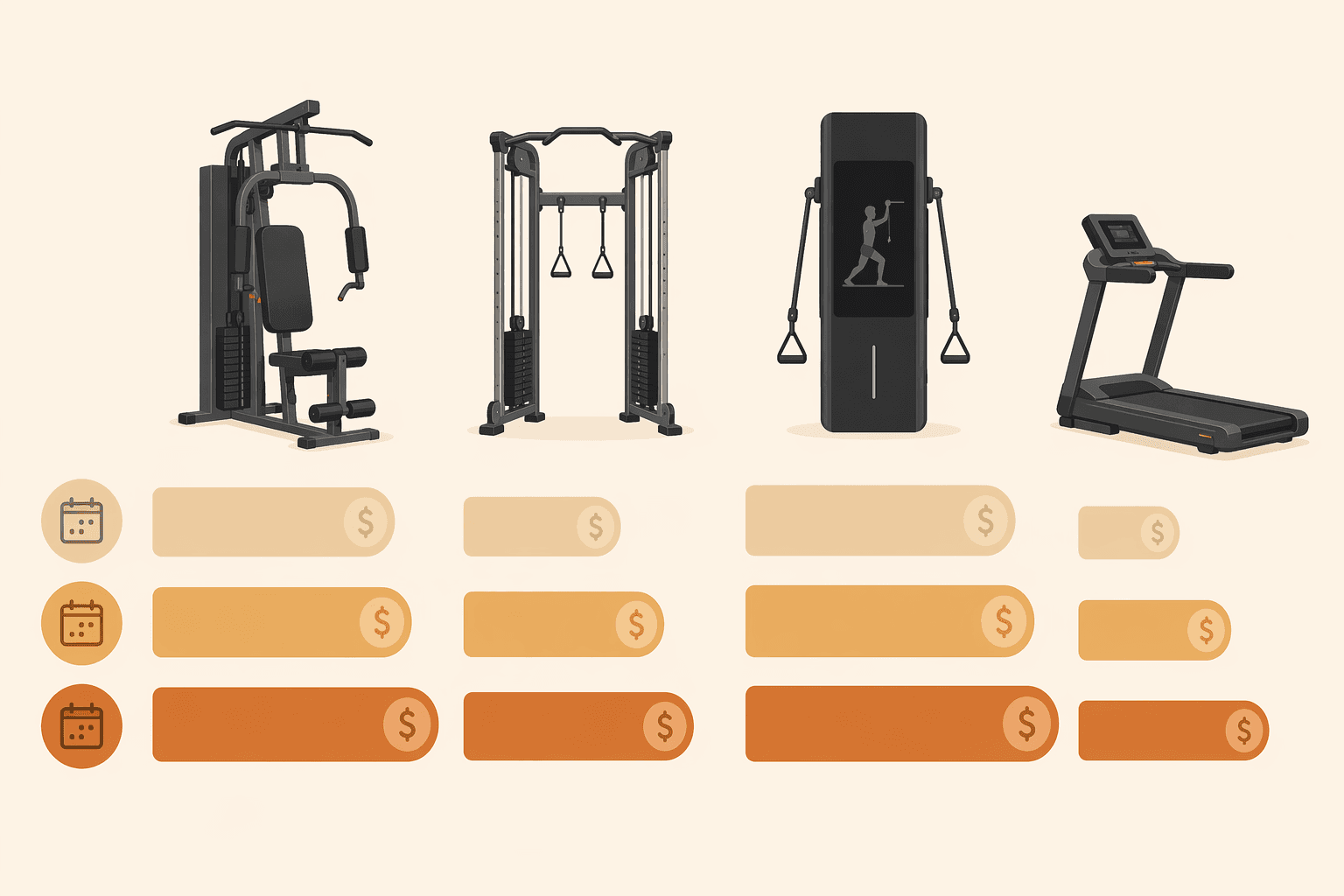
Now here’s the number that matters more than upfront price: the total cost over one, three, and five years, including required subscriptions and assuming no major repairs.
| Category | Machine | Year 1 | Year 3 | Year 5 |
|---|---|---|---|---|
| All-in-one | Major Fitness B17 | $4,199 | $4,199 | $4,199 |
| Functional trainer | REP Ares 2.0 | $2,999 | $2,999 | $2,999 |
| Smart gym (sub) | Tonal 2 | $5,014 | $6,453 | $7,892 |
| Smart gym (no sub) | Speediance Gym Monster | $3,199 | $3,199 | $3,199 |
| Cardio (rower) | Concept2 RowErg | $990 | $990 | $990 |
The smart gym with a subscription (Tonal) is the clear loser on cost. The functional trainer (REP Ares 2.0) costs less than half at five years, and you own it. The Tonal’s five-year total is more than double the REP. If you are willing to use a basic gym membership ($65/month) for variety, the REP plus five years of a membership still costs less ($2,999 + $3,900 = $6,899) than the Tonal alone.
The warranty difference is even more telling. REP gives a limited lifetime warranty on the Ares 2.0. Tonal gives one year. A one-year warranty on a $4,200 purchase tells me the manufacturer isn’t confident it will last. That’s a red flag, no matter how polished the software is.
The ROI break-even point varies wildly: a minimal $200–$500 setup breaks even in 4–10 months; a moderate $1,000–$2,500 setup in 1–3 years; a full $3,000–$10,000 setup in 2–7 years. The higher your upfront spend and the more subscription fees you add, the longer it takes to recoup your money versus a gym membership.
Footprint also matters. The B17 takes 37 square feet just for the machine, but you need room to move around it. Fitness Outlet recommends at least 80 square feet for a single functional machine and 120–150 square feet for a combination of cardio and strength. Ceiling height of 7–8 feet is the minimum. If you’re in an apartment, the smart gym or a folding rower may be your only realistic options – but that doesn’t mean they’re the cheapest. And budget treadmills under $500 are a false economy — they’re built to standards that don’t survive daily use.
Where Each Category Makes Sense
- You’re a strength-focused lifter with at least 80 sq ft and hate subscriptions: Get a functional trainer like the REP Ares 2.0. It gives you buttery cable resistance, a lifetime warranty, and zero monthly fees. The weight stacks are upgradeable to 310 lbs, so you won’t outgrow it. All-in-one stations are an option but cost more and have weaker warranties.
- You’re a runner or cardio lover who rarely does strength: Buy a standalone cardio machine – a Concept2 rower ($990), a quality treadmill ($1,000+), or an exercise bike. A 2021 study in the Journal of Sports Science & Medicine (small sample, nine participants) found treadmills produced higher fat oxidation than ellipticals or rowers during steady-state cardio. For pure endurance, rowers give a full-body workout in a small footprint.
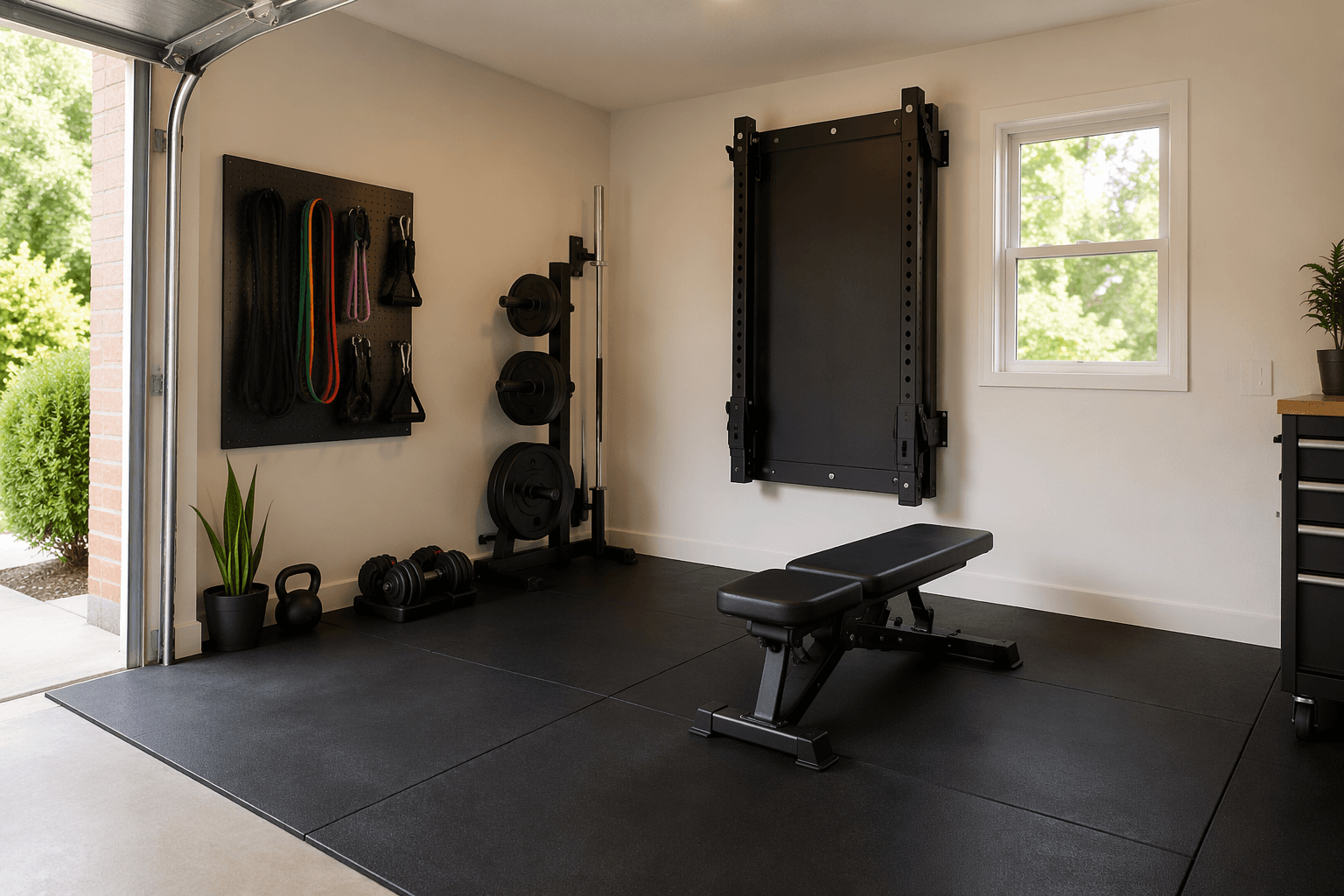
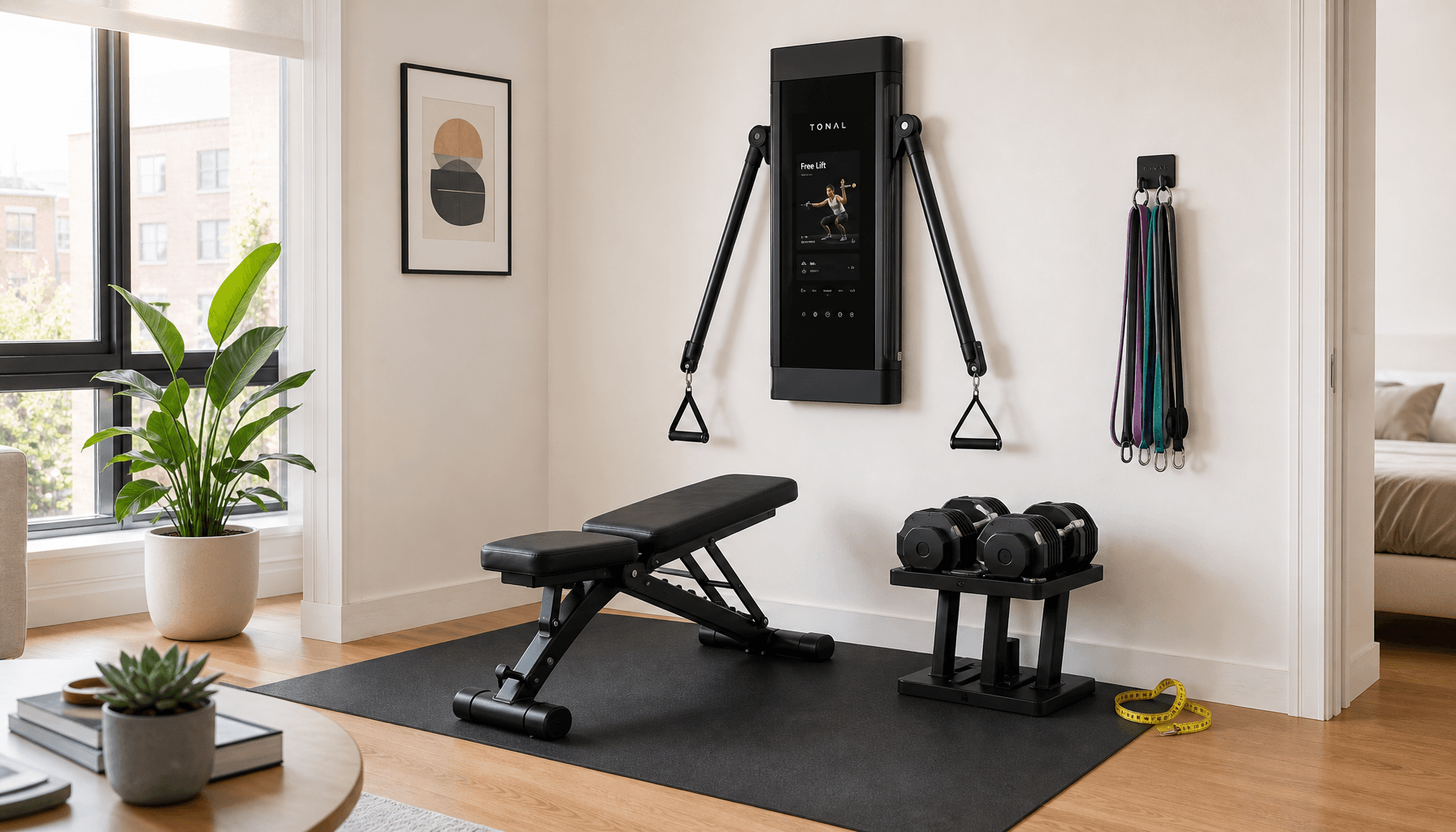
- You live in an apartment with minimal space and want guided workouts: A smart gym like the Tonal or Speediance makes sense. But be honest about the subscription. If you can stomach the monthly fee and the one-year warranty, the Tonal delivers a polished experience. The Speediance avoids the subscription but has a shorter warranty than a functional trainer. If space is the only constraint, consider a compact modular setup (adjustable dumbbells, a bench, resistance bands) – it can fit in a closet and costs a fraction of a smart gym.
- You’re on a tight budget ($200–$500): Start with resistance bands and bodyweight. A 2019 systematic review in SAGE Open Medicine concluded that bands can provide similar strength gains to free weights. It’s not a permanent solution, but it gets you started while you decide which category to invest in later.
The Only Rule You Need
Before you compare three smart gyms or two functional trainers, ask yourself: should I even be shopping in this category? The real savings come not from finding the cheapest model within a category, but from picking the right category in the first place.
Run the five-year total cost of ownership in your head. Factor in the subscription, the warranty, and the useful life. If a machine asks you to pay $60 a month and only guarantees it for one year, that’s a bad deal no matter how shiny the screen is. The real best workout machine for home is the one that fits your training, your space, and your long-term budget – and you don’t need to compare a single model to figure that out.

Comments
Join the discussion with an anonymous comment.