
Why “Best Treadmill for Walking” Is a Mistake
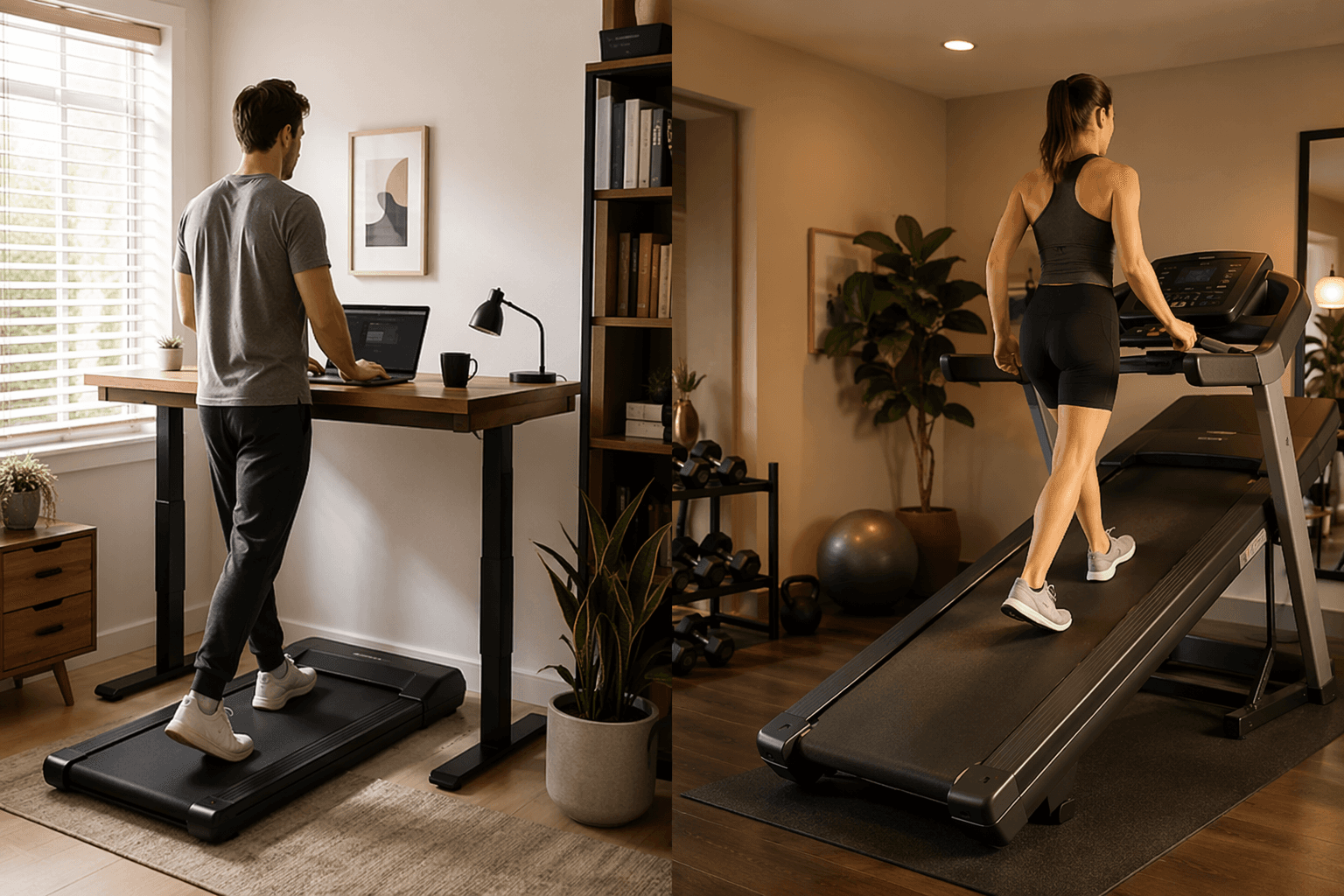
I bought a cheap under-desk treadmill during the pandemic. Three months in, the belt started fraying along the edge. The motor whined. The 90-day warranty was already dead. I replaced it with a full-size treadmill that has a lifetime frame warranty and is still running five years later. That experience taught me a lesson most buying guides skip: the best treadmill for walking depends entirely on what kind of walking you plan to do, and many roundups treat all walking treadmills as interchangeable.
Take the Goplus 2-in-1. It costs about $200, has a 40-inch deck, and carries a 90-day warranty. After a few weeks of use the belt frayed during Wirecutter’s testing. That’s not acceptable for anyone walking more than fifteen minutes a day. Compare that to the Horizon T101 at $649 with a lifetime frame and motor warranty. Warranty length is not a bonus feature — it is a direct proxy for how long the machine will last.
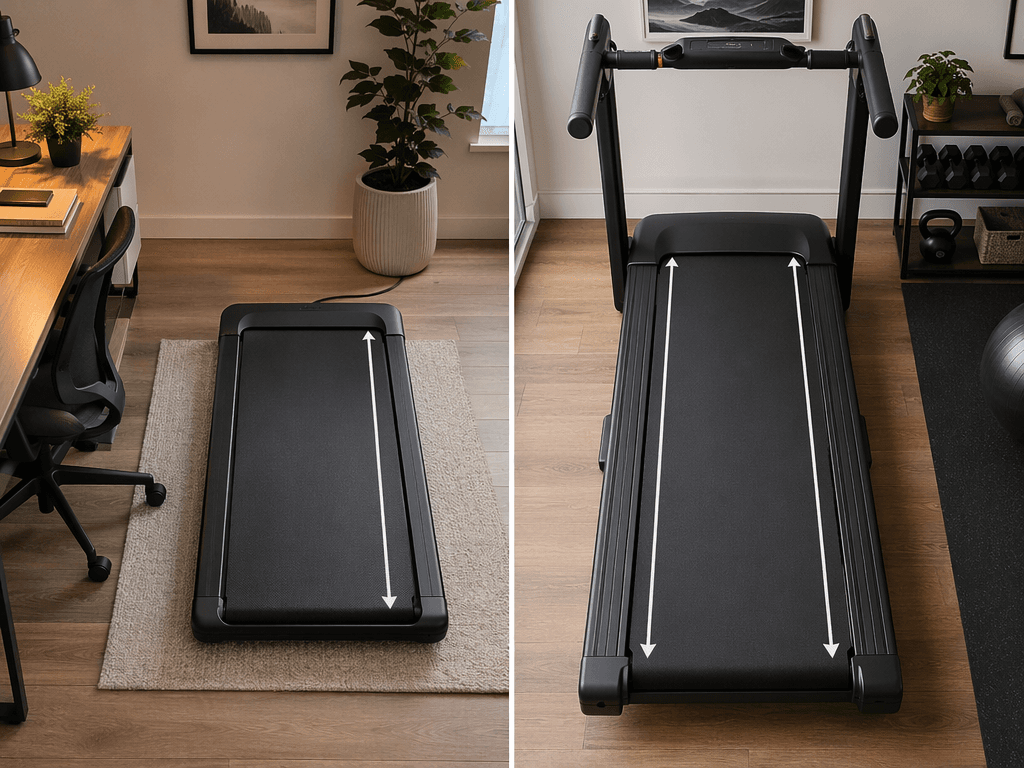
Deck length is another trap most roundups gloss over. The UREVO Strol 2E has a 42.5-inch deck. A tester who is 5'9" found it not comfortable... to even take full strides. Roundups call that “compact” — they don’t tell you it is too short for anyone over about 5'6". Walkers over that height need at least a 50-inch deck, preferably 55–60 inches for a natural stride. (I go deeper into this in the deck size guide.)
What a Walking Pad Actually Gives Up
I get the appeal: small footprint, low price, no assembly. But the trade-offs are concrete. Here is what walking pads (including under-desk models from brands like WalkingPad, UREVO, Goplus, Sunny) typically sacrifice:
- Speed limit 3–4 mph. The WalkingPad P1 tops out at 3.75 mph. That is fine for slow walking under a desk, but you cannot power walk or use incline intervals.
- No incline. Almost all walking pads have no incline or a fixed incline of a few degrees. A 2021 study in Sports found that even a 7% incline significantly affects heart rate and cardio output. Walking pads cannot deliver that.
- Short deck: 40–47 inches. That 40-inch deck on the Goplus? It is not comfortable for anyone over 5'6", and even average-height users will feel cramped.
- Low weight capacity: most cap at 220–265 lb. The Sunny Health SF-T4400 (a budget folding treadmill) holds 220 lb — no better than a walking pad. Full-size treadmills from Sole and Horizon hold 300–350 lb.
- Warranty: 90 days to 1 year. That is not a safety net; it is a signal that the machine is not built for long-term use.
If your walking is purely slow strolling while you work (under 3 mph, short sessions), a walking pad can work. But if you want a real walking workout — any pace above 3 mph, incline, longer than 30 minutes — you need a full treadmill. That is the central divide most roundups ignore. (For a deeper dive on this choice, see our walking pad vs. full-size treadmill comparison.)
Why Incline Changes Everything
If you want more calorie burn from walking without running, incline is your most leverageable upgrade. A treadmill with 10–15% incline turns a flat stroll into a meaningful cardiovascular challenge. The NordicTrack X24 goes up to 40% incline and can burn roughly five times the calories of walking flat (that is the 40% figure, not a 15% overclaim). Even a modest 7% incline, as the Sports study shows, significantly increases heart rate and energy expenditure. Walking pads have zero incline capability. If you plan to do any dedicated walking workouts that aim to improve fitness or burn meaningful calories, a walking pad will disappoint.
Our 8 Scenario-Based Picks (and Why They Fit)
Every pick below is judged by walking-specific criteria: deck length, motor CHP (2.5+ is enough for walking, but lower CHP walking pads are fine for their intended use), incline range, weight capacity, warranty, and total cost of ownership. These are not ranked; they are matched to scenarios.
- Horizon 7.0 AT — Best overall walker’s treadmill. 3.5 CHP, 60-inch deck, 0-15% incline, 325 lb capacity, lifetime frame/motor warranty, ~$999. This is the one I'd start with for most walkers: long deck, solid motor, lifetime warranty under $1,000.
- Sole F63 — Best incline for the price. 3.0 CHP, 60-inch deck, 0-15% incline, 325 lb capacity, lifetime frame/motor, ~$1,199. Sole’s F63 is widely called the “best for walkers” in reviews, and for good reason — the incline is steep enough to challenge, the deck is plenty long, and the cushioning is comfortable.
- WalkingPad P1 — Best compact / foldable. 1 HP, 47-inch deck, 0.5–3.75 mph, 220 lb capacity, 1-year warranty, ~$499. Folds to 32.5 inches and weighs 62 lb. No incline. Perfect for apartment-dwellers who want slow walking while watching TV or working at a standing desk. Do not expect to break a sweat.
- UREVO Strol 2E — Best under-desk walking pad. 2.5 HP, 42.5-inch deck, 0.6–6.2 mph, 265 lb capacity, 12-month warranty, ~$400. Quiet enough for work calls. The higher speed (6.2 mph) is unusual for a walking pad, but the short deck means tall walkers (over 5'8") will not be comfortable. A decent choice for shorter users who want a versatile walking pad.
- Horizon T101 — Best budget full-size treadmill. 2.5 CHP, 20x55-inch deck, 0-10% incline, 300 lb capacity, lifetime frame/motor warranty, ~$649. This is the cheapest full-size treadmill I would trust for daily walking. The 55-inch deck is adequate for most walkers (60 inches would be better for anyone over 6 ft), and the lifetime warranty on frame and motor gives peace of mind.
- Sunny Health SF-T4400 — Best budget walking pad alternative. 2.2 HP, 3 manual incline levels, 220 lb capacity, 3-year frame warranty, ~$500. Actually a folding treadmill, not a pad. The incline is manual (stop to adjust), but it offers a longer deck (~50 inches) than most walking pads. Limited warranty on parts. Good for someone who wants incline but has a very low budget.
- NordicTrack Commercial 1750 — Best with interactive classes. 3.5 CHP, 60-inch deck, -3% to 15% incline, ~$2,499. Comes with iFIT (subscription required after initial period). If you want guided walking classes and a smooth ride, this is a strong pick. But be aware of the subscription cost: read our comparison of connected vs. subscription-free treadmills to decide if the monthly fee is worth it for you.
- Sole F80 — Best heavy-duty walker’s treadmill. 3.5 CHP, 60-inch deck, 0-15% incline, 350 lb weight capacity, lifetime frame/motor/deck warranty, ~$1,899. Measured at 53.8 dB while walking (quiet as a refrigerator). This is the last treadmill you will buy for walking. Extremely quiet, excellent warranty, and a 350 lb weight capacity that accommodates any walker comfortably.
Quick Spec Comparison: How the 8 Models Stack Up
Use this table to compare the key specs side by side. Prices and dimensions are sourced from reviews as of mid-2026; check current pricing before buying.
| Model | Motor CHP | Deck (inches) | Incline | Weight Cap. | Warranty | Price |
|---|---|---|---|---|---|---|
| Horizon 7.0 AT | 3.5 | 60 | 0–15% | 325 lb | Lifetime frame/motor | ~$999 |
| Sole F63 | 3.0 | 60 | 0–15% | 325 lb | Lifetime frame/motor | ~$1,199 |
| WalkingPad P1 | 1.0 | 47 | None | 220 lb | 1 year | ~$499 |
| UREVO Strol 2E | 2.5 | 42.5 | None | 265 lb | 12 months | ~$400 |
| Horizon T101 | 2.5 | 55 | 0–10% | 300 lb | Lifetime frame/motor | ~$649 |
| Sunny SF-T4400 | 2.2 | ~50 | 3 manual | 220 lb | 3 years frame | ~$500 |
| NordicTrack 1750 | 3.5 | 60 | -3% to 15% | 400 lb | Lifetime frame | ~$2,499 |
| Sole F80 | 3.5 | 60 | 0–15% | 350 lb | Lifetime frame/motor/deck | ~$1,899 |
The Only Specs That Matter for Walking
You do not need a full buyer’s guide here (we have one dedicated to walkers), but a few criteria matter so much that they deserve a direct callout:
- Deck length: at least 50 inches for anyone under 5'8"; 55–60 inches for taller walkers. Ignore glossy “compact” labels. Measure your own stride.
- Motor CHP: 2.5 CHP is sufficient for walking. The Horizon T101 and UREVO both have 2.5 CHP. Do not pay extra for 3.0+ if you never run.
- Incline: non-negotiable if you want real cardio benefit. Even 7% makes a difference.
- Warranty: lifetime frame and motor is the gold standard. Anything less than 5 years on the frame is a risk for regular use.
- Ignore: touchscreen size (you can watch content on your own device), preloaded workouts (free apps are often better), shiny app integrations that lock you into a subscription. Our connected vs. subscription-free comparison explains why you should think twice about paying monthly for a treadmill.
Which Scenario Fits You? A Final Verdict
There is no single best walking treadmill. The right choice depends on your space, budget, and how serious your walking habit will be. Here is how I would decide:
- I walk while working at a standing desk, need something quiet and small, and am under 5'6" and 220 lb → UREVO Strol 2E or WalkingPad P1.
- I want a dedicated walking workout with incline, have a spare room or garage corner, and can spend around $1,000 → Horizon 7.0 AT.
- I want serious incline and a rock-solid build, plan to walk daily for years, have a bit more budget → Sole F63 or Sole F80.
- I am on a tight budget but still want a real treadmill with incline → Horizon T101.
- I have a small apartment but still want incline and a long deck → a folding treadmill like the Horizon 7.0 AT (see our folding treadmill decision framework).
- I value guided classes and don’t mind a subscription → NordicTrack 1750 (budget for iFIT).
Assess your scenario honestly, then pick from the list above. A walking pad under a desk is a tool; a full-size treadmill is a home gym. Both work, but only if you buy the right one for your real situation. I learned that lesson the expensive way.
Comments
Join the discussion with an anonymous comment.