
A treadmill belt and deck replacement runs $600 to $950. If you buy a used treadmill for $500 and it needs that work, your net effective price is $1,100–1,450. That is not a deal. The 40–70% savings figure is a directional average that hides massive variation. It assumes equipment in good condition, and that assumption is what gets people burned.
I have examined hundreds of secondhand gym deals, first as a repair technician and later as a reseller. After the first fifty, I stopped looking at the asking price first. I look at the condition of the parts that are expensive to replace. Most casual buyers—and most articles—treat inspection as a generic checklist. It is not. Each equipment type has a specific, preventable failure that will eat your savings if you miss it.
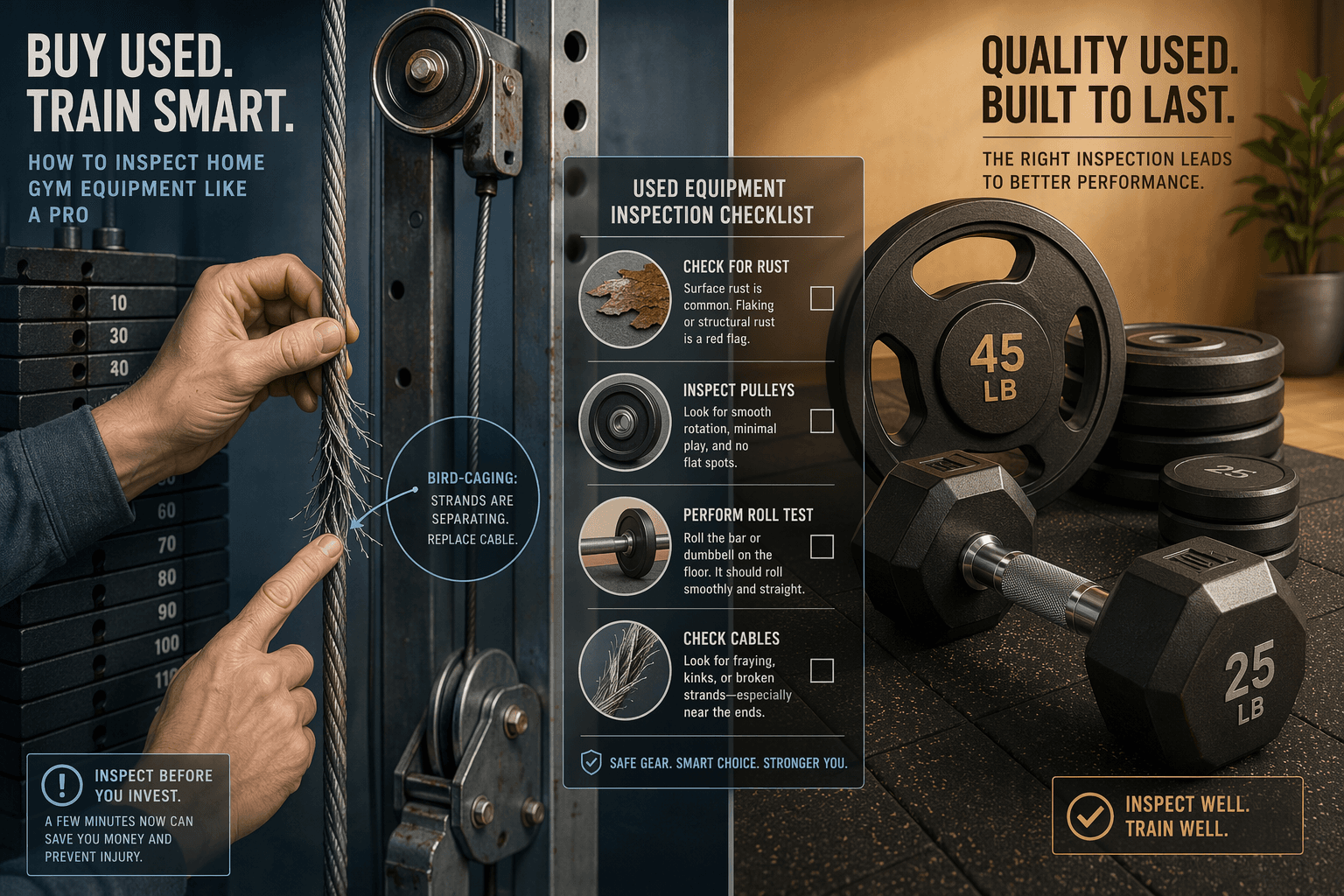
Treadmills: The $950 Warning
Treadmills account for a huge share of used listings, and they are the equipment type most likely to hide an expensive problem. 85% of mechanical failures in commercial treadmills occur in the drive system or electronics, yet most buyers jog for two minutes on a walk test and call it good. That test catches almost nothing. Here is what you actually do:
- Perform the belt finger test. Lift the edge of the walking belt in the center of the deck. If you can see more than about a quarter-inch of the belt edge above the deck surface, or if the belt feels thin and frayed, the belt and possibly the deck are due for replacement. That is your $600–950 hit.
- Access the service menu. Most commercial and many consumer treadmills have a diagnostic screen that shows total motor hours, error codes, and service history. The key sequence differs by brand—hold down a combination of speed/incline buttons while powering on—but the seller should know it. If they do not, search the brand and model on your phone. High motor hours (over 3,000 on a consumer model, over 10,000 on commercial) mean bearings, belts, and electronics are approaching end of life.
- Run the treadmill at 7–8 mph (or the highest speed you can safely stand beside). Listen for squeaks, clunks, or speed oscillations. Feel the frame for vibration that travels through the deck. A smooth walk test at 3 mph tells you nothing about bearing condition under load.
- Test incline through full range of motion. Listen for grinding in the elevation motor. Incline mechanisms fail often and are not cheap to repair.
If the test reveals belt wear or high motor hours, subtract the estimated repair cost from your initial offer. A treadmill that needs a new belt and deck is not a $500 treadmill; it is a $1,100+ treadmill that requires your time to fix. That math rarely beats buying new with a warranty.
Cable Machines: Bird-Caging and the 50% Load Test
Cables are consumable, and the cost adds up fast. A single cable replacement costs $85–175, and a machine like a functional trainer or lat pulldown may have three or four. But the real risk is not the cost—it is the safety hazard of a cable snapping under load.
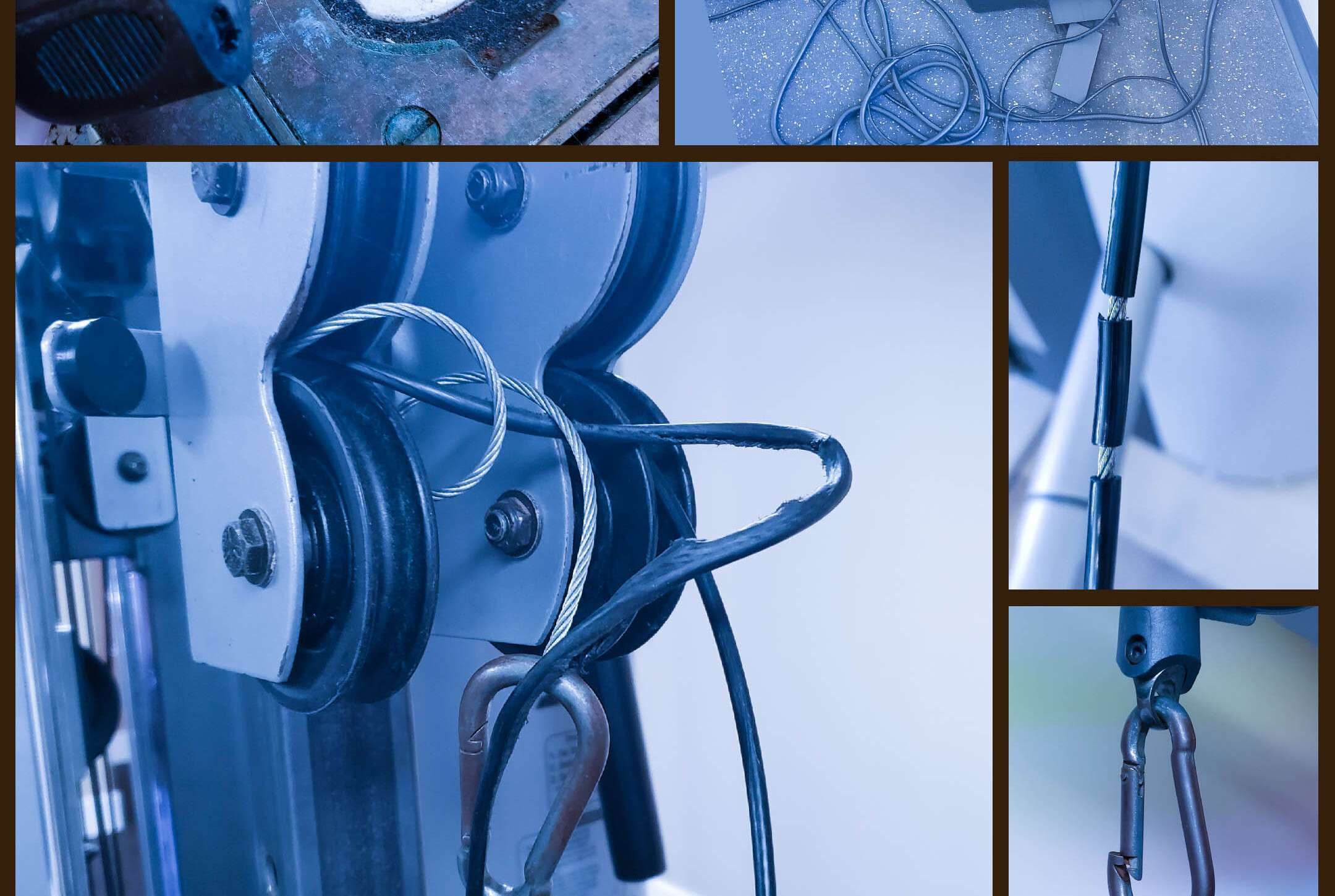
The critical inspection point is the cable end where it attaches to the pulley or the weight stack pin. Look for bird-caging—strands that have separated and pushed outward, creating a fluffy or brush-like shape around the cable. That is a failure sign. Also run your fingers along the full length of each cable. Any rough spots, kinks, or inconsistent diameter mean the cable is compromised.
Then do a load test at about 50% of the stack weight on each station. Pull smoothly and feel for binding, catching, or uneven resistance through the full range of motion. Binding often indicates a bent pulley or a misaligned cable path, which can cause premature wear on all cables. It is also a sign that the previous owner may have dropped the weight stack aggressively, which can crack the weight stack guide rods—an expensive repair that usually totals the machine.
Commercial-grade cable machines from Life Fitness, Precor, and Hammer Strength are engineered for 12+ hours of daily use. A well-maintained commercial unit that has seen moderate home use will outperform a new consumer-grade machine for years. But that advantage vanishes if the cables or pulleys have been neglected. Do not pay a premium for commercial branding if the consumables are shot.
Barbells and Plates: Roll, Spin, and the Crack vs. Rust Distinction
Iron is the safest used buy, but only if you know what to check. Olympic weight plates retain 70–80% of retail value on the used market because they are nearly indestructible. The same cannot be said for barbells.
Barbell roll test. Place the bar on a flat floor and roll it slowly. If it wobbles, it is bent. A bent bar should be passed over—it can damage the knurling unevenly and, in severe cases, be unsafe under heavy load. Some bending in the shaft is repairable (a shop can straighten it for around $50–100), but bending near the sleeve or end cap is usually terminal.
Sleeve spin. Grab each sleeve and spin it. It should rotate freely and smoothly. Grinding, sticking, or excessive play means the bearings or bushings are worn. Replacement sleeves are sometimes available for premium barbells (Rogue, Rep Fitness) but can cost $80–150 per side. On a budget bar, seized sleeves are a write-off.
Plates: crack vs. rust. Surface rust on iron plates is cosmetic. A light coat of steel wool and some elbow grease brings them back. Cracks or chips in the metal, especially near the center hole, are structural. Do not buy cracked plates. Also check the center hole fit on cheap plates—some budget brands have over-sized holes that make the plates wobble on the bar during lifts, which is annoying and can shorten barbell sleeve life.
Barbells and plates are the most liquid part of the used market. Premium brands like Rogue hold 15–20% higher resale value than budget brands. If you are patient, you can often find Rogue or American Barbell bars at 60–75% of retail on Facebook Marketplace, and they will hold that value if you resell later.
Adjustable Dumbbells: The Plastic Latch Trap
Adjustable dumbbells are popular used buys because the new retail price is high and the savings can be dramatic. But they have a failure point that most sellers do not know about: the plastic or composite latches that hold the weight plates in place when you change selections.
Inspect the selector dial mechanism on each dumbbell. Cycle through every weight setting. The engagement should be crisp—you should feel a clear click or detent at each stop. If it slides smoothly without resistance, the internal indexing mechanism may be worn. More importantly, examine the latch tabs or locking pins for cracks. Many adjustable dumbbell models (especially budget-friendly brands) use plastic parts for the selector. A cracked latch means the plates can disengage during a lift. That is a direct safety hazard.
Also check that the weight plates sit flat against each other when locked. If there is wobble, the guide rods may be bent or the main housing may be warped. Replacement parts for adjustable dumbbells are often proprietary and can be expensive or unavailable if the model is discontinued. I have seen buyers pay $400 for a set of adjustable dumbbells only to discover that the manufacturer no longer sells replacement latches for that generation. That set effectively became a paperweight.
Universal Red Flags That Kill Any Deal
These apply to every type of equipment. If you see any of them, the deal is not worth your time:
- Refusal to test. A seller who will not let you plug in a treadmill or run a cable through its full range of motion is hiding something. Walk.
- Missing safety pins, clips, or locks. On racks, adjustable benches, and cable machines, missing safety equipment is a non-negotiable deal-breaker. Do not assume you can find replacements cheaply—many brands use non-standard pin sizes.
- Frame cracks or weld fractures. A crack in any load-bearing frame member—bench frame, squat rack upright, weight stack guide rod—is structural failure. Do not buy.
- Obvious DIY repairs. Drilled holes, welded patches, zip-tied cable guides, or electrical tape on wiring. These repairs are not to spec and are likely hiding the original failure.
- Rust on structural weld points. Surface rust on painted steel is cosmetic. Rust that has bubbled up under the paint at a weld joint indicates that the corrosion has weakened the weld. Not worth the risk.
- Smoke or burning smells. On any motorized equipment, a burning smell during operation is a sign of electrical failure or motor bearing failure. It will not get better.
Fair Price Reference Table
These are national average ranges for used equipment as a percentage of current new retail. Your local market may vary by 10–20%. Before you start negotiating, have a specific number in mind based on the condition you saw during inspection.
| Equipment Type | Typical Used Price (% of Retail) | Notes |
|---|---|---|
| Olympic weight plates (iron) | 50–80% | Most liquid; surface rust is cosmetic; cracks are deal-breakers. |
| Barbells (steel, premium brands) | 60–80% | Premium brands hold 15–20% higher value; roll test essential. |
| Adjustable dumbbells | 50–70% | Heavily dependent on selector mechanism condition; plastic latches are the weak point. |
| Squat racks / power racks | 60–70% | Rogue racks resell at 80%+; Titan at ~50%. Check for missing hardware. |
| Benches (adjustable) | 55–65% | Check for wobble in incline/decline positions; missing locking pins. |
| Plate-loaded machines | 50–60% | Lower demand; check guide rods and bushings. |
| Selectorized machines (lat pulldown, functional trainer) | 40–60% | Cable replacement cost ($85–175 per cable) should factor into offer. |
| Treadmills (consumer) | 30–50% | Depreciates fast; belt/deck condition is the main value driver. |
| Exercise bikes | 30–45% | Check resistance mechanism (magnetic vs. friction) and condition of belt/chain. |
| Ellipticals & rowers | 30–40% | Less liquid; check drive belt and pivot bearings. |
If you need a framework to decide whether to buy new or used based on your budget, space, and goals, our Home Gym Equipment Decision Framework walks through that question in depth.
Where to Find Deals and the Seasonal Calendar
The best deals are not on any single platform; they are in the timing. Here is where I focus and when.
- Facebook Marketplace and Craigslist. The highest volume by far. Search with brand names, not generic terms ("Rogue barbell" beats "barbell"). Sort by newest listings first. The first seller to post a fair price usually moves it within hours. Set notifications.
- OfferUp and Letgo. Lower volume, but sometimes sellers are less informed about pricing. Worth checking if you have a specific model in mind.
- Estate sales and moving sales. These are often priced to clear. You can sometimes get a whole home gym for the price of a single piece. The catch: you need to be ready to transport immediately.
- Commercial gym liquidations. When a big-box gym closes, they sell entire lots through auction houses or direct liquidation. The equipment is usually high-use, but prices can be extremely low if you are willing to take multiple pieces. Be prepared for heavy wear and no warranty.
Seasonal windows: January through April is the prime season for resolution quitters. People buy equipment in January, give up by February or March, and list it in March and April. May through June is moving season. Sellers who are relocating want equipment gone fast and are more willing to negotiate. November through December is the worst time to buy—everyone is holding equipment for the new year hype cycle, and demand is low but sellers are not motivated.
When messaging a seller, be direct: ask for the condition of the specific parts you care about ("How many motor hours on the treadmill?" "Are the cables fraying?"). An honest seller will answer. A vague answer is a red flag.
How to Negotiate: The 15–25% Sweet Spot
The general rule is that offers 15–25% below the asking price are typical and often accepted. But do not anchor to the asking price—anchor to your net effective price. Here is how the conversation should go in your head:
- Determine the fair price for the equipment in good condition from the table above (50% of retail on a two-year-old consumer treadmill, say $600).
- Add your inspection findings. The belt shows moderate wear. Estimated belt-and-deck replacement: $700. Net effective price: $600 + $700 = $1,300.
- Compare to new. The new equivalent treadmill sells for $1,200. Your net effective price is higher. That means you should either negotiate the purchase price down far enough to bring net effective price below $1,200, or walk.
Most sellers expect to negotiate. Bring your inspection evidence ("I noticed the belt needs replacing, which runs about $700 to fix") and make a specific, fair offer based on that. If the seller is not willing to adjust for known repair costs, you are better off waiting for the next listing.
The Net Effective Price: Making the Final Decision
Net Effective Price = Purchase Price + Probable Repair Budget
Probable repair budget should be based on what you actually saw: belt wear, cable condition, motor hours, frame condition. Budget 15–25% of purchase price for potential repairs is the standard advice—and that is a decent rule of thumb for equipment that looks clean and functions well. But if you see specific wear, adjust the budget upward to match the actual repair cost.
If net effective price is at least 20% below the new retail price for a comparable piece (with warranty), the deal is worth considering. If it is close to new retail, buy new. If it is above new retail, you are paying a premium for used equipment. I have seen people do that. Do not be one of them.
Transport and Basic Maintenance to Protect Your Investment
Once you buy, transport and setup can undo your savings if you are careless. A few practical notes:
- Disassemble what you can. Remove the deck from a treadmill (most consumer models have bolts at the front and rear). Tie adjuster handles on cable machines so the weight stack does not slide during transport. Remove any loose parts—safety weights, detachable electronic consoles.
- Protect moving parts. Use moving blankets and straps, not rope directly on painted surfaces. A rope can strip paint down to metal, introducing rust points.
- Lube the belt (treadmills) and cables (cable machines). Use 100% silicone lubricant on treadmill decks. Wipe cables with a light machine oil to prevent rust. Tighten any loose bolts after the first week of use—shipping vibration can loosen things.
- Keep it clean and dry. A clean machine lasts longer. Dust accelerates wear on electronics and bearings. If you store equipment in a garage, consider a dehumidifier if your climate is humid.
If you are planning a phased build that mixes used and new purchases, our Best Home Exercise Equipment for Beginners: Phased Build Guide shows you what to prioritize first and what to add later.
Last reviewed: 2026-06-22.

Comments
Join the discussion with an anonymous comment.