
Why Space Planning for a Smith Machine Fails
The most expensive mistake a home gym buyer can make is ordering a Smith machine based on the product page footprint alone. That 47.3" x 53.2" rectangle printed in the spec sheet is the machine's resting position — it tells you nothing about whether you can actually use it. The real metric is usable area: the floor space you need to load plates, position a bench, squat through a full range of motion, and exit the bar safely.
Three common errors account for nearly all space-planning failures:
- Ignoring front clearance. A Smith machine needs 2–4 ft in front for bench placement and squat movement. Without it, you cannot perform the exercises the machine is designed for.
- Forgetting side clearance for plate loading. The barbell sleeves extend beyond the uprights. You need 2–3 ft on each side to load and unload plates without scraping your knuckles against a wall.
- Overlooking ceiling height. Most Smith machines stand 82–90 inches tall. An 8-ft ceiling leaves only 6–14 inches of overhead clearance — often insufficient for a standing overhead press or pull-up attachment.
The Three Tiers of Smith Machine Space Needs
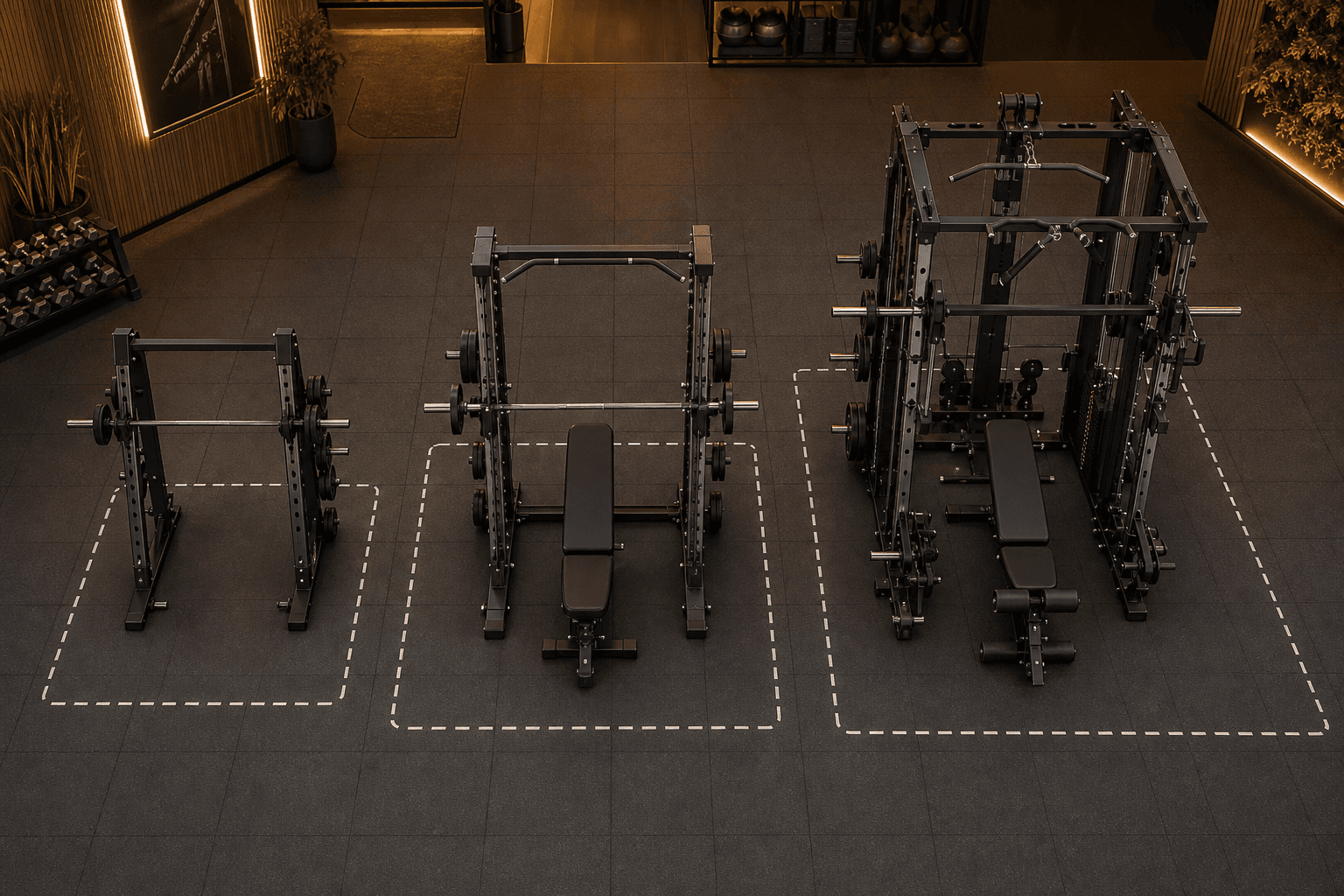
Not all Smith machines demand the same floor space. The market breaks into three distinct tiers based on usable area requirements. Understanding which tier fits your room is the first step in any purchase decision.
Tier 1: Compact Squat Rack Alternative (~42 sq ft usable)
If your space is extremely tight — a spare bedroom corner or a narrow garage bay — a compact squat rack with a Smith attachment may be your only option. The Vanswe Squat Rack, for example, has a footprint of roughly 6–11 sq ft and requires a usable area of about 42 sq ft (84" x 72"). These units trade some stability and weight capacity for a dramatically smaller footprint. They are best suited for light-to-moderate training and users who prioritize space savings over heavy lifting.
Tier 2: Compact Smith Machine (~51–62 sq ft usable)
This is the sweet spot for most apartment and spare-room setups. Compact Smith machines like the Vanswe GW1000 (47.3"W x 53.2"D footprint) require a minimum usable area of roughly 51 sq ft (95" x 77") and an ideal room size of about 62 sq ft (107" x 83"). These machines include a guided barbell and basic safety catches but typically lack integrated cable stations or pull-up bars. They are a direct replacement for a power rack in spaces where a full cage would not fit.
Tier 3: Full All-in-One Smith Machine (~85–117 sq ft usable)
Full all-in-one machines combine a Smith machine, power rack, cable crossover, and often a pull-up station in a single unit. The Vanswe GW2000, for instance, has a 46.5"W x 70"D footprint but needs a minimum usable area of about 85 sq ft (95" x 130") and an ideal room size of 117 sq ft (119" x 142"). These are the machines you see in dedicated home gyms and garage setups. They offer the most versatility but demand the most floor space.
| Tier | Example Model | Machine Footprint | Min. Usable Area | Ideal Room Size | Best For |
|---|---|---|---|---|---|
| Compact Rack Alternative | Vanswe Squat Rack | ~6–11 sq ft | ~42 sq ft | ~48 sq ft | Extreme space constraints, light training |
| Compact Smith Machine | Vanswe GW1000 | ~17.5 sq ft | ~51 sq ft | ~62 sq ft | Apartments, spare rooms, moderate lifting |
| Full All-in-One Smith | Vanswe GW2000 | ~22.6 sq ft | ~85 sq ft | ~117 sq ft | Garages, dedicated gyms, heavy training |
Clearance Requirements: Front, Sides, and Above
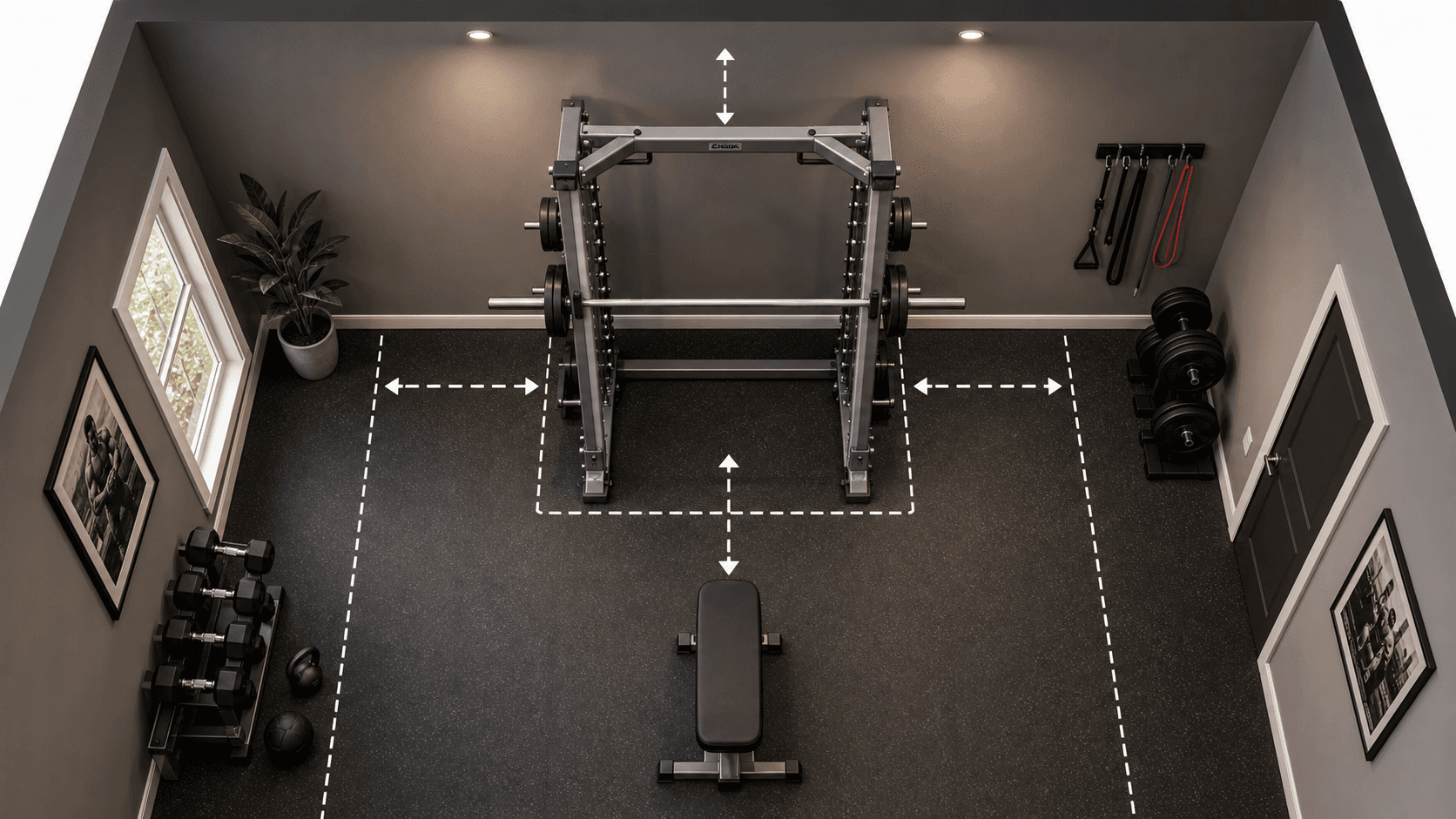
Clearance is the difference between a machine that fits on paper and a machine you can actually train with. The numbers below are non-negotiable for safe, comfortable use.
Front Clearance: 2–4 Feet
The front of the machine — where you stand to squat or press — needs the most space. A minimum of 2 ft is required for basic bench placement, but 3–4 ft is recommended for full squat movement and safe exit from the bar. If you plan to use an adjustable bench for incline presses, factor in the bench's length plus your body position. A 4-ft front clearance zone accommodates most lifters and bench sizes.
Side Clearance: 2–3 Feet Each Side
Side clearance serves two purposes: plate loading and arm extension. The barbell sleeves extend beyond the uprights — on some models, the total width with sleeves is 10–15 inches wider than the frame. You need at least 2 ft on each side to load plates without hitting a wall. Three feet per side is ideal if you plan to use the machine for exercises that require lateral movement, such as split squats or Bulgarian split squats.
Overhead Clearance: 1–2 Feet Above the Machine
Overhead clearance is the most commonly miscalculated dimension. Most Smith machines are 82–90 inches tall. With a recommended 1–2 ft of clearance above the machine, you need a ceiling height of at least 8 ft for shorter machines and 9 ft for taller ones. If the machine includes a pull-up bar, budget 2 ft of overhead clearance to perform pull-ups without hitting your head.
| Clearance Zone | Minimum | Recommended | Purpose |
|---|---|---|---|
| Front | 2 ft | 3–4 ft | Bench placement, squat movement, bar exit |
| Left side | 2 ft | 3 ft | Plate loading, arm extension |
| Right side | 2 ft | 3 ft | Plate loading, arm extension |
| Above (no pull-up bar) | 1 ft | 1.5 ft | Overhead press, bar lockout |
| Above (with pull-up bar) | 1.5 ft | 2 ft | Pull-up clearance |
Ceiling Height: The Overlooked Constraint
Ceiling height is the constraint that most often kills a Smith machine purchase after delivery. A machine that fits through the door may not fit under the ceiling.
The average Smith machine stands 88 inches tall, according to data from Garage Gym Reviews. That leaves just 8 inches of clearance in a room with an 8-ft (96-inch) ceiling — barely enough for a standing overhead press and not enough for pull-ups. Taller machines, such as the Major Fitness B17 Flying Fortress at 88.1 inches or the Mikolo M4-2.0 at 87.5 inches, require a 9-ft ceiling for comfortable use.
Special cases to watch for:
- Basements with exposed joists or ductwork. The usable ceiling height may be lower than the floor-to-joist measurement. Measure from the finished floor to the lowest obstruction.
- Vaulted ceilings. The height at the machine's location may differ from the room's peak. Place the machine where the ceiling is highest.
- Lifter height. A tall lifter (6'2" or more) needs additional overhead clearance for standing exercises. The machine's height plus the lifter's reach determines the real ceiling requirement.
How to Measure and Plan Your Space
Before you buy, verify your space with a physical measurement method. The tape-on-floor approach is the most reliable way to visualize whether a Smith machine will work in your room.
The Tape-on-Floor Method
- Mark the machine's footprint on the floor using painter's tape. Include the full width and depth from the spec sheet.
- Extend the tape to mark the front clearance zone (3–4 ft from the front edge of the footprint).
- Mark the side clearance zones (2–3 ft from each side edge).
- Place a chair or box in the front clearance zone to simulate bench position. Sit on it and simulate a squat or press motion to confirm you have enough room.
- Measure the ceiling height directly above the footprint. Subtract the machine's height to calculate overhead clearance.
Check the Delivery Path
A machine that fits in the room may not fit through the door. Measure every doorway, hallway, and stairwell along the delivery route. Most Smith machines arrive in multiple boxes, but some all-in-one units come partially assembled and require wider clearances. If your delivery path includes tight corners or narrow stairs, confirm the box dimensions with the manufacturer before ordering.
Account for Multi-Use Room Constraints
If the room serves double duty — a spare bedroom that also functions as an office, or a garage that still needs to park a car — the usable area shrinks further. Factor in the space needed for other furniture, storage, and walkways. A Smith machine that requires 85 sq ft of usable area may need a 120 sq ft room when you account for non-gym uses.
Model-Specific Space Data at a Glance
The table below compiles footprint and clearance data for several Smith machine models. Use these numbers as reference points when evaluating your space. Note that usable area varies based on your chosen clearance zones and room layout.
| Model | Footprint (W x D x H) | Weight Capacity | Min. Usable Area (Est.) | Ceiling Needed |
|---|---|---|---|---|
| RitFit Multifunctional Smith Machine | 45.3" x 44" x 82" | ~400 lbs | ~45 sq ft | 8 ft |
| Vanswe GW1000 (Compact) | 47.3" x 53.2" x 84" | ~600 lbs | ~51 sq ft | 8 ft |
| Titan Smith Machine | 75" x 54" x 86" | 600 lbs | ~65 sq ft | 8.5 ft |
| Force USA G3 (All-in-One) | 78" x 60.5" x 87" | ~1,000 lbs | ~85 sq ft | 8.5 ft |
| Major Fitness B17 Flying Fortress | 78.7" x 71.3" x 88.1" | ~1,500 lbs | ~95 sq ft | 9 ft |
| Vanswe GW2000 (All-in-One) | 46.5" x 70" x 87" | ~800 lbs | ~85 sq ft | 8.5 ft |
Space-Saving Tips for Smith Machine Owners
If your space falls short of the ideal dimensions, several strategies can help you fit a Smith machine into a tighter footprint without sacrificing safety or usability.
Vertical Storage for Plates and Accessories
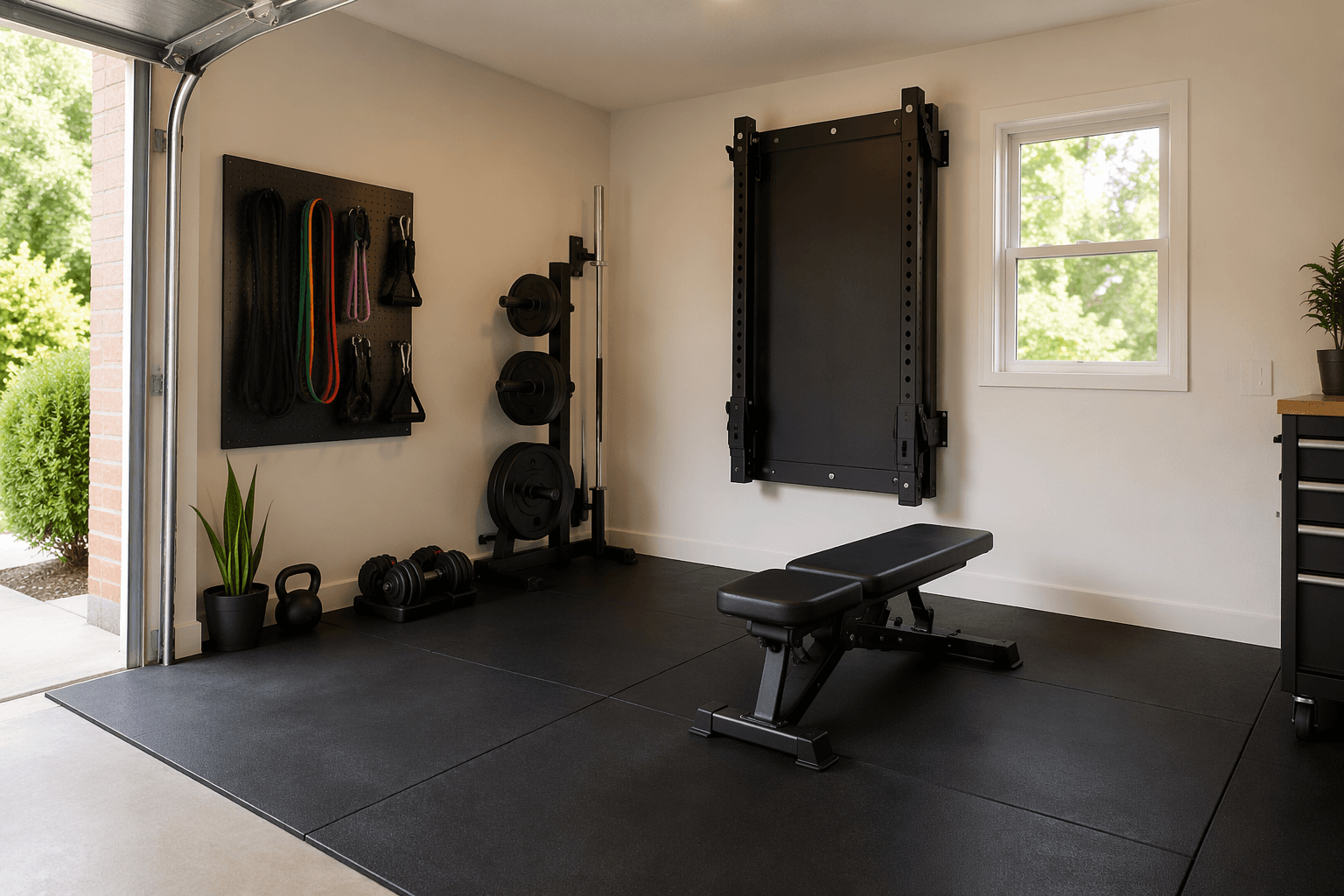
Floor space is your most limited resource. Store weight plates on vertical racks or wall-mounted pegs rather than on the floor. Resistance bands, collars, and smaller accessories can hang on pegboards or hooks. Every square foot you reclaim from storage goes toward usable training area.
Wall Placement vs. Center-of-Room Positioning
Placing the Smith machine against a wall can save significant floor space, but it limits access to one side. If you choose wall placement, ensure the open side has at least 3 ft of clearance for plate loading and exercise movement. Center-of-room placement requires more total floor space but allows access from all sides, which is preferable for exercises like split squats or lunges.
Consider a Folding or Compact Rack Alternative
If your space is truly tight — under 50 sq ft of usable area — a folding power rack or a compact squat rack with a Smith attachment may be a better fit. These options can be folded against the wall when not in use, freeing the room for other activities. The Major Fitness F35, for example, is a folding power rack that collapses to a fraction of its in-use footprint.
Multi-Use All-in-One Machines Consolidate Functions
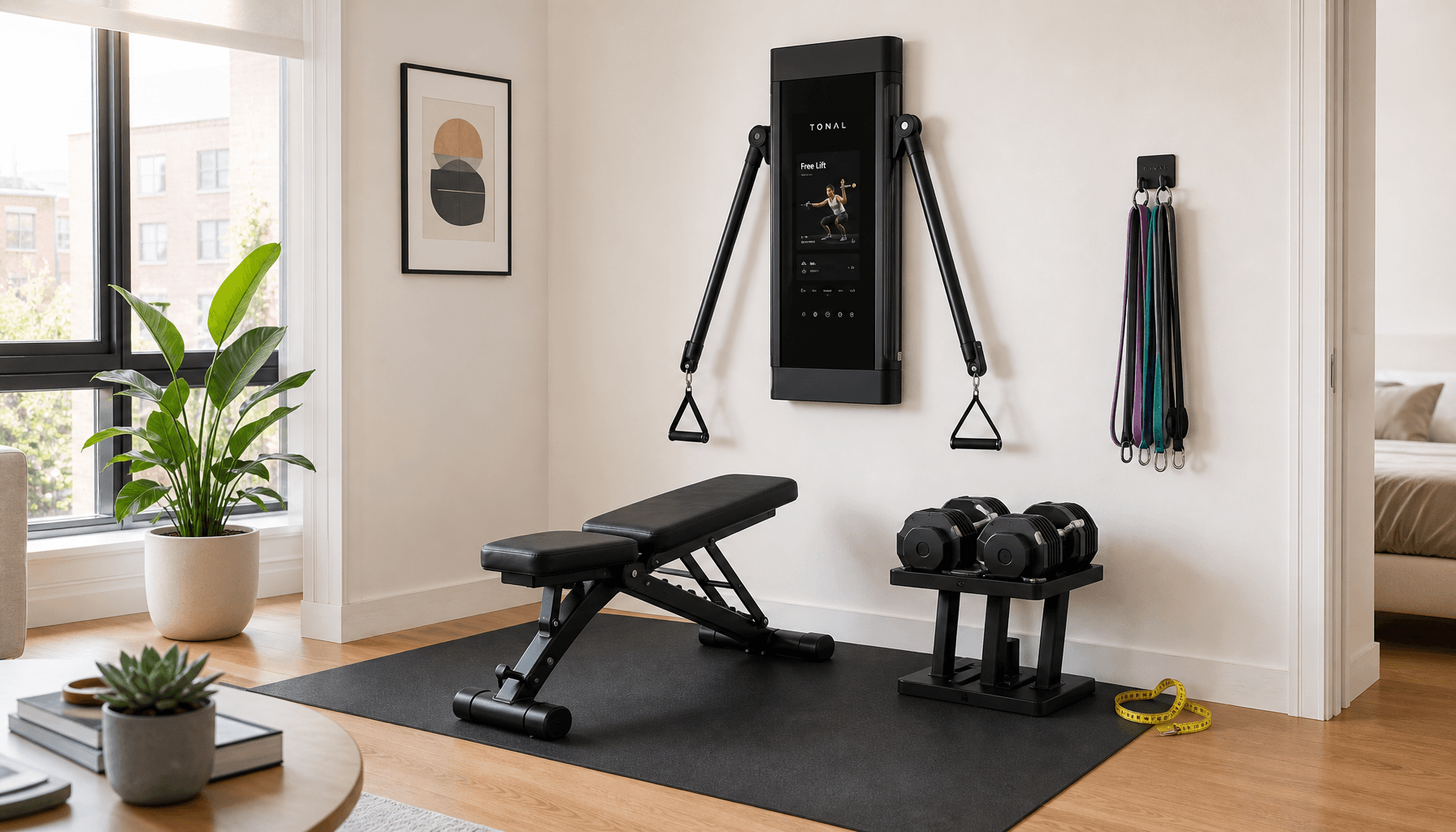
An all-in-one Smith machine that includes a cable crossover, pull-up bar, and weight storage in a single unit can replace multiple pieces of equipment. This consolidation reduces the total floor area needed for a complete home gym. For a detailed breakdown of all-in-one formats and trade-offs, see our All-in-One Exercise Machines: The Complete Buyer's Guide for 2026.
Comments
Join the discussion with an anonymous comment.