
Why Goal-Matching Matters More Than Ratings or Popularity
The fitness app market is saturated. A quick search returns dozens of options, each with thousands of five-star reviews and polished marketing. The natural instinct is to pick the highest-rated app or the one with the most recognizable brand name. That instinct is the most common — and most expensive — mistake people make.
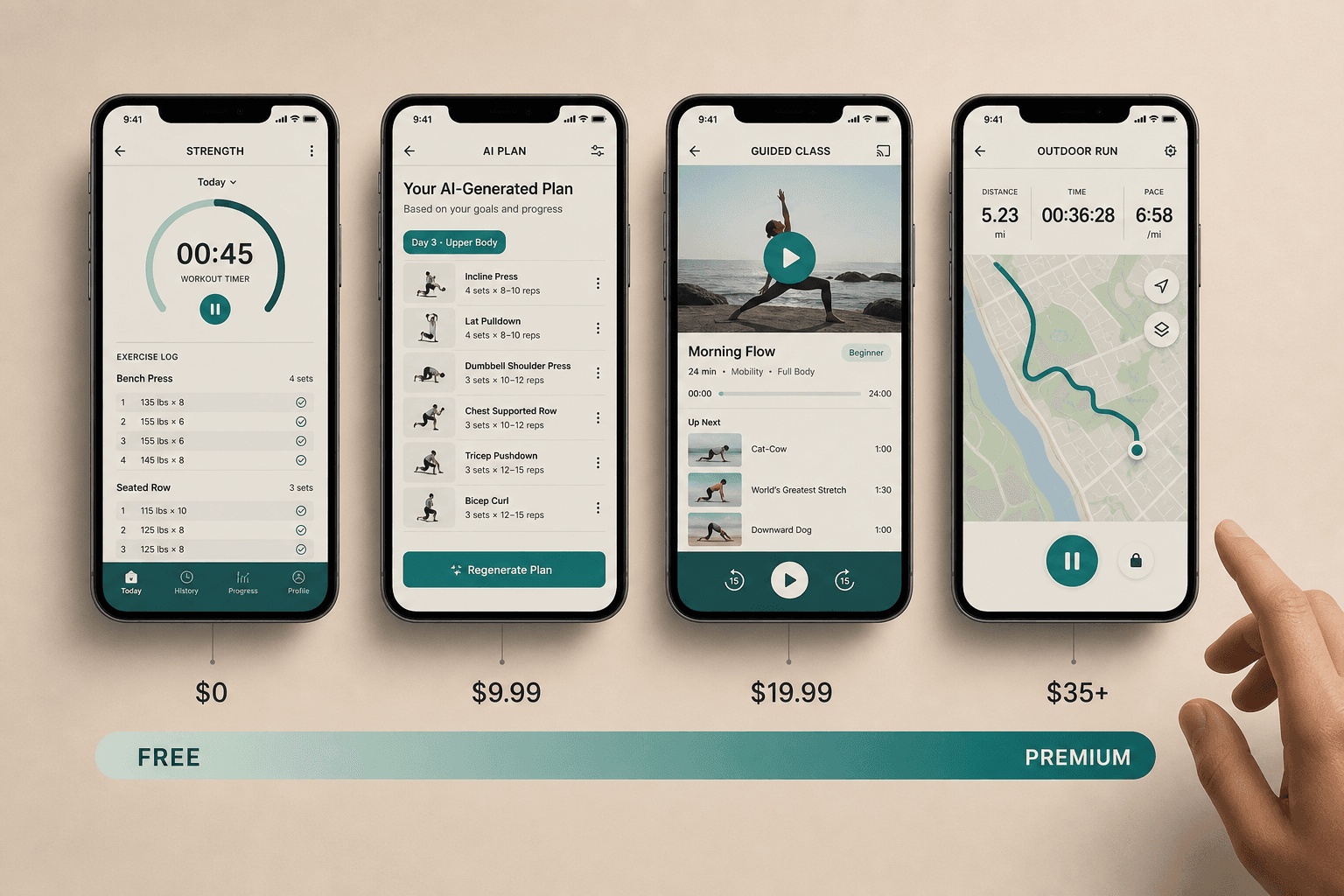
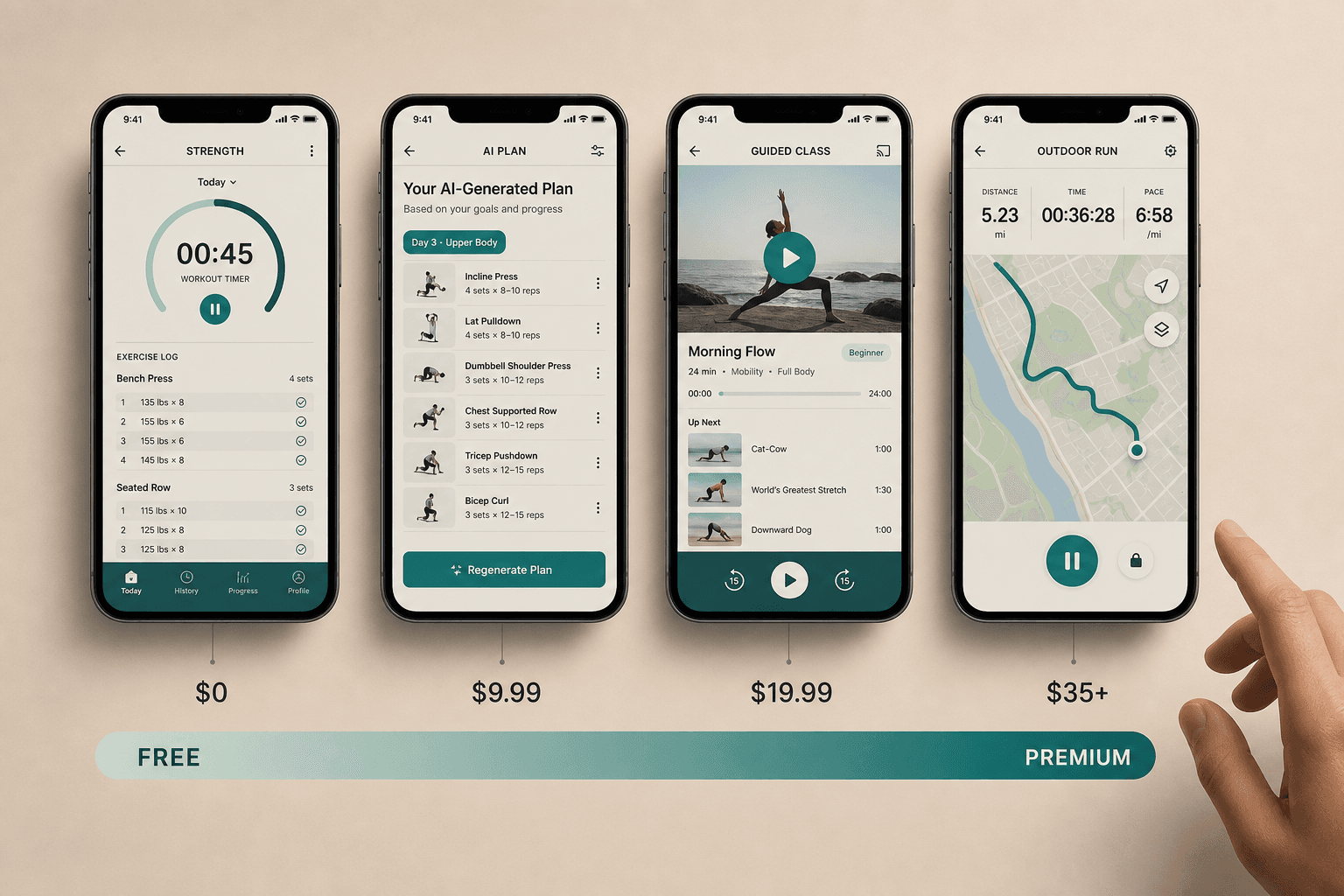
A strength tracking app like Hevy and a guided class app like Peloton serve fundamentally different purposes. An AI programming app like Fitbod adapts your workouts based on recovery data; a social tracking app like Strava motivates through leaderboard competition. Using the wrong category for your goal leads to poor adherence, wasted subscription money, and stalled progress. The average workout app costs $34 per month according to Garage Gym Reviews' testing of over 70 platforms. Subscribing to the wrong one for three months wastes over $100 before you realize it is not working for you.
Strength & Muscle Building: Tracking, Programming, and AI Coaches
If your primary goal is building muscle or increasing strength, you need an app that supports progressive overload — the systematic increase of weight, volume, or intensity over time. Guided class apps like Peloton and Apple Fitness+ are poorly suited for this because they follow a fixed class structure that does not adapt to your personal progression. You need one of three app types: a pure tracking app, a program library, or an AI programming coach.
Pure Tracking Apps: Hevy and Strong
Pure tracking apps are best for lifters who already know their program. They provide a workout log, exercise library, and progress charts — but they do not design workouts for you. Hevy is the strongest free option in this category. Its free version includes exercise charts, personal record tracking, and a social feed for community accountability. Strong Workout Tracker Gym Log offers a free basic tier and a premium version at $4.99 per month or $29.99 per year. Both apps are available on iOS and Android.
Program Libraries: Boostcamp
Program libraries are ideal for lifters who want a structured routine but do not want to design one themselves. Boostcamp offers over 1,000 workout plans from verified coaches and competitive powerlifters. It is free to use with a $14.99 per month Pro tier that unlocks additional programs and advanced analytics. Garage Gym Reviews named it the best strength app in their free workout apps roundup, noting its library of evidence-based programs like nSuns and GZCL.
AI Programming Coaches: Fitbod and JuggernautAI
AI programming apps represent the fastest-growing category in fitness technology in 2026. These apps adapt weight, volume, and exercise selection based on your logged performance, recovery status, and available equipment. Fitbod costs $15.99 per month and was named best AI workout app by Garage Gym Reviews. It learns your strength curve and adjusts future workouts to target weak points. JuggernautAI is a premium option at $35 per month, designed specifically for powerlifting and strength sport athletes. It uses periodization principles and auto-regulates training intensity based on your daily readiness.
| App | Category | Pricing | Best For |
|---|---|---|---|
| Hevy | Pure Tracking | Free | Lifters who know their program and want a clean log |
| Strong | Pure Tracking | Free / $4.99/mo | Gym-goers who want a simple, fast logging experience |
| Boostcamp | Program Library | Free / $14.99/mo Pro | Lifters who want structured, coach-designed programs |
| Fitbod | AI Programming | $15.99/mo | Lifters who want adaptive workouts that learn their strength curve |
| JuggernautAI | AI Programming | $35/mo | Powerlifters and strength athletes needing periodized programming |
For a deeper comparison of strength training apps, see our four-axis decision framework for strength training apps, which evaluates apps across programming quality, tracking depth, community features, and pricing.
Weight Loss & General Fitness: Guided Classes That Remove the Planning Burden
For weight loss and general fitness, the most important variable is consistency — not the sophistication of the programming. Guided class apps excel here because they remove the planning burden entirely. You open the app, pick a class, and follow along. There is no decision fatigue about what exercise to do, how many sets, or how to structure a session.
Nike Training Club (NTC) is the strongest free option in this category. It is completely free with over 300 workouts spanning strength, HIIT, yoga, and mobility. Multiple sources — including PCMag, CNET, Forbes, and Good Housekeeping — have named it the best free workout app. Forbes noted that NTC offers 300+ workouts at no cost, making it the top pick for budget-conscious users. It is available on both iOS and Android.
Peloton App One costs $12.99 per month or $129 per year and provides access to thousands of live and on-demand classes across cycling, running, strength, yoga, and meditation. Good Housekeeping named it the best overall workout app in their 2026 testing. The app-only tier does not require Peloton equipment, though some classes are optimized for the bike and tread.
FitOn offers a free tier with access to workout classes and a Pro tier at $19.99 per month (or $129.99 per year). Garage Gym Reviews named it the best free app for beginners, noting its variety of class types and celebrity trainers. FitOn also includes live classes, which can help with accountability.
| App | Pricing | Workout Count | Best For |
|---|---|---|---|
| Nike Training Club | Free | 300+ | Budget-conscious users who want variety without spending anything |
| Peloton App One | $12.99/mo or $129/yr | Thousands (live + on-demand) | Users who want live class energy and a large class library |
| FitOn | Free / $19.99/mo Pro | Hundreds | Beginners who want free access with the option to upgrade for live classes |
If you are combining app-based workouts with home cardio equipment, see our complete guide to cardio at home for equipment recommendations and workout structure guidance.
Running & Cycling: Social Tracking and Route-Based Motivation
Running and cycling apps serve a different psychological need than strength or class apps. The primary motivator for outdoor cardio is often social competition and route discovery, not guided instruction. Strava dominates this category because its social layer — segments, leaderboards, challenges, and friend activity feeds — creates motivation that standalone tracking apps cannot replicate. PCMag, CNET, and Good Housekeeping all named Strava the best app for runners and cyclists.
Strava offers a free tier with GPS tracking, segment discovery, and basic social features. The paid version costs $11.99 per month or $79.99 per year (with a student discount of $40 per year). The paid tier adds route planning, advanced performance analytics, and beacon safety features.
Map My Fitness by Under Armour is a strong free alternative. It costs $5.99 per month for the Premium tier and was named the best free app for runners by Garage Gym Reviews. It offers GPS tracking, audio coaching, and route discovery. Its free tier is more generous than Strava's, making it a better option for runners who do not want to pay for social features.
For indoor cycling, Zwift is the dominant platform at $19.99 per month. It gamifies indoor training with virtual worlds, group rides, and structured workouts. Garage Gym Reviews named it the best app for cycling. Zwift requires a smart trainer or power meter for full functionality, so it is best suited for cyclists who already own indoor training equipment.
| App | Pricing | Platform | Best For |
|---|---|---|---|
| Strava | Free / $11.99/mo ($79.99/yr) | iOS, Android | Runners and cyclists who want social competition and route discovery |
| Map My Fitness | Free / $5.99/mo Premium | iOS, Android | Runners who want a generous free tier with audio coaching |
| Zwift | $19.99/mo | iOS, Android, Windows, Mac | Indoor cyclists with a smart trainer who want gamified training |
Yoga & Flexibility: Structured Progression for Mobility
Yoga and flexibility apps require a fundamentally different instructional approach than strength or cardio apps. They need clear video demonstrations, pose modifications, and structured progression from beginner to advanced levels. Generic workout apps rarely serve this need well.
Down Dog is the strongest dedicated yoga app, particularly for beginners. It offers an Absolute Beginner level with structured progression, and you can customize session length, difficulty, and focus area (e.g., hip opening, back bending, relaxation). It costs $9.99 per month. Daily Burn named it the best app for beginner yoga, noting its accessible entry point for complete newcomers.
Alo Wellness Club became completely free in December 2025, making it a standout option for yoga practitioners on a budget. CNET and Good Housekeeping both named it the best wellness app. It offers yoga, meditation, and mindfulness content from professional instructors. The free tier includes a substantial library of classes, though some premium content may require a subscription.
For users whose primary focus is flexibility and mobility rather than yoga, StretchIt offers dedicated stretching programs at $24.99 per month or $179.99 per year. PCMag named it the best app for stretching, noting its structured progression from beginner to advanced flexibility levels.
| App | Pricing | Best For |
|---|---|---|
| Down Dog | $9.99/mo | Beginners who want structured yoga progression with customization |
| Alo Wellness Club | Free | Budget-conscious yoga practitioners who want a large free library |
| StretchIt | $24.99/mo or $179.99/yr | Users focused specifically on flexibility and mobility rather than yoga |
AI-Powered Programming: The Fastest-Growing Category in 2026
AI programming apps represent a new category that bridges the gap between random workouts and personalized coaching. Unlike static program libraries or guided classes, these apps adapt to your performance, recovery, and equipment availability in real time. They are the fastest-growing segment of the fitness app market in 2026.
Fitbod ($15.99/mo) uses AI to learn your strength curve and adjust future workouts to target weak points. It considers factors like muscle recovery, exercise history, and available equipment. Garage Gym Reviews named it the best AI workout app.
TR[Ai]NER by Element 26 is a newer entrant (2025) that costs as low as $8.33 per month on an annual plan. It was named the best app for workout plans by Garage Gym Reviews. TR[Ai]NER generates daily workouts based on your training history, recovery data, and goal. It was iOS-only at the time of research, so Android users should verify compatibility before subscribing.
Caliber Strength Training offers a free version with 500+ exercises, ad-free workout logging, and progress tracking. Its Pro tier costs $19 per month and adds group coaching. Garage Gym Reviews named Caliber the best overall free workout app in their beginner roundup, noting that its free version is unusually generous compared to competitors.
| App | Pricing | Platform | Best For |
|---|---|---|---|
| Fitbod | $15.99/mo | iOS, Android | Lifters who want adaptive workouts that learn their strength curve |
| TR[Ai]NER | From $8.33/mo (annual) | iOS (check Android) | Users who want daily AI-generated workouts at a lower price point |
| Caliber | Free / $19/mo Pro | iOS, Android | Budget-conscious lifters who want a generous free tier with coaching options |
Quick-Reference Comparison Table: All Picks by Goal
The table below summarizes every recommended app in this guide, organized by primary training goal. Use it to compare options across categories without re-reading the full article.
| Goal | App | Pricing | Platform | One-Line Best For |
|---|---|---|---|---|
| Strength | Hevy | Free | iOS, Android | Lifters who know their program and want a clean log |
| Strength | Boostcamp | Free / $14.99/mo Pro | iOS, Android | Lifters who want structured, coach-designed programs |
| Strength | Fitbod | $15.99/mo | iOS, Android | Lifters who want adaptive AI programming |
| Strength | JuggernautAI | $35/mo | iOS, Android | Powerlifters needing periodized programming |
| Weight Loss / General | Nike Training Club | Free | iOS, Android | Budget-conscious users who want 300+ free workouts |
| Weight Loss / General | Peloton App One | $12.99/mo | iOS, Android | Users who want live class energy and variety |
| Weight Loss / General | FitOn | Free / $19.99/mo Pro | iOS, Android | Beginners who want free access with live class option |
| Running / Cycling | Strava | Free / $11.99/mo | iOS, Android | Runners and cyclists who want social competition |
| Running / Cycling | Map My Fitness | Free / $5.99/mo Premium | iOS, Android | Runners who want a generous free tier with audio coaching |
| Running / Cycling | Zwift | $19.99/mo | Multiple | Indoor cyclists with a smart trainer |
| Yoga / Flexibility | Down Dog | $9.99/mo | iOS, Android | Beginners who want structured yoga progression |
| Yoga / Flexibility | Alo Wellness Club | Free | iOS, Android | Budget-conscious yoga practitioners |
| Yoga / Flexibility | StretchIt | $24.99/mo | iOS, Android | Users focused on flexibility and mobility |
| AI Programming | Fitbod | $15.99/mo | iOS, Android | Lifters who want adaptive workouts |
| AI Programming | TR[Ai]NER | From $8.33/mo (annual) | iOS | Users who want daily AI-generated workouts |
| AI Programming | Caliber | Free / $19/mo Pro | iOS, Android | Budget-conscious lifters who want a generous free tier |
How to Choose Your Next Step
The single most important takeaway from this guide is simple: pick the app category that matches your goal first, then evaluate within that category. Do not start with a general "best fitness apps" search and try to make a running app work for strength training, or a yoga app work for weight loss.
If you are still unsure which category fits your situation, start with our decision framework for complete beginners, which walks through the questions you need to answer before downloading anything. For a more concise version, see our four tests for absolute beginners.
For strength-focused readers, our strength training app decision framework provides a deeper evaluation of programming quality, tracking depth, and community features. For those combining app use with home workouts, our at-home cardio guide offers equipment and workout structure recommendations.
Comments
Join the discussion with an anonymous comment.