
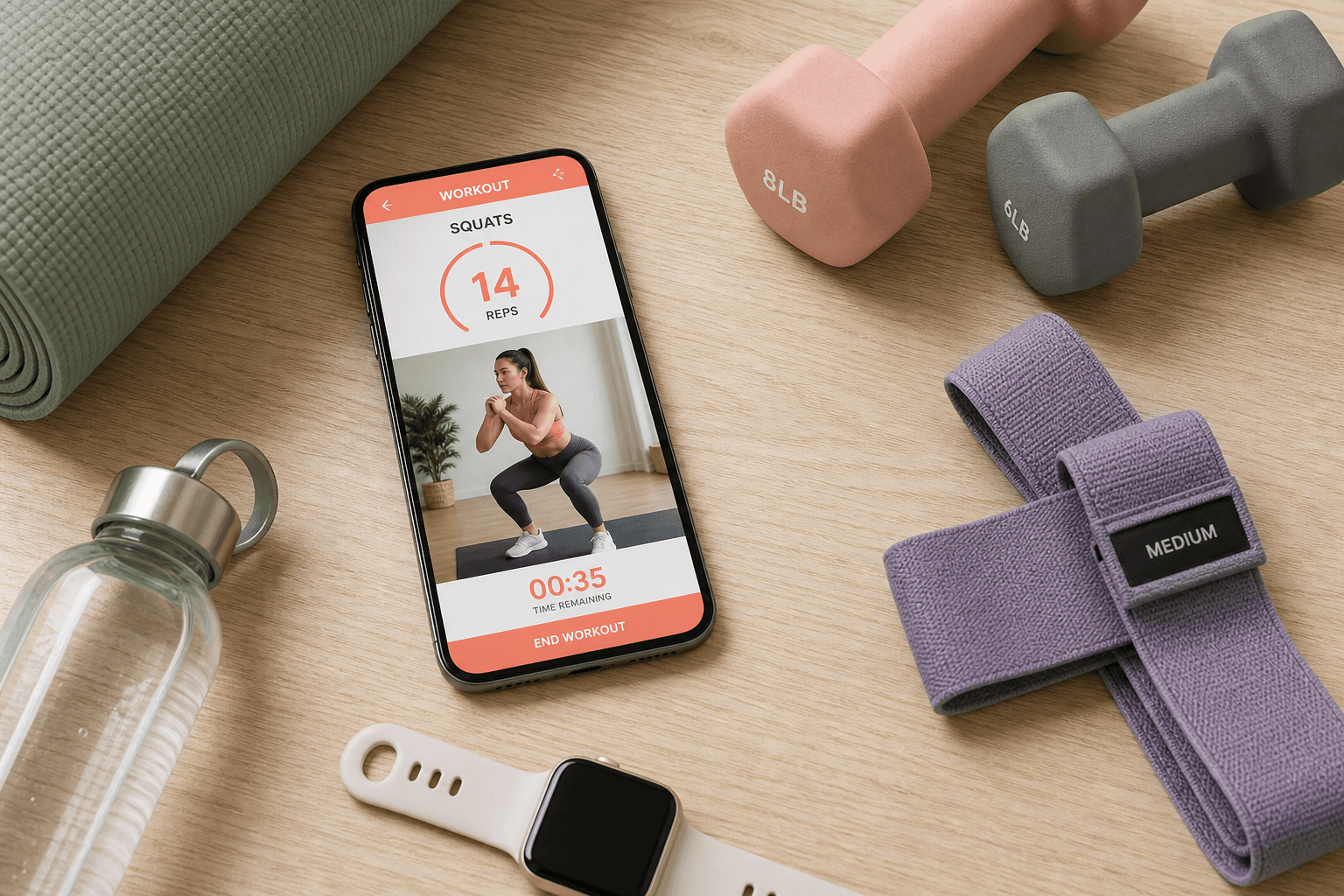
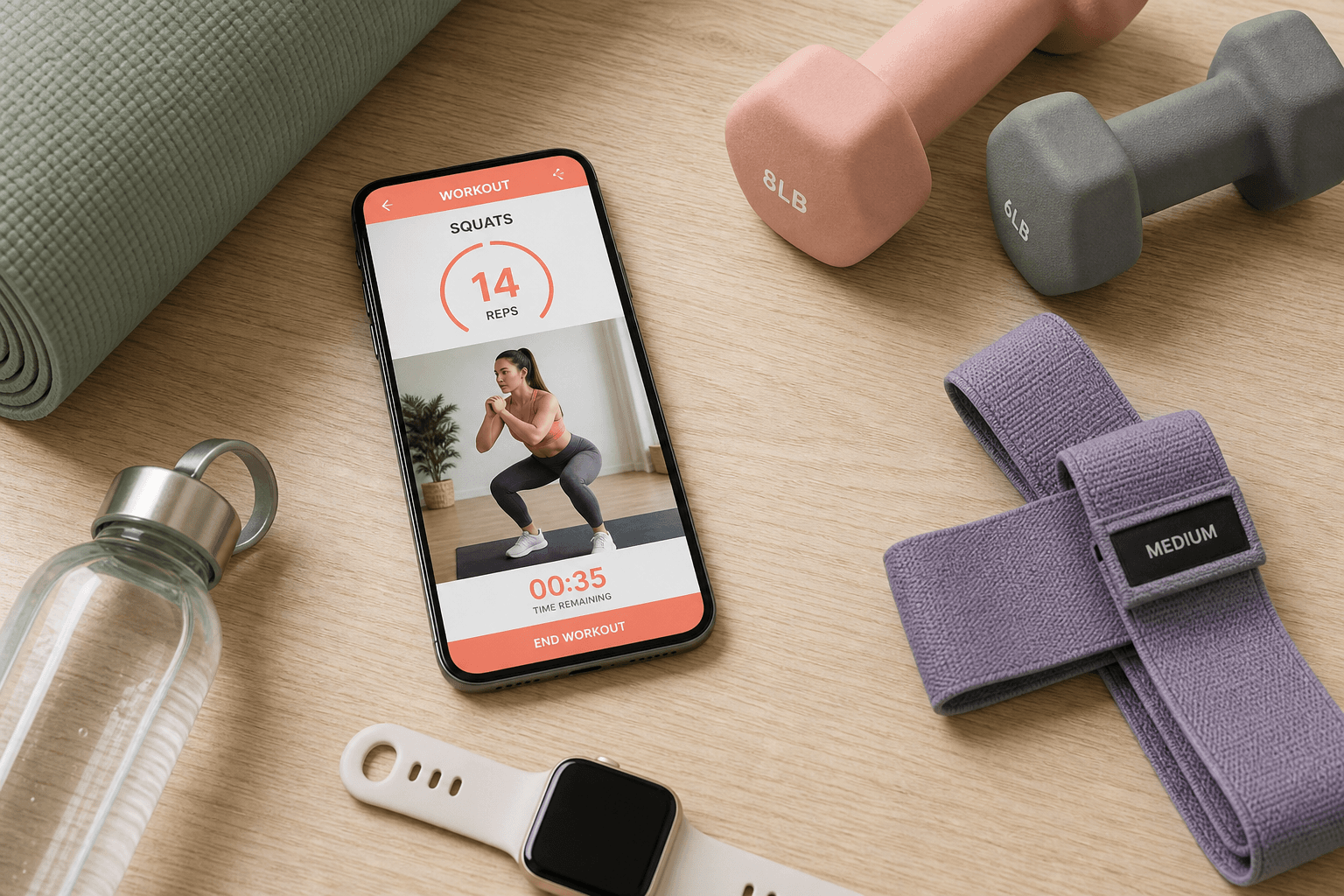
The global market for workout apps designed for women is projected to hit $5.64 billion in 2026, growing at a compound annual rate of 17%, according to Coherent Market Insights. Subscriptions alone account for 62.2% of that revenue. Those numbers tell a clear story: millions of women are paying $10 to $30 every month for fitness apps. But a growing number of high-quality free options — including Nike Training Club and the recently-freed Alo Wellness Club — are making the paid pitch harder to justify.
This guide is built around a single question: when does a subscription actually deliver something you can't get for free? We've tested the major players, pulled pricing and feature data from hands-on reviews by CNET, Garage Gym Reviews, and Good Housekeeping, and organized the decision around the training needs that matter most to women — strength progression, life-stage programming, cycle awareness, and accountability.
The Free-Tier Landscape: What You Actually Get Without Paying
The free app space has shifted dramatically in the last year. The most significant change: Alo Wellness Club recently became completely free, dropping its $20/month price tag and opening a library of over 3,000 yoga, barre, Pilates, and HIIT classes to everyone. That single move reshuffled the entire free-vs-paid calculus for women who prefer mind-body training over heavy strength work.
Here is what the three strongest free options currently offer:
- Nike Training Club (NTC): Completely free with no subscription tier. Certified trainers lead workouts across more than 10 categories — bodyweight, dumbbell, yoga, HIIT, mobility, and recovery. Garage Gym Reviews gave NTC a 4.2 out of 5 score and named it the Best Free Workout App for Women. The app integrates with Apple Music for playlist syncing. What it lacks: individualized programming. Every user gets the same workout library; there is no algorithm adjusting volume or load based on your progress.
- Alo Wellness Club: Now free for everyone. Good Housekeeping named it Best Wellness App after testing over 40 apps. The library includes 3,000+ classes spanning yoga (multiple styles), barre, Pilates, and HIIT. Production quality is high — the instructors are experienced, and the video direction is polished. The catch: it is almost entirely class-based. There is no structured program, no progressive overload, and no way to track strength increases over time.
- FitOn: Operates on a freemium model. The free tier gives you access to a solid library of bodyweight and light-equipment workouts led by celebrity trainers. The premium upgrade costs $9.99/month and unlocks personalized meal plans, more advanced workout filters, and the ability to work out with friends. At that price, it is the cheapest paid entry point among the major apps — but the free version is genuinely usable for general fitness maintenance.
For a deeper breakdown of what each free tier includes — workout counts, class types, and instructor credentials — see our feature-by-feature comparison of the best free workout apps in 2026. The rest of this article assumes you know what the free apps offer and moves directly to the harder question: when is paying actually worth it?
What Paid Apps Actually Deliver That Free Ones Don't
Free apps excel at one thing: giving you a large library of individual workouts. They struggle with everything that happens between workouts — progression planning, load management, recovery adjustment, and long-term program design. Paid apps justify their cost by solving those gaps. Here are the specific value drivers that matter for women.
Progressive Overload Programming
This is the single strongest argument for paying. Progressive overload — systematically increasing weight, volume, or intensity over time — is the mechanism that drives strength gains and body composition changes. Free apps almost never deliver it because it requires tracking your last session and calculating the next one.
Two apps stand out here. Stronger By The Day ($15/month, $40/quarter, or $100/year) is built by powerlifting coach Meg Gallagher and uses science-based periodization. CNET's fitness writer Giselle Castro-Sloboda reported lifting more weight than before pregnancy after just over a month on the program. Caliber offers a free-forever version with a 500+ exercise library, but the $19/month Pro tier unlocks personalized program design that adjusts based on your logged progress. Garage Gym Reviews gave Caliber a 5/5 rating for value.
Personalized Coaching and Accountability
For women who struggle with consistency or form confidence, a human coach — even a remote one — changes the equation. Future costs $199/month and pairs you with a personal trainer who designs your weekly plan, checks in via the app, and adjusts based on your feedback. Good Housekeeping named it Best for Personal Training. Caliber Premium ($200+/month) offers a similar 1:1 coaching model. These are not for everyone, but for women who have tried and failed to stick with self-directed programs, the accountability layer can be the difference between three months of progress and three months of starting over.
Life-Stage-Specific Training
Pregnancy, postpartum recovery, and menopause introduce physiological changes that general workout libraries do not address. Bloom Method ($29.99/month, 7-day free trial) focuses entirely on diaphragmatic breathing, core activation, and pelvic floor exercises for prenatal and postnatal women. Garage Gym Reviews named it the Best Workout App for Prenatal/Postnatal Women. Sweat ($25/month or $135/year) offers over 50 workout programs and 13,000 workouts created specifically for women by women, with all-female instructors — including dedicated prenatal and postnatal tracks. Good Housekeeping named it Best for Women.
Cycle-Synced Training and Nutrition Integration
A smaller but growing category of apps adjusts workout recommendations based on menstrual cycle phase. WeGLOW is the most prominent example, though its claims ("98% see results in 8 weeks") come from manufacturer testimonials, not independent testing. EvolveYou ($22.99/month or $119/year) takes a broader approach, combining fully customizable routines with nutrition planning. CNET's managing editor Nasha Addarich Martínez, a fitness enthusiast of 16 years, named EvolveYou the best overall workout app for women.
For a full breakdown of which apps serve which life stage — prenatal, postpartum, 40+, and beyond — see our guide to workout apps for women by life stage.
Price-Benefit Matrix: 8 Apps Compared at a Glance
The table below organizes the eight most relevant apps across the dimensions that determine whether a subscription makes sense for you. Use it as a quick-reference tool before reading the detailed decision rules.
| App | Price | Free Trial | Equipment Needed | Free Version Usable? | Women-Specific Value Driver |
|---|---|---|---|---|---|
| Nike Training Club | Free | N/A | None to dumbbells | Yes — full library | Best free option; certified trainers, 10+ categories |
| Alo Wellness Club | Free (was $20/mo) | N/A | None (yoga mat helpful) | Yes — full library | 3,000+ yoga, barre, Pilates, HIIT classes |
| FitOn | Free / $9.99/mo premium | N/A (free tier exists) | None to light dumbbells | Yes — core workouts free | Cheapest paid entry; celebrity trainers |
| Caliber | Free / $19/mo Pro / $200+/mo Premium | 7-day free trial (Pro) | Dumbbells, barbell optional | Yes — free version has 500+ exercises | Progressive overload programming; 5/5 value rating (GGR) |
| Stronger By The Day | $15/mo, $40/quarter, $100/yr | 7-day free trial | Dumbbells, barbell, rack optional | No — paid only | Science-based periodization; powerlifting coach Meg Gallagher |
| Bloom Method | $29.99/mo | 7-day free trial | None to light resistance | No — paid only | Prenatal/postnatal; pelvic floor and core focus |
| EvolveYou | $22.99/mo or $119/yr | 7-day free trial | Dumbbells, resistance bands | No — paid only | Customizable routines + nutrition planning; CNET's best overall |
| Future | $199/mo | Free trial (length varies) | Varies by coach plan | No — paid only | 1:1 personal coaching; Good Housekeeping's Best for Personal Training |
Decision Rules: Pay If You Need This, Stay Free If You Don't
The matrix above gives you the data. These rules give you the framework to apply it to your situation.
Stay Free If…
- You want class variety and don't need structured progression. NTC and Alo Wellness Club together give you thousands of workouts across yoga, HIIT, strength, and mobility. If your goal is to move daily and enjoy variety, you do not need to pay.
- You primarily do bodyweight or light-dumbbell work. Free apps cover this well. NTC's bodyweight library is extensive, and Alo's HIIT and Pilates classes require minimal to no equipment.
- You are maintaining general fitness, not chasing specific strength or physique goals. Maintenance does not require progressive overload. Free apps give you enough stimulus to preserve your current fitness level.
- You are unsure what you need and want to explore before committing. Download NTC and Alo Wellness Club. Use them for 4–6 weeks. If you find yourself wanting more structure, then evaluate paid options.
Pay If…
- You want to build strength with a real progression plan. Stronger By The Day ($15/month) or Caliber Pro ($19/month) are the most cost-effective options. Both deliver periodized programming that free apps cannot match.
- You are pregnant, postpartum, or navigating menopause. Bloom Method ($29.99/month) and Sweat ($25/month) offer programming designed for these life stages. Free apps do not address pelvic floor recovery, diastasis recti precautions, or hormonal training adjustments.
- You need accountability to stay consistent. If you have tried self-directed training and quit after 3–4 weeks, the $199/month for Future may be cheaper than another year of unused free apps. The coach relationship changes the behavior.
- You want nutrition and training in one platform. EvolveYou ($22.99/month) combines customizable workout routines with meal planning. No free app offers this integration at a useful depth.
- You are interested in cycle-synced training. WeGLOW is the primary option here, but approach its claims with healthy skepticism. Use the free trial to evaluate whether the cycle adjustments actually feel different from a well-designed general program.
For a deeper look at what makes a workout app genuinely useful for beginners — including the difference between teaching and cheerleading — read our analysis of what beginners actually need from a workout app.
Frequently Asked Questions
Are free workout apps really free, or are there hidden paywalls?
Nike Training Club and Alo Wellness Club are genuinely free with no subscription required. You can access the full library without entering payment information. FitOn is the exception: its free tier is usable, but the best features (personalized meal plans, advanced filters, friend workouts) sit behind the $9.99/month premium upgrade. Always check the app store listing before downloading — some apps advertise as "free" but require a subscription after a 7-day trial.
What equipment do I need for each app?
NTC and Alo Wellness Club work with no equipment or minimal gear (a yoga mat, light dumbbells). FitOn's free tier is similar. Stronger By The Day and Caliber assume you have access to dumbbells and ideally a barbell and rack, though both offer bodyweight alternatives. Bloom Method requires almost no equipment — its focus is breathing and core activation. EvolveYou and Sweat work best with dumbbells and resistance bands. Future's equipment needs depend on the coach you are paired with.
How do I cancel a subscription without getting charged?
Every app in this guide uses auto-renewal. The safest approach: immediately after signing up for a free trial, go into your phone's subscription settings (Settings > Your Name > Subscriptions on iPhone; Google Play > Subscriptions on Android) and cancel. You will still have access for the full trial period. Set a calendar reminder to re-evaluate before the trial ends. Do not rely on canceling through the app itself — some apps make the cancellation flow intentionally hard to find.
Can I use a free app and a paid app together?
Yes, and this is a smart strategy for many women. Use NTC or Alo for active recovery days, mobility work, and variety. Use a paid app like Stronger By The Day or Caliber for your main strength sessions. The free app covers the "move every day" goal; the paid app covers the "get stronger over time" goal. Just be careful not to over-train by combining high-intensity sessions from both.
What if I already have a fitness tracker — does that change the recommendation?
It can. If you own an Apple Watch, NTC integrates directly with Apple Health and Apple Music, making it a seamless free option. If you use a Garmin or Fitbit, check whether the paid app you are considering syncs with your device's platform. Caliber and Future both sync with Apple Health, which then feeds data to most major tracker platforms. For a full breakdown of which apps sync with which devices, see our free vs. paid iPhone fitness apps guide.
Comments
Join the discussion with an anonymous comment.