
The Best Fitness Trackers for Women with Small Wrists: A Fit-First Guide to Bands, Rings, and Watches Under 140mm
If you have small wrists (under 140mm circumference), most fitness trackers are too bulky to wear comfortably. This guide cuts through the noise to recommend the compact trackers, bands, and rings that actually fit without sacrificing accuracy.
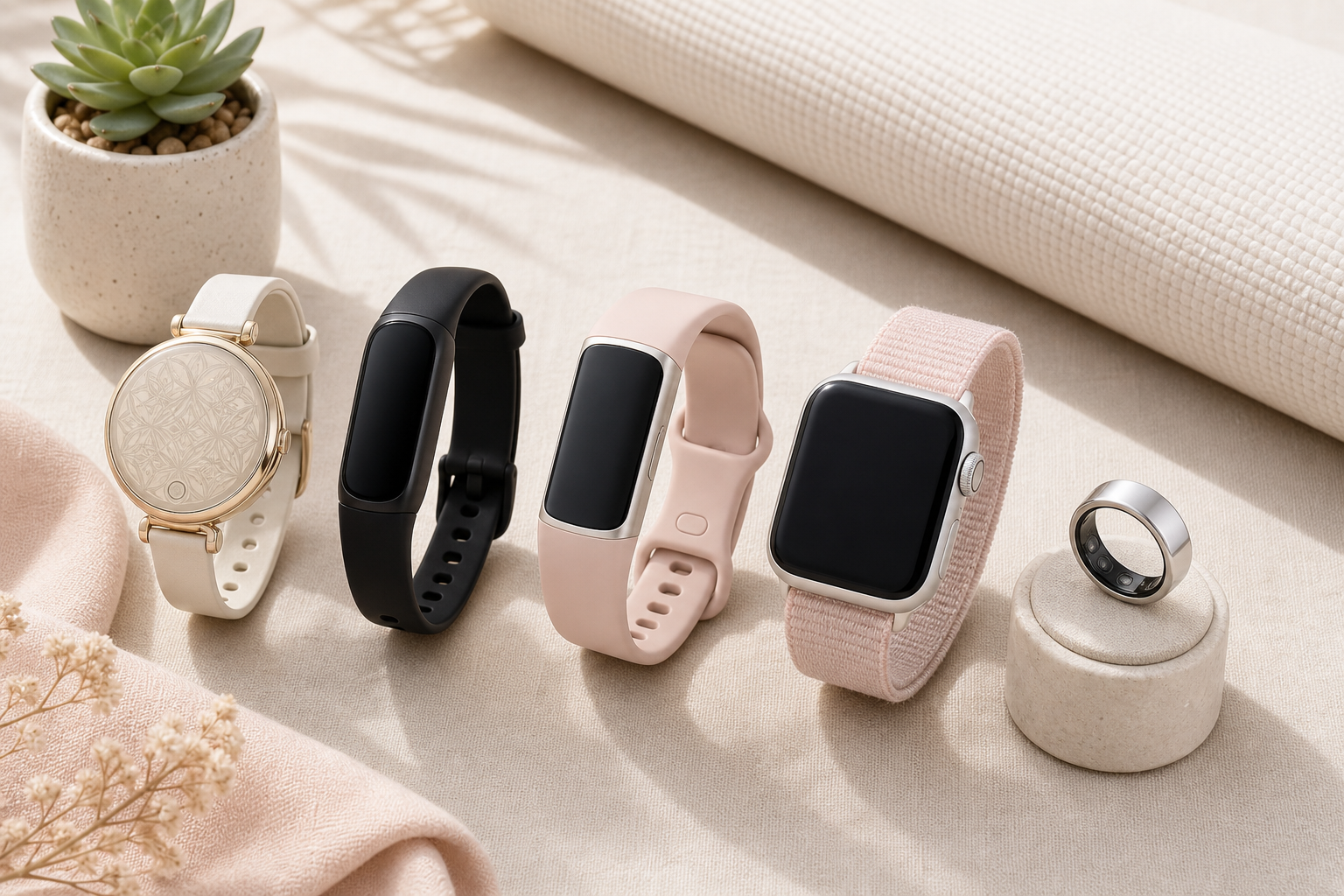
Why Most Fitness Trackers Don't Fit Small Wrists (And Why It Matters)
If you've ever strapped on a new fitness tracker only to find the band dangling past your wrist bone or the case overhanging the edges of your forearm, you're not imagining the problem. The vast majority of wearable devices are engineered around an average male wrist circumference of roughly 165–185mm. For women with wrists under 140mm — a common measurement for petite frames — that design assumption creates what we call the "bulk gap": a zone where the device is physically too large to sit flush against the skin.
This isn't just a comfort issue. A tracker that slides around or sits on the wrist at an angle loses consistent skin contact, which directly degrades the performance of the optical heart rate sensor. The same problem affects step counting: a loose device can register extra steps from incidental arm movement, or miss steps entirely when it shifts position. Sleep tracking, which depends on the device staying in one place through multiple position changes overnight, becomes unreliable when the band has to be cinched uncomfortably tight just to stay put.
The good news is that the market has started to respond. Several manufacturers now produce devices with case widths under 30mm, band widths as narrow as 14mm, and total weights below 30g. These aren't stripped-down "lite" versions that sacrifice core functionality. As we'll see in the recommendations below, compact trackers from Garmin, Fitbit, Apple, and Oura now pack accurate heart rate monitoring, sleep staging, cycle tracking, and stress analysis into packages that actually fit a sub-140mm wrist.
How to Measure Your Wrist and What 'Small' Actually Means for Tracker Fit
Before you start comparing specs, take 30 seconds to measure your wrist circumference. You'll need a flexible measuring tape or a piece of string and a ruler.
- Wrap the tape or string around your wrist just below the wrist bone (the ulnar styloid process), where you'd normally wear a watch or tracker.
- Pull it snug — not tight enough to indent the skin, but firm enough that it doesn't sag.
- Note the measurement where the tape meets its end, or mark the string and measure it against a ruler.
If your measurement is 140mm (about 5.5 inches) or less, you fall into the sub-140mm category that this guide addresses. For context, the average women's wrist circumference in the U.S. is roughly 152–158mm, so sub-140mm wrists are on the smaller end of the bell curve.
Once you have your measurement, three physical dimensions determine whether a tracker will feel comfortable or cumbersome:
- Case width: The horizontal span of the device body. For sub-140mm wrists, look for cases under 30mm. The Fitbit Inspire 3, at 18.5mm, is the narrowest option among color-screen trackers.
- Band width: The width of the strap where it attaches to the case. Narrower bands (14–18mm) conform better to small wrists without creating a "flap" of excess strap. The Garmin Lily 2 uses a 14mm band — the narrowest of any mainstream tracker.
- Device weight: Heavier trackers pull on the band and tend to slide around. Under 30g is ideal; under 10g is virtually unnoticeable. The Fitbit Inspire 3 weighs approximately 9g, while the Oura Ring 4 ranges from 3.3g to 5.2g depending on size.
| Wrist Circumference | Recommended Form Factor | Max Case Width | Max Weight |
|---|---|---|---|
| Under 130mm | Fitness band or ring | 22mm | 15g |
| 130–140mm | Band, ring, or small watch | 30mm | 30g |
| 140–150mm | Any band or ring; small-to-medium watch | 36mm | 40g |
| 150mm+ | All form factors available | 42mm+ | 50g+ |
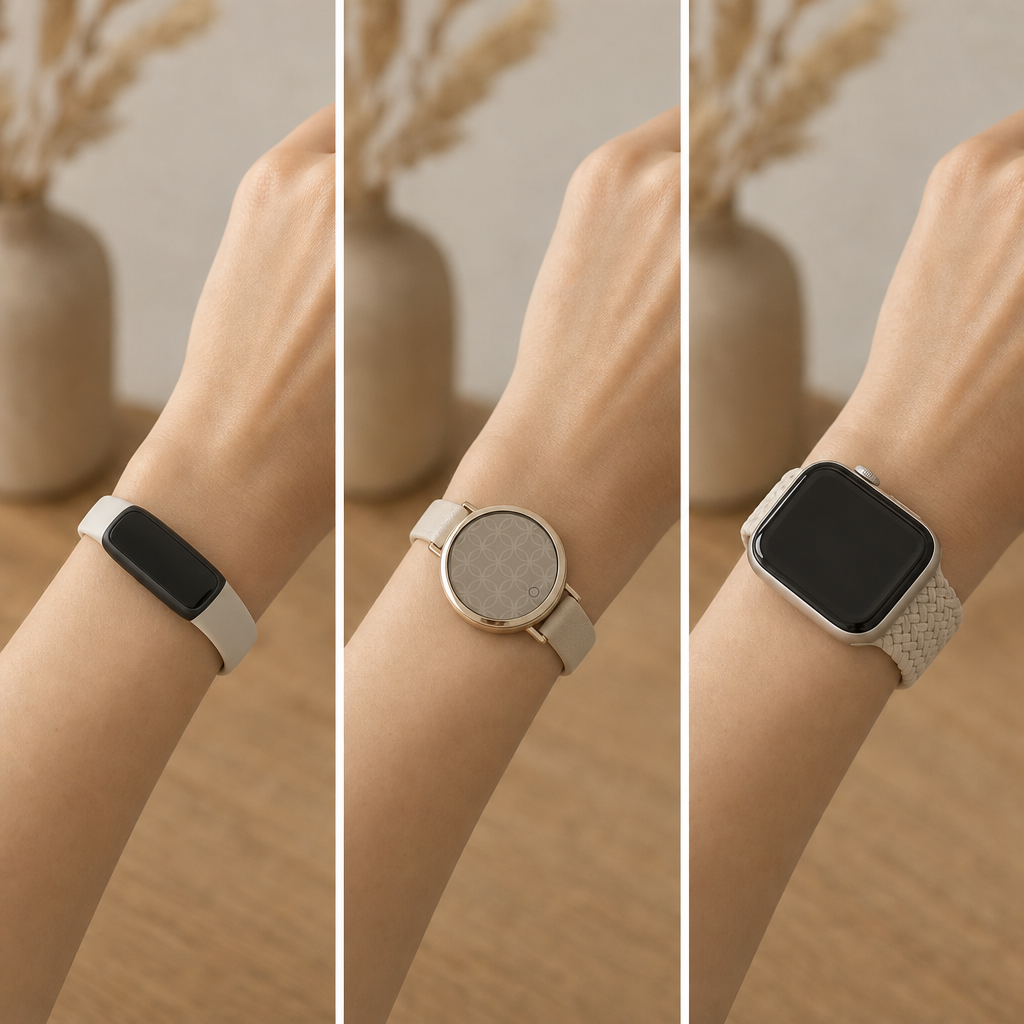
The 5 Best Fitness Trackers for Sub-140mm Wrists: Tested for Fit and Accuracy
The following devices were selected because they meet three criteria: a case or band design that works for sub-140mm wrists, reliable core tracking (heart rate, steps, sleep), and availability as of June 2026. Each entry includes the exact dimensions that matter for fit, along with accuracy data from controlled testing where available.
Garmin Lily 2 — The Slimmest Profile for Style-Conscious Users
The Garmin Lily 2 is the only mainstream tracker with a 14mm band width, making it the clear choice for very small wrists. It weighs approximately 27g and uses a hidden touchscreen display that only lights up when you turn your wrist — the lens itself is patterned and decorative, so the device looks more like a piece of jewelry than a piece of tech. PCMag named it "Best for Women," and Wareable called it "exceptionally comfortable to wear."
The trade-off is significant: the Lily 2 has no built-in GPS, so it relies on your phone's GPS for outdoor run tracking. The display is monochrome grayscale (16 levels), and there is no temperature sensor for enhanced cycle predictions. Battery life is rated at up to 5 days. For active users who want GPS, the Lily 2 Active variant adds onboard GPS and addresses the primary complaint about the original.
Fitbit Inspire 3 — The Lightest and Most Compact Color-Screen Tracker
At just 0.32 ounces (approximately 9g) with an 18.5mm case width, the Fitbit Inspire 3 is the lightest tracker on this list. Wirecutter's testing found it had the most accurate step count of any device they tested, with just 0.32% error over two days of wear. The battery lasted 8.5 days in their testing, close to the advertised 10 days.
The Inspire 3 is a pure fitness band — no GPS, no music controls, no smartwatch features. It tracks heart rate, sleep stages, stress, and SpO2, and it supports Fitbit's cycle tracking. The 0.5-inch wide band is narrow enough to fit small wrists without excess strap, and the device is thin enough to wear comfortably overnight for sleep tracking.
Fitbit Charge 6 — Slim Case with More Features
The Fitbit Charge 6 has a 26.4mm case and weighs approximately 30g — slightly larger than the Inspire 3 but still well within the sub-140mm comfort zone. Women's Health notes its slim frame is "lightweight enough to sleep with." It adds built-in GPS, 40+ exercise modes, and 5 ATM water resistance (swim-proof).
Wirecutter measured a 1.3% step count error and battery life of approximately 5 days in testing (rated for 7). The Charge 6 uses a proprietary band with a clasp that some users find finicky, but the band width is narrow enough for small wrists. It also supports Google Wallet and YouTube Music controls, bridging the gap between a pure fitness band and a smartwatch.
Apple Watch SE 3 (40mm) — The Small Smartwatch Option
For women who want smartwatch functionality — notifications, apps, cellular options — the Apple Watch SE 3 in 40mm is the smallest full-featured smartwatch that still fits sub-140mm wrists. It weighs approximately 30g and has an always-on display. Wirecutter notes it charges to 50% in 30 minutes, which helps offset the 18-hour battery life.
CNET's lab testing (30+ miles of controlled track runs compared against a Polar H10 chest strap) found the Apple Watch Series 11 had the lowest heart rate error at 0.98% (1.40 BPM). While the SE 3 uses the same optical heart rate sensor architecture, it lacks the ECG app and blood oxygen sensor found on the Series 11. For distance tracking, CNET found the Series 11 averaged 0.99 miles per 1-mile test — essentially dead-on. The SE 3's step counting was within 10–18 steps of a manual counter for 1,000 steps.
Oura Ring 4 — Zero Wrist Bulk, Maximum Data
If you want to eliminate wrist bulk entirely, the Oura Ring 4 is the answer. Available in sizes 4 through 15, it weighs between 3.3g and 5.2g depending on size — light enough that multiple reviewers describe forgetting they're wearing it. It collects data through 18 sensor pathways and tracks sleep, heart rate, HRV, stress states (Stressed, Engaged, Recovering, Restored), and cycle tracking with fertile window estimates.
Women's Health reports the Oura Ring's cycle tracking is "accurate down to the day" for regular cycles, though less reliable for irregular cycles. PCMag praised its comfort and women's health features. Battery life tested at 7.25 days. The ring requires a subscription: $5.99 per month or $69.99 per year for full functionality.
| Device | Case Width | Weight | Band Width | GPS | Battery (Tested) | Subscription |
|---|---|---|---|---|---|---|
| Garmin Lily 2 | ~34mm (decorative lens) | ~27g | 14mm | No (phone tether) | ~5 days | None |
| Fitbit Inspire 3 | 18.5mm | ~9g | ~13mm | No (phone tether) | ~8.5 days | Fitbit Premium optional |
| Fitbit Charge 6 | 26.4mm | ~30g | ~18mm | Built-in | ~5 days | Fitbit Premium optional |
| Apple Watch SE 3 (40mm) | 40mm | ~30g | 20mm (sport band) | Built-in | ~18 hours | None |
| Oura Ring 4 | N/A (ring) | 3.3–5.2g | N/A | No (phone tether) | ~7.25 days | $5.99/mo required |
Band Options That Make a Difference: Finding the Right Strap for Small Wrists
The case is only half the fit equation. The band determines whether the device stays in place, how it feels against the skin, and whether you end up with a long tail of excess strap flapping against your forearm.
For sub-140mm wrists, the best band types are:
- Braided solo loops (Apple Watch): These stretch-to-fit bands have no clasp or buckle, so there's no excess strap. They come in sizes down to 1 (130–140mm wrist). This is the most comfortable option for small-wrist Apple Watch users.
- Nylon sport loops (Apple Watch, Garmin): Hook-and-loop closures allow infinite micro-adjustment, so you can get the exact tightness needed for accurate sensor readings without a strap tail.
- Slim silicone bands (Fitbit Inspire 3, Charge 6): Fitbit's proprietary bands are narrow enough for small wrists, but the Charge 6 clasp can be finicky. Third-party options with traditional buckle closures are available.
- 14mm leather or metal bands (Garmin Lily 2): The Lily 2 uses standard 14mm lug width, which means you can swap in any third-party 14mm band. This opens up a wide range of styles from slim Milanese loops to narrow leather straps.
A note on proprietary bands: Fitbit devices use proprietary attachment mechanisms, so you're limited to Fitbit's own bands or third-party bands designed specifically for each model. Apple Watch bands use a standard slide-in mechanism, and the 40mm SE 3 is compatible with all Apple Watch bands designed for 38mm, 40mm, and 41mm cases. Garmin's Lily 2 uses standard 14mm lugs, giving you the most third-party flexibility.
What You Give Up (and What You Don't) with a Smaller Fitness Tracker
There's a persistent assumption that smaller devices mean fewer features. The reality is more nuanced. You do make real trade-offs in certain areas, but the core health-tracking capabilities that most women actually use — heart rate, sleep staging, step counting, cycle tracking, stress monitoring — are fully available on compact devices.
| Feature | Available on Compact Devices? | Notes |
|---|---|---|
| Heart rate monitoring | Yes | All five devices track 24/7 heart rate. CNET lab data shows Apple Watch SE/Series 11 at <1% error vs. chest strap. |
| Sleep staging (light, deep, REM) | Yes | All five devices track sleep stages. Oura Ring 4 is widely considered the most accurate for sleep. |
| Step counting | Yes | Wirecutter found Fitbit Inspire 3 at 0.32% error — the most accurate step counter tested. |
| Cycle tracking | Yes | All five support cycle tracking. Garmin offers the deepest pregnancy tracking (gestational age, prenatal nutrition, kick logging). |
| Built-in GPS | Partial | Fitbit Charge 6 and Apple Watch SE 3 have it. Garmin Lily 2 and Fitbit Inspire 3 require phone tether. |
| ECG | No on compact models | Not available on Inspire 3, Lily 2, or Oura Ring 4. Apple Watch SE 3 lacks ECG (Series 11 has it). |
| Blood oxygen (SpO2) | Partial | Available on Inspire 3, Charge 6, Oura Ring 4. Not on Lily 2 or Apple Watch SE 3. |
| Battery life | Varies | Compact devices with smaller batteries: Inspire 3 (~8.5 days), Lily 2 (~5 days), Apple Watch SE 3 (~18 hours). |
| Display size | Smaller | Smaller screens mean less glanceable data. Lily 2 uses a hidden display; Inspire 3 has a small color screen. |
How Tightness Affects Sensor Accuracy: Getting the Fit Right
Optical heart rate sensors work by shining LEDs through the skin and measuring the light that reflects back. The signal quality depends on consistent, stable contact between the sensor and your skin. Too loose, and ambient light leaks in, creating noise. Too tight, and you compress the capillaries, reducing blood flow and producing artificially low or erratic readings.
The guideline is simple: the band should be snug enough that the device doesn't slide around when you move your arm, but not so tight that it leaves an indentation in your skin after removal. For most people, this means you can fit one finger between the band and your wrist.
This balance is harder to achieve with a ring. Garage Gym Reviews notes that the Oura Ring can become uncomfortably tight during hot workouts when fingers naturally swell. If you plan to wear a ring during exercise, consider sizing up slightly and using a silicone sizing ring to test fit before committing.
For a deeper look at how sensor accuracy varies across devices and body types, see our guide to fitness tracker accuracy for women, which covers heart rate, step count, sleep, and cycle tracking performance across top models.
Quick Comparison: Which Tracker Should You Choose?
| Device | Best For | Wrist Fit | Price Tier | Subscription | Battery | GPS |
|---|---|---|---|---|---|---|
| Garmin Lily 2 | Style-first users who want a jewelry-like tracker | Excellent — 14mm band, ~27g | $200–$250 | None | ~5 days | Phone tether |
| Fitbit Inspire 3 | Budget buyers who want the lightest possible tracker | Excellent — 18.5mm case, ~9g | Under $100 | Premium optional | ~8.5 days | Phone tether |
| Fitbit Charge 6 | Active users who want GPS in a slim package | Good — 26.4mm case, ~30g | $150–$180 | Premium optional | ~5 days | Built-in |
| Apple Watch SE 3 (40mm) | iPhone users who want full smartwatch features | Good — 40mm case, ~30g | $250–$280 | None | ~18 hours | Built-in |
| Oura Ring 4 | Users who want zero wrist bulk and deep sleep/HRV data | Excellent — ring sizes 4–15, 3.3–5.2g | $300–$350 | $5.99/mo required | ~7.25 days | Phone tether |
If you want the absolute best fit for a very small wrist and don't need GPS, the Garmin Lily 2's 14mm band is unmatched. If budget is your primary concern and you want the most accurate step counting available, the Fitbit Inspire 3 delivers at under $100. For iPhone users who want a full smartwatch experience, the Apple Watch SE 3 in 40mm is the smallest smartwatch that still fits. And if you're ready to ditch the wrist strap entirely, the Oura Ring 4 provides deep health data in a form factor you'll forget you're wearing.
For a broader look at how these devices compare when organized by your actual priorities — style, budget, women's health features, or training intensity — see our priority-based buyer's guide for women's fitness trackers.
This result comes from one real apartment under the stated conditions — it is a strong signal, not a guarantee your space will measure identically.
Builds this evidence supports
Cable Machine Alternatives That Save Space and Money
Compare the best cable machine alternatives for home gyms – from resistance bands and pulley systems to suspension trainers and compact digital units – and find the right option for your space and budget.
How to Choose a Compact Home Gym That Works for Your Space, Budget, and Noise Tolerance
This article provides a structured decision framework for apartment dwellers and small-space residents to match their specific floor footprint, noise sensitivity, and budget to the most suitable compact home gym strategy — whether that's an all-in-one machine, modular build, smart digital system, or band/bodyweight setup.
The Garage Gym Reality Check: What Equipment Actually Fits in a Single-Car Garage
Most garage gym guides assume a two-car space. This article uses real dimensions, real equipment footprints, and three layout templates to show what fits—and what doesn't—in a single-car garage (10x20 to 12x20 ft).
Spot something off?
If this result didn't match your own space, let us know — floor-damage and noise claims carry real deposit-risk consequences if we get them wrong.