
Best Fitness Tracker 2026: The Subscription Trap That Triples Your Cost (and How to Avoid It)
Many fitness trackers cost far more than their sticker price due to mandatory or aggressive subscription fees. This guide compares 3-year total cost of ownership for 12+ devices, reveals which brands lock basic features behind paywalls, and helps budget-conscious shoppers find a tracker that delivers real value without recurring costs.
Your $160 Tracker Costs $400 Over Three Years
A Fitbit Charge 6 costs $159.95 at retail. Add Fitbit Premium at $10 per month or $80 per year, and over three years the total comes to $400. That is 2.5 times the sticker price — and the device itself still only tracks steps, sleep, and heart rate at the basic level. The premium unlocks a daily readiness score and advanced sleep analytics, but the fee does not stop whether you use them or not.
I do not buy the idea that subscriptions are inevitable. They are a business model, and some brands have proven you do not need one to deliver solid tracking.
According to jointcorp.com, an OEM manufacturer that tracks the wearable market, 38% of fitness tracker users already pay for premium subscriptions, averaging $8.50 per month. And 52% of non-subscribers say they oppose paying again because they already bought the device. That is a lot of people who feel the same way.
Three Ways Brands Lock You In
Not all subscriptions are the same. They fall into three buckets, and the bucket a device sits in tells you more than the spec sheet does.
- Mandatory: You cannot use the device without a subscription. Whoop is the clearest example — the hardware is free only with a membership that starts at $199 per year. All data and analysis require one of the three annual tiers. Without it, the device is a brick.
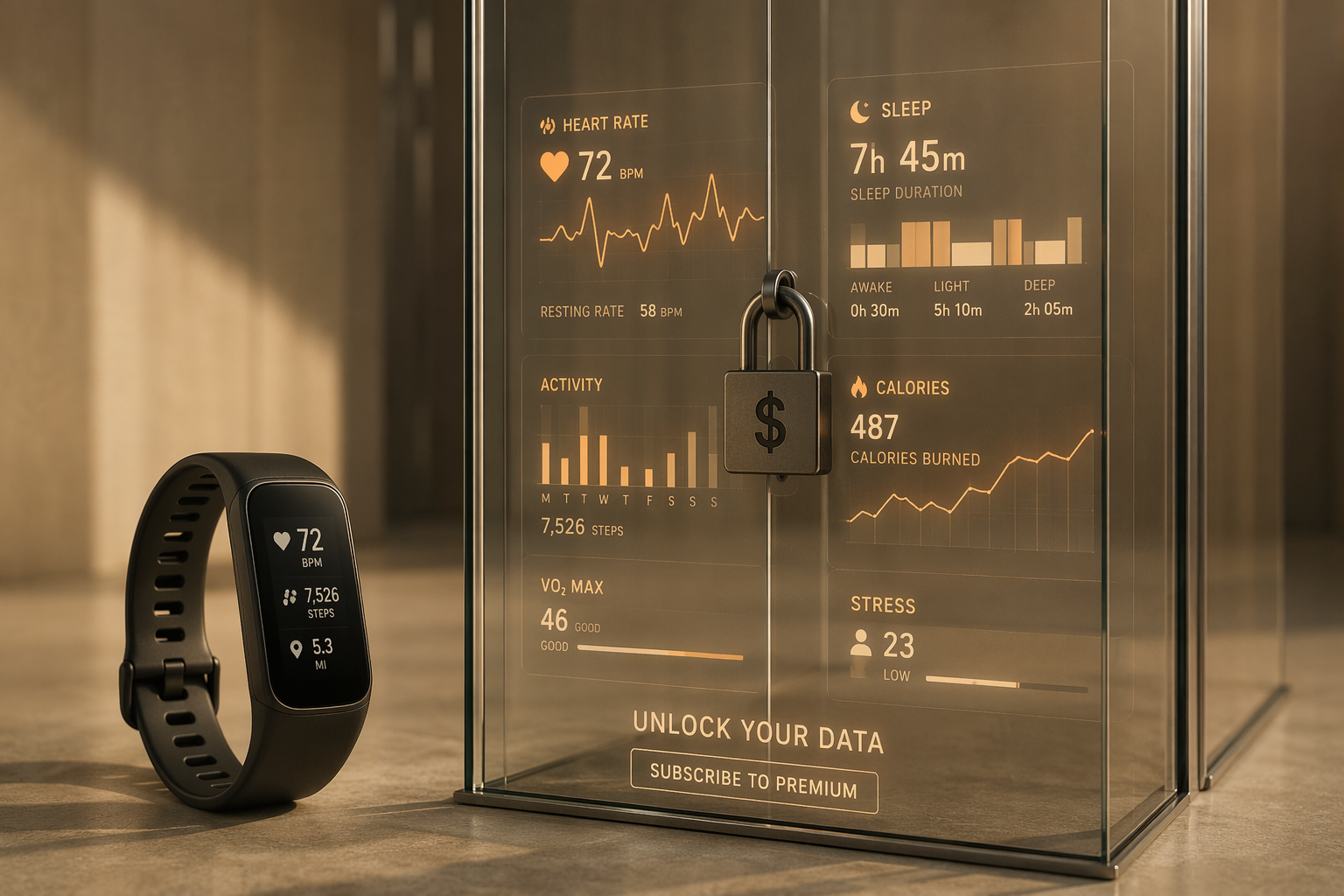
- Optional-but-aggressive: The device works out of the box, but the most useful features — readiness score, detailed sleep breakdown, personalized coaching — are locked behind a monthly fee. Fitbit without Premium: no daily readiness score, no advanced sleep score, no personal coaching. Oura without membership: detailed sleep stages, readiness score, recovery metrics are behind the $6/month wall.
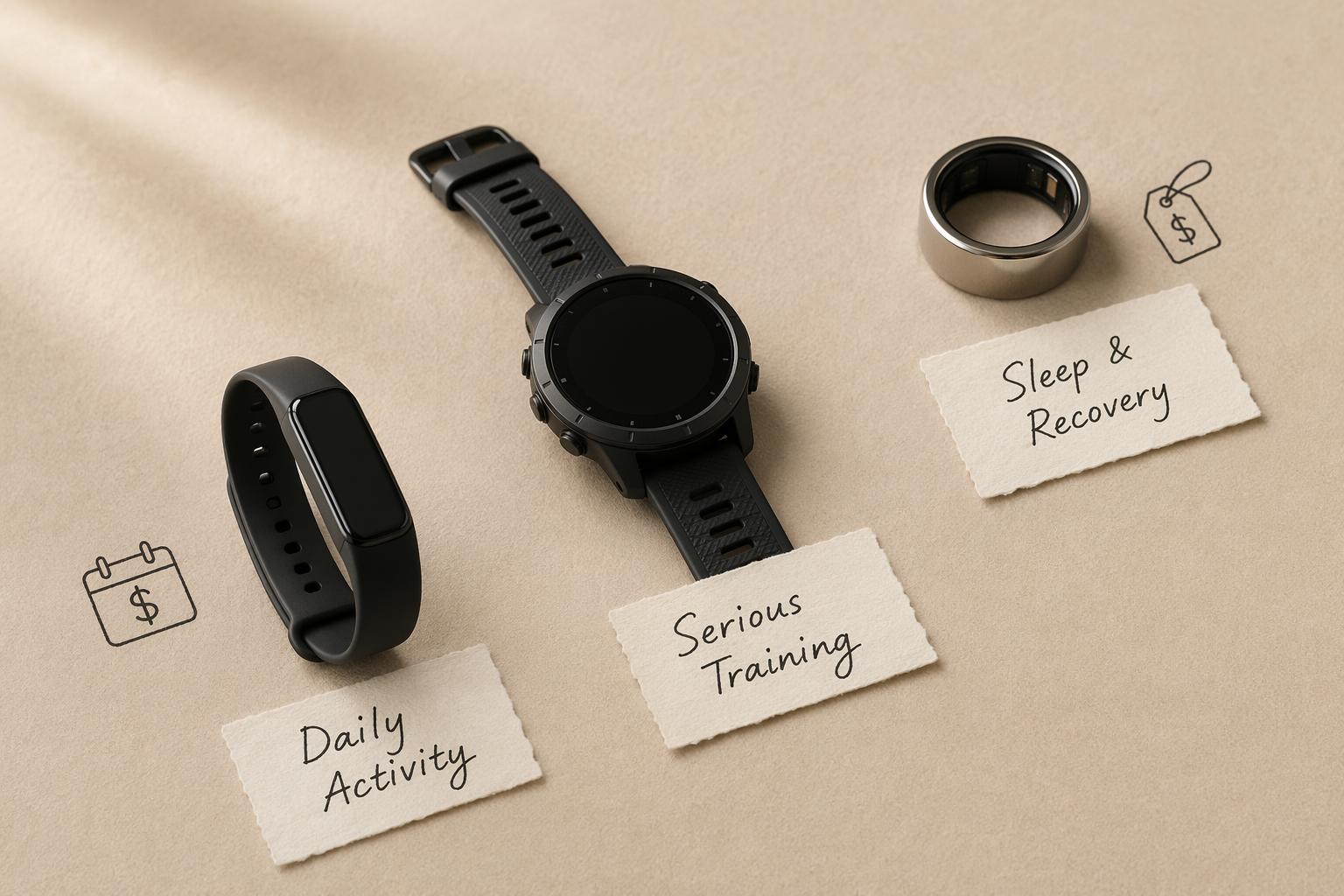
- No subscription: Garmin, Xiaomi, and Amazfit provide full core tracking — steps, sleep, heart rate, GPS — without any recurring charge. Advanced analytics like body battery, training readiness, sleep score, heart rate variability, stress tracking are included at no extra cost. A few coaching programs are gated, but for 90% of users the free tier is sufficient.
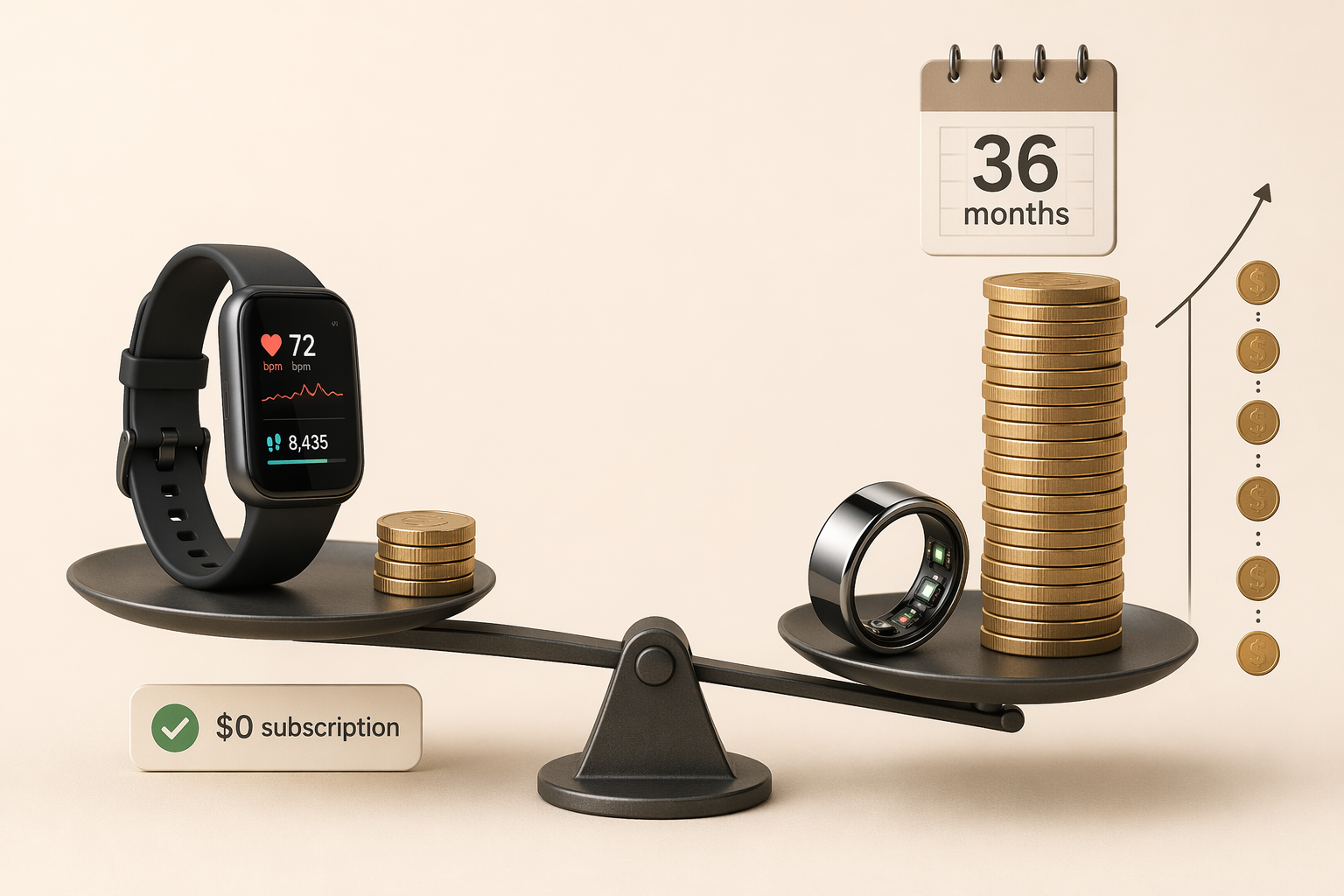
If you are comparing a $300 Oura Ring 4 with its $6 per month membership against a $300 Garmin Vivoactive 6 that requires nothing, the distinction is not academic. Over three years the Oura costs $516; the Garmin costs $300. The extra $216 buys you a better sleep tracker with a smaller form factor. That is a real trade-off, but the subscription cost flips the value equation for most people.
Total Cost Over 3 and 5 Years
The table below puts actual numbers on the table. Prices are retail list prices; subscriptions are from the brands themselves or from review sources. The message is simple: a device’s sticker price is a fraction of the story.
| Device | Sticker Price | Subscription Cost (annual) | 3-Year TCO | 5-Year TCO |
|---|---|---|---|---|
| Xiaomi Mi Band 9 | ~$50 | $0 | $50 | $50 |
| Amazfit Band 7 | ~$60 | $0 | $60 | $60 |
| Garmin Vivoactive 6 | $300 | $0 | $300 | $300 |
| Fitbit Charge 6 | $160 | $80 (Fitbit Premium) | $400 | $560 |
| Oura Ring 4 | $300 | $70 (membership) | $510 | $650 |
| Oura Ring 5 | $399 | $70 (membership) | $609 | $749 |
| Whoop 5.0 (One) | $0 (with membership) | $199 | $597 | $995 |
| Whoop MG (Peak) | $0 (with membership) | $239 | $717 | $1,195 |
| Google Fitbit Air | $100 | $100 (Google Health Premium) | $400 | $600 |
| Apple Watch Series 11 | $399+ | $0 (Fitness+ optional) | $399+ | $399+ |
The gap is enormous. A budget band like the Xiaomi Mi Band 9 costs $50 total over five years. A sub-required smart ring like the Oura Ring 4 costs $650. That is 13 times more for roughly the same step and sleep tracking accuracy. The extra cost buys you a more polished app and better sleep staging, but the core data is the same. I would rather keep my money.
The Hostageware Problem
The worst part of the subscription model is not the cost itself. It is what happens to your data if you stop paying. Some devices — Oura is the clearest example — make your detailed history inaccessible once the membership lapses. You have been tracking sleep for two years. You cancel the $6/month fee. The app still shows your last night’s sleep summary, but the months of trend data, the readiness trends, the sleep-stage breakdowns — all gone. Your own data is held hostage behind a paywall.
Fitbit does not fully delete your history, but some advanced metrics become unreadable without Premium. Whoop does not keep a free tier at all. The feeling is the same: you invested in a tool, built a history with it, and then that history is locked unless you keep paying. I would not call it a scam, but I would call it a deeply uncomfortable model for a health device.
When a Subscription Makes Sense — and When It’s a Waste
I do not want to sound like subscriptions are always bad. Whoop’s strain coach and recovery analysis are genuinely useful for serious athletes who train daily and want to optimize load management. The $199 to $359 per year can be worth it if you use the insights to adjust training and avoid injury. Similarly, Oura’s sleep science is industry-leading; for someone who prioritizes sleep quality over all else, the $6 per month might be acceptable.
But for the vast majority of people — those who want to track steps, sleep, heart rate, and maybe some runs — the subscription is a waste. A $50 Xiaomi band gives you the same step count and sleep duration. You lose the readiness score and the coaching, but you also keep your money. The question is not whether the subscription features are nice. It is whether they are worth hundreds of dollars over the life of the device.
Before You Buy
Run through these three steps:
- Calculate the three-year total cost of ownership by adding the sticker price to three years of subscription fees. Compare that to a no-subscription alternative in the same form factor.
- Check what features are gated. If the only gated features are coaching and meal logging, you might not miss them. If the daily readiness score and sleep breakdown are locked, you are buying a device that hides its best features.
- Decide how long you plan to keep the device. If you upgrade every two years, the subscription impact is smaller. If you keep a tracker for four or five years, the subscription becomes the majority of the cost.
For deeper dives into specific brands, see our Oura Ring 4 total cost of ownership piece, our Whoop subscription cost-benefit analysis, and the full Whoop vs Oura vs Garmin vs Fitbit comparison if you are still deciding between ecosystems.
This result comes from one real apartment under the stated conditions — it is a strong signal, not a guarantee your space will measure identically.
Builds this evidence supports
No build currently links to this specific test. Browse all builds with a matching tag.
Spot something off?
If this result didn't match your own space, let us know — floor-damage and noise claims carry real deposit-risk consequences if we get them wrong.