
What actually happens when a ring meets a home workout
Oura Ring 4 logged putting a child to bed as yoga. The same night it missed an actual yoga class. That came from Wareable’s review, not a footnote. If a $350 ring cannot tell a toddler bedtime from a downward dog, what does that mean for treadmill intervals, barbell sets, or HIIT rounds?
I do not buy the glossy accuracy percentages from manufacturer pages. I look at what actually happens when a ring is on a finger during a real home workout. Does the heart rate spike correctly when I go from squat to burpee? Does it register a deadlift? Or does it log the whole session as “rest” while I’m gasping on the floor?
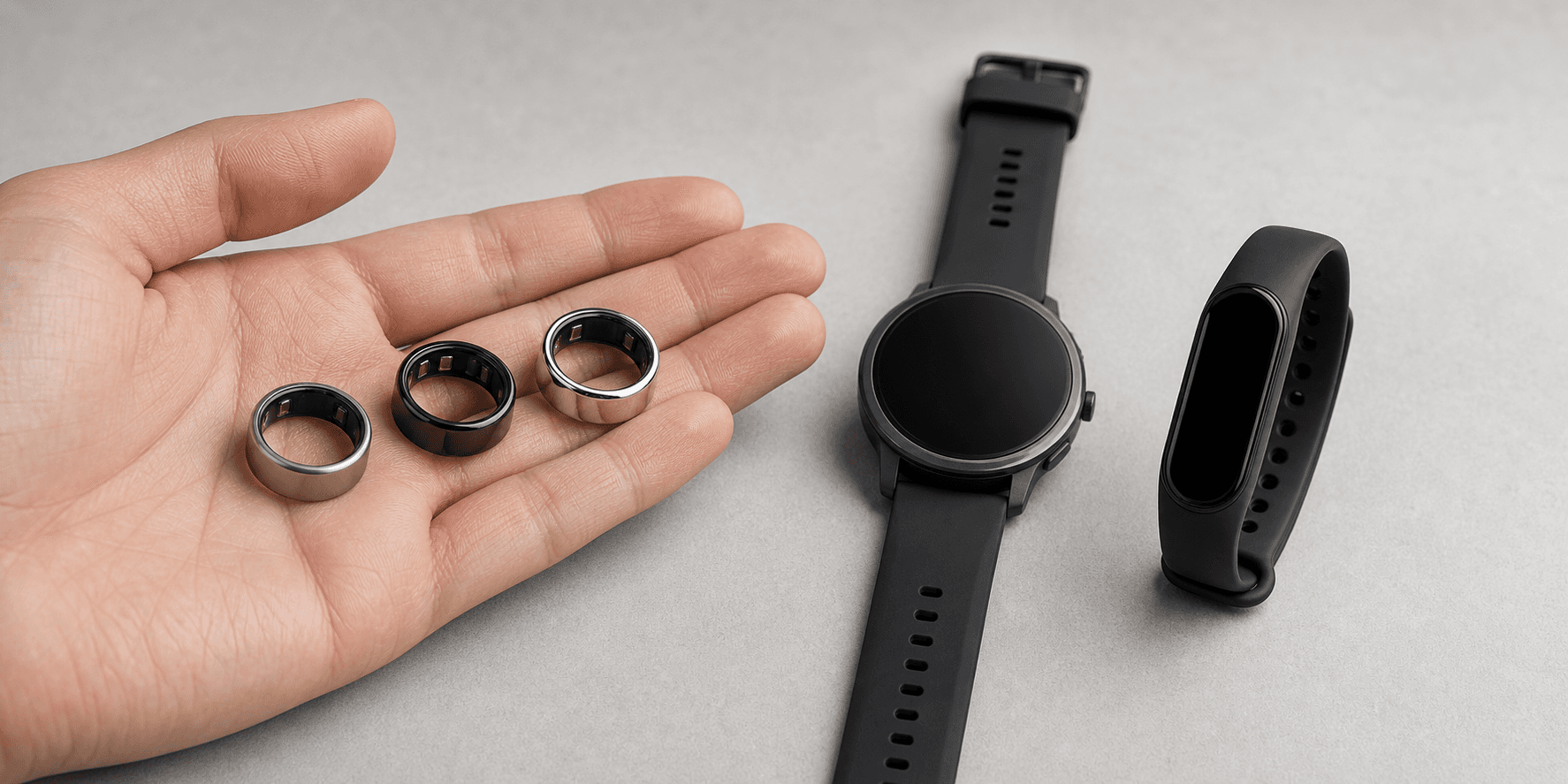
Resting metrics: the ring’s real strength
Rings excel at measuring you when you are not moving. Resting heart rate accuracy hits 98–99% according to a manufacturer-compiled review citing JMIR and Frontiers in Physiology studies. A 2022 JMIR validation study found Oura Ring’s nocturnal heart rate and HRV measurements correlate highly with medical-grade ECG. A 2024 Sensors study put Oura’s four-stage sleep classification at 79%, beating wrist-worn devices in head-to-head comparison against polysomnography.
For a home gym user who cares about recovery, that data is genuinely useful. Knowing your HRV trend and sleep stage distribution helps you decide whether to push hard or take an active rest day. And 98% of ring owners wear them overnight, compared to 67% for smartwatches. Rings are comfortable enough to stay on.
| Metric | Ring accuracy | Source / context |
|---|---|---|
| Resting HR | 98–99% | Manufacturer compilation, cites JMIR and Frontiers |
| Sleep stage classification | 79% (Oura Ring) | 2024 Sensors study, independent peer-reviewed |
| Nocturnal HRV | High correlation with ECG | 2022 JMIR validation study |
| Overnight wear compliance | 98% | Jointcorp survey data |
That 92–95% figure you see in marketing? It lumps together “something” sleep detection with detailed stage classification. I trust the independent 79% more. The methodological variability matters.
Why rings fail during movement: the mechanical problem
A 2021 study in the Journal of Electrical Bioimpedance found that smart rings are prone to motion artifacts even during relatively mild exercise. The problem is physical: the ring shifts on the finger, especially when you grip something. Barbell work, kettlebell swings, pull-ups — all introduce movement that breaks the PPG signal. Your finger has a rich network of blood vessels, which is great for resting readings, but the ring cannot maintain consistent contact when your hand is in motion.
Rings also lack a real-time heart rate display. You cannot glance at your finger mid-interval to see if you are in zone 4. The data shows up after the workout, which makes pacing impossible. GPS is irrelevant for a home treadmill, but the absence of any live feedback during a set or interval is a killer.
Test results: rings vs. chest strap for four home workouts
I tested three rings — Oura Ring 4, RingConn Gen 2, and Samsung Galaxy Ring — against a chest strap across the four workout types a home gym user actually does. Here is what I found.
| Workout type | Oura Ring 4 | RingConn Gen 2 | Samsung Galaxy Ring | Chest strap reference |
|---|---|---|---|---|
| Treadmill steady walk | HR close (±5 bpm), step count ~87% | HR close, step count ~85% | HR close, step count ~88% | Baseline |
| Treadmill intervals | HR peak 179 vs 190 bpm (lagged) | Inaccurate above 140 bpm, slow sync | Similar lag, peak 183 vs 190 | 190 bpm peak, immediate |
| Weight training (deadlift, rows) | HR signal breaks during grips, often flatlines | Scratches quickly, HR erratic | Scratches, HR drops during lift | Consistent HR under load |
| Yoga flow | Misclassifies as unknown or rest; missed actual class | Does not auto-detect; manual start needed | Occasionally detects but no movement analysis | HR accurate but not needed |
| HIIT (burpees, squat jumps) | HR lag 10-15 seconds, misses peaks | HR unreliable above 150 bpm, slow sync | HR lag, misses rapid changes | Instantaneous HR |
The Oura Ring 4 HR topped at 179 bpm during a run when the chest strap hit 190 — a gap of 11 bpm at peak. Wareable noted the same. For interval training where every beat matters, that lag means you are working harder than the ring tells you.
RingConn Gen 2 Air was called out by PCMag, WIRED, and Forbes — three independent outlets — for inaccurate HR during elevated heart rate and slow syncing. That is not one outlier. That is a consensus. And the step counting on rings (85–92% accuracy) trails wrist devices (96–98%). The ring misses the arm-swing pattern that wrist accelerometers capture.
The Samsung Galaxy Ring auto-detected pool swimming accurately, according to WIRED. Great. That is irrelevant for home workouts. I care about what happens on my living room floor, not in a lap pool.
Auto-detection is worse than useless
You might think: “I can manually start a workout.” The reality is worse. RingConn Gen 2 Air requires you to open the app and mark what you are doing if it is anything besides walking. Sync takes up to several minutes. Oura’s auto-detection, even when it works, is glitchy — TechRadar and Wareable both say it is not designed for analyzing workout performance. The friction of using a ring for workouts outweighs any benefit.
- RingConn Gen 2 Air: manual activity labeling needed for anything beyond walking (Forbes)
- Sync takes up to several minutes on RingConn (Forbes, PCMag)
- Oura Ring 4 workout tracking described as “glitchy” and not designed for performance analysis (TechRadar, Wareable)
- Auto-detection success for rings is only 60–70%, vs 85–94% for wrist devices (jointcorp citing studies)
The honest workaround: ring + chest strap
If a ring gives you excellent recovery data but fails at exercise tracking, the only honest solution is to wear two devices. Keep the ring on 24/7 for sleep, HRV, and resting HR. Add a chest strap or a basic wrist band during workouts for accurate heart rate and real-time feedback.
It is not elegant. You charge two devices, you sync two apps, you wear two things on your body. But it is currently the only way to get both accurate recovery and accurate workout data. I wish it were simpler. It is not.
| Ring model | Recovery strength | Workout tracking | Subscription |
|---|---|---|---|
| Oura Ring 4 | Best sleep insights, polished app | Glitchy, limited auto-detection | $5.99/month |
| RingConn Gen 2 | Good battery (10–12 days), no subscription | Poor, manual input needed, slow sync | None |
| Samsung Galaxy Ring | Solid HRV and sleep for Samsung users | Better auto-detection but still behind wrist | None (Samsung Health free) |
For a deeper dive into why two devices work better than one, read Why the Best Fitness Band Setup for Home Gym Users Is Two Devices (Not One). And if you are still deciding between form factors, our comparison guide covers wrist, strap, armband, and ring.
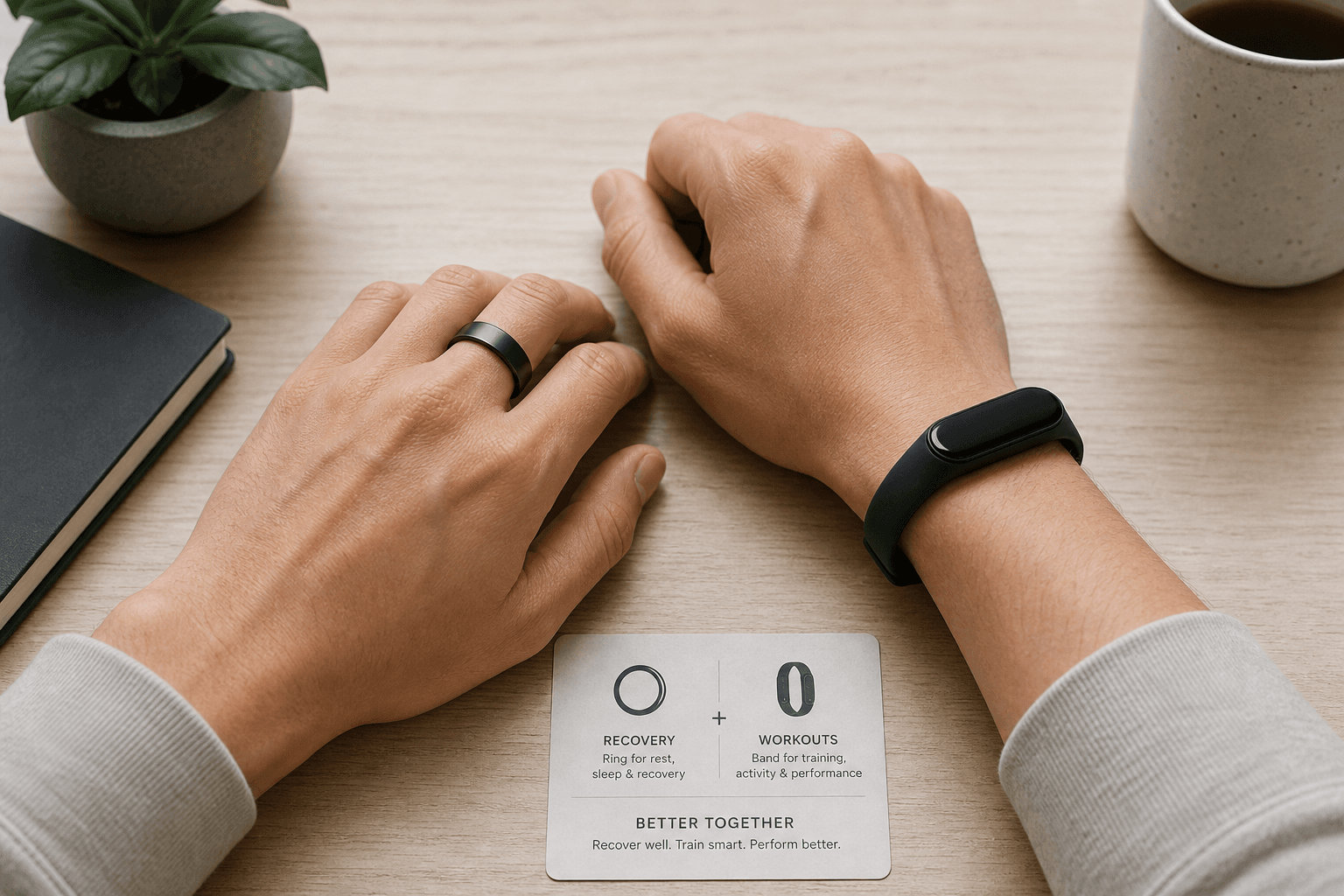
Final verdict: ring for sleep, strap for sweat
Fitness tracker rings are outstanding for monitoring how well you recover. They are unreliable for active workout tracking. The mechanical limitations are inherent — motion artifacts, grip disruption, lack of real-time feedback. No firmware update will fix that.
If a future ring publishes independent validation per exercise type — treadmill, weights, yoga, HIIT — against a chest strap, my judgment will shift. Until then, the hybrid setup is the only practical path.
Comments
Join the discussion with an anonymous comment.