
The device price is not the price. For a fitness tracker subscription cost comparison, the useful number is device cost plus the subscription you must pay, or realistically expect to pay, over the years you keep it. That one rule changes the ranking fast: a $0 Whoop can cost more over three years than a Garmin Venu 3, Apple Watch, Ultrahuman Ring Air, or several budget bands combined, while subscription-free devices stay boringly fixed.
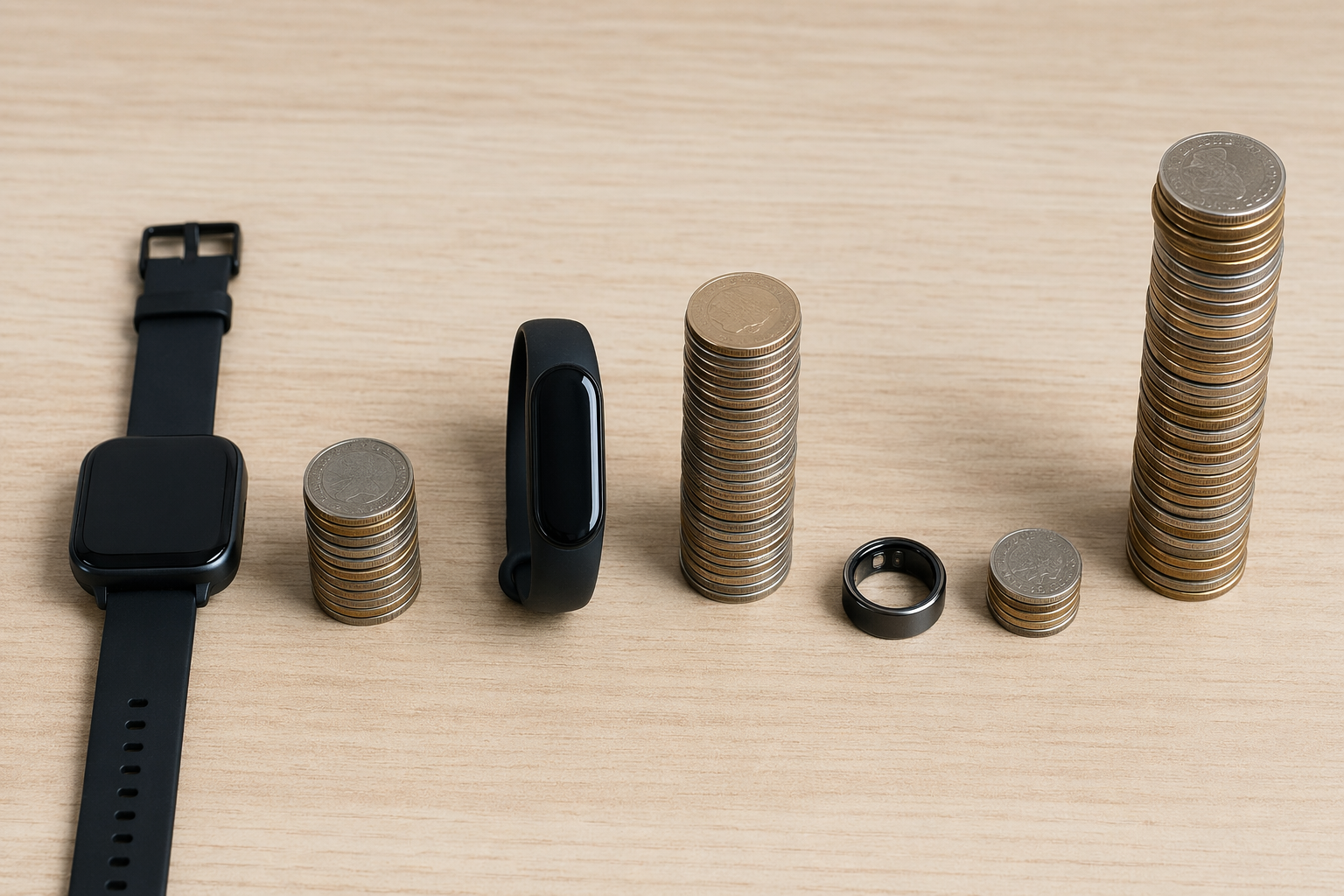
The table below uses approximate U.S. pricing available in Q3 2026. It separates subscription-free use from paid-tier scenarios where the subscription is optional. Taxes, discounts, device bundles, monthly-plan markups, trade-ins, and replacement bands are not included.
| Device / scenario | Upfront cost | Annual subscription counted here | 1-year total | 3-year total | 5-year total |
|---|---|---|---|---|---|
| Xiaomi Smart Band 10 | ~$53 | $0 | ~$53 | ~$53 | ~$53 [1] |
| Fitbit Air | $100 | $0 for core features; AI Coach requires Google Health Premium | $100 | $100 | $100 [2] |
| Fitbit Charge 6, no subscription | ~$160 | $0 | ~$160 | ~$160 | ~$160 [3] |
| Whoop Basic | $0 | $199/year | $199 | $597 | $995 [4] |
| Whoop Peak | $0 | $239/year | $239 | $717 | $1,195 [4] |
| Whoop Life | $0 | $359/year | $359 | $1,077 | $1,795 [4] |
| Ultrahuman Ring Air | $349 | $0 | $349 | $349 | $349 [5] |
| Apple Watch Series 11, no Fitness+ | ~$400 | $0 | ~$400 | ~$400 | ~$400 [6] |
| Oura Ring 4 Horizon | $349 | $69.99/year | ~$419 | ~$559 | ~$699 [7] |
| Garmin Venu 3, no Connect+ | ~$450 | $0 | ~$450 | ~$450 | ~$450 [8] |
| Fitbit Charge 6 + Google Health Premium | ~$160 | $99.99/year | ~$260 | ~$460 | ~$660 [3] |
| Apple Watch Series 11 + Fitness+ | ~$400 | $79.99/year | ~$480 | ~$640 | ~$800 [6] |
| Garmin Venu 3 + Connect+ | ~$450 | $69.99/year | ~$520 | ~$660 | ~$800 [8] |
| Oura Ring 4 Ceramic | $549 | $69.99/year | ~$619 | ~$759 | ~$899 [7] |
The Math Changes Before the Features Do
The cheapest line in the table is also the least dramatic: the Xiaomi Smart Band 10 is about $53, with no subscription included in this comparison. If you keep it for one year, three years, or five years, the total remains about $53. That does not mean it beats a premium watch on sensors, apps, durability, or training tools. It means the ownership bill stays exactly where the shelf price said it would.
Fitbit Air plays a similar role at $100. Its AI Coach is tied to Google Health Premium, but the core tracking experience is not priced as mandatory in the available reporting. For someone who wants a simple tracker and does not care about paid coaching, that distinction matters more than the marketing copy around the premium tier.
The cleanest ring comparison is Ultrahuman Ring Air versus Oura. Ultrahuman Ring Air is $349 with no subscription in this table. Oura Ring 4 starts at $349 for the Horizon model, but the $69.99 annual membership brings the three-year total to about $559 and the five-year total to about $699. The higher-priced Ceramic model starts at $549 and reaches about $899 over five years. Oura says that without membership, users see only three daily scores, while membership unlocks deeper sleep, readiness, and health trend features [7].
That is not a minor add-on if those trend and interpretation tools are the reason you wanted a smart ring. The fair comparison is not “Oura costs $349 and Ultrahuman costs $349.” It is closer to “Ultrahuman costs $349 if you keep it, while Oura costs $349 plus the membership if you want the product as most shoppers understand it.”
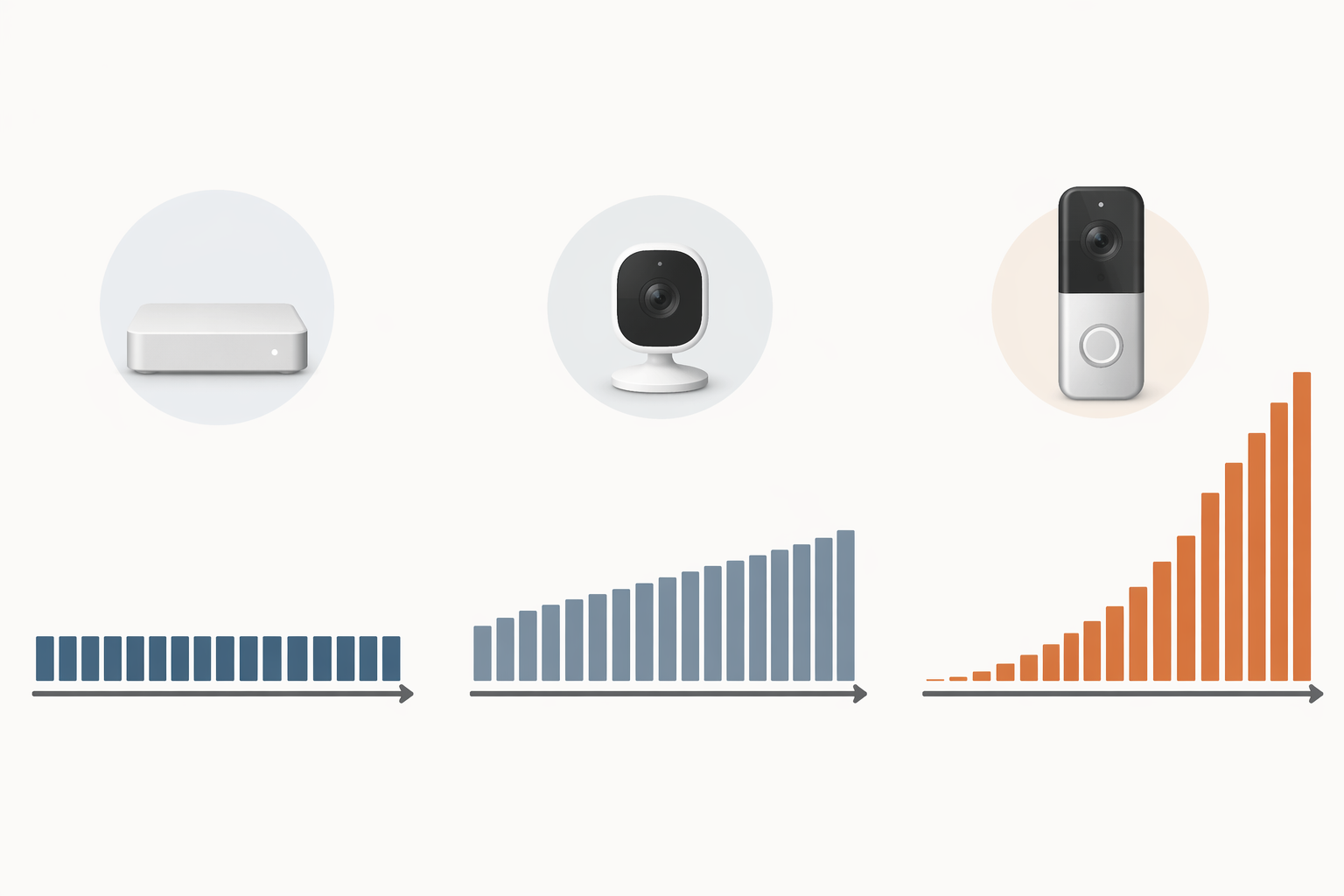
Whoop Is the Hardest Price to Feel at Checkout
Whoop looks gentle because there is no device price in the comparison. The bill is all membership. At current U.S. annual pricing used here, Whoop Basic is $199 per year, Peak is $239 per year, and Life is $359 per year. After three years, that becomes $597, $717, or $1,077. After five years, it becomes $995, $1,195, or $1,795 [4].
That does not make Whoop a bad product. It makes it a subscription product, not a low-cost tracker. If the recovery scoring, strain model, screenless design, and coaching layer are what you want, then the membership is the product. The mistake is comparing $0 upfront against a $349 ring or a $450 watch without carrying the annual fee across the ownership period.
There is also a pricing caveat. The official Whoop support page surfaced regional pricing rather than clean U.S. annual pricing. The U.S. figures above are supported by Whoop’s join flow and secondary coverage from Lifehacker and PCMag, but they should be rechecked at purchase because plan names, bundles, and regional pages can change [4].
Optional Subscriptions Need a Different Kind of Comparison
Garmin Connect+, Apple Fitness+, and Google Health Premium should not be lumped together with Whoop or Oura as if they do the same job. With Garmin Venu 3, Apple Watch Series 11, and Fitbit Charge 6, the device remains usable without the paid tier. The subscription may add workouts, coaching, AI features, or expanded insights, but the free tier is still a real product.
| Platform | What the optional subscription changes in this comparison | How to read the TCO |
|---|---|---|
| Fitbit / Google Health Premium | Adds paid premium features; current cited price is $99.99/year rather than the older $79.99/year Fitbit Premium figure still found in some older coverage. | Compare both $160 and ~$660 over five years before deciding whether Premium is part of your real plan. |
| Apple Fitness+ | Adds Apple’s workout subscription; the watch itself does not require Fitness+ for core health and activity tracking. | If you already use Fitness+, count it. If you only want watch tracking, do not pretend it is mandatory. |
| Garmin Connect+ | Adds Garmin’s paid tier while the free Garmin Connect app still carries most core tracking features according to reviewer coverage. | Use the no-subscription line unless a Connect+ feature is specifically why you are buying Garmin. |
For Fitbit Charge 6, the device-only estimate is about $160. Add Google Health Premium at $99.99 per year, and the three-year total becomes about $460; the five-year total becomes about $660 [3]. That is still lower than several premium scenarios, but it is no longer a simple $160 purchase.
Apple Watch Series 11 lands around $400 in this comparison. Add Fitness+ at $79.99 per year, and the five-year total reaches about $800 [6]. For someone who already wants guided workouts on Apple’s platform, that may be fine. For someone comparing health-tracking hardware only, Fitness+ should not be silently added just to make the Apple line look more expensive.
Garmin Venu 3 is roughly $450 here. With Connect+ at $69.99 per year, the five-year total is about $800; without Connect+, it stays at about $450 [8]. The Garmin Connect+ pricing and feature split deserve a little caution because Garmin’s subscription page was not fully accessible for verification, so this comparison relies on multiple independent reviewers rather than a fully crawled first-party page [8]. For a deeper Garmin-specific read, see Garmin Connect+ Reviewed: Is the $70/Year Subscription Worth It in 2026?.
What Wins at One Year, Three Years, and Five Years
At one year, low upfront hardware dominates. Xiaomi Smart Band 10 is the clear low-cost anchor at about $53, followed by Fitbit Air at $100. Whoop Basic at $199 is not outrageous at the one-year mark, especially compared with a $349 ring or $400 watch, but the comparison is already doing something strange: you have paid $199 and still do not own a standalone device experience.
At three years, the inversion is obvious. Ultrahuman Ring Air remains $349. Garmin Venu 3 without Connect+ remains about $450. Apple Watch Series 11 without Fitness+ remains about $400. Whoop Basic reaches $597, Whoop Peak reaches $717, and Whoop Life reaches $1,077 [4]. Oura Horizon reaches about $559, so it also crosses several subscription-free alternatives once membership is included [7].
At five years, subscriptions stop looking like add-ons and start looking like the main purchase. Whoop Life reaches $1,795, Peak reaches $1,195, and Basic reaches $995 [4]. Oura Ceramic reaches about $899 with membership [7]. Apple Watch plus Fitness+ and Garmin Venu 3 plus Connect+ each land around $800, while their no-subscription versions stay around $400 and $450 respectively [6][8].
This is why the ownership horizon matters. If you replace devices every year, a subscription can feel manageable. If you keep wearables for three to five years, the recurring fee can overtake the hardware price.
The Subscription Test Before You Buy
Before comparing totals, sort the device into one of three buckets. This is more useful than asking whether the brand “has a subscription,” because nearly every platform can point to some paid service somewhere.
- No-subscription hardware: Xiaomi Smart Band 10 and Ultrahuman Ring Air stay at the device price in this comparison.
- Optional-subscription platforms: Fitbit, Apple, and Garmin have usable free tiers, so the paid line should be counted only if you want those paid features.
- Effectively subscription-dependent products: Whoop requires membership, and Oura’s most useful sleep, readiness, and trend features sit behind membership.
That last bucket is where shoppers need to be most careful. If a device’s advertised value depends on readiness trends, recovery interpretation, AI coaching, or long-term health insights, then the subscription is not a decorative extra. It belongs in the first price you write down.
If you are still deciding between a ring, watch, and band, the form factor question is separate from the bill. A ring may be easier to sleep in; a watch may be better for live workout screens; a band may be enough for steps, sleep, and basic heart-rate tracking. For that part of the decision, use a broader ring vs. smartwatch vs. band comparison or an affordable fitness tracker feature guide. The cost table only answers what the device asks from your wallet over time.
Pricing Caveats Current to Q3 2026
A comparison like this is useful only if the assumptions stay visible. The Fitbit line uses Google Health Premium at $99.99 per year because the Fitbit-to-Google Health Premium transition is the current mid-2026 framing in the cited coverage; older Fitbit Premium references at $79.99 per year can still appear in older articles [3].
Apple Fitness+ remains listed here at $79.99 per year as of Q3 2026. Speculation about future Apple health subscription bundles is not counted because it is not current pricing for this comparison [6].
Garmin Connect+ is treated as optional because the free Garmin Connect app still supports the core tracking experience in the cited reviewer coverage. If Garmin changes the free-versus-paid feature split, the Garmin rows would need updating before the arithmetic changed [8].
Xiaomi pricing is especially retail-dependent. The ~$53 figure is useful for a low-cost anchor, not a promise that every U.S. buyer will find the same checkout price on the same day [1].
The Practical Buying Judgment
If the goal is the lowest long-term spend, subscription-free trackers dominate: Xiaomi Smart Band 10 for the cheapest basic band, Fitbit Air if its free core feature set is enough, and Ultrahuman Ring Air if you want a smart ring without a continuing membership bill.
If the goal is advanced recovery interpretation, coaching, or guided workouts, price the subscription as part of the product from day one. Whoop may still make sense for someone who wants its recovery system enough to pay annually, and Oura may still make sense for someone who values its membership features, but neither should be judged by upfront hardware cost alone.
For optional-subscription devices, decide whether the free tier is enough before comparing totals. Garmin, Apple, and Fitbit become much easier to evaluate once you stop treating their paid services as either irrelevant or automatically required. The bill you should compare is the one you are actually likely to keep paying.
References
- Xiaomi Smart Band 10 review, Wareable.
- Fitbit’s new $100 fitness tracker has a battery that lasts up to seven days, Engadget.
- Google Health Premium: What you need to know, Android Authority.
- Whoop 5.0 and MG launch with three new membership tiers, PCMag.
- Ultrahuman Ring Air, Ultrahuman.
- Apple Fitness Plus cost: Price, plans and free trials, Business Insider.
- Oura Membership, Oura Help.
- Garmin Connect+ Subscription Service: Hands-on and pricing details, DC Rainmaker.
Comments
Join the discussion with an anonymous comment.