
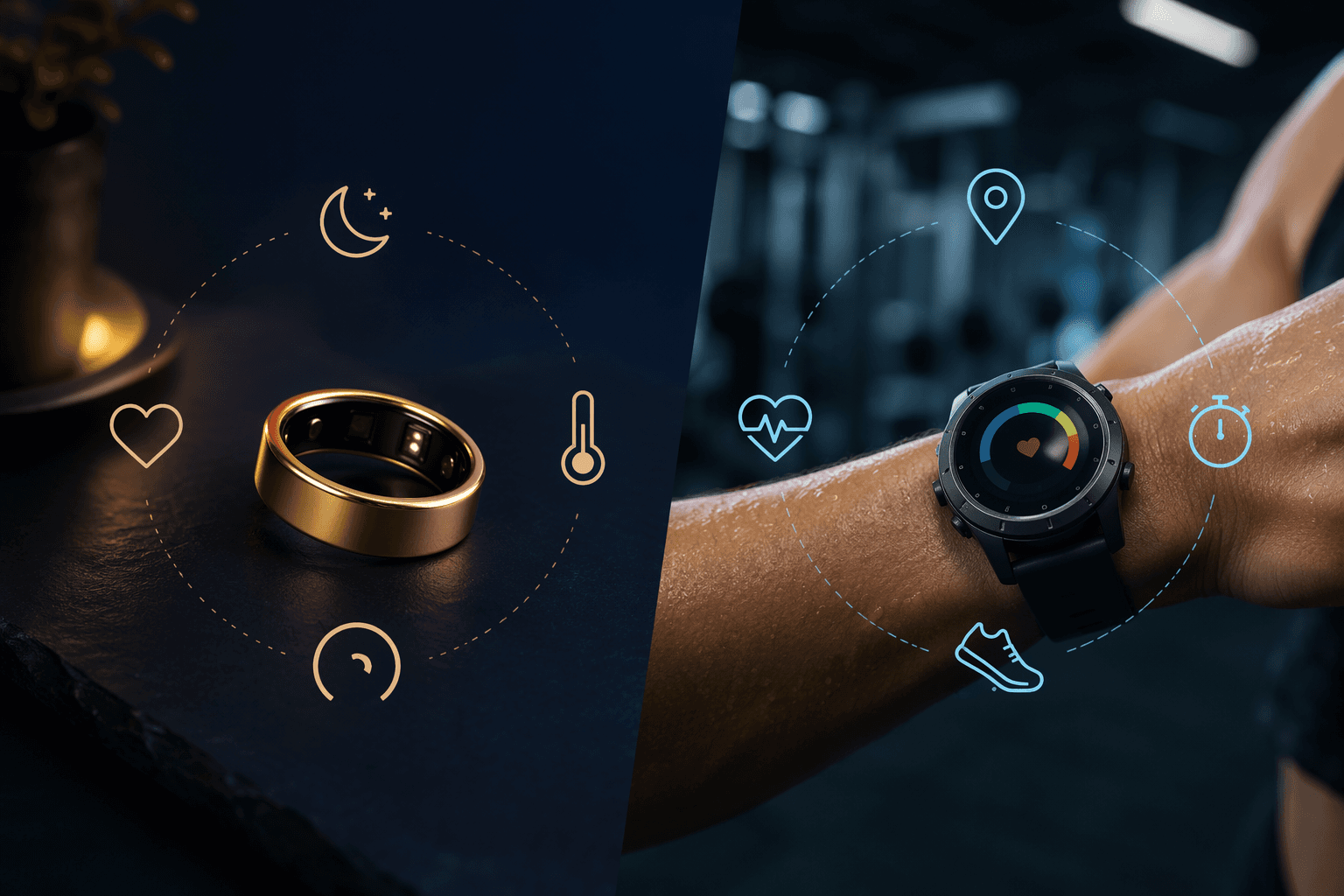
If the search term is “oura ring fitness tracker,” the useful question is a little different: is it trying to be a better workout coach, or a better recovery monitor? For home exercisers who care most about sleep, HRV, resting heart rate, and whether the body feels ready before the day starts, Oura is built around recovery first and live training second.
What Oura is actually measuring
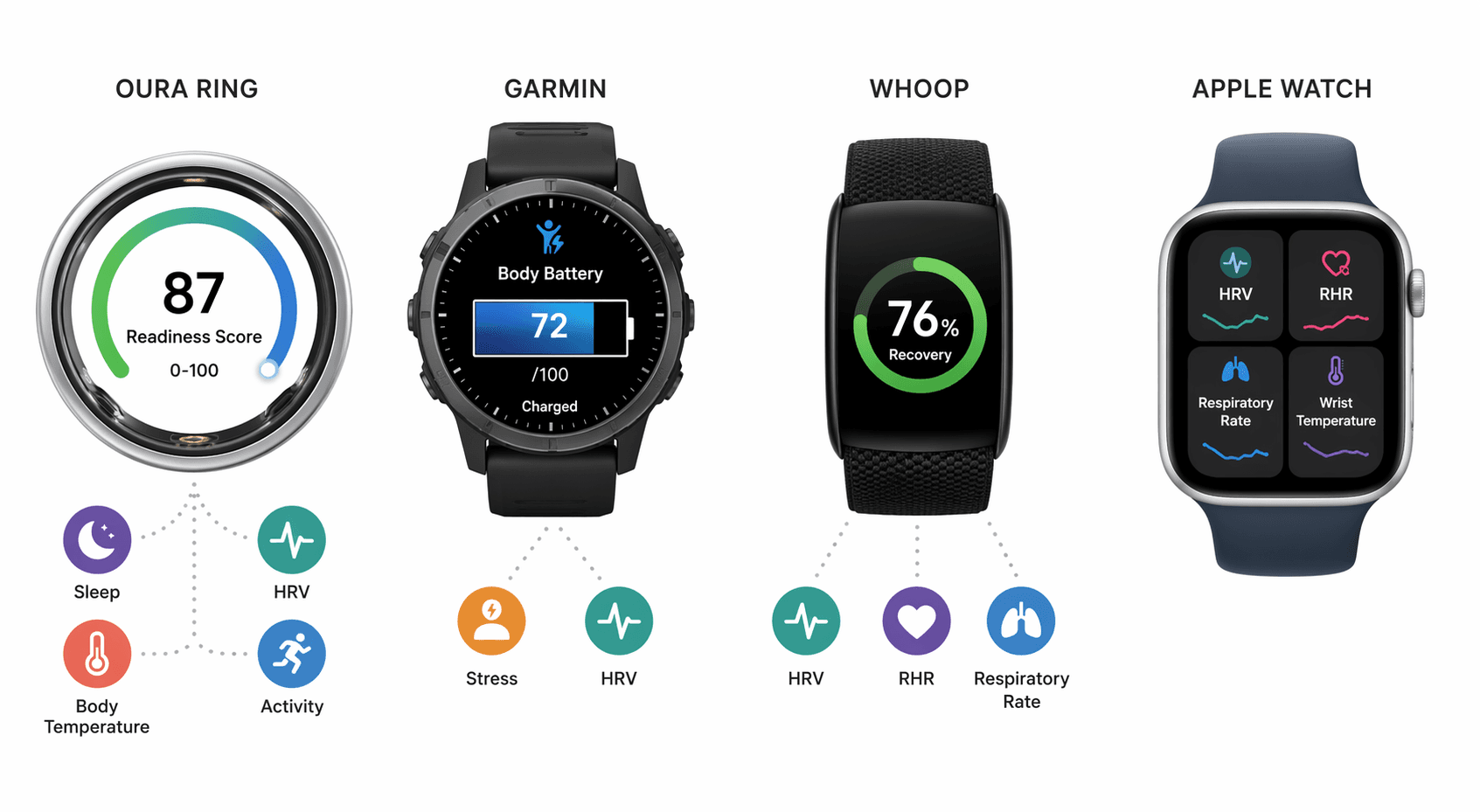
Oura’s Readiness Score is the clearest sign of what the ring thinks it is for. The score runs from 0 to 100 and is built from 9 contributors across sleep, activity, and body stress [1][2]. That is a different organizing idea from a watch that mainly surfaces workout stats and leaves you to assemble the recovery picture yourself. If you want the mechanics behind that score, the deeper breakdown of Oura’s recovery system is the better next stop: How Oura Ring Tracks Recovery.
| Device | Recovery logic | What usually matters most |
|---|---|---|
| Oura Ring | One Readiness Score built from multiple overnight and daily contributors; strong emphasis on sleep continuity, HRV, resting heart rate, and temperature trends. | Recovery insight that is easy to check before the day begins. |
| Garmin | Body Battery and training-readiness style signals, often tied closely to activity load and stress. | Training context and workout planning. |
| Whoop | Recovery score plus strain-oriented coaching, built for athletes who want a running view of recovery and workload. | How hard you can push and how much strain you have accumulated. |
| Apple Watch | Vitals surface separate signals such as HRV, resting heart rate, respiratory rate, and wrist temperature, but not one combined readiness score. | Interpretation, not a single verdict. |
| Fitbit | Mainstream sleep and wellness signals with a lighter recovery story than Oura or Whoop. | Basic sleep and wellness monitoring. |
That scoring setup only matters if the measurements are trustworthy. The brief points to an April 2026 independent study that found Oura the most accurate wearable for HRV and resting heart rate, and Oura also says its finger-based sensor receives a 50–100x stronger signal than wrist wearables [3]. The second claim is Oura’s own, not independent proof, but it does explain why ring data can behave differently from wrist data.
Why Oura tends to feel better overnight
The other practical advantage is that the ring is easy to forget about at night. Oura Ring 4 is rated for 5–8 days per charge, while the Apple Watch is usually closer to a daily charge cycle and many Garmin models sit somewhere in between [4]. That matters more than it sounds like, because recovery tracking fails the moment the device is off the body during the very hours it is supposed to watch.
That is also where comfort becomes a real metric. Reviewers who have lived with Oura for months and years keep landing on the same split verdict: sleep and recovery are the ring’s strongest side, while activity tracking is the weakest [4][5][6]. The ring can tell a useful recovery story without asking for much from the user; it is less convincing when the question becomes pace, GPS, heart-rate zones in motion, or strength-session detail.
Temperature trends and long-term recovery are where the ring stretches ahead
Oura tracks body temperature trends rather than absolute temperature, and it uses those overnight patterns as part of its recovery picture. It also adds longer-range features such as Resilience and Cardiovascular Age, which push the app beyond a single morning score and toward a slower view of recovery balance. Garmin’s and Whoop’s recovery systems are useful in their own way, but they do not lean on the same temperature-based recovery framing.
That difference is easy to miss if the comparison is reduced to feature counts. It is more visible if the real question is whether the device is helping someone notice accumulating fatigue, poor sleep, or a rough training week before those patterns turn into a missed session.
Where Garmin, Whoop, Apple Watch, and Fitbit still make more sense
Garmin still makes a strong case when the user wants recovery plus live training context. Body Battery and training-readiness features are useful if you want the watch to influence today’s workout, not just tomorrow morning’s interpretation. Whoop is even more opinionated about strain and recovery coaching, which is why serious exercisers often prefer it when workload management is the main job. Apple Watch is the most flexible ecosystem choice, especially if you already use it for everything else, but its Vitals view asks the user to combine several signals instead of handing back one recovery verdict. Fitbit remains the simpler mainstream option when sleep and general wellness matter more than a training-first coaching system.
For a broader look at form factor tradeoffs, the ring-versus-watch question is worth reading on its own: Fitness Tracker Ring vs. Smartwatch vs. Fitness Band.
Price matters, but only after the job is clear
Oura’s cost structure is straightforward once you know what it is trying to do: the ring itself sits in the mid-hundreds, and the app adds a monthly subscription [7]. Whoop pushes more of the cost into membership, while Garmin and Apple Watch usually ask for more upfront and no ongoing subscription [7]. That changes the value equation, but it does not change the bigger point: paying more for a live-training device does not help if what you actually need is a quiet overnight recovery monitor.
The decision boundary
- Choose Oura if recovery insight, sleep comfort, HRV and resting heart rate tracking, temperature trends, and uninterrupted overnight monitoring matter more than live workout feedback.
- Choose Garmin, Apple Watch, Fitbit, or Whoop if the device needs to guide training while the workout is happening.
- Choose Garmin or Whoop first if live load, strain, zones, or workout structure are part of the decision, not a separate app you check later.
- Choose Apple Watch if you want ecosystem depth and are comfortable interpreting several separate overnight signals instead of a single readiness score.
References
- Oura Member Care — Readiness Score and Readiness Contributors, support.ouraring.com
- Oura Blog — Readiness Score, Oura, ouraring.com/blog
- Oura Athlete Performance, Oura, organizations.ouraring.com/solutions/athlete-performance
- Oura Ring 4 Review 2026, Forbes Vetted, forbes.com
- Oura Ring 4 Review 2026, Business Insider, businessinsider.com
- Two-year Oura Ring 4 review, Runner's World, runnersworld.com
- Best Smart Rings 2026, PCMag, pcmag.com

Comments
Join the discussion with an anonymous comment.