
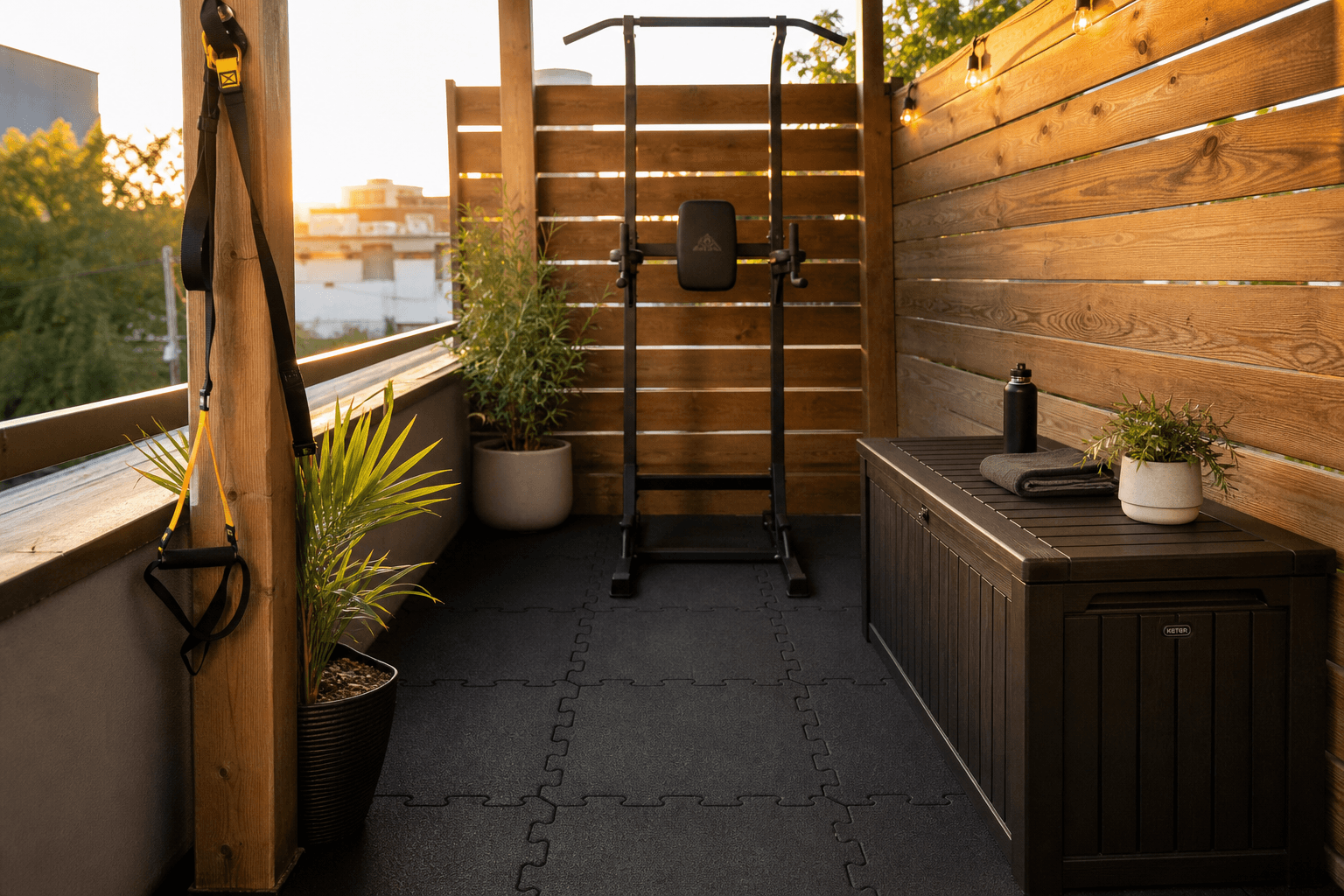
Why Calisthenics Equipment Is the Best Fit for Small Outdoor Spaces
When you have a yard measured in feet rather than acres, every square foot of floor space has to earn its keep. A backyard gym built around bodyweight gear — pull-up bars, dip stations, parallel bars, and gymnastic rings — delivers a higher strength-training density per square foot than any other equipment category. Here is why that matters for a small outdoor space.
Calisthenics equipment has no moving parts to rust, no cables to fray, no weight plates to store, and no electrical components to weatherproof. A wall-mounted pull-up bar occupies zero floor space. A set of gymnastic rings stows in a deck box and deploys in seconds. Even a freestanding power tower, the bulkiest single-unit option, fits within a 3×4 ft footprint — about the same area as a patio chair set. Compare that to a plate-loaded leg press or a cable crossover machine, which can consume 20–40 sq ft and require additional storage for plates and attachments.
The maintenance argument is equally compelling. Outdoor calisthenics gear, when chosen with weather-resistant materials, requires a monthly wipe-down and occasional touch-up paint. There are no hydraulic seals to leak, no bearings to grease, and no electronics to short. A properly coated steel pull-up bar can sit exposed to rain and UV for a decade with nothing more than cosmetic wear.
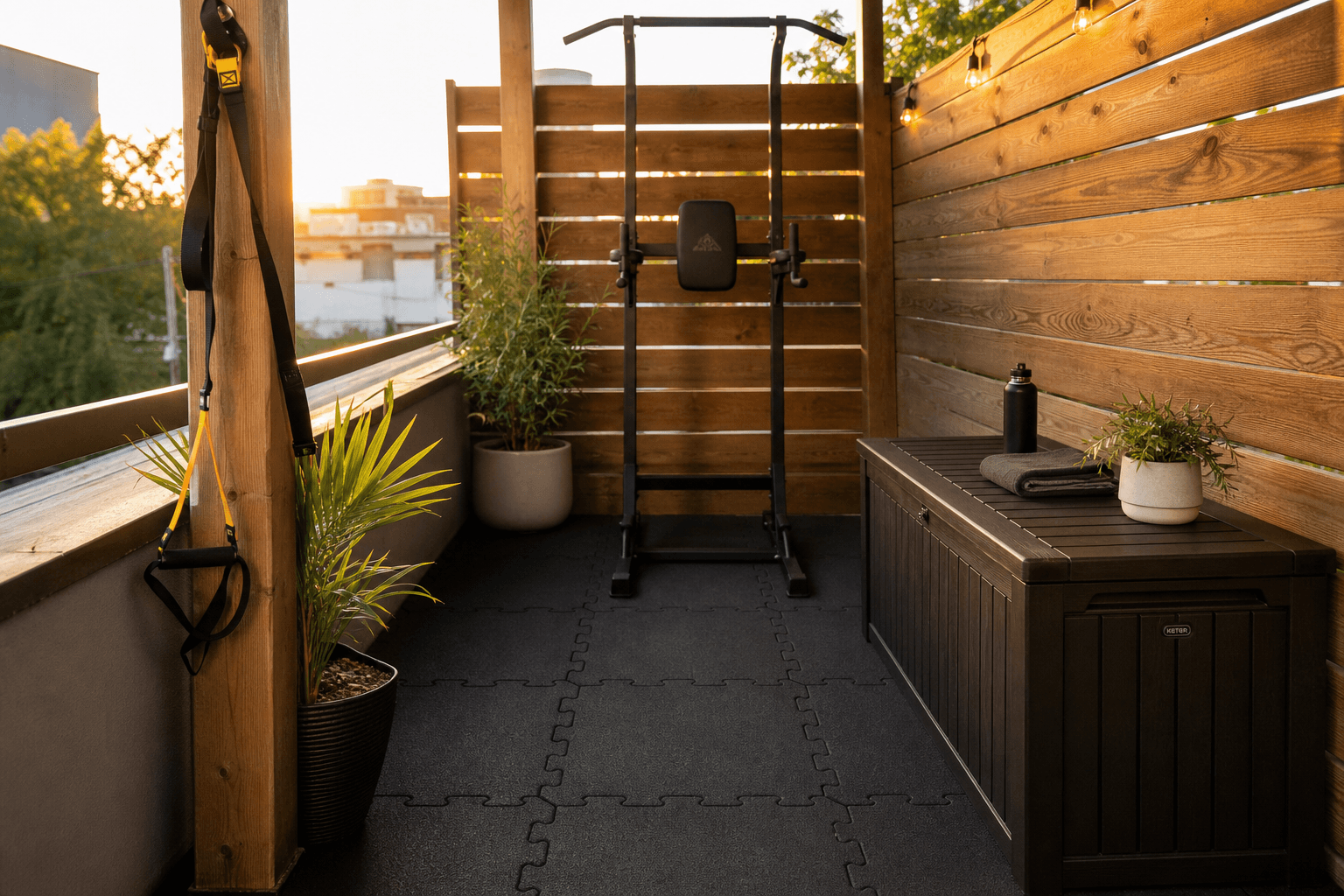
What You Need to Know Before You Buy: Anchoring, Surfaces, and Weatherproofing
Before you choose a specific piece of equipment, three practical decisions will determine whether your outdoor calisthenics setup lasts or becomes a rusted eyesore: how you anchor it, what surface it sits on, and how well it resists the elements.
Anchoring Options
The anchoring method depends on the equipment type and your yard's existing structures.
| Anchoring Method | Best For | Key Requirements |
|---|---|---|
| Wall-mounted (lag bolts) | Pull-up bars on brick, wood, or concrete walls | Structural wall capable of supporting dynamic load; masonry anchors for brick/concrete |
| Concrete footings | Multi-station rigs (SwingSesh, TriActive) | Excavation, concrete mix, curing time (typically 24–48 hours); permanent installation |
| Surface mounting (expansion bolts) | Power towers on concrete patios | Flat, level concrete surface; drill anchors into existing slab |
| Freestanding (no anchoring) | Compact power towers under 250 lb | Must be on flat, stable surface; may shift during intense use; not recommended for heavy dynamic work |
Surface Requirements
A flat, stable surface is non-negotiable. Concrete patios, paved areas, or compacted gravel work well. If your yard is grass, you will need to pour a small concrete pad (3×4 ft for a power tower, up to 6×8 ft for a multi-station rig) or use heavy-duty rubber stall mats over compacted soil. A 48 sq ft pack of puzzle mats (around $35) can create a serviceable training surface on uneven pavers or concrete, as documented in a real-world backyard gym build.
Weatherproofing Choices
The coating on your equipment is its first and most important defense against rust and UV damage. Three common options exist for outdoor calisthenics gear:
- Powder-coated steel: The standard for most outdoor fitness equipment. High-quality TGIC powder coating, like the type TriActive USA uses and tests to 1,000 hours of salt spray resistance, provides excellent corrosion protection. Look for this spec when buying.
- Galvanized steel: A zinc coating applied via hot-dip galvanizing. Extremely durable in coastal environments. SwingSesh uses plastic-coated heavy-gauge steel on some models, which is a variation of this approach. Galvanized steel can last 20+ years with minimal maintenance.
- Stainless steel: The gold standard for corrosion resistance. 316L stainless steel, in particular, is rated for 20+ years in coastal environments. However, it is significantly more expensive and heavier, making it less common for home calisthenics gear.
Under 50 Sq Ft: Wall-Mounted Bar and Rings (The Minimum Viable Setup)
If your available outdoor space is a narrow patio, a small balcony, or a sliver of yard against a house wall, a wall-mounted pull-up bar paired with gymnastic rings is the most space-efficient strength-training setup you can build. Total footprint: zero square feet. Total cost: under $200.
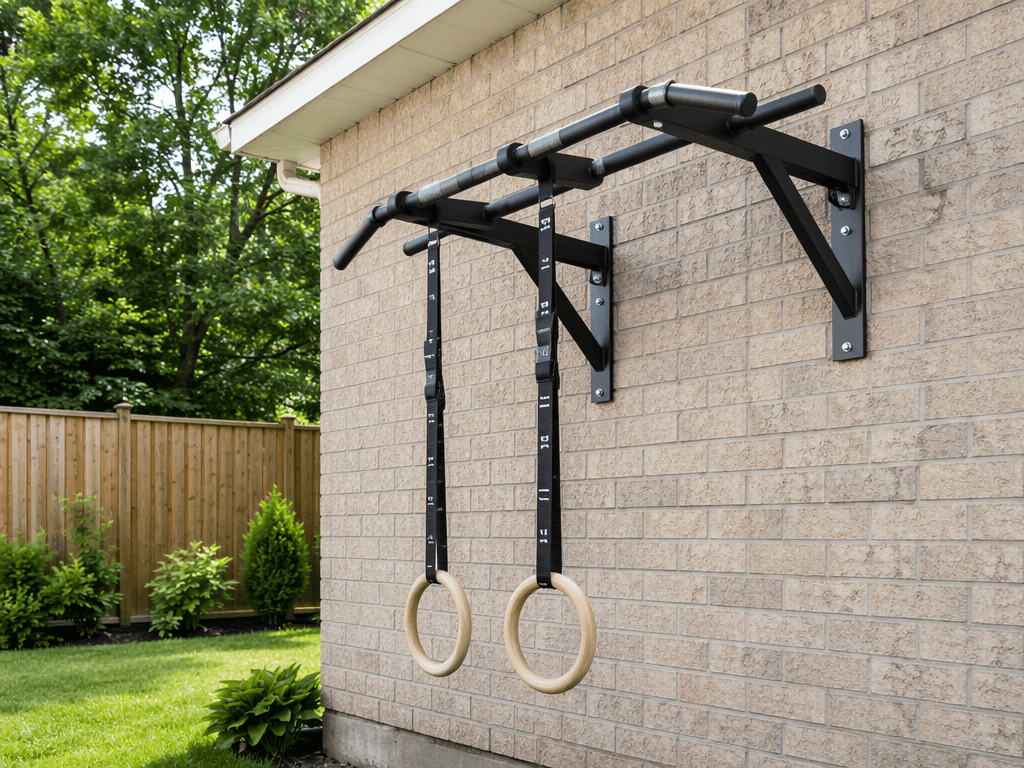
A wall-mounted pull-up bar typically costs $100–$150 and mounts directly to an exterior wall using heavy-duty lag bolts. Installation requires a structural wall — brick, concrete, or wood framing — and the appropriate masonry anchors or wood screws. The bar itself provides the foundation for pull-ups, chin-ups, and hanging leg raises.
Adding a pair of gymnastic rings ($30–$60) transforms this minimal setup into a full-body training station. Suspended from the pull-up bar or a separate anchor point, rings enable rows, ring dips, ring push-ups, muscle-up progressions, and a wide range of isometric holds. The rings themselves are lightweight and can be stored indoors when not in use, eliminating weather exposure concerns.
- Equipment needed: Wall-mounted pull-up bar ($100–$150), gymnastic rings with adjustable straps ($30–$60), masonry anchors or lag bolts (included or $10–$20)
- Total cost: $130–$230
- Footprint: 0 sq ft (wall-mounted)
- Exercises available: Pull-ups, chin-ups, hanging leg raises, ring rows, ring dips, ring push-ups, muscle-up progressions, L-sits, skin-the-cats
- Installation notes: Ensure the wall can support dynamic loads (your body weight plus momentum). Use masonry anchors for brick or concrete; use structural screws into studs for wood framing. Allow 24 inches of clearance in front of the bar for ring work.
50–150 Sq Ft: Compact Power Tower (The All-in-One Solution)
If you have a small patio, a side yard strip, or a corner of a larger yard that measures roughly 50–150 sq ft, a freestanding power tower is the most practical all-in-one calisthenics station. It consolidates pull-up, dip, knee raise, and push-up stations into a single unit with a footprint of roughly 3×4 ft — about the size of a standard doormat.
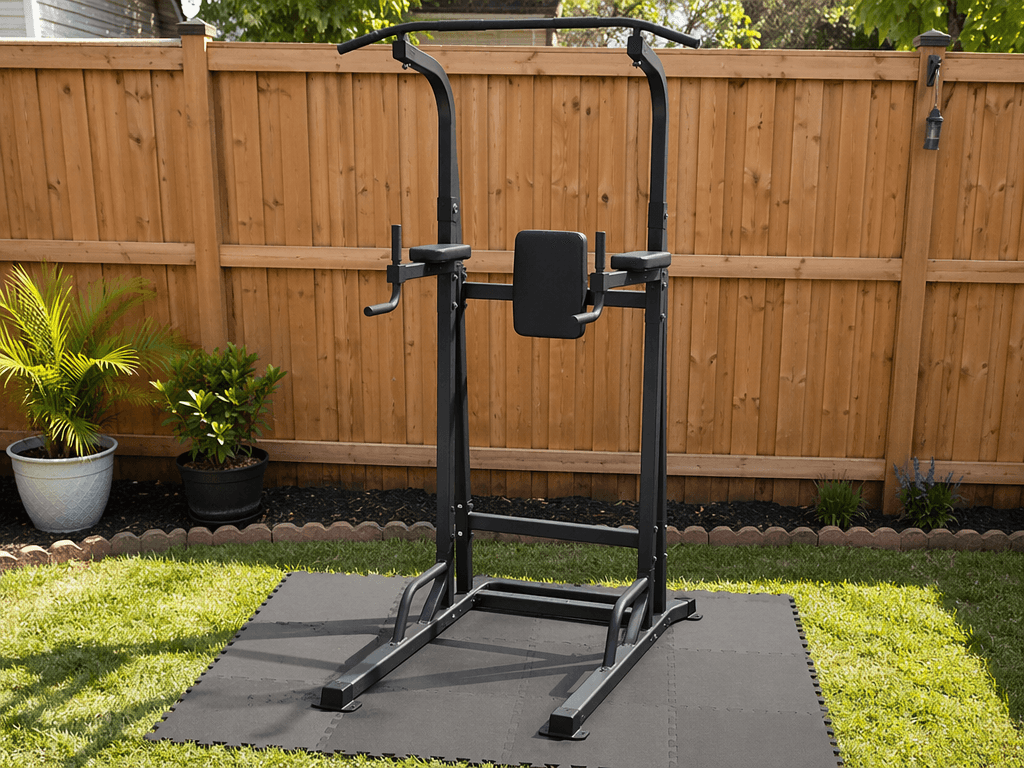
The Sportsroyals Power Tower, a representative model in this category, offers a 450 lb capacity and costs approximately $200–$300. It includes a pull-up bar, parallel dip bars, a backrest for knee raises, and push-up handles. The unit is freestanding and requires no anchoring on a flat, stable surface, though surface mounting with expansion bolts is recommended for heavy or dynamic use.
The trade-off with a power tower is between portability and stability. A freestanding unit on puzzle mats or concrete can be moved if you rearrange your space, but it may shift during intense kipping pull-ups or explosive dips. If you plan to use the tower for dynamic movements, surface-mounting it to a concrete slab with expansion bolts eliminates wobble and extends the equipment's lifespan.
| Feature | Sportsroyals Power Tower (Typical) |
|---|---|
| Footprint | 3 × 4 ft |
| Weight capacity | 450 lb |
| Price | $200–$300 |
| Stations | Pull-up bar, parallel dip bars, knee raise station, push-up handles |
| Anchoring | Freestanding (recommend surface mounting for stability) |
| Surface | Puzzle mats on concrete or compacted gravel; concrete pad for mounting |
| Weatherproofing | Powder-coated steel (check for TGIC coating spec) |
For readers weighing whether a power tower or a multi-station rig is the better long-term investment, our Power Towers vs. Calisthenics Stations vs. DIY Rigs comparison breaks down the durability, cost, and space trade-offs between these two categories.
150+ Sq Ft: Multi-Station Calisthenics Rig (The Permanent Outdoor Gym)
If you have a dedicated corner of your yard measuring 150 sq ft or more, a multi-station calisthenics rig is the most capable and durable option. These are permanent structures designed to live outdoors for decades, offering multiple pull-up bars at varying heights, ring attachment points, climbing elements, and sometimes parallel bars — all on a single welded frame.
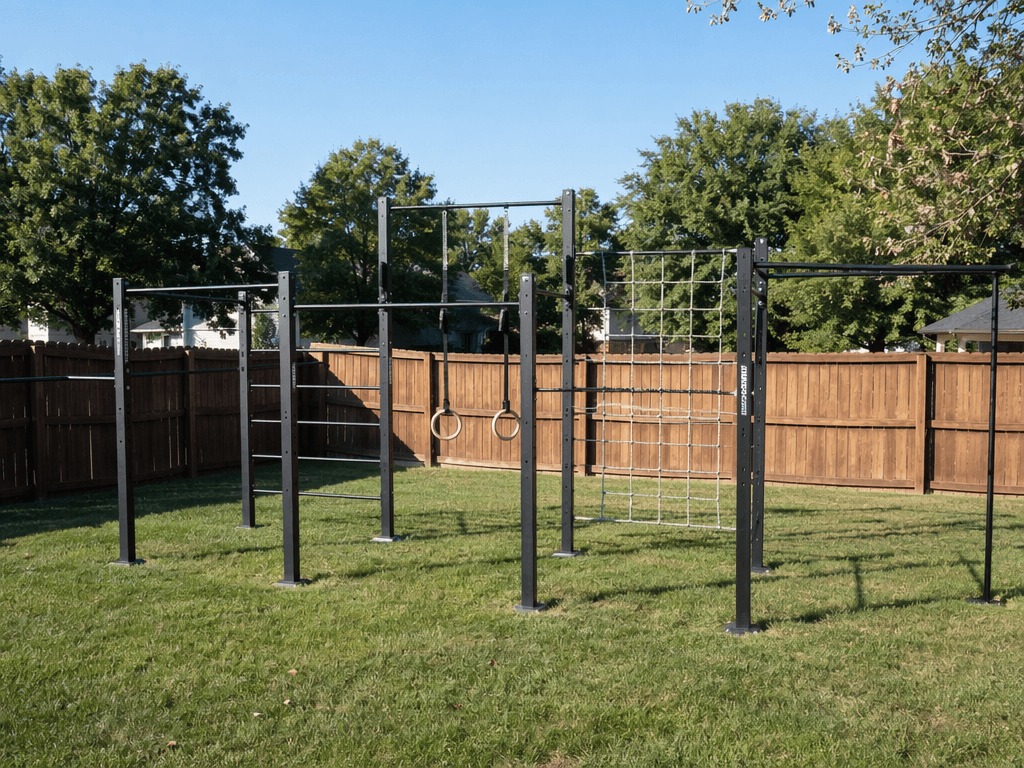
Two manufacturers dominate this category for home use: SwingSesh and TriActive USA.
SwingSesh Outdoor Rigs
SwingSesh offers a range of dedicated outdoor calisthenics rigs designed for permanent installation. The SimpleSesh, their entry-level model, starts at $3,200 and includes multiple pull-up bars, ring attachment points, and a climbing element. The Outdoor Rig & Power Rack starts at $1,800, while the SpartanSesh Cube ranges from $4,800 to $8,900. All SwingSesh products use plastic-coated heavy-gauge steel that the manufacturer claims requires no maintenance.
TriActive USA Stations
TriActive USA's horizontal bar and dip station products use TGIC powder coating tested to 1,000 hours of salt spray resistance — a commercial-grade durability standard. Their stations range from $1,178 to $1,350 and are designed for concrete footing installation. With proper maintenance, TriActive equipment can last up to 20 years.
DIY Wooden Structures: The Budget Alternative
For handy homeowners on a tight budget, a DIY wooden calisthenics structure built from pressure-treated lumber and galvanized hardware can cost $200–$500 in materials. A basic design includes two upright 4×4 posts, a crossbeam for pull-ups, and parallel dip bars. These structures typically last 5–10 years outdoors before the wood begins to rot or warp, even with proper sealing and maintenance.
Budget Ranges and Quick Comparison
The table below summarizes the three setup tiers by yard size, equipment type, footprint, total cost, and key trade-offs. Use it as a final decision-making tool based on your space and budget.
| Yard Size | Equipment | Footprint | Total Cost | Key Trade-Offs |
|---|---|---|---|---|
| Under 50 sq ft | Wall-mounted bar + rings | 0 sq ft (wall-mounted) | $130–$230 | Requires structural wall; limited to bodyweight exercises; rings add versatility at near-zero cost |
| 50–150 sq ft | Compact power tower (e.g., Sportsroyals) | 3 × 4 ft | $200–$300 | All-in-one station; freestanding may shift during dynamic use; surface mounting recommended |
| 150+ sq ft | Multi-station rig (SwingSesh, TriActive, or DIY) | 4 × 6 ft to 6 × 8 ft | $1,178–$8,900 (commercial) or $200–$500 (DIY) | Most capable and durable; requires concrete footings; DIY option is budget-friendly but less durable |
Final Tips for a Long-Lasting Outdoor Calisthenics Setup
Calisthenics equipment requires far less maintenance than plate-loaded or cable-based gear, but a few simple habits will extend its lifespan significantly.
- Monthly wipe-down: Wipe steel frames with a damp cloth and apply a light coat of mineral oil or 3-in-One Oil to prevent surface rust. For vinyl bench upholstery and rubber parts, use 303 Aerospace Protectant to protect against UV damage.
- Touch up scratches: Inspect powder-coated surfaces for chips or scratches. Touch up with matching exterior-grade paint to prevent rust from spreading under the coating.
- Drill drain holes: For power towers and rigs with hollow uprights, drill small drain holes at the lowest points to prevent water from pooling inside the tubes. Standing water inside a steel tube accelerates rust from the inside out.
- Cover in extreme weather: While quality outdoor gear is designed to withstand rain and sun, covering it with a tarp during prolonged wet seasons or winter storage reduces long-term wear. Ensure the cover allows airflow to prevent condensation.
- Store accessories indoors: Gymnastic rings, suspension trainers, and adjustable straps should be stored in a deck box or indoors when not in use. Nylon webbing and rubber grips degrade faster than steel when exposed to continuous UV.
If you decide to expand your outdoor gym beyond calisthenics — adding adjustable dumbbells, a weight bench, or cardio equipment — our Best Outdoor Exercise Equipment for Backyard Gyms guide covers the full range of weather-resistant options across all equipment categories.
Comments
Join the discussion with an anonymous comment.