
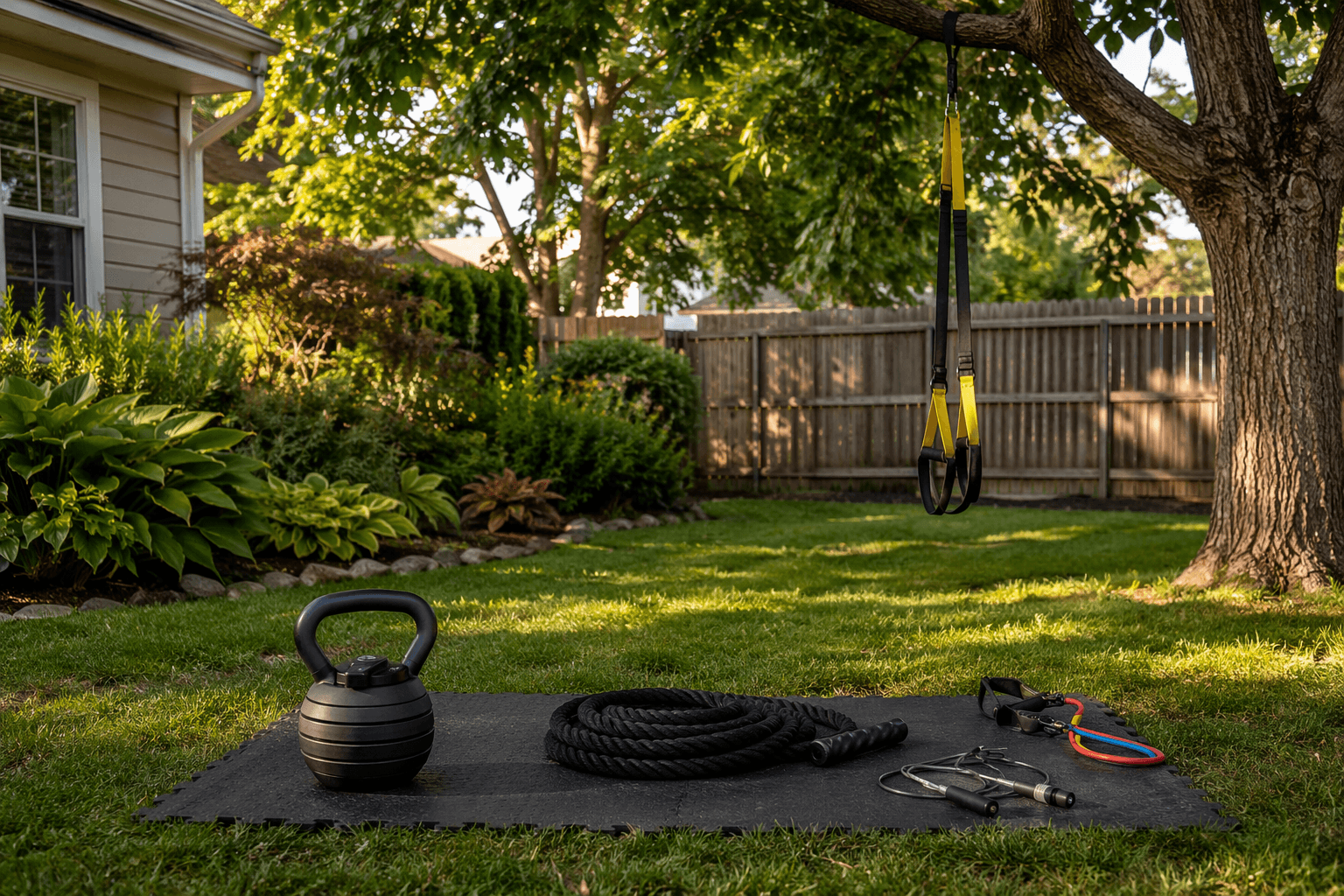
Why Move Your Workout Outside?
The case for taking your training beyond four walls is stronger than a simple change of scenery. Research has consistently linked outdoor exercise to reduced stress, improved mood, and increased feelings of revitalization compared to indoor workouts. When nearly 78% of exercisers now cite mental or emotional well-being as their top reason for working out — a finding from the ACSM's 2026 trends survey — the environment you choose matters more than ever.
There is also a practical, financial argument. The global outdoor gym equipment market was valued at $2.42 billion in 2026 and is projected to grow at an 8.3% CAGR through 2034, according to Straits Research. That growth is not just about municipal park installations; it reflects a mainstream shift toward residential outdoor fitness. Homeowners and renters alike are realizing that a patch of grass, a patio, or even a balcony can serve as a perfectly functional training zone — without the monthly membership fees or the commute.
The barrier has never been space or biology. It has been the assumption that outdoor gear must be expensive, permanent, or commercial-grade to be effective. This guide exists to dismantle that assumption. You can build a full-body outdoor gym for under $500 using portable, weather-resistant equipment that stores indoors when not in use. No concrete foundations, no covered structures, no thousand-dollar multi-station frames — just smart gear choices and basic storage discipline.
The Budget Ceiling: What You Can Get for Under $200, $500, and $1,000
Setting realistic expectations is the first step. The core thesis of this guide is a sub-$500 portable setup, but understanding what each budget tier unlocks helps you decide where to invest your first dollars.
| Budget Tier | What It Includes | Limitations |
|---|---|---|
| Under $200 | Jump rope ($15), resistance band set ($40–$80), DIY incline bench materials (~$80), and a basic yoga mat. | No adjustable kettlebell or suspension trainer. Relies heavily on bodyweight and band resistance. Best for getting started with minimal commitment. |
| Under $500 | Everything in the $200 tier plus a PowerBlock adjustable kettlebell ($199) and a suspension trainer ($60–$150). Covers the full strength, cardio, and mobility spectrum. | No adjustable dumbbells (those start around $335). No rower or fan bike. The gear is entirely portable and must be stored indoors. |
| Under $1,000 | Adds REP QuickDraw adjustable dumbbells ($335.99) and a Concept2 RowErg ($900+) or a folding treadmill. Begins to overlap with indoor-gym territory. | Still portable, but storage footprint grows. The rower alone weighs 57 lbs and requires vertical storage space. You are approaching the price of a permanent structure. |
For the purposes of this guide, we are targeting the $500 ceiling. That sweet spot buys you a versatile, four-piece equipment stack that covers strength, cardio, and mobility without requiring a shed, a permit, or a second mortgage.
Weatherproofing 101: What Materials Actually Hold Up
You do not need to become a metallurgist to keep your gear alive outdoors, but understanding a few material basics separates equipment that lasts a season from equipment that lasts a decade. The key is matching the material to the exposure level your gear will actually face.
- Powder-coated steel: The gold standard for frames and weight stacks. Quality powder coating resists rust, UV fade, and moisture far better than painted or bare steel. Commercial-grade outdoor equipment with proper coatings commonly serves 10 to 15 years, according to TriActive USA.
- Marine-grade fasteners: Stainless steel or galvanized bolts, screws, and pins resist corrosion in humid or coastal environments. If a piece of gear uses standard zinc-plated hardware, plan to store it indoors.
- UV-resistant rubber and latex: Resistance bands, kettlebell handles, and suspension trainer straps degrade under direct, prolonged sun exposure. Look for bands labeled UV-resistant or made from natural latex with a protective coating. Living.Fit's resistance bands, for example, use latex and are backed by a lifetime warranty — a strong signal of material confidence.
- Hot-dipped galvanization: A thicker zinc coating than standard galvanization. You will find this on commercial park equipment, but it is rare on sub-$500 residential gear. If you see it, consider it a bonus.
For a deeper dive into material science and long-term durability, see our dedicated guides on rust-resistant racks, benches, and barbells and what makes outdoor equipment last. For this guide, the takeaway is simple: buy gear with powder-coated or marine-grade components, store it out of direct sun and rain, and you will get years of use from a sub-$500 investment.
The Gear: 6 Portable, Weather-Resistant Picks for Under $500
The following six pieces form the core of a sub-$500 outdoor gym. Each was selected for its durability-to-weight ratio, storage footprint, and ability to deliver progressive overload without a power source or permanent anchor point.
| Item | Price | Why It Works Outdoors | Storage Tip |
|---|---|---|---|
| PowerBlock Adjustable Kettlebell | $199 | Selector-pin mechanism replaces 4 kettlebells in one compact unit. Powder-coated steel handle resists rust. No loose plates to corrode. | Store in its included base inside a deck box or closet. Wipe the selector pin dry after use. |
| Suspension Trainer (TRX or comparable) | $60–$150 | Anchors to a tree branch, fence post, or sturdy beam. Nylon straps are UV-resistant and dry quickly. No metal parts to rust. | Coil and store in its carry bag. Keep out of direct sunlight when not in use to extend strap life. |
| Battle Ropes | $40–$80 | Polyester or nylon construction resists moisture and mildew. No moving parts. Can be used on grass, concrete, or rubber mats. | Coil loosely in a ventilated bin. Do not store wet — hang to dry first to prevent mildew. |
| Living.Fit Resistance Bands (Complete Set) | $128 | Latex construction with a lifetime warranty. Resistance range of 6–250 lbs. Research cited by GGR (Lopes et al., 2019) shows elastic resistance provides similar strength improvements to traditional weights. | Store in a cool, dark bin. Latex degrades under prolonged UV exposure. Inspect for cracks before each use. |
| Jump Rope (Speed or Weighted) | $15 | Virtually indestructible. PVC or vinyl cable resists moisture. Handles are foam or plastic — no rust concerns. | Toss in any drawer or bin. No special storage required. |
| DIY Wooden Incline Bench (Materials) | ~$80 | Build from pressure-treated lumber and stainless steel hardware. Plans available on Etsy. Adjustable angle for presses, rows, and step-ups. | Store indoors or under a covered porch. Pressure-treated wood resists rot but should not sit in standing water. |
Total cost for the full stack: approximately $522 if you buy the suspension trainer at the high end, or $442 if you opt for a budget suspension trainer. Either way, you land within striking distance of the $500 target and cover every major movement pattern — push, pull, squat, hinge, carry, and rotational work.
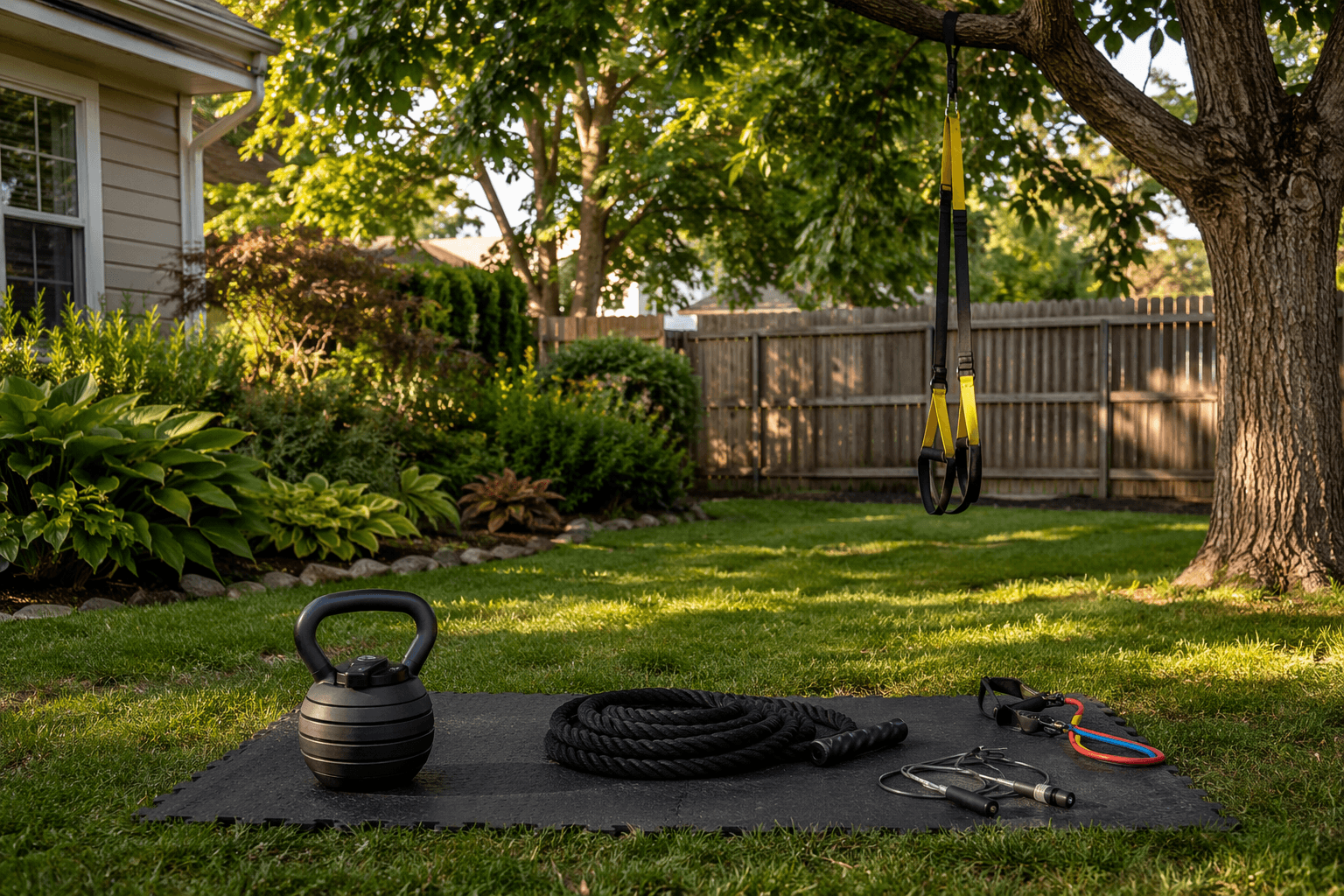
Storage Strategies: Keeping Your Gear Dry and Organized
The single most important factor in extending the life of budget outdoor gear is not the quality of the equipment — it is the discipline of putting it away. Every piece recommended in this guide is designed to be moved indoors or into a weatherproof container after use. That is the key differentiator from permanent installations: you trade a few minutes of setup and breakdown for a drastically lower cost and a longer equipment lifespan.
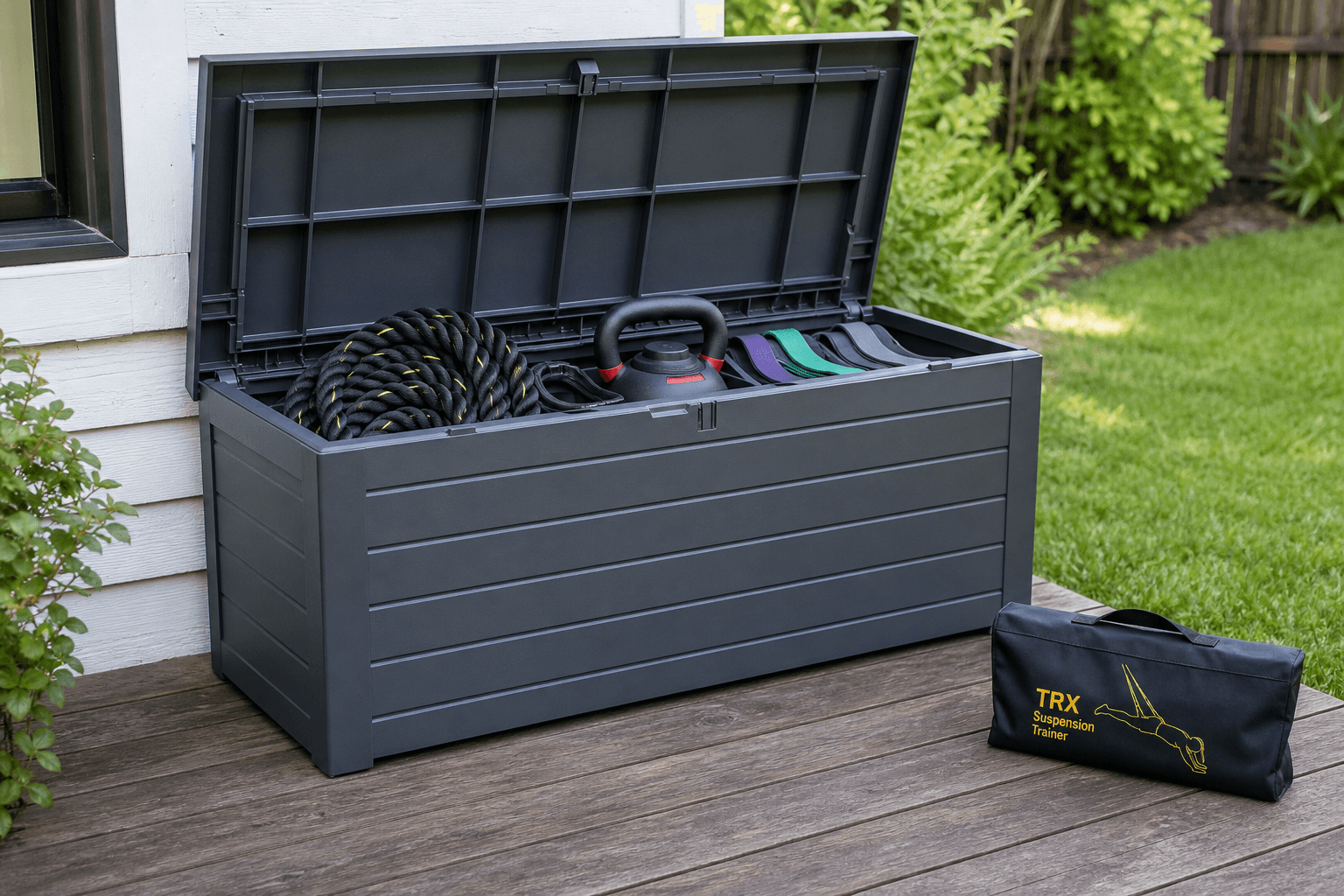
- Waterproof resin deck box: A 50–100 gallon deck box costs $50–$100 and fits a kettlebell, resistance bands, a jump rope, and coiled battle ropes. Look for UV-stabilized resin with a gasketed lid to keep out rain and pests. This is the single best storage investment for a patio or backyard setup.
- Garden shed or covered porch bin: If you have a small shed, dedicate a shelf or a plastic tote to your gear. The key is airflow — metal bins trap moisture. Use a ventilated plastic tote or a bin with drainage holes.
- Indoor closet or corner: The simplest option. A suspension trainer in its carry bag, a kettlebell on a low shelf, and a bin of bands take up less than 4 square feet of floor space. If you have a coat closet or a corner of a bedroom, you have a storage solution.
- Over-the-door hooks and wall racks: Jump ropes, suspension trainers, and band loops can hang on a hook inside a closet or on the back of a door. This keeps them dry and visible, which increases the likelihood you will actually use them.
Maintenance Checklist to Extend Gear Life
A five-minute post-workout routine will add years to your equipment. Here is the maintenance cadence for the gear in this guide:
- Rinse with fresh water: After every outdoor session, especially if you worked out on grass or in humid conditions. Salt from sweat and minerals from grass clippings accelerate corrosion. A quick spray from a garden hose removes the residue.
- Dry before storing: Wipe down metal surfaces with a microfiber cloth. Let latex bands and nylon straps air-dry in the shade for 10–15 minutes before coiling. Storing wet gear is the fastest way to invite rust and mildew.
- Inspect for rust, cracks, and wear: Once a month, check powder-coated surfaces for chips that expose bare metal. Check resistance bands for small cracks or flat spots — replace them immediately if you find any. Check suspension trainer carabiners and anchor loops for fraying.
- Lubricate moving parts: The selector pin on an adjustable kettlebell benefits from a drop of silicone lubricant every few months. Do not use oil-based lubricants, which attract dust and grit.
- Replace bands when they show cracks: Latex bands have a finite lifespan, even with perfect care. The lifetime warranty on Living.Fit bands covers defects, but normal wear and UV degradation are your responsibility. When a band shows any crack, retire it.
For a more detailed maintenance protocol covering larger equipment and long-term storage, see our comprehensive guide to what makes outdoor equipment last.
Sample Full-Body Workout (Using 3–4 Pieces of Gear)
A buying guide is only useful if the gear actually gets used. Below is a complete, followable full-body workout that uses the equipment mix recommended in this guide — kettlebell, suspension trainer, resistance bands, and jump rope. No gym, no power rack, no excuses.
Warm-Up (5 Minutes)
- Jump rope: 2 minutes (rest 30 seconds if needed)
- Band pull-aparts (light resistance): 15 reps
- Bodyweight squats: 15 reps
- Arm circles (forward and backward): 30 seconds each direction
Main Circuit (Repeat 3 Rounds, Rest 60 Seconds Between Rounds)
| Exercise | Gear | Sets x Reps | Notes |
|---|---|---|---|
| Kettlebell Goblet Squat | Adjustable kettlebell | 3 x 10–12 | Hold the kettlebell at chest height. Keep your chest up and drive through your heels. |
| Suspension Trainer Row | Suspension trainer | 3 x 8–10 | Walk your feet forward to increase difficulty. Keep your body in a straight line from head to heels. |
| Kettlebell Single-Arm Overhead Press | Adjustable kettlebell | 3 x 8 per side | Brace your core. Do not arch your lower back to press the weight overhead. |
| Band Glute Bridge | Resistance band (medium or heavy) | 3 x 15 | Place the band just above your knees. Drive your hips up and squeeze your glutes at the top. |
| Battle Rope Slams | Battle ropes | 3 x 30 seconds | Explosive, full-body movement. Slam the ropes as hard as you can. Keep your core tight. |
Cool-Down (5 Minutes)
- Band hamstring stretch: 30 seconds per leg
- Suspension trainer chest stretch: 30 seconds per side
- Deep breathing (box breathing): 2 minutes
This workout hits every major muscle group, builds cardiovascular endurance, and requires only the gear you already bought. Perform it 3–4 times per week on non-consecutive days for a complete training program.
When to Step Up to Permanent Structures
The portable sub-$500 approach is not a permanent ceiling — it is an on-ramp. At some point, you may find yourself wanting a dedicated pull-up bar, a barbell and plate set, or a rower that stays assembled year-round. That is the moment to consider a permanent or semi-permanent outdoor structure.
Signs you are ready to upgrade include:
- You have outgrown the resistance range of your bands and kettlebell.
- You are setting up and breaking down gear every day and wish it were always ready.
- You have a dedicated space (a covered patio, a garage corner, or a 100–200 sq ft backyard area) that can accommodate a permanent setup.
When that time comes, our complete guide to building a backyard gym on any budget covers the full range from $500 to $5,000, including permanent racks, barbells, and weatherproof storage sheds. But for now, the six pieces of gear in this guide will deliver a full-body workout that rivals anything a commercial gym offers — for less than the cost of six months of membership dues.
Comments
Join the discussion with an anonymous comment.