
Why Most Home Gym Equipment Fails Outdoors — and How to Prevent It
Moving your training outdoors sounds straightforward: set up a rack on the patio, leave the barbell on the bench, and enjoy fresh air instead of stale garage air. But the moment your equipment is exposed to rain, humidity, direct sunlight, and temperature swings, three distinct failure modes begin working against it.
The first is rust. Moisture — whether from rain, morning dew, or high humidity — attacks exposed metal surfaces. Bare steel can show surface rust within hours in a humid environment. The second is UV degradation. Ultraviolet radiation breaks down polymers: rubber bumper plates develop surface checking, vinyl upholstery cracks and fades, and plastic components become brittle. The third is moisture ingress. Water seeps into hollow uprights, unsealed bolt heads, and moving parts, causing internal corrosion that is invisible until the structure weakens.
The difference between equipment that lasts two years and equipment that lasts fifteen comes down to three factors: coating type, material choice, and design features. This article compares power racks, weight benches, barbells, and plates based on those three factors so you can choose gear that survives real outdoor conditions — not just marketing claims.
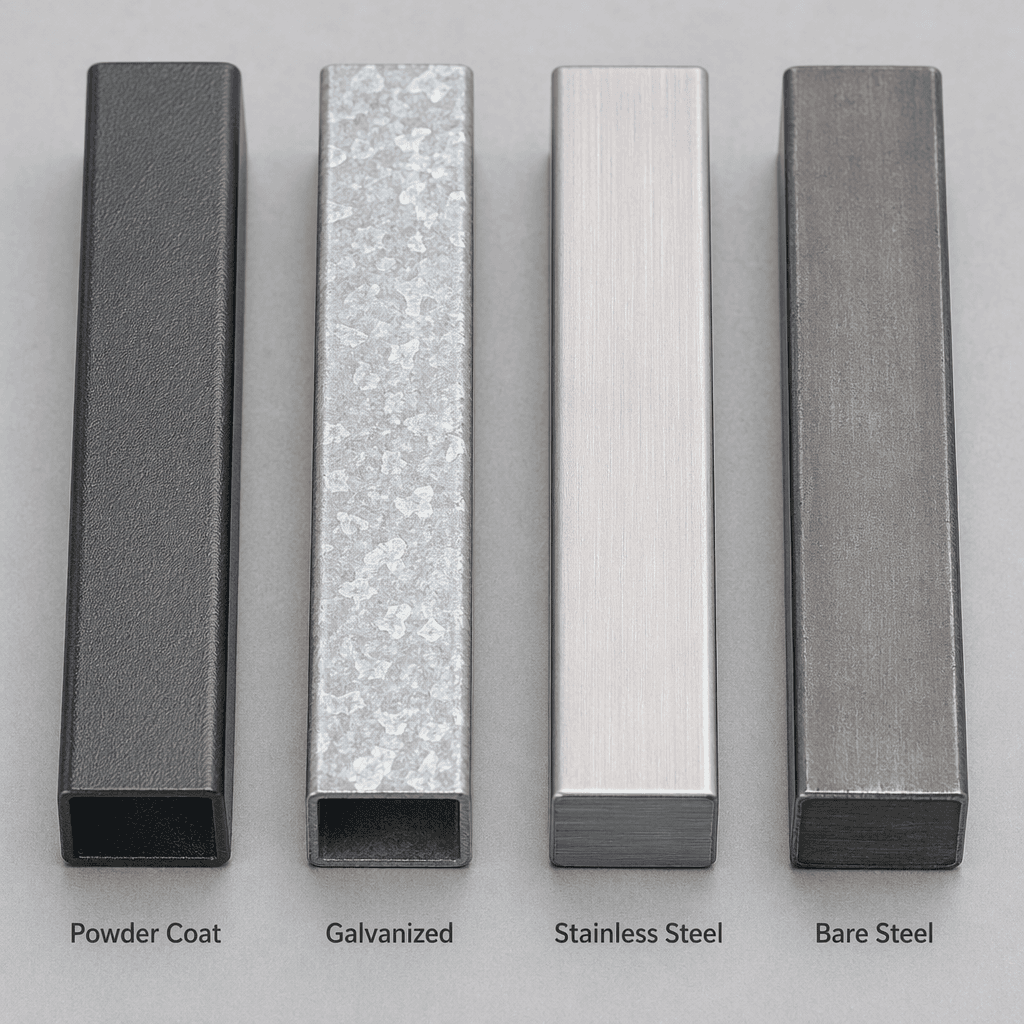
Material Comparison: Powder-Coated vs. Stainless Steel vs. Galvanized vs. Bare Steel
Every piece of outdoor equipment starts with a base metal — almost always steel — and then receives a surface treatment that determines how long it resists corrosion. The table below compares the four most common options you will encounter when shopping for outdoor-rated gear.
| Material / Coating | Corrosion Resistance | Maintenance Required | Cost Tier | Typical Lifespan Outdoors |
|---|---|---|---|---|
| Powder-coated steel | High (with 1,000+ hour salt spray rating) | Low — touch up chips promptly | Mid-range | 10–20 years |
| Stainless steel | Very high (chromium oxide layer) | Minimal — occasional cleaning | Premium | 15–20+ years |
| Hot-dip galvanized steel | High (zinc coating) | Low — zinc patina self-heals minor scratches | Mid-range | 10–15 years |
| Bare steel (painted or oiled) | Low | High — frequent oiling, repainting | Budget | 1–3 years |
Powder coating is the most common finish on residential outdoor equipment. The key specification to look for is salt spray testing duration. Commercial-grade equipment from suppliers like TriActive USA is tested to 1,000 hours of salt spray resistance, which indicates the coating can withstand years of outdoor exposure. If a manufacturer does not publish a salt spray rating, assume the coating is cosmetic-grade and will degrade faster.
Stainless steel offers the best weather resistance due to its chromium content, which forms a passive oxide layer that prevents rust. It is the most expensive option but requires virtually no shaft maintenance for barbells. Hot-dip galvanized steel — where the entire frame is dipped in molten zinc — provides excellent corrosion resistance at a lower cost than stainless, though the characteristic spangled finish is less visually refined. Bare steel with only a paint or oil coating is the cheapest upfront but demands constant attention and will fail quickly if neglected.
Power Racks: Coating Quality, Drain Holes, and Frame Design
A power rack is the most expensive single piece of outdoor gym equipment, so getting the material and design right matters most here. The frame must resist corrosion from the outside — rain, humidity, UV — and from the inside, where condensation and trapped water can cause hidden rust.
Start with the coating. Look for a thick powder coat with a published salt spray rating. If the manufacturer does not specify a rating, the coating is likely intended for indoor use only. The frame should be made from strong steel tubing — 11-gauge or 12-gauge for residential use — with the powder coat applied evenly over all surfaces, including the interior of the tubing where possible.
Drain holes are a critical design feature that many indoor racks lack. Water that enters the uprights — through open tops, bolt holes, or j-hook slots — needs a way out. The lowest point of each upright should have a small drilled drain hole to prevent water from pooling inside. Without drain holes, standing water inside the frame accelerates internal corrosion that you cannot see until the metal weakens.
Exposed nuts, bolts, and moving parts are vulnerable points. Spraying exposed hardware with enamel paint adds a protective layer. For the interior of the uprights, an internal frame coating like Eastwood's internal frame coating provides an extra barrier against moisture that enters through the top of the upright.
Weight Benches: Marine-Grade Vinyl, Sealed Seams, and Rust-Resistant Frames
Weight benches face a dual challenge: the frame must resist rust, and the upholstery must survive sun and moisture. A bench with a rusted frame but intact upholstery is still usable; a bench with rotted upholstery but a clean frame is uncomfortable and unsafe.
For the frame, look for powder-coated or stainless steel construction. The same coating and material principles that apply to power racks apply here. Benches rated for outdoor use typically have weight capacities of 600 to 1,000 pounds, which is sufficient for most home lifters. Ensure the frame has drainage features — small holes or channels that prevent water from pooling on horizontal surfaces.
The upholstery is where most outdoor benches fail. Standard vinyl absorbs moisture through seams, cracks under UV exposure, and peels within a season. Outdoor-rated benches use marine-grade vinyl with sealed seams, which is designed to resist water penetration and UV degradation. The seams should be heat-sealed or welded, not stitched — stitched seams create needle holes that let water into the padding underneath.
- Marine-grade vinyl: Resists UV fading, cracking, and water absorption. Look for this term specifically — standard "leatherette" or "PU leather" is not the same.
- Sealed seams: Heat-welded or glued seams prevent moisture from wicking into the foam padding. Stitched seams will eventually leak.
- UV-resistant materials: The vinyl itself should be formulated with UV stabilizers. If the manufacturer does not mention UV resistance, assume the bench is indoor-only.
- 303 Aerospace Protectant: Apply this to the upholstery every quarter. It is the most recommended UV protectant for vinyl, rubber, and plastic components on outdoor gym equipment.
Barbells: Stainless Steel vs. Cerakote vs. Zinc — What Actually Works Outdoors
Barbells take the most abuse from outdoor conditions because they are handled constantly, exposed to sweat and moisture, and stored horizontally where water can pool on the shaft. The coating or material choice determines how often you need to maintain the bar — and whether it will still spin smoothly after a year outside.
| Barbell Type | Outdoor Durability | Shaft Maintenance | Cost | Best For |
|---|---|---|---|---|
| Stainless steel | Excellent | None required | $$$ | Permanent outdoor installation |
| Cerakote (ceramic coating) | Good | Light oiling | $$ | Covered outdoor areas |
| Zinc / Black oxide | Poor | Frequent oiling | $ | Indoor use only |
| Bare steel | Very poor | Constant oiling | $ | Not recommended outdoors |
Stainless steel barbells are the single best investment for an outdoor gym. The chromium content creates a passive oxide layer that prevents rust without any coating. The shaft requires no maintenance — no oiling, no wiping down after every session. The sleeves (the rotating ends) still need occasional lubrication, but the shaft itself is effectively maintenance-free. This makes stainless steel the clear choice for a barbell that will live outdoors permanently.
Cerakote is a ceramic-based coating that provides good corrosion resistance, but it is not as durable as stainless steel. If the coating chips — which it will over time from contact with j-hooks and plate collars — the exposed steel underneath can rust. Cerakote bars work well in covered outdoor areas where they are not exposed to direct rain.
Zinc and black oxide coatings are the worst performers outdoors. They provide minimal corrosion protection and will show rust within weeks of regular outdoor exposure. Bare steel is even worse — it can develop surface rust within hours in humid conditions. Neither should be used for an outdoor barbell.
For maintenance on non-stainless bars: apply 3-in-One oil to the shaft monthly to prevent rust, and spray WD-40 on the sleeve ends to repel water and keep the bushings or bearings spinning freely.
Weight Plates: Urethane vs. Rubber Bumper vs. Iron
Weight plates sit on the barbell or on the floor, often in direct sunlight and on damp surfaces. The material that encases the plate — or the lack of one — determines how well they survive outdoor conditions.
| Plate Type | UV Resistance | Temperature Stability | Maintenance | Outdoor Lifespan |
|---|---|---|---|---|
| Urethane-coated | Excellent | Stable across temperature swings | Minimal — occasional wipe-down | 10+ years |
| Rubber bumper | Moderate | Expands and contracts with temperature | 303 Protectant every quarter | 3–5 years |
| Cast iron (painted) | N/A | Stable | Oil and repaint as needed | 5–10 years with maintenance |
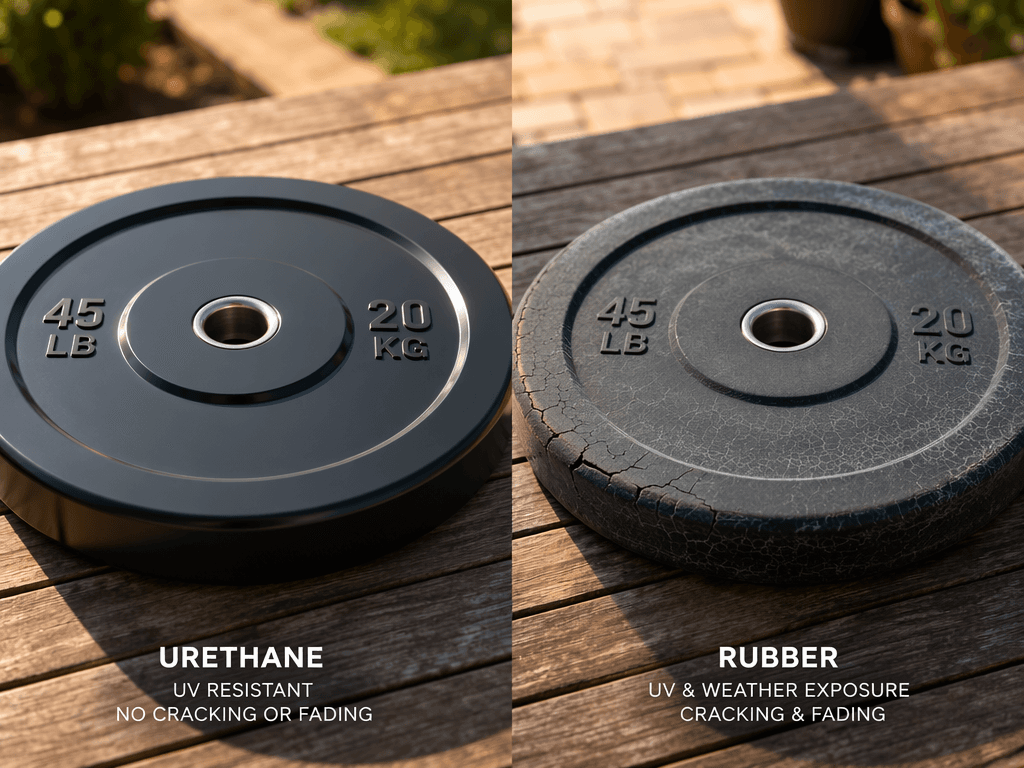
Urethane-coated plates are the best choice for outdoor use. Urethane is inherently UV-stable — it does not break down or discolor under sunlight the way rubber does. It also resists temperature swings without expanding or contracting, so the fit on the barbell remains consistent year-round. Urethane is more expensive than rubber, but the longevity advantage is significant.
Rubber bumper plates are the most common type in home gyms, but they perform poorly outdoors. Rubber expands and shrinks with temperature changes, which can cause the metal insert to loosen over time. UV exposure causes surface checking — tiny cracks that spread across the rubber surface — and eventually leads to deeper cracking and material degradation. Applying 303 Aerospace Protectant every quarter helps slow UV damage, but rubber bumpers will still degrade faster than urethane in outdoor conditions.
Cast iron plates are the most affordable option and can last outdoors if maintained. The key is the paint or coating. Factory paint jobs are often thin and chip easily, exposing bare iron to rust. Restoration is straightforward: sand off rust, apply a rust-inhibiting primer, and paint with a durable enamel. Oiling the plates periodically also helps prevent surface rust.
Cardio Machines and Other Equipment: What to Avoid or Protect
Not all equipment is suitable for outdoor use, and some types should never be left exposed. Cardio machines — treadmills, exercise bikes, ellipticals — perform poorly outdoors. Their electronic components, motors, and moving parts are not designed to handle moisture, dust, or temperature extremes. Even under a cover, condensation can damage circuit boards and cause bearing failure. If you must use cardio equipment outdoors, keep it in a fully enclosed structure or bring it inside after each use.
Some equipment types are naturally weather-resistant and require minimal protection:
- Suspension trainers (TRX, knockoffs): Nylon straps and plastic handles are UV-resistant and waterproof. Rinse with fresh water after use in salty or chlorinated environments.
- Battle ropes: Polyester or nylon ropes handle sun and moisture well. Store off the ground to prevent mildew on the underside.
- Kettlebells and dumbbells: Cast iron with powder coating or urethane coating works well outdoors. Bare cast iron needs occasional oiling.
- Jump ropes, resistance bands, and yoga mats: These are portable and should be stored indoors when not in use. UV will degrade rubber bands and foam mats quickly.
For a full breakdown of which equipment types can stay outside and which must be stored, see our complete weatherproofing and maintenance guide.
Protective Accessories: Covers, Canopies, and Storage Solutions
Even the best-coated equipment benefits from physical protection. Covers, canopies, and storage solutions reduce the amount of direct rain, sun, and debris that your gear has to withstand, extending its lifespan significantly.
Weatherproof covers are the first line of defense. Look for covers made from heavy-duty, UV-resistant fabric with sealed seams and a waterproof coating. The cover should fit snugly over the equipment — loose covers flap in the wind, trap moisture underneath, and accelerate wear. For power racks, a custom-fit cover that drapes over the entire frame is ideal. For barbells, a dedicated barbell cover or a simple PVC tube storage case keeps the shaft dry.
Canopy tents or pergolas provide overhead protection while keeping the space open and airy. The key consideration is height: standard pop-up canopies are often too short for overhead pressing. If you plan to do standing overhead press or pull-ups, look for a canopy with a peak height of at least 10 feet, or build a permanent pergola structure that clears your tallest movement.
- Weatherproof covers: UV-resistant, waterproof, snug fit. Replace every 2–3 years as fabric degrades.
- Canopy tents: Minimum 10-foot peak height for overhead work. Anchor securely against wind.
- Deck boxes: Store smaller items (bands, jump ropes, collars, gloves) in a waterproof deck box to keep them dry and out of direct sun.
- Sheds or semi-enclosed structures: The best long-term solution. A simple lean-to or shed keeps equipment dry and shaded while maintaining easy access.
For a full space-planning guide that covers flooring, layout, and storage for outdoor gyms, see our Backyard Gym Equipment guide.
Maintenance Schedule for Outdoor Gym Equipment
Even the most weather-resistant equipment needs regular attention. The schedule below covers the essential tasks that keep your gear functional and safe. Adjust frequency based on your local climate — humid coastal areas need more frequent maintenance than dry inland regions.
| Frequency | Task | Equipment |
|---|---|---|
| Monthly | Oil barbell shaft with 3-in-One oil; spray sleeve ends with WD-40 | Barbells |
| Monthly | Check drain holes in rack uprights for blockages; clear debris | Power racks |
| Quarterly | Apply 303 Aerospace Protectant to bench upholstery, rubber plates, and plastic components | Benches, plates, accessories |
| Quarterly | Inspect powder coating for chips or scratches; touch up with enamel paint | All coated equipment |
| Annually | Disassemble and lubricate moving parts (pulleys, cables, pivot points) | Cable machines, functional trainers |
| Annually | Inspect all bolts and hardware for rust; replace as needed | All equipment |
| Seasonally | Remove covers and let equipment air out on dry days to prevent trapped moisture | All covered equipment |
For a more detailed maintenance routine covering specific products and troubleshooting, see our complete weatherproofing and maintenance guide.
Product Recommendations by Equipment Type with Price Ranges
The following recommendations are organized by equipment type and reflect the material and design characteristics discussed throughout this guide. Prices are approximate and may vary by retailer and region. Always verify the coating type, salt spray rating, and design features before purchasing.
- Power racks: Look for powder-coated frames with a published salt spray rating of 500+ hours, drilled drain holes in uprights, and sealed bolt heads. Expect to pay $500–$1,500 for a residential outdoor-rated rack. Stainless steel hardware kits are worth the upgrade.
- Weight benches: Choose benches with marine-grade vinyl, sealed seams, and powder-coated or stainless steel frames. Weight capacity should be 600–1,000 lbs. Prices range from $200–$600 for outdoor-rated models.
- Barbells: Stainless steel is the only choice for permanent outdoor use. Expect to pay $300–$600 for a quality stainless steel barbell. Cerakote bars ($200–$400) are acceptable for covered areas but will not last as long.
- Weight plates: Urethane-coated plates ($2–$3 per lb) are the best outdoor choice. Rubber bumper plates ($1.50–$2.50 per lb) are acceptable with quarterly 303 Protectant application. Cast iron plates ($1–$2 per lb) work if maintained with oil and paint.
For a broader product roundup with specific model recommendations and side-by-side comparisons, see our Best Outdoor Exercise Equipment for Backyard Gyms article. If you are working within a specific budget, our Buyer's Guide for Backyard Workout Spaces provides budget-tier breakdowns.
Once you have selected your equipment, our Backyard Gym Equipment guide will help you plan the full space — flooring, layout, storage, and budget — so you can build an outdoor gym that lasts.
Comments
Join the discussion with an anonymous comment.