
Why Cushioning Matters for Runners with Joint Concerns
If you are a runner managing knee, hip, or ankle issues, the surface you run on is not a minor detail — it is a primary variable in your training load equation. The common assumption that any treadmill will be easier on your joints than pavement is only half true. The reality is more nuanced: treadmill cushioning exists on a spectrum, and the wrong point on that spectrum can either fail to protect your joints or alter your gait enough to create new problems.
Running on a treadmill is biomechanically distinct from running outdoors. Physical therapist Allison Greer, PT, DPT, SCS from the Hospital for Special Surgery notes that treadmill running increases Achilles tendon loading compared to overground running. The moving belt pulls the foot backward, which changes how the calf complex and Achilles tendon absorb and release energy. At the same time, the predictability of a treadmill allows for precise control of speed, incline, and duration — a significant advantage for systematic rehabilitation.
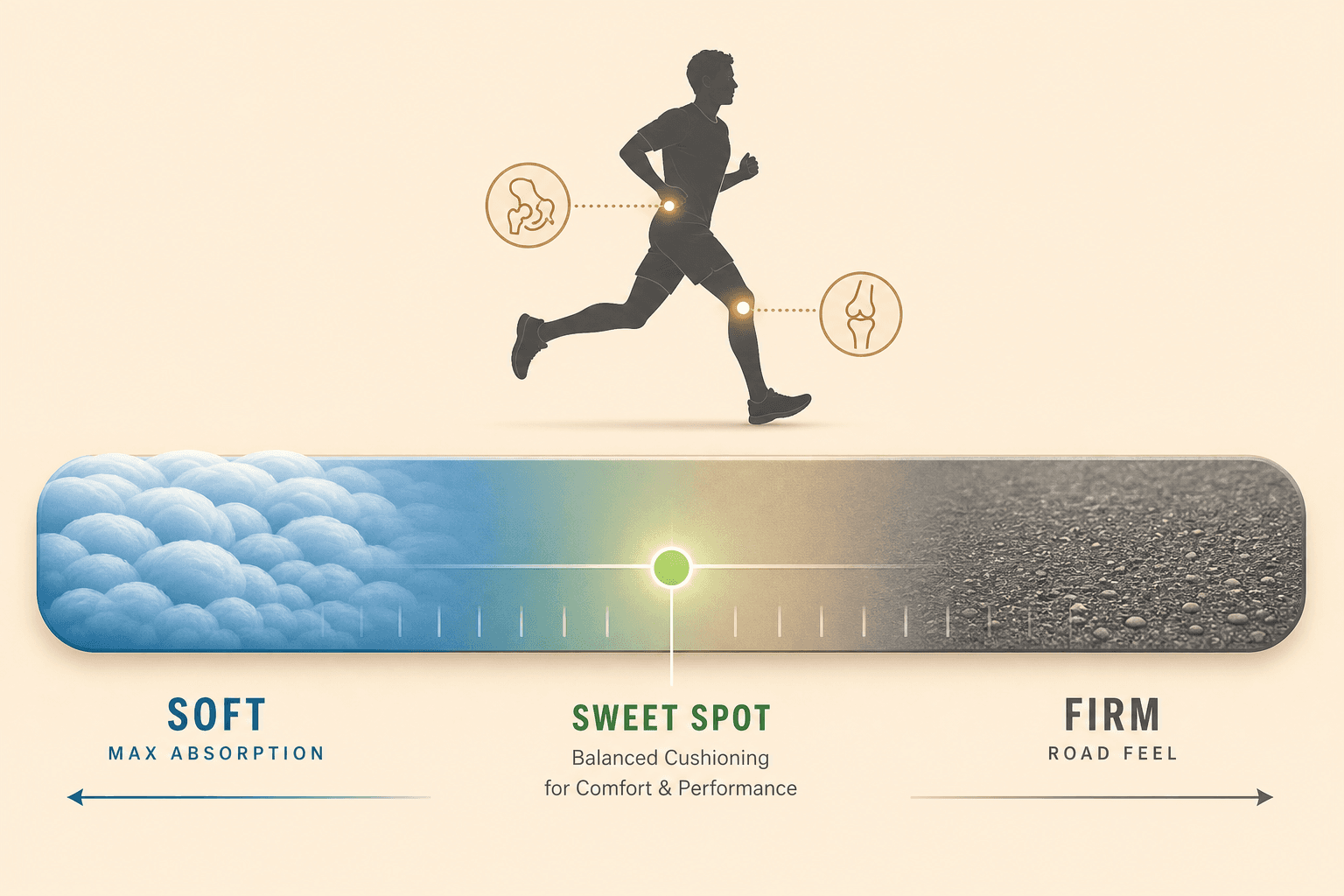
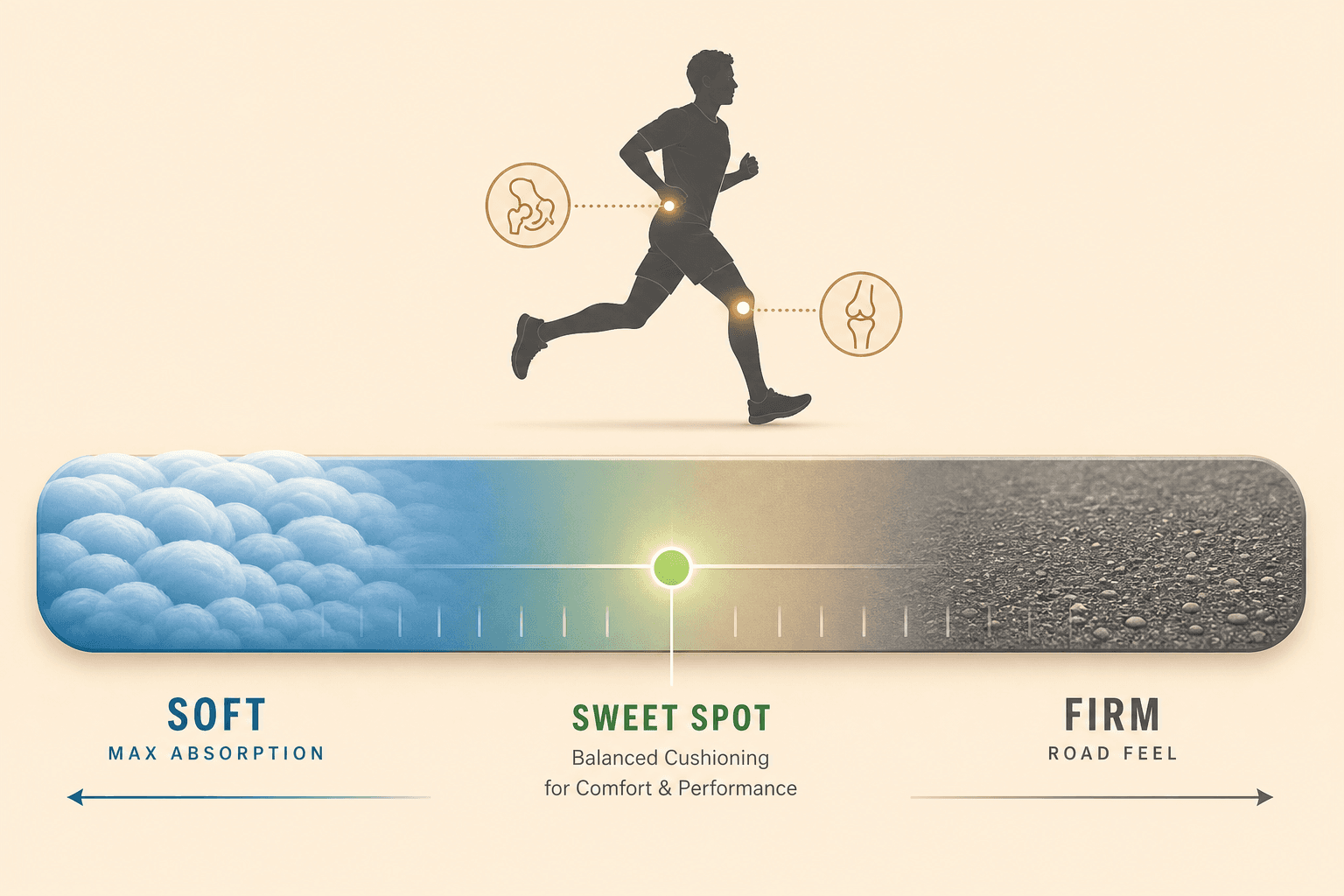
The core thesis of this guide is straightforward: the ideal treadmill deck for a runner with joint concerns reduces peak impact forces by at least 40% compared to asphalt while maintaining enough firmness for a natural gait cycle and efficient toe-off. Too soft, and you lose the proprioceptive feedback your joints need to stabilize properly. Too firm, and you might as well be running on the road. The goal is the sweet spot.
How Treadmill Cushioning Systems Work
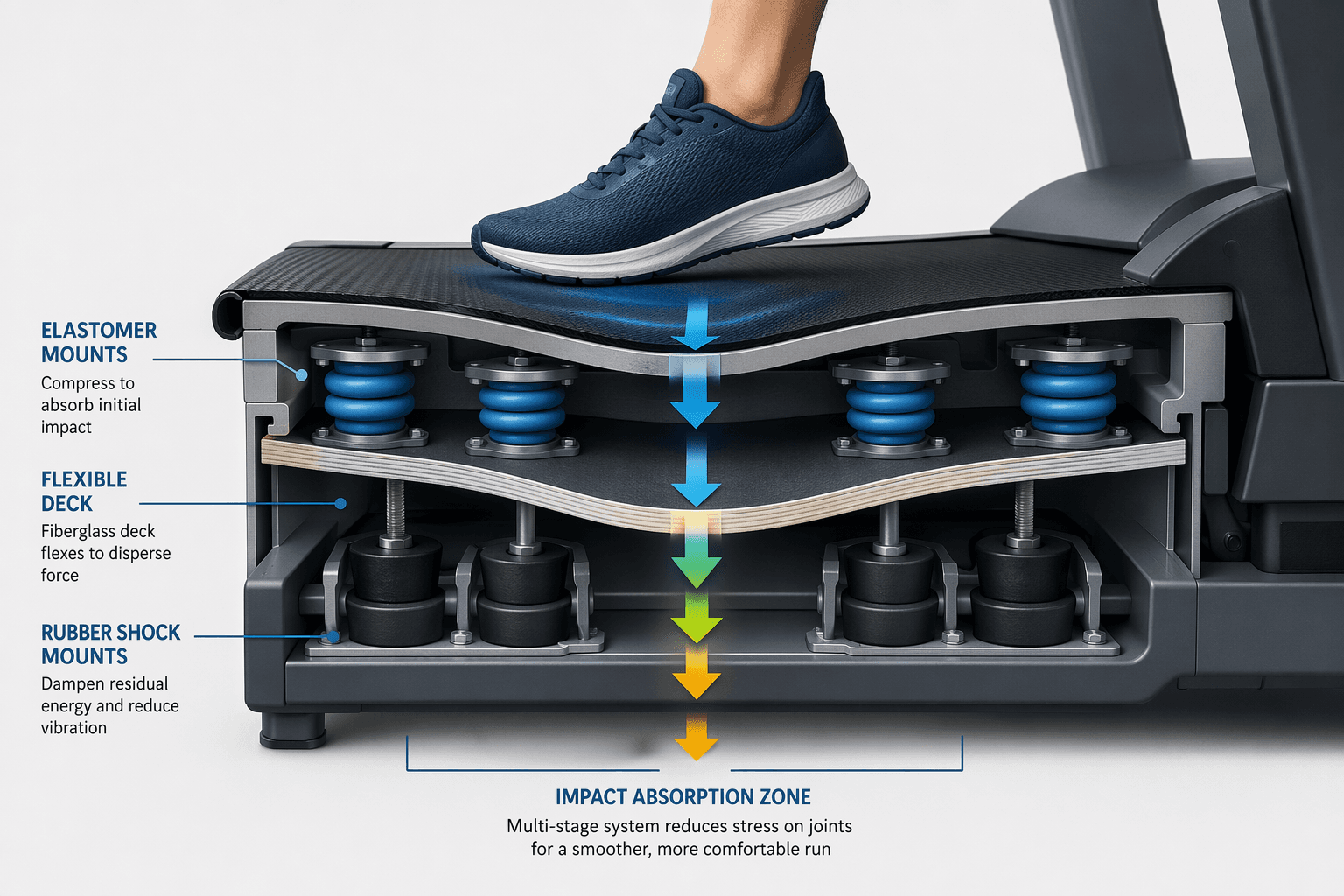
Treadmill decks do not absorb impact through magic or marketing. They use a combination of mechanical components designed to compress, flex, and rebound under load. Understanding these components helps you evaluate why one deck feels different from another — and why that difference matters for your specific joint concern.
The most common cushioning technologies include:
- Elastomer compression springs: These are rubber or urethane inserts positioned between the deck frame and the running belt. When your foot strikes, the elastomers compress to absorb vertical force, then rebound to return energy. The density and number of elastomers determine how much cushioning the deck provides.
- Rubber shock mounts: Similar to the bushings in a car suspension, these mounts isolate the deck from the frame. They reduce the vibration that travels through the machine and into your joints, particularly useful for runners with hip or lower-back sensitivity.
- Flexible deck boards: Some manufacturers use a thinner or more pliable deck board that bends slightly under load, creating a trampoline-like effect. This distributes the impact force over a longer time interval, reducing the peak load on your knees and ankles.
- Reversible decks: A practical durability feature that also affects cushioning consistency. The Sole F80, for example, uses a reversible deck that can be flipped once one side wears down, effectively doubling its lifespan while maintaining the same cushioning properties on both sides.
Each of these technologies produces a different feel underfoot. Some decks prioritize maximum impact absorption, which can feel plush or even marshmallow-like. Others prioritize responsiveness and road feel, which provides better proprioception but less impact reduction. The best choice depends on where your joint concern falls on that spectrum.
Quantitative Comparison: Cushioning Performance of Top Treadmills
The following table compiles the available quantitative data on cushioning performance from tested models. These figures come from a combination of manufacturer specifications, independent tester measurements, and expert reviews. Where data is based on manufacturer claims or tester blogs rather than independent lab testing, that is noted.
| Model | Cushioning System | Impact Reduction vs. Asphalt | Noise Level (Walking) | Adjustability | Ergonomics Rating |
|---|---|---|---|---|---|
| Sole F80 | Cushion Flex Whisper Deck | Up to 40% | 53.8 dB | Fixed (reversible deck) | N/A |
| NordicTrack Commercial 1750 | RunFlex Cushioning | Not specified | Not specified | Adjustable (on/off) | 5/5 |
| Bowflex T6 | Proprietary cushioning system | Not specified | Not specified | Fixed | 5/5 |
| Bowflex T9 | Comfortable deck | Not specified | Not specified | Fixed | Not specified |
Comments
Join the discussion with an anonymous comment.