
Xavier Legette's Training Routine You Can Do at Home
Xavier Legette's training highlights look like they require a pro facility, but the four pillars behind them — high-volume catching, boxing-style conditioning, short-burst speed work, and hamstring protection — transfer to a home setup. This routine adapts each documented pillar into an equipment-light, budget-tiered workout you can run in an apartment or spare room.
- Equipment tier required
- none
- Duration
- 35-50 min
- Difficulty
- beginner
- Target area
- full body
- Space footprint needed
- small
- Noise level
- low
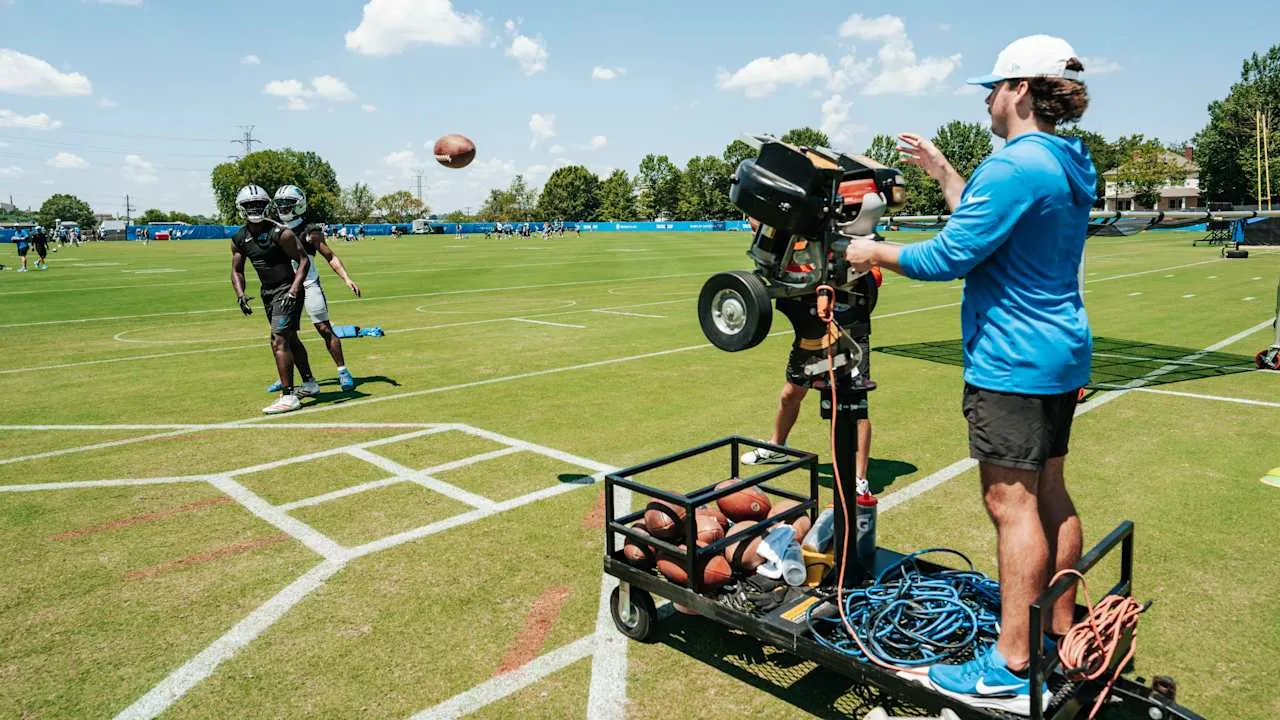
The useful part of Xavier Legette’s training highlights is not that he has access to pro equipment. It is that the public pieces keep pointing to the same four pillars: catching volume with eye training, short-burst power, conditioning, and braking. The treadmill work with Deebo Samuel is the flashy clip context, not a full program leak [1]. The cleanest skill-work evidence is Legette staying after a nearly 100-degree Panthers practice for about 20 minutes on the Jugs machine, catching through a partner’s hand-to-face and arm-tug interference, and saying the extra work “trains my eyes” [2]. The conditioning clue is narrower: The Athletic reported boxing workouts to improve cardio [3]. The durability clue is more specific again: Panthers.com reported that Legette asked director of performance Josh Hingst for a plan to “bulletproof my hamstrings” and moved from a playing range of 228–230 pounds to about 221 [4].
So this is not Xavier Legette’s official weekly schedule. No public source gives his exact set counts, boxing rounds, or Panthers performance plan. What follows is a home synthesis of the documented pillars behind the highlights, scaled for a living room, hallway, garage corner, or spare room.
Legette’s combine numbers explain why the home version leans into acceleration and explosion without pretending a recreational athlete should chase his outputs: a 4.39-second 40-yard dash, a 40-inch vertical, a 1.54-second 10-yard split, and a listed combine weight of 221 pounds [5][6]. Those numbers are context, not homework.
The home version at a glance
| Documented pillar | What it trains | Small-space substitute | Budget path |
|---|---|---|---|
| Jugs-machine catch volume with interference | Eyes, hands, late tracking, contact tolerance | Tennis-ball wall catches, card catches, partner taps, bad-ball catches | $0 wall + tennis ball; low-cost reaction ball; upgraded rebounder |
| Boxing for cardio | Repeatable conditioning, rhythm, shoulder endurance | Shadowboxing rounds, jump-rope simulation, light band punches | $0 shadowboxing; low-cost rope; upgraded doorway or freestanding bag if noise allows |
| Treadmill/sprint/change-of-direction highlights | First steps, posture, cut timing, re-acceleration | Wall drives, two-step starts, tape shuttles, short L-cuts | $0 tape marks; low-cost cones; upgraded turf strip or slide-resistant mat |
| Hamstring-focused offseason prep | Braking, hip control, posterior-chain tolerance | Isometric bridges, walkouts, hinge reaches, controlled stop-start drills | $0 floor work; low-cost sliders; upgraded Nordic strap only if you can use it safely |
A full session can run 35–50 minutes. If you live above someone, put the catching and hamstring blocks first and keep the speed work to tape marks and controlled stops. If you have a garage or ground-floor room, add the louder rope, bag, or shuttle options. For a quieter football-only conditioning layer, pair this routine with apartment football conditioning drills instead of turning every block into a jump-heavy workout.
Block 1: Build the hands before you chase the highlight catch
The Jugs-machine clip matters because it shows volume after fatigue. Legette was not just catching clean balls in a clean stance; the Panthers.com scene had him working after a hot practice while a partner created game-situation interference, and Legette tied the work directly to training his eyes [2]. That is the part worth stealing.
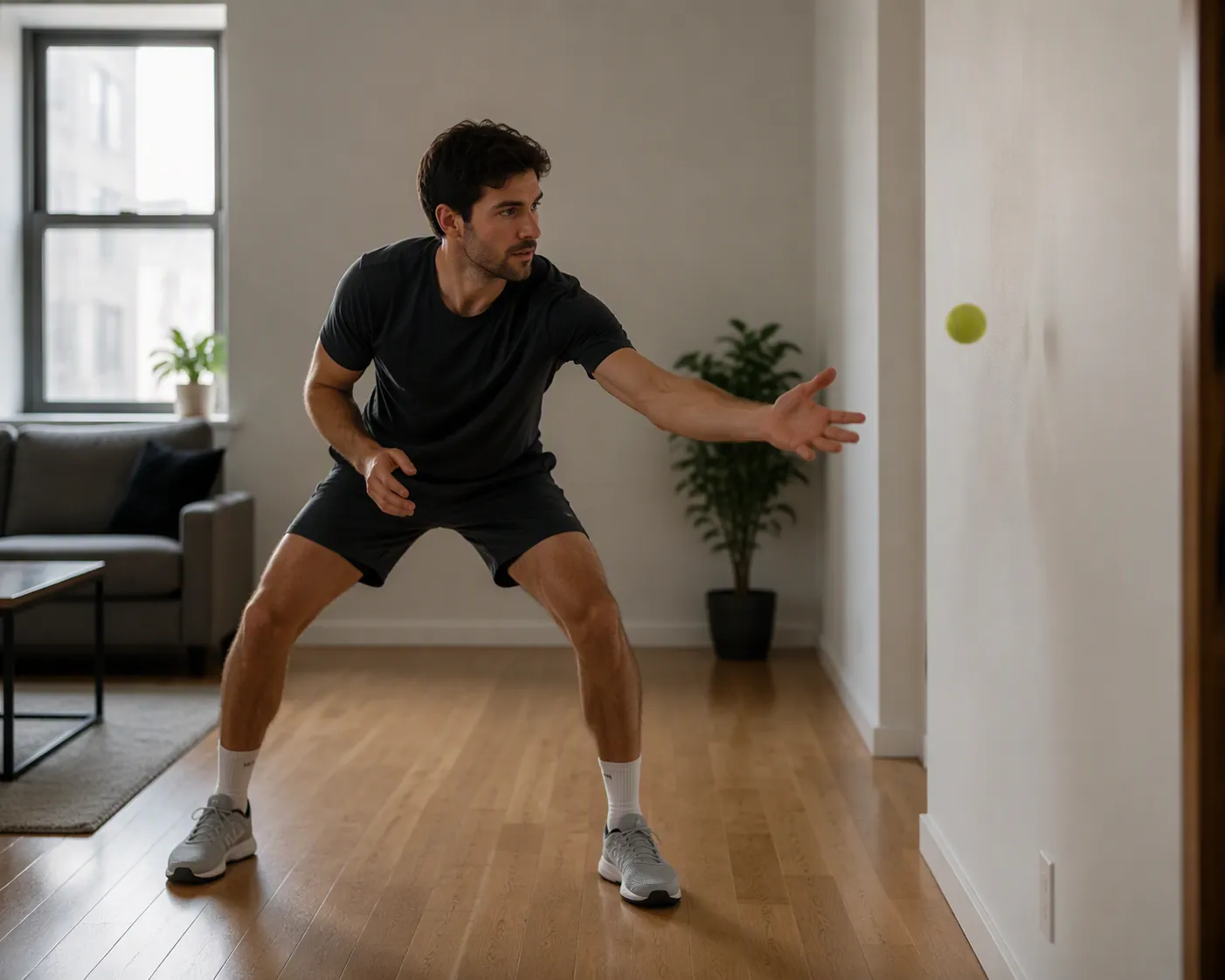
USA Football recommends low-tech hand-eye work such as tennis-ball wall catches and card catching, which is exactly the kind of cheap drill that keeps the point without pretending your apartment wall is a Jugs machine [7]. GoRout’s receiver-drill guidance also emphasizes basic hand position, daily catch volume, short bursts, shuttle work, and deceleration mechanics for receivers [8]. Put those together and the home block becomes simple: lots of catches, changing angles, late eyes, and just enough disruption to stop you from catching like a mannequin.
The 12-minute wall-catch ladder
- Easy two-hand catches: Stand 4–6 feet from a blank wall. Throw a tennis ball chest-high, catch with soft hands, and reset your feet after every catch. Use this as the warm-up, not the test.
- One-hand outside-frame catches: Throw slightly outside your shoulder line. Catch with the near hand, bring the ball into your body, and switch sides. The goal is clean tracking, not circus reach.
- High/low changes: Alternate one throw above the eyes and one throw near the thigh. Use diamond hands above the waist and cupped/pinkies-together hands below the waist.
- Turn-and-find catches: Face away from the wall, toss the ball lightly over your shoulder or have a partner call “turn,” then locate it late. Start slow. If the wall is unpredictable, reduce speed before you add difficulty.
- Fatigue catches: After 20 seconds of fast feet in place, make 10 clean catches. Stop the set when you start stabbing at the ball instead of receiving it.
For most home athletes, 80–160 total catches is plenty. Receiver development resources often discuss 100–200 daily catch reps, but that number only helps if the last 50 still look like catches, not swats [8]. The fix is not more volume at any cost. It is clean volume with a clear miss log: palms too hard, eyes leaving early, thumbs wrong, feet dead, or panic when the ball arrives off-center.
Cheap interference that does not require a defender
The partner interference in Legette’s Jugs work is easy to overdo at home. You do not need anyone ripping your shoulder while you catch a tennis ball next to a coffee table. Use small, predictable interference first:
- Partner hand flash: The partner waves a hand across your line of sight after the ball leaves the wall, then gets out of the way.
- Light forearm tap: The partner taps your forearm before the catch, never during the catch.
- Towel brush: Hang a towel from one hand and let it brush your shoulder as the ball arrives.
- Bad-ball call: A partner calls “high,” “low,” “left,” or “right” just before your throw, forcing an awkward but safe catch angle.
Card catches are the quietest finisher. Drop a playing card from shoulder height and catch it with the same-side hand before it flutters past your waist. It looks silly until you realize it punishes late eyes and stiff fingers immediately. Use 10 drops per hand, then move on.
Block 2: Use boxing as conditioning, not as a made-up Legette fight camp
The Legette-specific claim here should stay small: boxing workouts were reported as part of his cardio work [3]. Generic NFL boxing cross-training can include jump rope, speed bag, heavy bag, mitt work, and shadowboxing, but that does not mean Legette publicly disclosed all of those pieces [9]. At home, the useful translation is repeatable rounds where your feet, shoulders, and breathing keep working after your arms get tired.
| Apartment level | Conditioning choice | How to run it |
|---|---|---|
| $0 / quiet | Shadowboxing | 3 rounds of 2–3 minutes: jab-cross, slip, reset feet, breathe through the nose when possible |
| Low-cost | Rope or rope simulation | 30 seconds easy bounce, 30 seconds boxer step, 30 seconds high knees, 30 seconds easy bounce |
| Bag-friendly room | Light bag rounds | Work rhythm and posture; do not turn every punch into a wall-shaking power shot |
If you already know you want a full boxing progression, use the site’s home boxing workout drills for round structure, or compare boxing training by budget before buying gloves, wraps, or a bag. Renters should be especially careful with hanging equipment; the home boxing for renters guide is a better place to solve noise and deposit problems than your lease renewal meeting.
Block 3: Shrink the speed work without losing the first-step demand
A treadmill clip with Deebo Samuel is good internet. For home training, the better question is what it asks for: rhythm at speed, violent arm action, posture, and the ability to turn acceleration on quickly [1]. You cannot run a 40-yard dash in a hallway, and you do not need to. The home job is to practice the first two or three steps and then stop under control.
- Wall drives: Hands on a wall, body angled, ribs down. Drive one knee up, switch, and hold each rep for a clean split second. Do 2–3 short sets before any fast footwork.
- Two-step starts: Mark a start line and a finish line 6–8 feet away. Burst for two hard steps, then freeze in an athletic stance. If you need three loud stomps to stop, you went too fast for the room.
- Tape 5-10-5: Use floor tape or socks as markers and compress the classic shuttle into the space you actually have. Touch the line with your hips low, not by folding at the spine.
- Small L-cut: Set three markers in an L shape. Sprint one short segment, plant outside foot, turn the corner, and decelerate before the wall or furniture becomes part of the drill.
This is where Legette’s 10-yard split matters more than his full 40 for a home routine. A 1.54-second 10-yard split is a reminder that receiver speed starts early [5][6]. Your version should feel explosive for one breath, then controlled immediately after. That second half is not boring housekeeping; it is the bridge into the hamstring block.
As of Q3 2026, even the positive camp reports should stay in their lane. Panthers coach Dave Canales said Legette “looks fast” and “looks powerful,” which supports the idea that the offseason theme was visible in camp, not that anyone should forecast his season from July practice notes [10].
Block 4: Brake like the hamstrings have a vote
The most useful home-training detail in the whole Legette file might be the least viral one: he reportedly asked for a plan to “bulletproof my hamstrings” while trimming from 228–230 pounds to about 221 [4]. That weight move does not prove injury protection by itself. It does show that the offseason discussion was not only about looking faster; it was about how his body handles sprinting, cutting, and stopping.
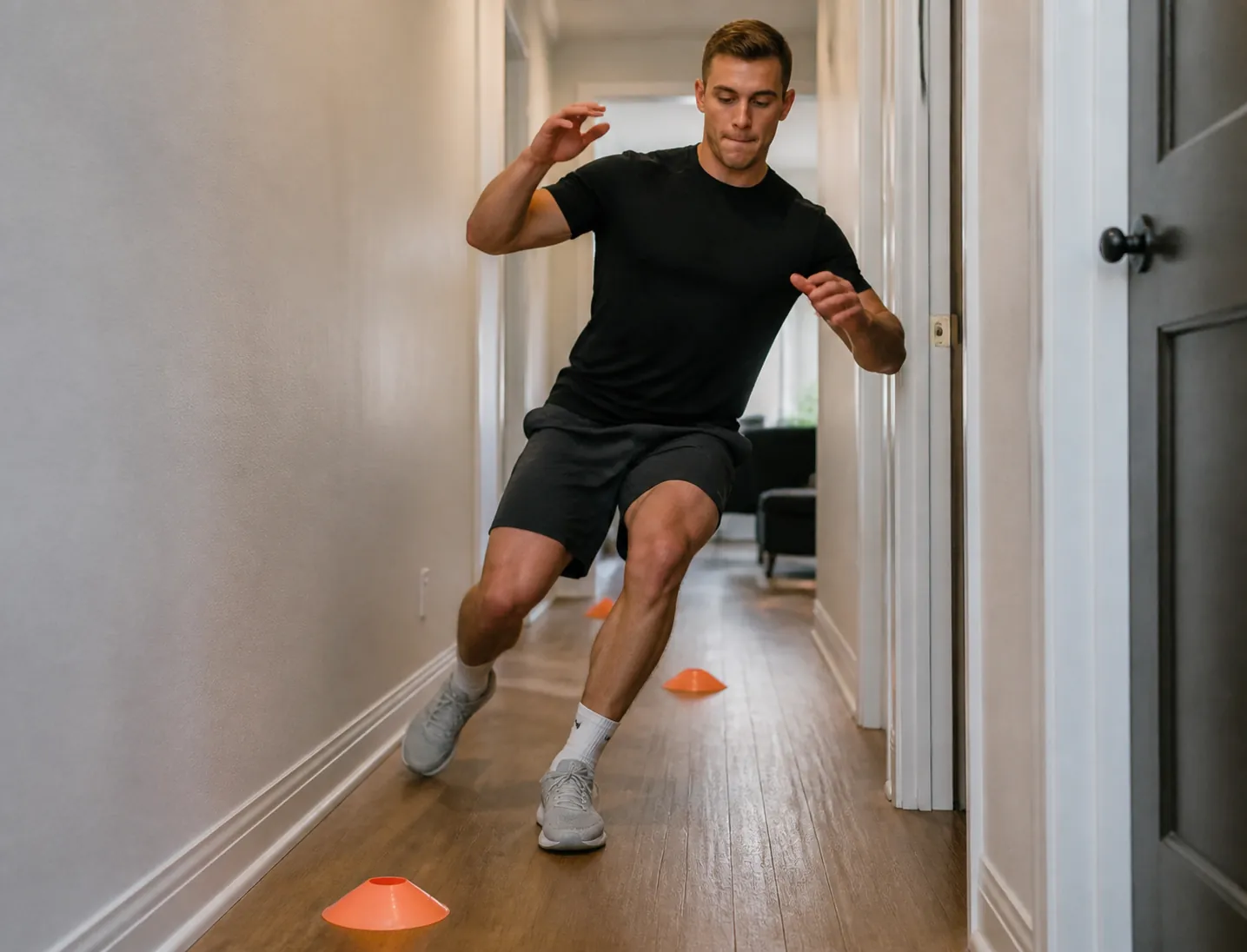
The home version should train the hamstrings in two ways: slow tension before the fast work, then controlled braking after it. Do not save this for the end when you are sloppy. Put a short hamstring primer before the speed block and a deceleration finisher after it.
Hamstring primer: 6–8 minutes
- Glute bridge hold: Heels under knees, ribs down, hips level. Hold without cramping through the lower back.
- Long-lever bridge hold: Move heels farther away and hold again. The farther heel position asks more from the hamstrings, so keep the hold clean and brief.
- Hamstring walkouts: Start in a bridge, walk the heels out two or three small steps, then walk back. Stop before your pelvis drops.
- Single-leg hinge reach: Stand on one leg, soften the knee, reach the opposite leg back, and return without twisting. Use a wall touch for balance if needed.
Deceleration finisher: 8–10 minutes
- Step-and-stick: Take one aggressive step forward and stick the landing. Knee tracks over the middle toes, hips sit back, chest stays proud.
- Two-step brake: Accelerate for two steps, plant, and hold for two seconds. If your planted foot skids, reduce speed or improve the surface.
- Lateral stick: Shuffle one or two steps to the side and freeze. Keep the foot, knee, and hip stacked instead of letting the knee dive inward.
- Catch-then-brake: Have a partner toss a tennis ball as you take one step, catch it, and stop. This ties the hands block to the braking block without needing a field.
If you like NFL-style prehab work, the Travis Kelce prehab workout is a useful companion, but keep the Legette emphasis clear: the hamstrings have to tolerate acceleration and braking, not just survive a few stretches on the floor.
A practical week that keeps the pillars intact
Because Legette’s exact schedule is not public, treat this as a small-space template, not a reconstruction. The easiest way to make it work is three main sessions plus tiny hand-work snacks.
| Day | Main emphasis | Session |
|---|---|---|
| Day 1 | Hands + hamstrings | Wall-catch ladder, card catches, hamstring primer, step-and-stick braking |
| Day 2 | Boxing + short acceleration | Shadowboxing or rope rounds, wall drives, two-step starts, light mobility |
| Day 3 | Integrated receiver day | Catch ladder, partner interference, tape shuttle, catch-then-brake finisher |
| Optional micro-dose | Eyes and hands | 5–8 minutes of tennis-ball or card catches on non-main days |
The budget version is not a consolation prize. A tennis ball, a deck of cards, floor tape, and a clear wall cover most of the training qualities. Cones make setup faster. A rope adds rhythm if your floor can handle it. A rebounder or bag is only worth it if you have the storage, sound control, and safe mounting. If space is the limiting factor, solve storage and floor protection first; the narrow-apartment home gym storage guide is more useful than buying one more “football speed” gadget that lives in a closet.
Legette’s highlights are fun because he is explosive. The transferable routine is useful because it is repetitive: see the ball late and catch it clean, condition without needing a field, accelerate in a few hard steps, then brake with enough control that the hamstrings are not just along for the ride. That will not make a non-pro train like an NFL receiver. It can let someone practice the same themes without a Jugs machine, a 40-yard lane, or a garage full of heavy gear.
References
- Panthers’ Xavier Legette works out with Deebo Samuel ahead of 2025 season — Panthers Wire, July 1, 2025.
- Xavier Legette is back to putting in the extra work on the Jugs machine — Panthers.com, July 2025.
- Panthers preseason takeaways: Xavier Legette disqualified — The Athletic, August 11, 2025.
- Xavier Legette spent his offseason looking backward in order to move forward — Panthers.com, June 2026.
- Xavier Legette 40 time: South Carolina football WR runs 4.39 40-yard dash at NFL combine — Greenville News, March 2, 2024.
- Xavier Legette — MockDraftable.
- 3 low-tech ways to help athletes build hand-eye coordination — USA Football.
- Football Wide Receiver Drills — GoRout.
- Boxing Workouts: The Secret of NFL Football Players — FightCamp.
- Panthers 2026 training camp: Xavier Legette looks fast, powerful — Panthers Wire, July 26, 2026.
What a small equipment investment adds
We don't have a build tagged to this exact tier yet. Browse all builds.
How often should you repeat this?
See our recovery and rest reference for citation-anchored rest-interval guidance.
Spot something off?
Tell us if a movement, tier assumption, or duration didn't match your experience.