
Last reviewed for Q3 2026 pricing. Rowing machine prices and subscriptions vary by retailer, bundle, financing offer, and promotional period.
The best rowing machine for home is not automatically the cheapest rower that moves, or the prettiest one with a screen. The real question is what changes when the price jumps from roughly $250 to $990 to $2,500 or more: frame stability, rail length, user capacity, resistance feel, warranty, storage, programming, and the bill that keeps arriving after delivery day.
Garage Gym Reviews’ 2026 testing puts the average tested rowing machine price at $1,502, which is a useful anchor because it keeps the Concept2 RowErg’s roughly $990 price in perspective: not cheap in normal household-budget terms, but below the tested-category average and far below the fully connected smart-rower tier.[1]
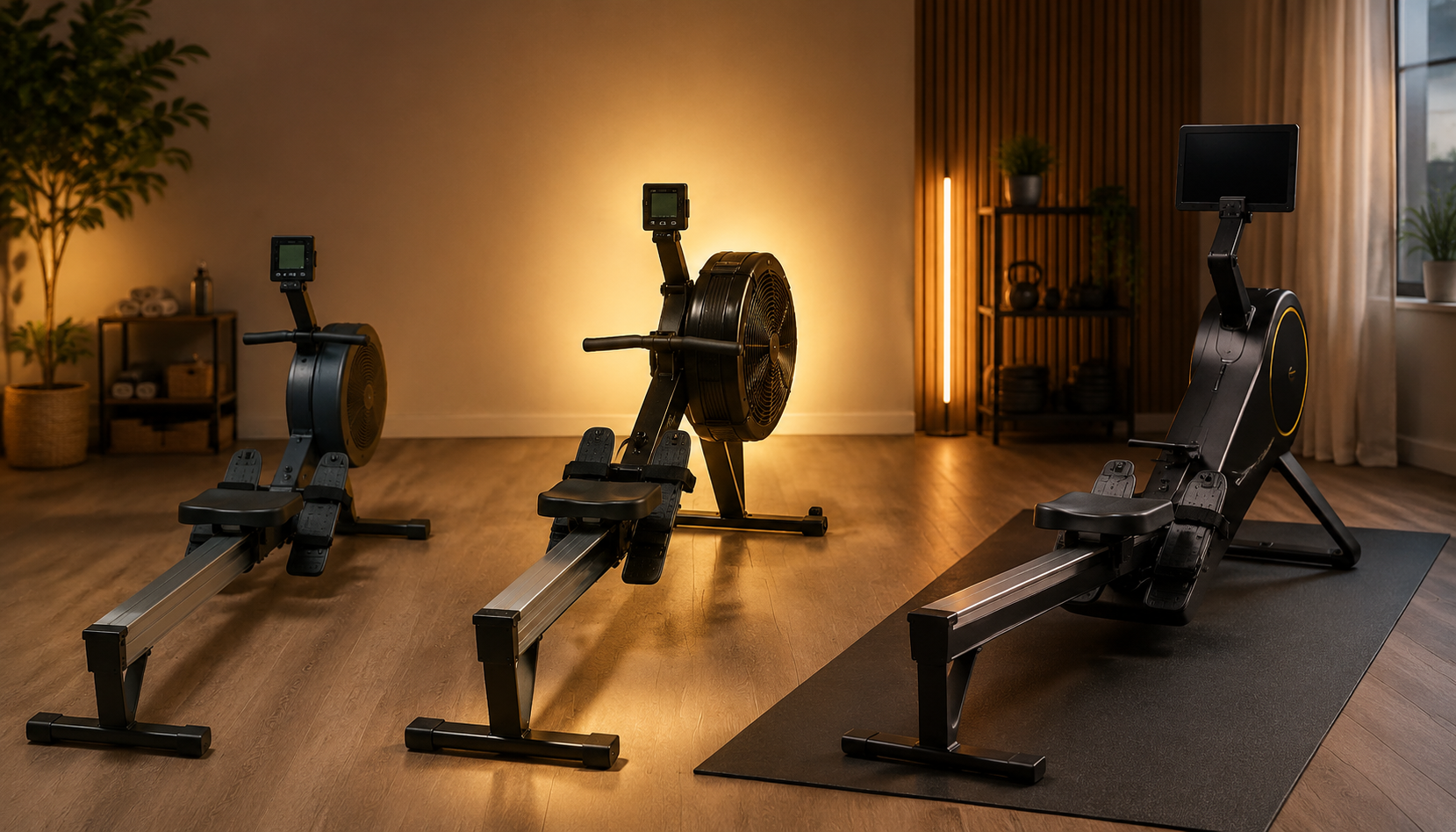
That is why rowing value is nonlinear. The biggest jump in long-term value usually happens before the luxury screen appears. Around $700 to $1,000, machines such as the Concept2 RowErg and Rogue Echo Rower move into 500-pound user capacities, proven frames, no mandatory subscriptions, and stronger resale potential. Above that, the extra money often buys coaching, entertainment, industrial design, and a more polished living-room object. Those can matter. They just need to be used enough to justify the ownership cost.
What Each Price Tier Actually Buys
| Price tier | Typical buyer | What improves | Main tradeoff |
|---|---|---|---|
| Under $300 | Hard budget ceiling, first rower, light-to-moderate use | Basic rowing motion, compact footprint, low upfront cost | Lower capacity, shorter rails, lighter frames, simpler components |
| $700-$1,000 | Durability-first home gym buyer | Commercial-grade feel, 500lb capacities, better monitors, stronger resale | Less visual polish, limited built-in entertainment |
| $1,500-$2,500+ | Buyer who will use guided classes, games, scenic rows, or smart training often | Large screens or connected apps, premium design, more immersive programming | Subscriptions can add $1,000+ over three years |
Resistance type matters, but it is not the whole purchase. Air rowers tend to reward harder pulls with more resistance, magnetic rowers are often quieter and more adjustable, water rowers lean into a smoother sensory feel, and hydraulic rowers usually live in the cheapest and most compact end of the category. If resistance type is still the open question, start with this rowing-machine framework before treating price as the only filter.
Under $300: A Real Entry Point, With Real Boundaries
A sub-$300 rower can be the right answer when the budget is truly fixed. The Sunny Health & Fitness SF-RW5801 is the clean example: roughly $250, 16 magnetic resistance levels, a 50-pound machine weight, a 285-pound user capacity, a 77-inch rail, and a three-year frame warranty.[1]
Those numbers explain the machine better than a star rating does. A 50-pound rower is easier to move than a commercial air rower, but that also means less mass holding it down during harder pulls. A 285-pound capacity may be fine for many households, but it gives less margin than a 500-pound-rated rower. A 77-inch rail can become a fit issue for taller users, especially around 6 feet 2 inches and above.[1]
This is not a fake rower. It is a budget rower. The distinction matters. It can let someone start rowing at home without waiting for a $1,000 purchase, and that has value. The compromise is that lighter framing, more plastic in the build, shorter rail travel, and limited storage flexibility make it less likely to feel like a long-term household machine under frequent use.
The uncomfortable counterargument is the “buy once” argument. A $250 rower is cheaper today, but if regular use exposes enough annoyance or wear that it gets replaced within a few years, the first purchase becomes tuition. That does not mean every first-time buyer should stretch to $990. It means the under-$300 tier is best when expectations are modest: shorter sessions, lighter use, smaller users, and a willingness to accept a less planted feel.
$700-$1,000: Where the Long-Term Value Gets Much Better
The $700 to $1,000 tier is where the rowing-machine category starts behaving differently. The money is no longer just buying a console upgrade or a nicer handle. It buys the parts of ownership that are hard to fix later: a stronger frame, a longer-lasting resistance system, higher user capacity, a monitor that training plans actually recognize, and a machine other people still want if you sell it.
The Concept2 RowErg is the reference point here. At roughly $990, it carries a 500-pound user capacity and is widely used in competitive rowing environments; Wirecutter and Garage Gym Reviews both note Concept2’s dominance across collegiate and competitive programs, with more than 90% using the brand.[1][2]
That competitive-rowing detail should not be overread. It does not mean every home user needs a Concept2, and it does not prove that a beginner will enjoy it more than a connected rower. It does show that the machine’s monitor standard, parts ecosystem, and durability have been pressure-tested outside the home-gym review cycle. For an ordinary buyer, that translates into lower drama: replacement parts are available, training data is familiar, and the machine is not dependent on a monthly content platform to remain useful.
Resale value is the other quiet advantage. Garage Gym Reviews reports that Concept2 rowers consistently sell for 70% to 80% of retail after years of use.[1] That changes the math. A rower that costs about $990 but can later recover a large share of that price may have a lower effective ownership cost than a cheaper machine that nobody wants used, or a smart rower whose appeal depends on active subscriptions and current software support.
The Rogue Echo Rower belongs in the same value conversation. At about $925, it also lists a 500-pound user capacity, and it is the official CrossFit rower.[1] Again, that does not make it the perfect rower for every living room. It does mean Rogue is aiming it at hard training rather than casual gadget appeal, which is exactly what a lot of home-gym buyers want from a cardio machine: pull, sweat, store, repeat.
The middle tier is not glamorous in the way smart fitness marketing is glamorous. It is valuable because the machine keeps making sense after the first month. No required class membership. No screen becoming the center of the purchase. No awkward feeling that the hardware is only half alive unless another bill is paid. If durability, capacity, and low long-term cost are the priorities, this is the tier to beat.
The Space and Storage Check Still Matters
A good rower can still be the wrong rower if it does not fit. Wirecutter uses an 8-by-3-foot minimum space guideline for rowing-machine use, which is a better mental model than only checking the folded dimensions.[2] The working footprint matters because the handle, seat, and user all need room during the stroke.
Storage claims deserve a second look in every tier. Some machines fold but do not store vertically. Some premium designs look better in a room because they are meant to remain visible, not because they disappear. If the rower must move after every workout, check machine weight, transport wheels, folded orientation, and whether the stored shape actually fits through the path from workout spot to storage spot.
$1,500 and Up: The Subscription Is Part of the Machine
Premium smart rowers are not automatically bad buys. Hydrow, Ergatta, Aviron, Peloton, and iFIT-connected machines can make rowing feel less lonely and less repetitive. For some buyers, coached sessions, games, scenic rows, leaderboards, and polished screens are the difference between using the rower and letting it become expensive furniture.
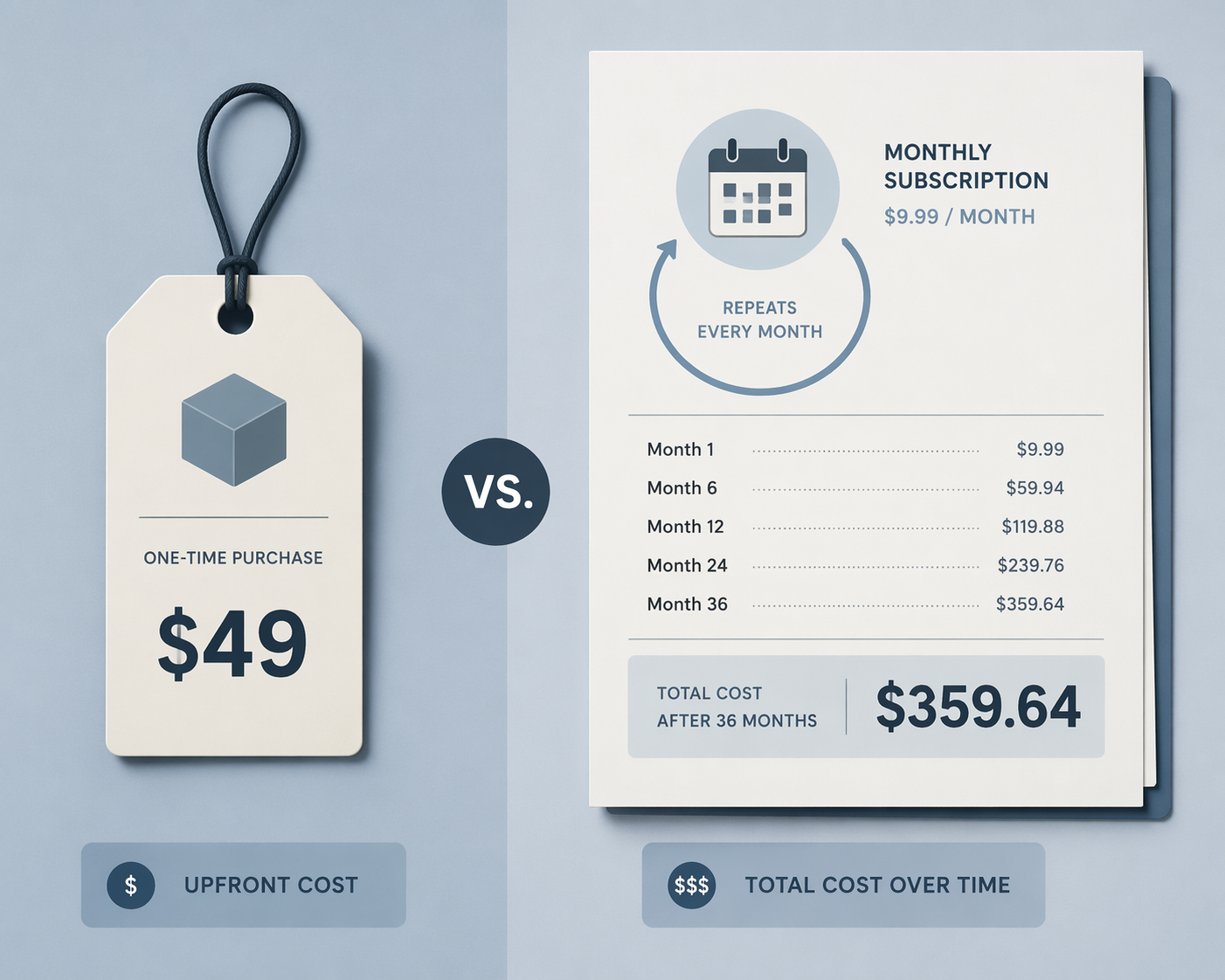
The bill needs to be counted honestly, though. Across major connected rowing brands, 2026 subscription pricing commonly sits around $29 to $50 per month: Hydrow is reported around $44 to $50 per month, iFIT around $39 per month, Peloton around $50 per month, Aviron around $29 to $34 per month, and Ergatta around $29 to $39 per month.[3][1][4]
| Example | Hardware price | Subscription assumption | Approx. 3-year total |
|---|---|---|---|
| Generic smart rower | $2,000 | $40/month | $3,440 |
| Peloton Row+ top-end reference | $3,495 | $50/month | $5,295 |
| Concept2 RowErg comparison | About $990 | No mandatory subscription | About $990 before accessories, tax, or resale |
A $2,000 rower with a $40 monthly subscription costs $3,440 over three years, before taxes, delivery, accessories, or financing costs. That is nearly 72% more than the hardware sticker price.[3] The Peloton Row+ is an even clearer top-end reference: $3,495 for the machine plus a $50 monthly subscription brings the three-year total to $5,295.[3]
That comparison should not be used as a cheap shot. A $44 monthly Hydrow membership may be easy to justify for someone replacing a gym membership or sharing the rower across a household. A gamified Aviron or Ergatta setup may be exactly what keeps a reluctant cardio user consistent. The mistake is buying the hardware as if the subscription were a small accessory instead of one of the main ownership costs.
The useful question is not “Are subscriptions bad?” It is “Will this specific programming make me row often enough to beat the cheaper durable machine?” If the answer is yes, the premium tier has a fair case. If the answer is maybe, the monthly fee becomes a bet against your own future attention.
Aviron and Ergatta Show Why Premium Is Not One Thing
Aviron is the interesting middle-ground smart example. The Aviron Strong Go Rower is listed around $1,599, with a 507-pound weight capacity, dual air-magnetic resistance, and a 20-year limited warranty, which stands out in the category.[1] It still carries a subscription cost if the connected features are part of the reason for buying it, but the hardware case is stronger than “screen attached to rower.”
Ergatta sits on a different emotional axis. CNET highlights the Ergatta Luxe’s furniture-grade design and vertical-storage appeal.[3] That matters for buyers who do not have a garage gym and do not want a black metal machine dominating a shared room. The value question is whether that design and programming solve a real household problem or just make the initial purchase feel more exciting.
Budget Verdicts by Buyer Type
- Choose under $300 if the budget ceiling is firm, the main goal is to start rowing at home, and you can accept lighter construction, lower capacity, and a less durable ownership path.
- Choose $700-$1,000 if you want the strongest long-term value: high capacity, durable construction, no required subscription, and a machine that remains useful without a content ecosystem.
- Choose $1,500-$2,500+ if guided programming, games, scenic rowing, visual design, or household motivation are central to whether the machine gets used.
- Treat Peloton Row+ as a premium-above-premium reference point, not a normal budget comparison, because its three-year ownership total can exceed $5,000 when the subscription is included.[3]
For a buyer comparing a full home gym budget rather than just a rower, the same total-cost habit applies across equipment. The subscription math used here is similar to the framework in what smart home gym systems actually cost over five years and all-in-one versus modular home gym cost comparisons.
If the decision is strictly rowing-machine value, the center of gravity is clear: the $700 to $1,000 tier is where the machine starts to feel like a long-term tool instead of a compromise or a content platform. Spend less only when the upfront limit is real. Spend more when the programming, design, and connected experience are not decoration, but the reason you will keep rowing.
References
- The 12 Best Rowing Machines For Your Home Gym: Expert-Tested and Favorited 2026, Garage Gym Reviews, 2026.
- The 2 Best Rowing Machines of 2026, Wirecutter, 2026.
- The Best Rowing Machines of 2026, Expert Tested, CNET, 2026.
- Best Rowing Machines 2026, BarBend, 2026.

Comments
Join the discussion with an anonymous comment.