
Search for exercise equipment for legs and the results quickly drift toward machines: leg presses, hack squat units, squat racks, cable stacks. Those are useful if you have the room, money, and patience for permanent equipment. They are not the starting requirement for training legs at home.
For this guide, “small space” means a shared room or apartment setup where you may have under 50 square feet available while training, and far less available once the workout is over. In practice, the better question is whether the equipment can work in roughly the footprint of a yoga mat, then disappear under a bed, in a closet, or behind a door.
The practical verdict: under $200 can cover serious beginner leg training in less than 10 square feet. Under $500 becomes useful when you want heavier dumbbell work, a bench, or a first step toward barbell-style training. The difference is not whether the cheaper setup is “real.” The difference is how long it can keep giving you enough resistance to progress.
What leg equipment actually has to do
A leg setup does not need to look like a gym floor. It needs to load the main movement patterns enough that you can make them harder over time.
| Leg training need | Small-space equipment that can cover it | What to watch |
|---|---|---|
| Squat and lunge pattern | Resistance bands, adjustable dumbbells, bench for step-ups | Needs enough load to challenge quads and glutes, not just balance |
| Hip hinge | Dumbbells, bands | Progression matters because light hinges get easy quickly |
| Hamstring curl | Core sliders, bands | Sliders depend heavily on floor surface and control |
| Leg extension pattern | Door-anchored bands, ankle weights for lighter work | Bands need a secure anchor and smooth resistance path |
| Glute isolation | Bands, ankle weights, dumbbells | Easy to make it burn; harder to keep increasing resistance |
| Calf work | Dumbbells, bands, step or bench edge when appropriate | Usually needs higher reps or added load |
That last column is where many cheap home setups fail. A tool can make an exercise feel difficult today and still be a poor buy if there is no obvious next step. Good budget equipment lets you add a thicker band, stack bands, raise dumbbell weight, slow the tempo, increase range of motion, or move from two-leg to single-leg versions without changing the whole room.
If you want a wider comparison that includes larger machines and higher price tiers, the broader exercise equipment for legs buyer’s guide is the better place to go. This article stays with the budget question: what can you buy under $500 that still gives your legs a real progression path?
$0–$50: useful add-ons, not a complete long-term setup
The cheapest leg equipment is not useless. It is just easy to overstate. A few small pieces can make bodyweight leg work more specific and more controlled, especially if you are starting from nothing.
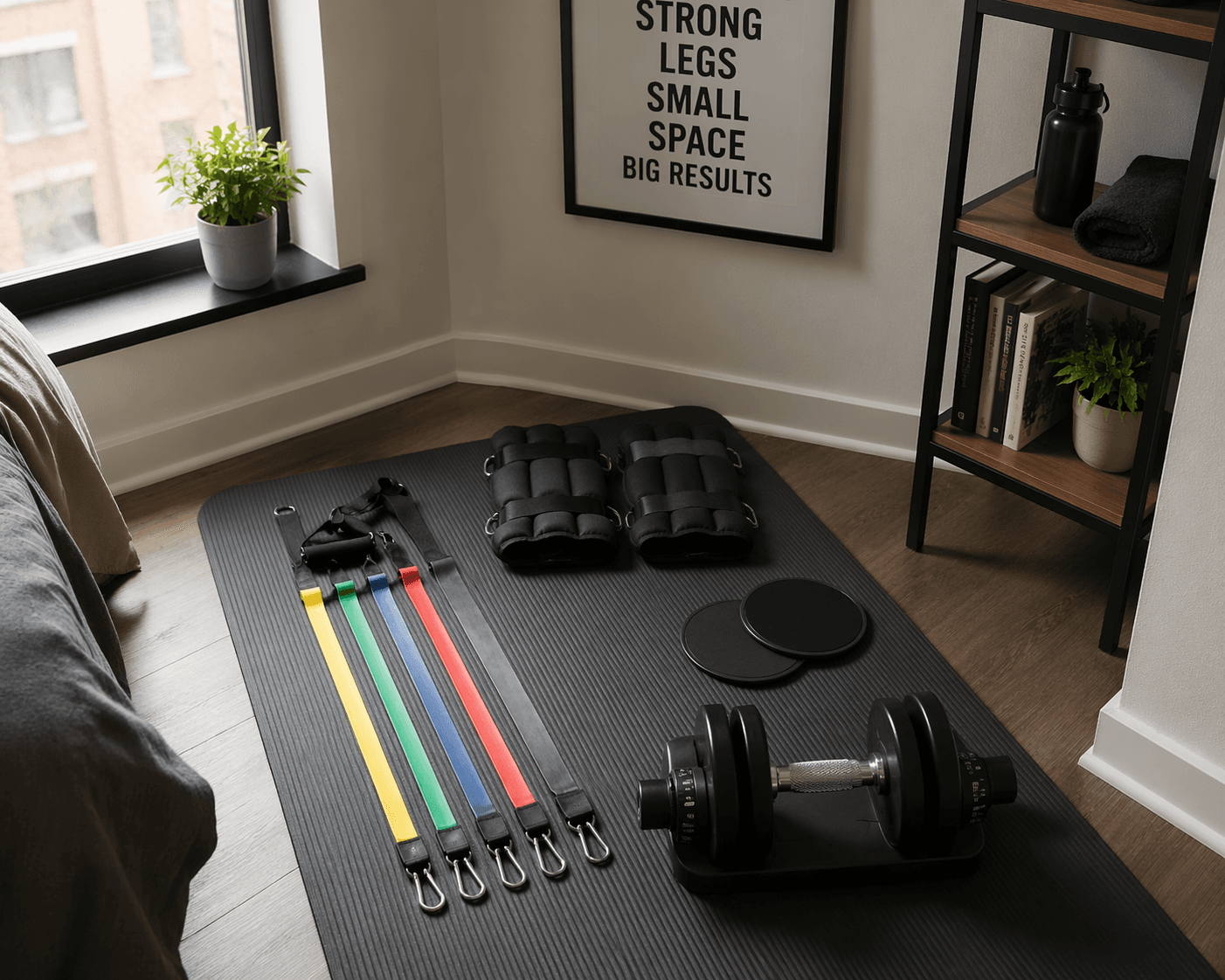
- Loop or tube resistance bands can add load to squats, hinges, lateral walks, glute bridges, leg extensions, and kickbacks.
- Ankle weights make leg raises, glute kickbacks, standing abductions, and some walking drills harder without any setup.
- Core sliders turn the floor into a hamstring curl station if the surface cooperates.
Verywell Fit tested Pvolve’s 3-pound ankle weight pair and reported that they stayed secure during glute kickbacks, leg raises, and walking; the same budget-equipment testing also covered Synergee sliders, which can be used for hamstring curls, mountain climbers, and pikes on carpet or hardwood surfaces.[1]
That makes ankle weights and sliders good compact add-ons. They are not a substitute for heavier loading. A 3-pound ankle weight can make a glute kickback cleaner and more demanding, but it will not keep a stronger beginner progressing on squats or Romanian deadlifts. Sliders are similar: excellent for hamstring control, awkward if your hardwood is slick, and surprisingly noisy if you are dragging plastic across the wrong surface with a downstairs neighbor listening.
This tier is best if the real constraint is immediate cost. It gives you more exercise variety and better muscle targeting, but the ceiling arrives quickly unless bands are part of the purchase.
$50–$200: the best small-apartment starting point
The most convincing budget leg setup starts with stackable resistance bands, then adds ankle weights and sliders if the budget allows. This is the tier that makes the under-10-square-foot claim work, because bands can be loaded, stored, and redirected in ways that fixed tiny tools cannot.
Wirecutter tested 32 resistance band sets over seven years and recommends Bodylastics Stackable Tube Bands, listed at about $50–$60 in its guide. The details matter for legs: the internal safety cords are designed to prevent snapping, and the door anchor allows movements such as squats, deadlifts, and leg extensions instead of limiting the bands to upper-body pulling.[2]
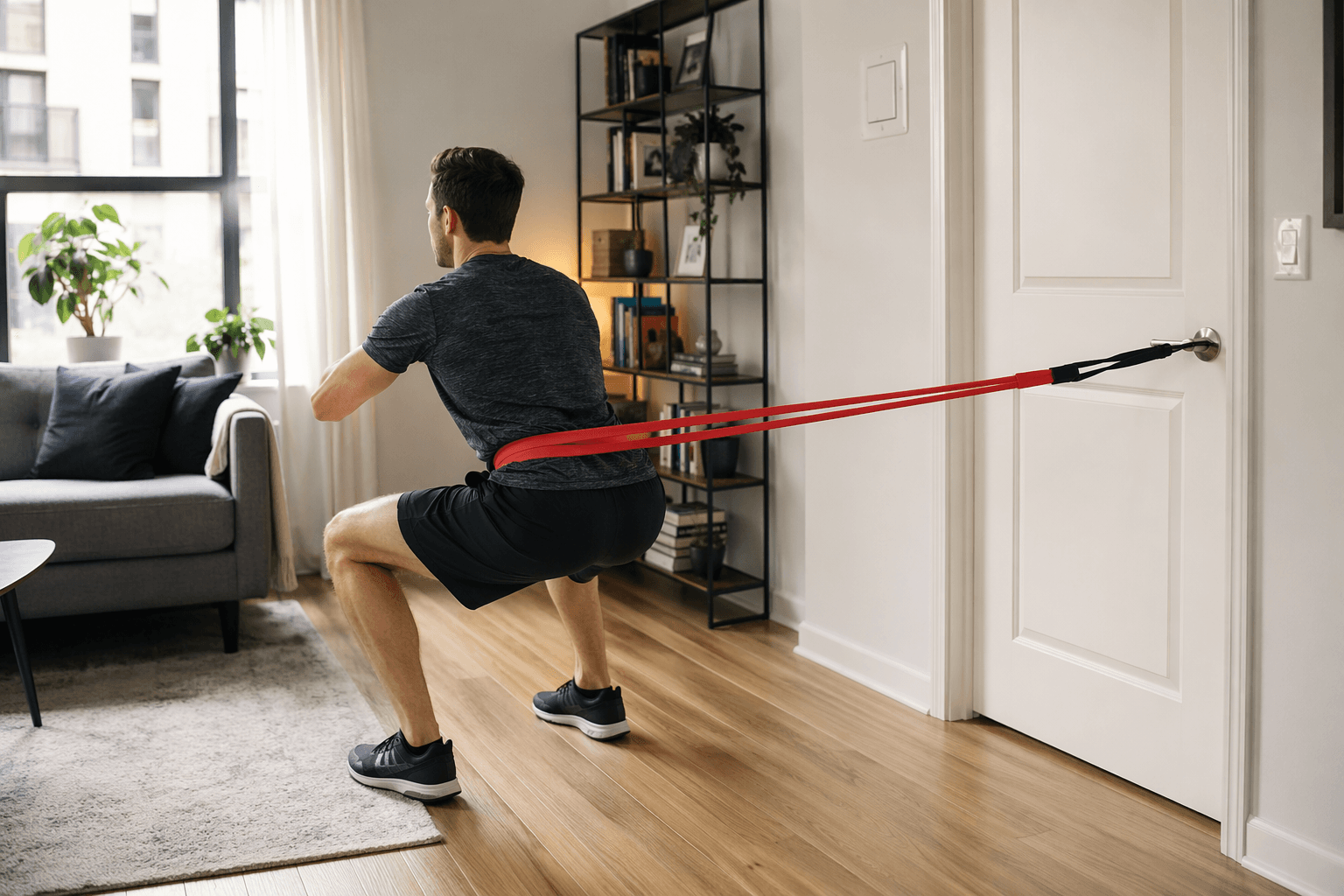
A door anchor is not a glamorous feature, but it is the difference between owning bands and having a lower-body station. Anchor the band low and you can train a pull-through or hinge pattern. Anchor it behind you and a squat or split squat can be loaded through the hips. Anchor it near the floor and a seated or standing leg extension pattern becomes possible. None of this requires a rack, and none of it needs to remain in the living room after the set is done.
The progression is also clearer than it looks from the outside. You can move from a lighter band to a heavier one, stack two bands together, step farther from the anchor to increase tension, or pair band resistance with slower reps and pauses. For a beginner, that can be enough to build a several-month runway before dumbbells become the more obvious next purchase.
How the under-$200 setup covers the legs
For squats and lunges, bands can add resistance without requiring you to clean heavy weights into position. A banded squat anchored under the feet or behind the body will not feel identical to a barbell squat, but it does give the quads and glutes something to push against. Split squats and reverse lunges are even friendlier in a small room because they need less side-to-side space than walking lunges.
For hinges, bands are useful because the setup stays quiet. A banded Romanian deadlift or pull-through does not involve dropping plates, rolling dumbbells, or shifting a bench around the room. The tradeoff is that band tension changes through the range of motion, so you have to pay attention to where the movement is hardest. That is not a dealbreaker, but it is different from holding a fixed weight.
For hamstrings, sliders are the small tool that earns its storage space. Slider hamstring curls can be brutally effective with only body weight because the hamstrings have to flex the knee while the hips stay lifted. They also reveal the apartment problem quickly: carpet, hardwood, mats, socks, and slider material all change the feel. If the slider skids too fast or chatters across the floor, use a rug, mat, or different surface before assuming the exercise is wrong.
For glute isolation, ankle weights and bands both work. Bands are better when you need meaningful resistance in abductions, kickbacks, and bridge variations. Ankle weights are better when you want no setup at all. They are especially useful in the small, annoying windows of home training: ten minutes before work, one exercise after a walk, or a short finisher when dragging out dumbbells would make you skip it.
For calves, the same setup can work, but it is less elegant. Bands can add resistance to standing calf raises, and a dumbbell eventually makes the movement simpler to load. In the under-$200 tier, calves usually need higher reps, slower lowering, single-leg versions, or a safe step edge. If your only available surface is a wobbly chair rail or a stair you share with roommates, skip the theatrics and keep the movement flat and controlled.
Be honest about the ceiling. Bands, ankle weights, and sliders can support roughly three to six months of progressive beginner leg training before many people want heavier resistance. That is not a failure. It is a good first phase that costs less, stores better, and teaches movement patterns before the room starts filling with iron.
If this is part of a broader first home-gym purchase, the home gym equipment for beginners framework can help decide what to buy next without turning one leg-equipment order into a whole-room project.
$200–$500: when dumbbells start doing more than bands
The first upgrade I would make after bands is not a machine. It is adjustable dumbbells, assuming you have a safe place to set them down and enough floor discipline not to leave them in a walkway.
Verywell Fit tested the BCBIG adjustable dumbbell set at a listed price of about $100, while BarBend’s budget home gym testing included the REP FB-5000 flat bench at about $240.[1][3] Together, that kind of pairing opens goblet squats, split squats, lunges, step-ups, Romanian deadlifts, hip thrust variations, and loaded calf raises without requiring a rack.
A bench is where the small-space argument gets more conditional. A flat bench is useful. It also occupies real storage space, and many apartments do not have a good place for one unless it can slide against a wall or under a high bed. If the choice is between a bench that lives permanently in the living room and dumbbells that fit in a closet, I would buy the dumbbells first.
The best reason to add a bench is not that a home gym looks incomplete without one. It is that the bench changes exercise options: step-ups become easier to standardize, hip thrusts become more comfortable, rear-foot-elevated split squats become possible, and seated calf work gets simpler. If those movements are actually in your plan, the bench earns its footprint. If not, it is an expensive shelf.
This is also the point where budget planning becomes more useful than product browsing. The jump from bands to adjustable dumbbells is a genuine training upgrade; the jump from dumbbells to bench is more about exercise selection and convenience. If you are trying to map where the next dollars go, the home fitness budget tiers guide lays out what different spending levels usually unlock.
Where a squat stand fits, and where it stops fitting
A squat stand is not a bad idea. It is just not the same idea as a stowable apartment leg setup.
BarBend tested the Titan T-3 squat stand, listed at $349.99, and notes that it uses 11-gauge steel and supports 1,000 pounds.[3] That is a legitimate strength-training upgrade for someone moving toward barbell squats, rack pulls, presses, and heavier lifting. It also asks for more space, more equipment around it, and more tolerance from the room it lives in.
The stand itself may be under $500, but the useful setup does not stop with the stand. A barbell, plates, floor protection, storage, and noise management become part of the decision. In a garage corner, that can make sense. In a shared apartment where the training area has to turn back into a living room, it is usually the point where the original problem has changed.
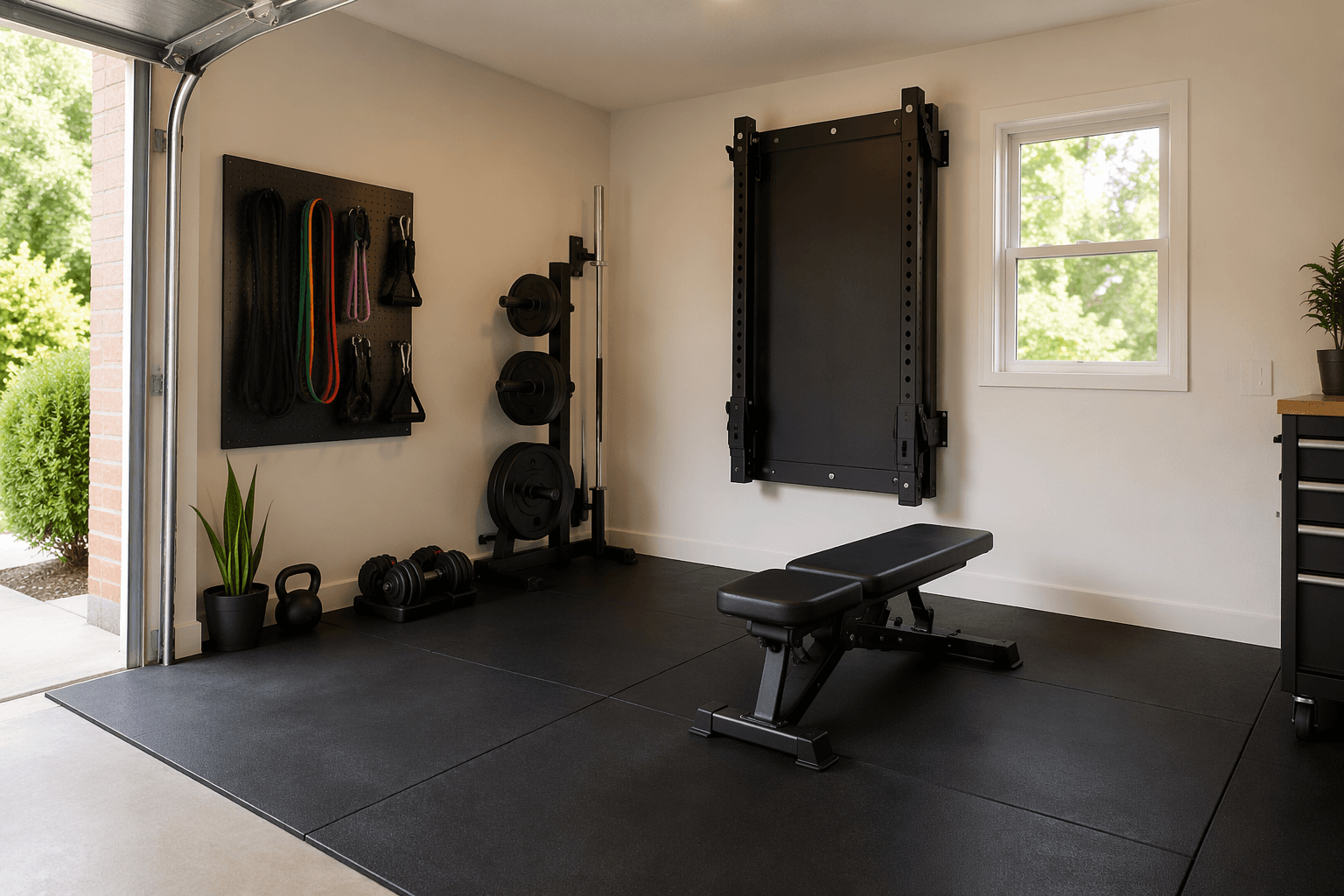
If you have a garage or semi-permanent corner and want to stay compact, the garage gym equipment for small spaces guide is a better upgrade path than trying to force rack-based training into a room that still needs to function as housing.
The apartment problems product pages skip
Small leg equipment still has to behave well in a real apartment. Bands can snap back if an anchor is careless. Sliders can slip too quickly on smooth floors. Dumbbells can thud if you set them down like you are in a commercial gym. A bench can become the thing everyone trips over on the way to the kitchen.
Noise is not only about jumping. A slow banded squat is quiet; a metal adjustment collar hitting hardwood is not. Slider hamstring curls on carpet may be nearly silent; the same sliders on a bare floor may scrape. If you have downstairs neighbors, choose movements and surfaces before chasing the heaviest-looking equipment.
Storage also decides whether equipment gets used. Bands and ankle weights can live in a drawer. Sliders can disappear beside a mat. Adjustable dumbbells need a predictable landing spot. A bench needs a real home. If the setup takes longer to clear than the workout itself, it will eventually lose to the couch.
For room layout, floor protection, and noise tradeoffs beyond leg training, see the small-apartment guide to what home gym equipment actually fits in a small space. That decision can matter more than squeezing one more accessory into the cart.
A practical buying sequence
Prices in this category move, and the cited figures reflect listing prices in the source reviews rather than guaranteed Q2 2026 checkout prices. Verywell Fit and BarBend both base their recommendations on hands-on testing, but their reviewed products included manufacturer-provided samples, which is worth keeping in mind when comparing claims.[1][3]
| Budget | Buy first | What it unlocks | Likely limitation |
|---|---|---|---|
| $0–$50 | Sliders, ankle weights, or basic bands | Glute isolation, hamstring curls, light leg accessories | Limited heavy loading |
| $50–$200 | Stackable resistance bands, then sliders and ankle weights | Squats, hinges, leg extensions, curls, glute work, calves in under 10 square feet | Many beginners outgrow the resistance ceiling after several months |
| $200–$500 | Adjustable dumbbells; bench only if you will use its exercise options | Heavier squats, lunges, RDLs, step-ups, hip thrusts, calf raises | More storage space and more floor protection |
| Near $500 and beyond | Squat stand only with semi-permanent space | Barbell-adjacent progression | No longer a simple stowable apartment setup |
Start with stackable bands if the budget is tight. Add sliders and ankle weights when you want more hamstring and glute options without adding clutter. Add adjustable dumbbells when band progress starts to stall. Consider a bench only when its movements solve a real training problem. Consider a squat stand only when the ceiling of the current setup, not the marketing around “real leg day,” demands it.
If you are still deciding whether to buy equipment at all, compare the long-term cost against your actual gym use with the home gym versus gym membership cost guide. The cheapest equipment is still wasted money if it does not fit the room, the neighbors, or the way you actually train.
References
- The 17 Best Budget Home Gym Equipment, Tested — Verywell Fit
- The 4 Best Resistance Bands of 2026 — Wirecutter
- The Best Budget Home Gym Equipment of 2025 — BarBend
Comments
Join the discussion with an anonymous comment.