
Exercise Equipment for Legs: A Buyer's Guide Organized by Space, Budget, and Training Goal
Choosing leg exercise equipment for your home gym isn't about picking a single 'best' machine. This guide helps you match equipment types to your available space, budget, experience level, and training focus — so you build a leg day setup that actually works for you.
Why Leg Equipment Decisions Are Different at Home
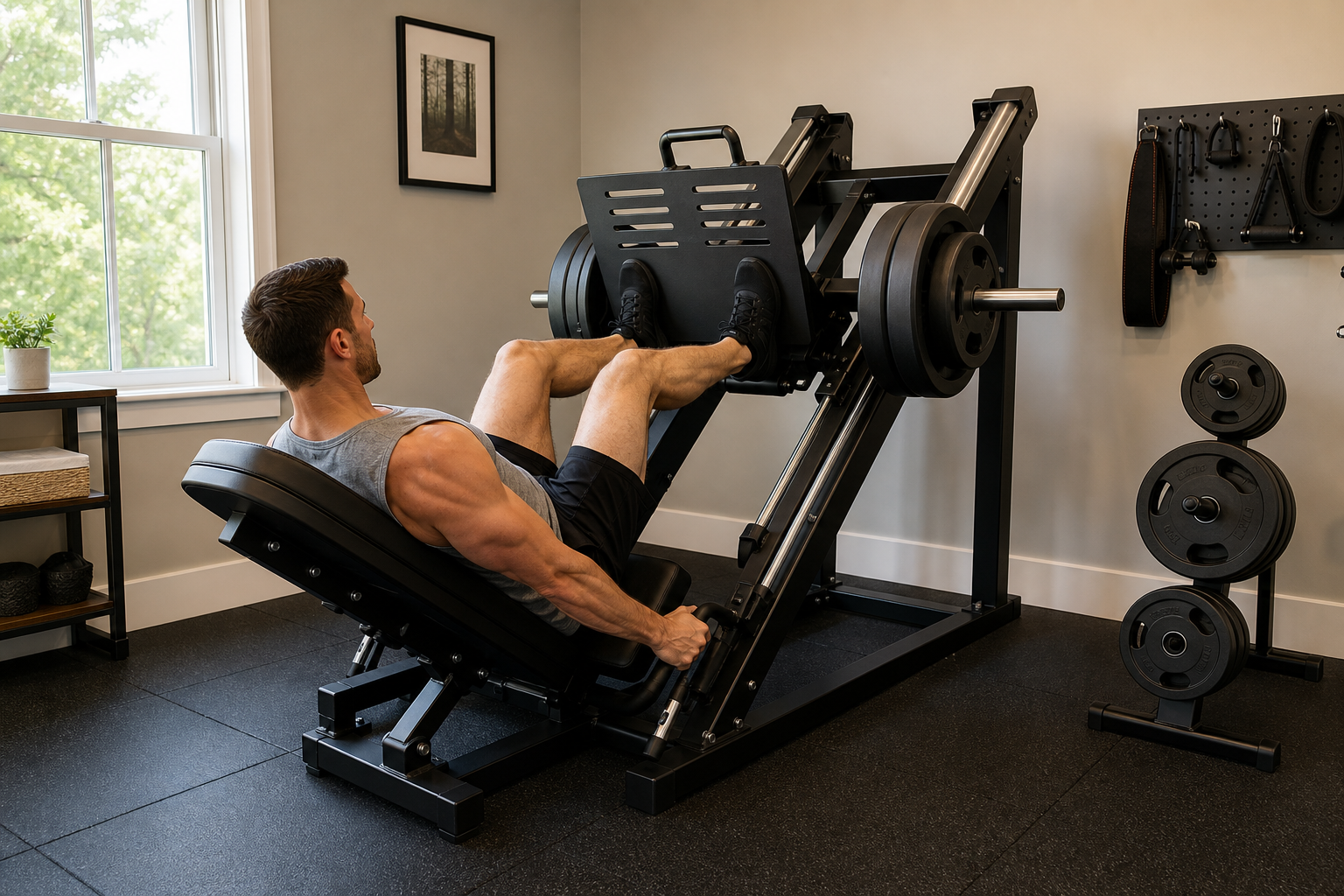
In a commercial gym, you walk in and every machine is already there — leg press, hack squat, leg extension, leg curl, Smith machine, squat rack. You use what you need that day and leave the rest for someone else. At home, every piece of equipment you buy occupies permanent floor space, consumes a fixed portion of your budget, and commits you to a specific training capability for months or years. There is no swapping machines between sets.
This changes the decision logic entirely. Instead of asking "Which leg machine is best?" you need to ask "Which leg machine is best for my specific combination of space, budget, experience level, and training goal?" A power cage that takes up 24 square feet is a great choice for a garage gym with a $2,000 budget. It is a terrible choice for a studio apartment with a $500 budget and a ceiling height of seven feet.
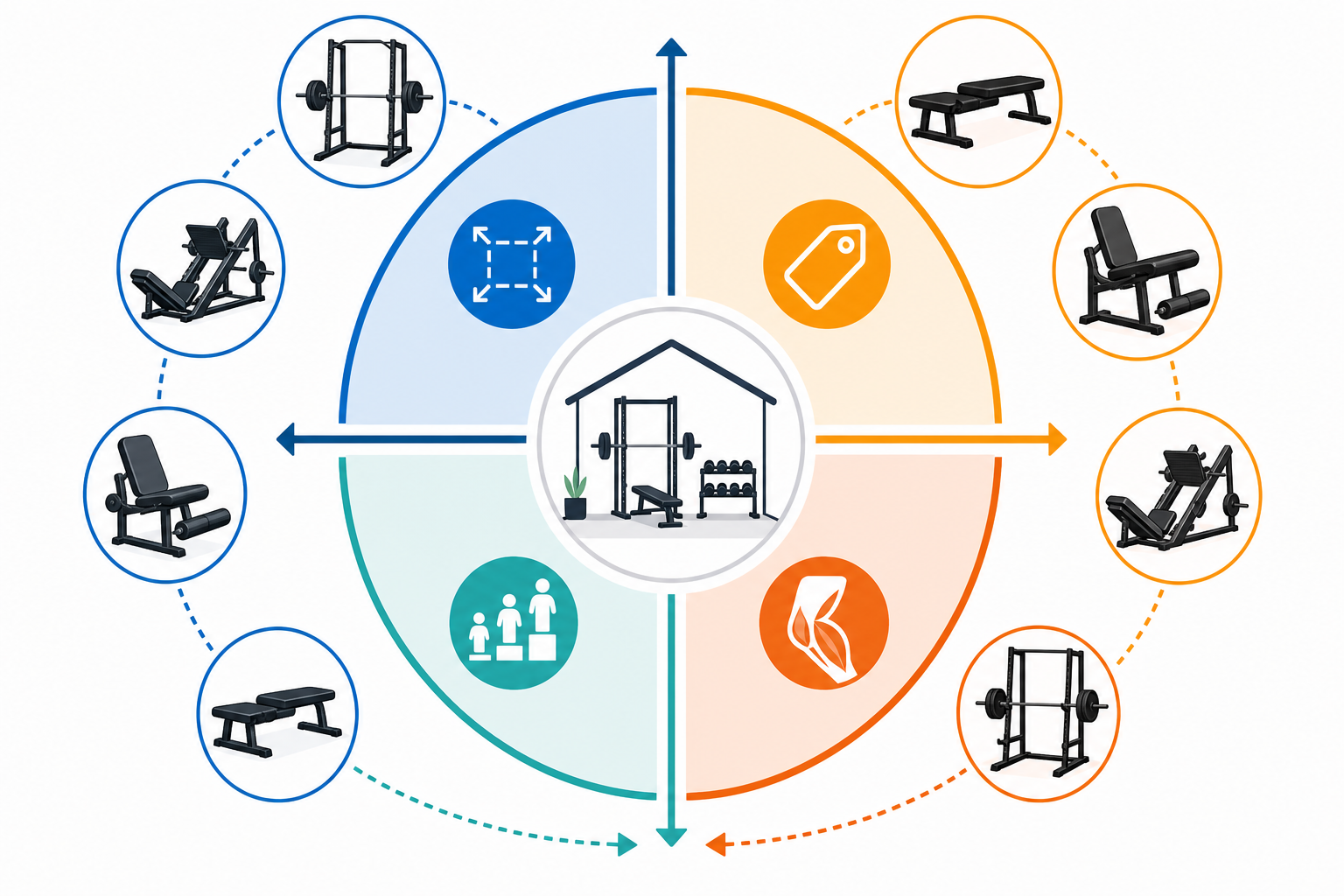
The Four Constraint Axes for Choosing Leg Equipment
Every leg equipment decision at home comes down to four variables. You cannot optimize all four simultaneously — trade-offs are inevitable. The goal is to find the combination that best serves your specific situation.
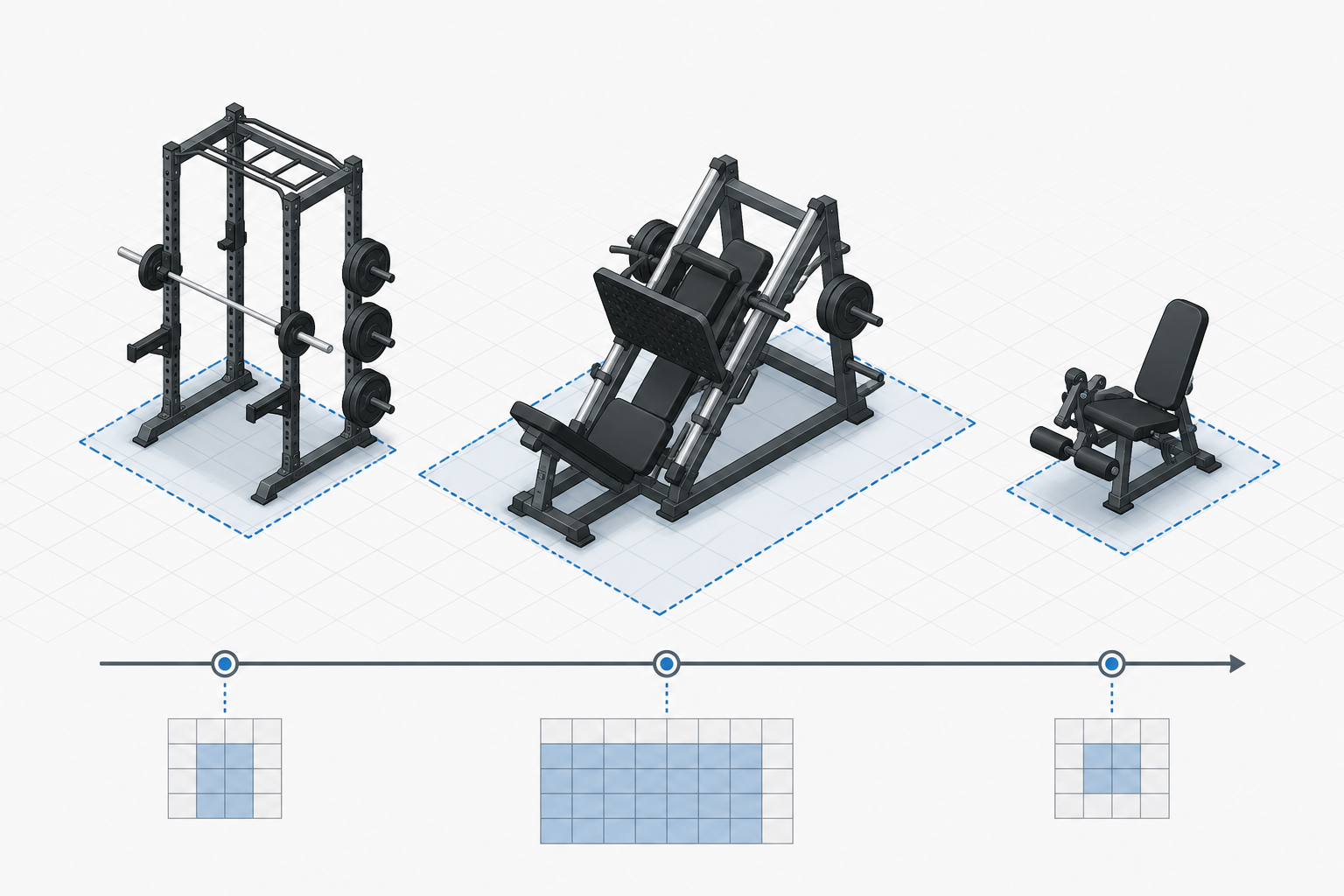
- Available floor space. Measured in square feet of dedicated floor area plus clearance for movement. A leg press can require 30–40 sq ft. A folding squat rack can fit in under 10 sq ft when stored. Ceiling height matters for overhead movements like squats and standing calf raises.
- Total budget. Includes the machine itself, shipping, assembly, flooring, and any attachments. A power cage with a barbell and plates can run $1,000–$2,500. A standalone leg extension machine might cost $300–$800 but delivers far less versatility per dollar.
- Experience level. Beginners benefit most from compound barbell movements that build coordination and whole-body strength. Intermediate lifters can productively add isolation machines to target specific weak points.
- Training goal. Compound strength (squats, deadlifts) requires different equipment than isolation hypertrophy (leg extensions, leg curls). If your primary goal is quad growth, a leg press or hack squat may serve you better than a squat rack.
Leg Equipment Catalog: Machine Types Compared by Space, Budget, and Muscle Focus
The following table provides a side-by-side comparison of the major leg machine types available for home gyms. Each entry includes approximate footprint, typical price tier, primary muscle targets, and the user scenario where it makes the most sense.
| Machine Type | Footprint (sq ft) | Price Tier | Primary Muscles | Best For |
|---|---|---|---|---|
| Power cage / squat rack | 16–24 | $500–$2,500 | Quads, glutes, hamstrings, core | Versatile compound training; best overall value per sq ft |
| Smith machine | 20–30 | $400–$1,500 | Quads, glutes, hamstrings | Solo lifters who want a fixed bar path; beginners |
| Leg press (45-degree) | 30–40 | $800–$2,000 | Quads, glutes, hamstrings, calves | High-volume quad training; less balance demand |
| Leg press / hack squat combo | 20–30 | $1,000–$2,500 | Quads, glutes, hamstrings | Space-efficient two-in-one for quad-focused lifters |
| Leg extension / curl machine | 12–18 | $300–$800 | Quads (extension), hamstrings (curl) | Isolation work; best as bench attachment |
| Belt squat machine | 10–15 | $400–$1,200 | Quads, glutes, hamstrings | Lifters with lower-back issues; squat variation |
| Hip thrust bench | 8–12 | $200–$600 | Glutes, hamstrings | Glute-focused training; compact option |
| Nordic curl bench | 6–10 | $100–$300 | Hamstrings | Hamstring isolation; very compact |
| Calf raise machine (standing/seated) | 6–10 | $150–$500 | Calves | Targeted calf work; small footprint |
Power cage / squat rack. According to Garage Gym Reviews, a power rack is "one of the most versatile pieces of equipment for training your legs" and "typically a great addition to a garage gym." It allows barbell back squats, front squats, lunges, rack pulls, and calf raises — plus full-body exercises like bench press and pull-ups. For the footprint, no other leg machine delivers this range of movement options.
Smith machine. The Smith machine guides the barbell on a fixed vertical or slightly angled path. This makes it safer for solo lifters who do not have a spotter, and it allows exercises like wide-stance sumo squats and split squats that target the quads and glutes from different angles. The trade-off is that the fixed bar path reduces the stabilizer muscle engagement that free-weight squats provide.
Leg press. The leg press allows you to lift more weight than a barbell squat because it removes the balance and core stability demands. This makes it effective for high-volume quad training and for lifters who want to push their legs to failure without worrying about dumping a barbell. The downside is its large footprint — a 45-degree leg press typically requires 30–40 sq ft. Some manufacturers offer vertical leg press models that are more compact, but these are less common in home gyms.
Leg extension and leg curl. These machines isolate the quads and hamstrings respectively. They are effective for targeting specific muscle groups but offer the least versatility per dollar of any leg machine. As Garage Gym Reviews notes, they "aren't very versatile" and are best purchased as attachments for a weight bench or as a two-in-one machine rather than as standalone units. A bench attachment that adds leg extension and curl functionality typically costs $200–$400 and takes up minimal additional space.
Belt squat, hip thrust bench, Nordic curl bench, calf raise. These are specialized machines that serve specific training goals. A belt squat machine is useful for lifters who want to squat heavy without loading the spine. A hip thrust bench is compact and effective for glute development. A Nordic curl bench is one of the smallest leg-specific machines available and targets the hamstrings through an eccentric-focused movement. Calf raise machines are small and inexpensive but only work one muscle group.
Two-Machine Combo Recommendations for Common Home Gym Scenarios
The most efficient home leg-day setup pairs one versatile strength station with one targeted lower-body station. This gives you compound movement capability plus isolation or variation work — without filling your space with single-purpose machines. The following combinations are adapted from recommendations by RitFit Sports and reflect real-world home gym constraints.
| Scenario | Primary Machine | Secondary Machine | Why This Pairing Works |
|---|---|---|---|
| Compact space (under 50 sq ft) | Folding squat rack | Adjustable bench + leg curl attachment | Folding rack stores against wall; bench adds leg extension/curl without a separate machine |
| Heavy lifting / strength focus | Power cage | Leg press / hack squat combo | Cage handles all compound lifts; combo machine adds quad volume without extra footprint |
| Solo training / safety priority | Smith machine | Hip thrust attachment | Smith machine provides fixed bar path for safe solo lifting; hip thrust adds glute work |
| Bodybuilding / hypertrophy focus | Smith machine | Leg press / hack squat combo | Both machines allow high-volume, controlled reps with less balance demand |
| Beginner (first home gym) | Power cage | Beginner-friendly leg press | Cage builds compound strength and coordination; leg press adds accessible quad volume |
Why the power cage appears in multiple combos: A power cage or squat rack offers the most versatility for leg training per square foot of any leg equipment. It enables barbell back squats, front squats, overhead squats, lunges, step-ups, rack pulls, and calf raises — all within a 16–24 sq ft footprint. For beginners, it builds whole-body coordination and strength more efficiently than any single-purpose machine. For intermediate lifters, it provides the progressive overload foundation that isolation machines cannot replace.
Lower-Cost and No-Equipment Alternatives
Not every home gym needs a $2,000 leg press. If your budget is tight or your space is extremely limited, several lower-cost options can still deliver effective leg training.
- Resistance bands. Bands can replicate many leg machine movements — banded squats, banded leg extensions, banded hip thrusts, and banded glute bridges. They take up almost no space and cost $20–$60 for a set. As Garage Gym Reviews notes, resistance bands are a good alternative to hip abductor/adductor machines, which "take up a lot of space with little versatility."
- Adjustable dumbbells. A pair of adjustable dumbbells (typically $200–$500) enables goblet squats, Bulgarian split squats, lunges, step-ups, and Romanian deadlifts. These exercises cover quads, glutes, hamstrings, and calves with a single piece of equipment that fits on a shelf.
- Compact leg sled. Powertec's Compact Leg Sled is a space-saving design for home gyms that engages quads, hamstrings, glutes, and calves. It takes up significantly less floor space than a traditional leg press while still providing a similar pressing movement. This is a middle-ground option for buyers who want leg press functionality without the 30–40 sq ft footprint.
- Bench attachments. A leg lift-curl attachment or leg press attachment for a weight bench adds leg extension and curl functionality without a standalone machine. Powertec's Workbench Leg Press Attachment is one example. These attachments typically cost $150–$400 and store compactly when not in use.
- Bodyweight exercises. Bodyweight squats, lunges, step-ups, glute bridges, and single-leg Romanian deadlifts require zero equipment. While they cannot provide the same progressive overload as weighted machines, they are a legitimate starting point for beginners and a useful complement to any home gym.
Safety and Setup Checklist for Home Leg Equipment
Setting up leg equipment at home requires more than just assembling the machine. The following checklist covers the practical steps that keep you safe and protect your equipment and flooring.
- Measure room clearance and ceiling height. For a power cage or Smith machine, you need enough ceiling height to perform a full-depth squat with the barbell loaded. Measure from the floor to the lowest overhead obstruction. For leg press machines, ensure there is enough room to fully extend your legs without hitting a wall.
- Install rubber flooring. Rubber flooring protects your subfloor from dropped weights, reduces noise, and provides a stable surface for heavy lifts. Stall mats (3/4-inch thick rubber) are a common and cost-effective solution for home gyms. They also help dampen vibration that can disturb neighbors in apartments.
- Check safety catches and spotter arms. Before loading any weight, verify that the safety catches on your power cage or Smith machine are set at the correct height. For squats, the safeties should be just below your lowest squat depth. Test them with an empty barbell first.
- Start lighter than you think you need. When using a new machine for the first time, use a weight that feels easy. This allows you to test the range of motion, foot placement, and machine mechanics without risking injury. As FitEvo advises, "start with light weight, move slowly, breathe properly, and warm up on a bike or treadmill for a few minutes."
- Warm up properly before every session. A 5–10 minute warm-up that includes light cardio (jumping jacks, high knees, or a few minutes on an exercise bike) followed by dynamic stretches (leg swings, walking lunges, bodyweight squats) prepares your muscles and joints for heavier work.
Frequently Asked Questions
Is a leg press or squat rack better for home?
It depends on your constraint axes. A squat rack (or power cage) offers far more versatility per square foot — you can squat, lunge, press, and pull from the same station. A leg press is better for high-volume quad isolation and for lifters who want to push leg training to failure without balance demands. If you have space for only one, choose the squat rack. If you have room for two, pair a power cage with a leg press or hack squat combo.
Can I build legs without any machines?
Yes. Bodyweight squats, lunges, step-ups, glute bridges, and single-leg Romanian deadlifts can build significant leg strength and muscle, especially for beginners. Adding resistance bands or adjustable dumbbells increases the load without requiring large machines. For intermediate and advanced lifters, however, progressive overload becomes difficult without some form of weighted equipment.
What is the smallest leg machine that still works?
A Nordic curl bench (6–10 sq ft) or a calf raise machine (6–10 sq ft) are the smallest dedicated leg machines. However, a folding squat rack paired with an adjustable bench and a leg curl attachment offers far more training variety in a similar footprint. The compact leg sled from Powertec is another space-efficient option that provides leg press functionality in a smaller package.
Should I buy a standalone leg extension or a bench attachment?
A bench attachment is almost always the better choice for home gyms. Standalone leg extension and leg curl machines take up 12–18 sq ft and offer limited versatility. A leg curl/extension attachment for your existing weight bench costs less, stores more compactly, and frees up floor space for other equipment. The only exception is if you already have a dedicated leg press or hack squat and want a separate station for isolation work.
What should I buy first as a beginner?
A power cage or squat rack with a barbell and weight plates. This single investment gives you access to squats, lunges, rack pulls, and calf raises — plus full-body exercises like bench press and overhead press. Add an adjustable bench and a leg curl attachment later for isolation work. If your budget or space cannot accommodate a power cage, start with adjustable dumbbells and a set of resistance bands, then upgrade when you outgrow them.
Once you have chosen your equipment, the next step is putting it to use. The Leg Workouts at Home: Three Complete Routines by Equipment Tier guide provides full workout plans matched to the equipment you own. For a deeper look at programming — rep ranges, sets, progression, and how to structure your leg days over weeks — see How to Program Leg Day at Home for Strength, Hypertrophy, or Endurance. And if you are still evaluating other equipment categories, the Best Home Exercise Equipment: A Constraint-Based Buying Guide for 2026 covers the full landscape.
This result comes from one real apartment under the stated conditions — it is a strong signal, not a guarantee your space will measure identically.
Builds this evidence supports
Cable Machine Alternatives That Save Space and Money
Compare the best cable machine alternatives for home gyms – from resistance bands and pulley systems to suspension trainers and compact digital units – and find the right option for your space and budget.
How to Choose a Compact Home Gym That Works for Your Space, Budget, and Noise Tolerance
This article provides a structured decision framework for apartment dwellers and small-space residents to match their specific floor footprint, noise sensitivity, and budget to the most suitable compact home gym strategy — whether that's an all-in-one machine, modular build, smart digital system, or band/bodyweight setup.
The Garage Gym Reality Check: What Equipment Actually Fits in a Single-Car Garage
Most garage gym guides assume a two-car space. This article uses real dimensions, real equipment footprints, and three layout templates to show what fits—and what doesn't—in a single-car garage (10x20 to 12x20 ft).
Spot something off?
If this result didn't match your own space, let us know — floor-damage and noise claims carry real deposit-risk consequences if we get them wrong.