
If you divide monthly price by verified overall score, Shred is the first app that makes the calculator look useful instead of decorative: $9.99 per month divided by a 4.28/5 overall score comes out to about $2.33 per overall score point. Future, at $199 per month, lands around $46.28 per overall score point — roughly a 20x difference. Prices are treated here as verified as of June 26, 2026, because app pricing moves often enough to make old screenshots dangerous. [1]
Then Caliber’s free tier walks in and breaks the neat little spreadsheet. GGR gives Caliber 5/5 for instruction and 5/5 for progressive overload across its tiers, including the free version. At $0, the cost-per-point math is unbeatable for someone who can train without human follow-up. [1]
That does not mean every paid strength training app is a waste. It means the first question is not “Which app is best?” It is “Which training problem am I paying to solve?” Instruction, progression, equipment fit, and accountability are different products. Paying $10 for better dumbbell programming is not the same purchase as paying $199 for a coach to notice when you disappear.
The value table: monthly cost divided by the score that matters
Overall scores are useful, but they can be too blunt for buying decisions. GGR scores apps on a 1-to-5 scale across 13 dimensions, and its pricing methodology can already reward cheaper apps: apps under $15 can receive 4 to 5 stars on price, while apps at $35 or more can receive 1 star for price. [1] So for value, the cleaner move is to look at raw training dimensions first: instruction, progressive overload, equipment adaptability, and accountability.
| App | Monthly price used | Most relevant verified score | Cost per relevant score point | What the number actually says |
|---|---|---|---|---|
| Caliber Free | $0 | 5/5 instruction; 5/5 progressive overload | $0 | Best pure value if you can self-direct and do not need coaching follow-up |
| Boostcamp Free | $0 | 5/5 progressive overload | $0 | Hard to beat for free structured progression |
| Nike Training Club | $0 | 4/5 instruction | $0 | Strong free beginner instruction, less of a dedicated progression engine |
| TR[Ai]NER by Element 26 | ~$8.33/month when billed annually | 5/5 instruction; 5/5 progressive overload; 5/5 equipment demands | ~$1.67 per 5-point dimension point | One of the strongest low-cost ROI cases when the annual price fits |
| Shred | $9.99 | 4.28/5 overall; 5/5 instruction; 5/5 equipment adaptability | $2.33 per overall point; ~$2.00 per 5-point dimension point | The cleanest budget paid comparison point |
| Fitbod | $15.99 | 5/5 equipment adaptability; 3/5 instruction; 3/5 progressive overload | ~$3.20 per equipment point; ~$5.33 per instruction or progression point | Great equipment matching, weaker value if your main need is teaching or long-term progression |
| Caliber Pro | $19 | 5/5 instruction; 5/5 progressive overload | $3.80 per 5-point dimension point | Pays for added features around an already strong free base |
| JuggernautAI | $35 | 5/5 progressive overload; 3/5 instruction; 3/5 workout variety | $7.00 per progression point; ~$11.67 per instruction point | Expensive unless structured barbell progression is the bottleneck |
| Future | $199 | 5/5 accountability | $39.80 per accountability point; ~$46.28 per overall point | Not a cheap programming buy; it is a human accountability buy |
The table is deliberately unfair to vague app marketing. A pretty interface does not get its own column. “Personalized” does not count unless it shows up as better progression, better equipment matching, better instruction, or actual accountability. That is where most home lifters either get value or pay rent on an app they barely need.
Why the cheapest overall score is not always the best buy
A low cost-per-overall-score number is a good first filter. It is not a verdict. If an app’s overall score includes price, then dividing price by that overall score can reward cheapness twice. That is why Shred’s $2.33 per overall point is interesting, but its 5/5 instruction and 5/5 equipment adaptability are more useful for deciding whether it belongs on a home lifter’s phone. [1]
Future is the cleanest example of why the dimension matters. At $199 per month, it looks absurd next to Shred if the buyer only wants sets, reps, and exercise demos. But Future scores 5/5 in accountability, and accountability is not the same thing as an exercise library. [1] Someone paying for human follow-up is buying a different product than someone comparing dumbbell programs.
The problem is the cliff. The available score set does not identify any app under $15 per month that scores above 4/5 in accountability. That leaves a gap between affordable app subscriptions and Future-style coaching. For a lot of home lifters, that is the exact place where the budget decision gets uncomfortable: the thing they want most may not exist at the price they hoped to pay.
Beginner with little or no equipment: do not pay before the app teaches
For a beginner training in a living room, the app has two jobs before anything else: teach the movement well enough to start safely, and make the next workout obvious. That is why Caliber Free is hard to argue against. A free app with 5/5 instruction and 5/5 progressive overload is not merely “good for the price.” For a self-directed beginner, it may be the price ceiling until a real problem appears. [1]
Nike Training Club also belongs in the beginner conversation because it is free and carries a 4/5 instruction score. [1] That makes it useful for someone who needs guided sessions and basic confidence more than a detailed long-term strength plan. The tradeoff is that a beginner who wants strength progression to be the central feature may outgrow a general training library faster than they expect.
This is where free-versus-paid advice gets sloppy. Free is enough when the free app solves the actual bottleneck. If the bottleneck is “I do not know what to do next Monday,” Caliber Free or a Boostcamp-style free progression option can be a better buy than a paid app with nicer screens. If the bottleneck is “I cannot tell whether my squat pattern is safe,” then the instruction standard matters more than the subscription label.
For more beginner-specific context, the useful comparison is not a generic app roundup but what a beginner needs from the product: clear teaching, sensible starting loads, and few decisions between workouts. That is the same reason guides like Free vs. Paid Workout Apps for Beginners and Best Strength Training Apps for Absolute Beginners Learning Proper Form are better companions to this decision than another list of “top apps.”
Intermediate dumbbell or mixed-equipment lifter: Shred and TR[Ai]NER make the strongest ROI case
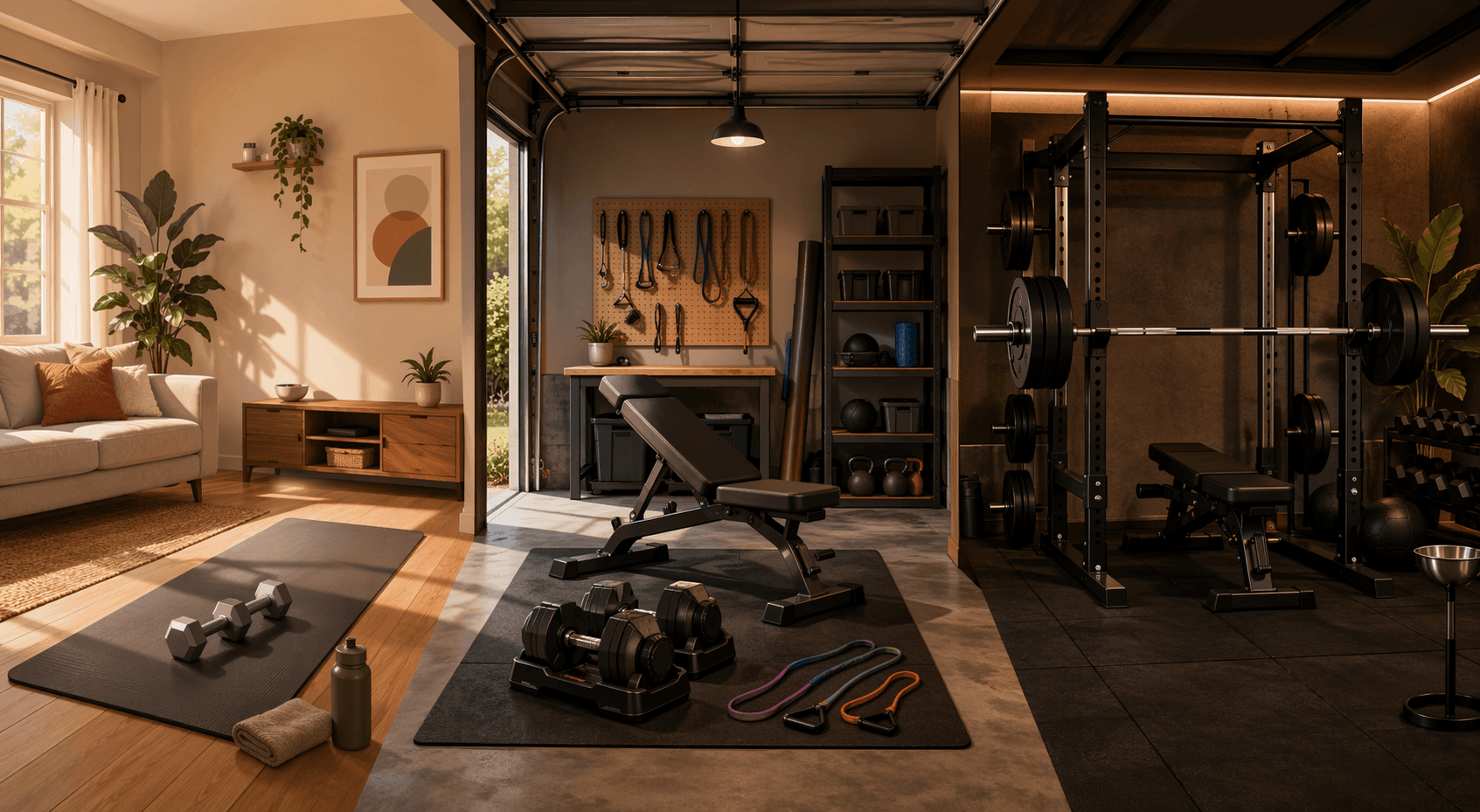
Once a lifter owns adjustable dumbbells, a bench, bands, maybe a kettlebell, the app’s equipment logic starts to matter. A program that constantly assigns exercises the lifter cannot load is not “personalized”; it is admin work with push notifications.
Shred is the best simple paid benchmark here. At $9.99 per month, with 5/5 instruction and 5/5 equipment adaptability, it offers a clear value case for someone who wants guided strength sessions without climbing into coaching prices. [1] It is not free, but it does not need many avoided bad workouts to justify $9.99.
TR[Ai]NER by Element 26 may be even more interesting if the annual billing works for the buyer. The research brief lists it at about $8.33 per month when billed annually, with 4.3/5 overall and perfect 5/5 scores in instruction, progressive overload, and equipment demands. [1] That combination is exactly what a mixed-equipment home lifter should be hunting for: teach the movement, progress the work, and stop pretending everyone owns the same room.
Fitbod is the app I would not dismiss, but I would label carefully. Its 5/5 equipment adaptability is valuable for a home setup, especially when the available equipment changes by day. But GGR gives it 3/5 for instruction and 3/5 for progressive overload. [1] So Fitbod’s value depends on the buyer already knowing how to lift and mainly needing exercise selection around available equipment. If the buyer needs teaching and progression, the $15.99 monthly price becomes harder to defend against cheaper apps with stronger scores in those exact dimensions.
Caliber Pro, at $19 per month, sits in a slightly different spot. The free version already carries the 5/5 instruction and 5/5 progressive overload scores, so the paid question is not “Is Caliber good?” It is “Do the Pro features remove enough friction from my training to justify paying for something built on a strong free base?” [1] For some lifters, yes. For a spreadsheet-friendly lifter who already logs consistently, maybe not.
This is also where equipment spending can quietly distort app ROI. A $10 app is not really a $10 training system if it only works well after another equipment purchase. Before paying for an app because it adapts beautifully, it is worth checking whether the home setup itself is the limiting factor; a constraint-based equipment guide or a basic home gym cost comparison can be more useful than another subscription trial.
Advanced barbell lifter: JuggernautAI is expensive for the right reason
JuggernautAI is not the budget winner. At $35 per month, it costs $7 per point for its 5/5 progressive overload score. It also scores 3/5 for instruction and 3/5 for workout variety. [2] For a beginner, that is not the shape of a good value pick.
For an advanced barbell lifter, the same numbers read differently. If the main job is structured progression around heavy compound lifts, a 5/5 progressive overload score can matter more than cheap access to workouts. The buyer is not paying for general exercise discovery. They are paying to have training stress organized.
That defense has a boundary. JuggernautAI makes the most sense when the lifter has the equipment and training base to use it. A barbell-focused app is a poor bargain if the user is still training with one pair of light dumbbells. If the app assumes a more complete strength setup, the subscription price is only one part of the real cost; equipment planning belongs in the same decision as the monthly fee.
For that buyer, $35 per month can be rational. For the beginner who needs form instruction, or the intermediate lifter who needs better dumbbell substitutions, it is probably paying for the wrong strength training app.
Where BetterMe and Future fit
BetterMe is listed at $19.99 per month, but the available sources do not give the same useful strength-specific dimension scores for it. [1] Without verified instruction, progressive overload, equipment adaptability, or accountability scores to compare against the other apps, it should not be pushed up the strength-training value ranking just because the monthly price is familiar.
Future deserves the opposite treatment: not ignored, not lazily mocked, but placed in the correct category. Its $199 monthly cost and 5/5 accountability score make it a premium accountability product, not a cost-efficient programming app for most home lifters. [1] If the buyer needs someone to review, respond, and keep pressure on the habit, the comparison should be against coaching alternatives, not against Shred’s cost per overall score point.
The practical decision rule
If you need instruction and progression without coaching, start with Caliber Free or another free option with strong progressive overload, such as Boostcamp. Paying more before you outgrow that is optional, not virtuous.
If you want low-cost guided strength value, Shred and TR[Ai]NER have the strongest ROI case in the paid budget tier because their scores sit in the dimensions that actually affect training: instruction, progression, and equipment fit.
If you are an advanced barbell user, JuggernautAI can justify $35 per month when 5/5 progressive overload is the feature you truly need. If what you really need is accountability, admit that you are shopping in a different aisle: the under-$15 apps in this research do not clear 4/5 accountability, and the jump to Future-style coaching is steep.
References
- Expert-Tested: The Best Workout Apps (2026), Garage Gym Reviews
- Expert-Tested: Best Weightlifting Apps (2026), Garage Gym Reviews
Comments
Join the discussion with an anonymous comment.