

A $3,295 Gamble
Consider two treadmills: the Peloton Tread at $3,295 and the Sole F80 at $1,799.99. The Peloton comes with a 12-month limited warranty. The Sole F80 covers the frame and motor for life, parts for three years, labor for one. If the motor fails in year three—a $300–$600 repair—the Peloton owner pays the full amount. The Sole owner pays zero. That single repair nearly wipes out the $1,495 price difference. And the motor is just one possible failure.
The Four Parts of a Warranty (and Which One Actually Costs You)
A treadmill warranty is not one promise—it is four, each with its own expiration. The frame (steel skeleton) almost never fails in a home machine, so a lifetime frame warranty is nice but not where the real exposure lives. The motor, the control board, and the belt are the components that break. And those are the ones where the warranty duration varies wildly.
- Motor: $300–$600 to replace (source: Treadmill Doctor). The most expensive single repair. If the motor warranty is only two years, you are on the hook for any failure after that.
- Control board (MCB): $200–$600. The board manages speed, incline, and safety. It is susceptible to power surges and humidity. Many claims come in years three and four.
- Belt and deck: $250–$350 for a belt replacement, more if the deck needs resurfacing. Belts wear naturally—a machine used daily may need a belt after three to five years. That is a predictable cost, but only a long parts warranty covers it.
- Labor: $150–$200 per service call. Even if you get a free part, you still pay for the technician. Labor coverage is often the shortest term—frequently just one year.
When a brand advertises “lifetime frame” but offers only one year on parts and labor, the fine print shifts hundreds of dollars of risk back to you. The BarBend treadmill warranty guide recommends at least 10 years on frame, 2 years on parts, and 1 year on labor. By that standard, machines like the Peloton Tread (12-month limited) and the NordicTrack Commercial 1750 (2-year parts) fall short.
How Six Brands Stack Up
The table below shows the exact warranty terms for six major brands. Prices are from manufacturer sites (June 2026). Note the wide gap between Sole and Horizon on one side and Peloton on the other.
| Brand / Model | Price | Frame | Motor | Parts | Labor |
|---|---|---|---|---|---|
| Sole F80 | $1,799.99 | Lifetime | Lifetime | 3 yr | 1 yr |
| Horizon 7.0 AT | $1,099 | Lifetime | Lifetime | 3 yr | 1 yr |
| NordicTrack Commercial 1750 | $2,499 | 10 yr | Lifetime | 2 yr | 1 yr |
| Peloton Tread | $3,295 | 12 mo | 12 mo | 12 mo | 12 mo |
| Bowflex (typical) | $1,500+ | 15 yr | 5 yr | 1 yr | 2 yr |
| ProForm (typical) | $1,000+ | 10 yr | 2 yr | 2 yr | 1 yr |
A few caveats. The Peloton warranty is the subject of some confusion—BarBend's guide lists 3–5 year motor and 5-year frame coverage, but OutdoorGearLab's 2026 review states a flat 12-month limited warranty. The manufacturer's current documentation (Peloton website) confirms the 12-month term for the Tread purchased after 2023. I treat the shorter term as authoritative for recent purchases.
Similarly, Horizon's higher-end model (7.4 AT) upgrades parts to 5 years and labor to 2 years, but the 7.0 AT shown here is the most popular home treadmill. NordicTrack's lifetime motor warranty is good on paper, but its 2-year parts and 1-year labor leave plenty of exposure for controller and belt failures.
The Garage Clause: 40% of Buyers Lose Their Warranty Day One
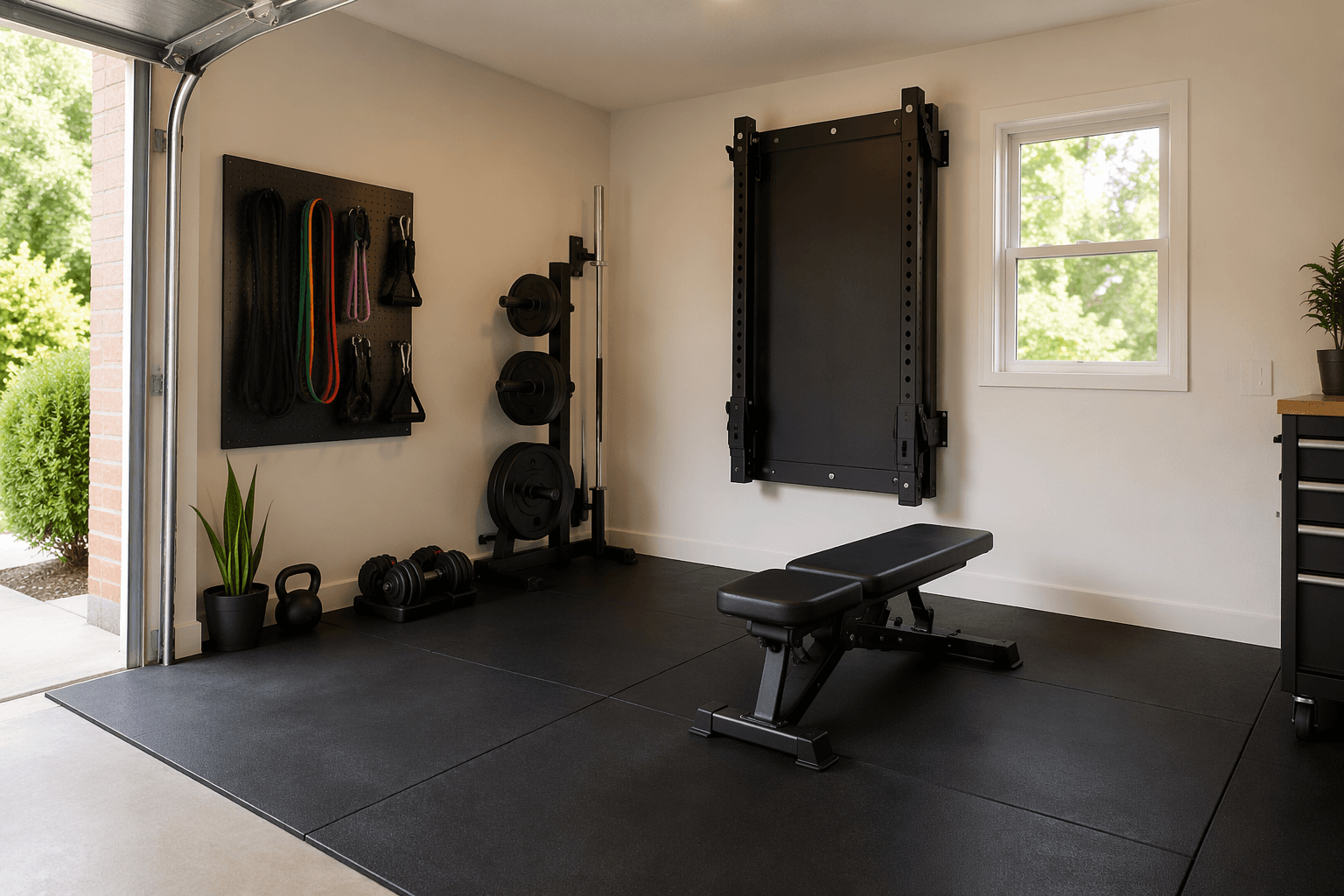
Read the fine print on any major brand's warranty, and you will find a sentence like this one from NordicTrack: "Warranty is voided if the treadmill is used or stored in a garage." I have seen that exact clause in documents from Bowflex, Horizon, NordicTrack, ProForm, Weslo, and Xterra. Sole and Peloton have similar environmental restrictions. The official stance: the treadmill must be kept indoors, in a climate-controlled space between 50°F and 105°F, away from moisture and dust.
Now consider where people actually put treadmills. Industry estimates place 35–45% of home treadmills in garages. That is millions of machines sitting in a space the manufacturer forbids. The practical effect: if you put your treadmill in a garage, you are running it outside warranty for any part failure that can be blamed on temperature or humidity. The cold makes belts harden and crack; heat can overheat the motor; humidity corrodes the control board. The brand will point to the garage clause and deny your claim.
The financial consequence is immediate. A machine that promises a 10-year frame warranty effectively has no frame warranty in a garage. You are left paying for the motor, belt, and board yourself. In that situation, a Sole or Horizon machine suddenly looks less attractive if you cannot keep it indoors—their long warranties become moot. The garage clause is the single most commonly overlooked trap in treadmill buying.
For a deeper look at how garage placement affects your buying decision, see our full decision framework: The Right Treadmill for Your Home: A Buyer's Decision Framework, which covers NordicTrack's garage policy in context.
What You'll Pay Over Five Years
Let me walk through a plausible five-year scenario for a treadmill with only a one-year warranty—like the Peloton Tread. You use the machine three or four times a week. In year two, the belt starts slipping; a technician replaces it for $300. In year three, the motor control board fails, costing $400. In year five, the motor itself burns out: $450. Total out-of-pocket: $1,150. That is within the low end of the $500–$2,000 range.
- Belt replacement: $250–$350 (typical at years 3–5)
- Motor replacement: $300–$600 (most common failure between years 3 and 7)
- Control board: $200–$600 (can fail at any time, often due to power surges)
- Routine service (cleaning, lubrication, adjustment): $150–$200 per visit
For a machine with a lifetime motor warranty and three-year parts coverage, the same scenario drops to maybe $150–$200 in routine service—the belt is covered in year three, and the motor is covered forever. The $500–$2,000 range is not a scare tactic; it is a conservative projection based on industry repair averages. The range widens if you have multiple failures or a higher-end model with more expensive parts.
Extended Warranty: When to Buy, When to Skip
Third-party extended warranty plans typically cost $100–$200 per year for a home treadmill. Compare that with a motor repair at $400: if you pay $150 a year for three years and avoid one motor failure, you are $50 ahead. The breakeven point depends on how likely a major repair is. For a machine with a short manufacturer warranty, the odds are high enough that an extended plan is a reasonable hedge.
I personally would not buy an extended warranty for a Sole F80 or a Horizon 7.0 AT. Their manufacturer coverage already covers the motor and frame for life and parts for three years—the period when most failures occur. For a Peloton Tread or a NordicTrack 1750, I would buy the extended plan without hesitation. One repair after year one pays for itself.
Two Brands to Buy, One to Skip, and a Garage Warning
If you plan to own your treadmill for more than two years, your most cost-effective choices are Sole and Horizon. Both offer lifetime frame and motor, plus three years on parts and one year on labor. Combined with a $0 subscription, the total cost of ownership over five years is almost entirely the purchase price plus routine service.
NordicTrack's warranty is decent—lifetime motor, 10-year frame—but the 2-year parts and 1-year labor create a risk window where a controller failure in year three costs you $200–$600. If you factor in the required iFIT subscription, the total five-year cost climbs well above Sole and Horizon. The same is true for Bowflex and ProForm: their longer frame and motor warranties are offset by short parts and labor.
Peloton sits at the other end. A $3,295 machine with a 12-month warranty is, frankly, a gamble. The brand's ecosystem is polished, but the warranty economics are weak. If you buy a Peloton, either budget $100–$200 per year for an extended plan or accept that you are self-insuring for years two through five.
And finally, the garage clause: it applies to every major brand. If you plan to put your treadmill in a non-climate-controlled garage, the entire warranty calculus shifts. You are essentially unprotected for all but the first year. In that case, the best treadmill for home is one that costs as little as possible to repair, which means paying attention to parts availability and repair costs, not just the warranty paper. But the budget play gets complicated quickly—for a full breakdown, read our Walking Pad vs. Full-Size Treadmill: 3-Year Durability and TCO Comparison.
The Bottom Line
Warranty differences are not fine print trivia. They are real dollar exposure that can make a $1,100 Horizon 7.0 AT cheaper to own than a $2,500 NordicTrack over five years. Read the warranty table before you buy. And if your treadmill is going in the garage, reset your expectations: you are buying a machine that will have no warranty at all.

Comments
Join the discussion with an anonymous comment.