
Why the ‘Best’ Fitness App for Women Depends on Your Profile
Women make up roughly 60% of fitness app users, according to market data from Nimble AppGenie. Yet most roundup content treats this audience as a monolith, publishing a single ranked list and calling it a day. The problem is that a new mother recovering from childbirth, a 50-year-old navigating perimenopause, and a 25-year-old training for a half-marathon have almost nothing in common in terms of programming needs — but they are all being served the same recommendations.
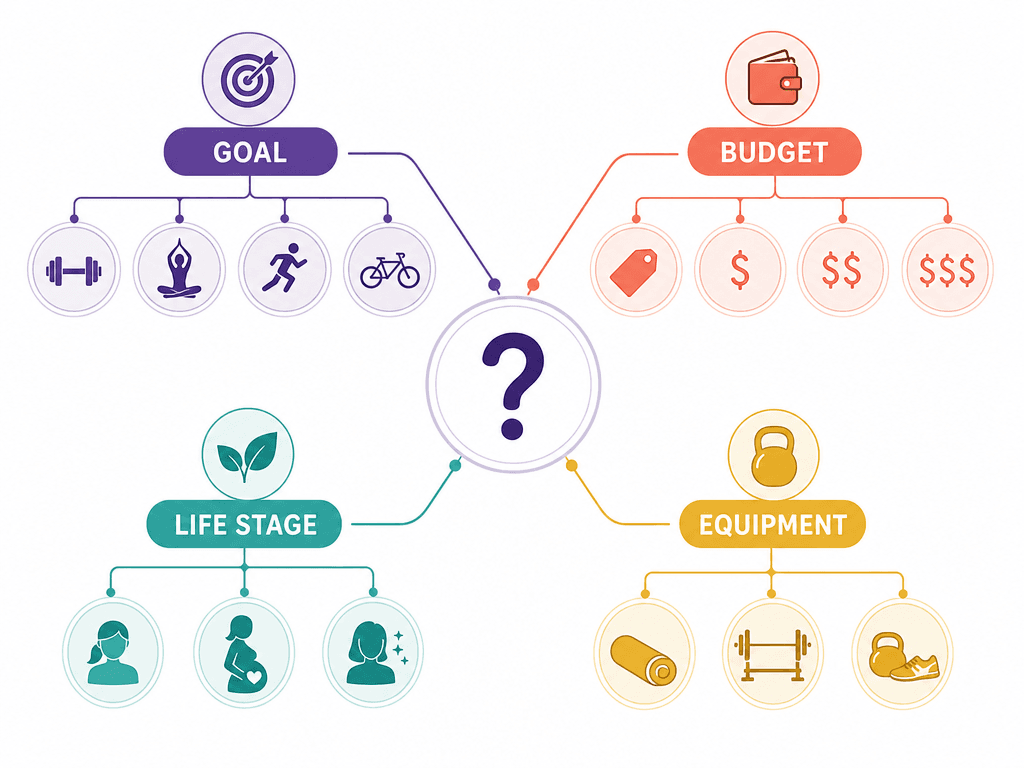
This guide takes a different approach. Instead of declaring one app the winner, it provides a multi-axis decision framework that helps you match an app to your specific profile. The four axes are:
- Primary goal — strength, yoga, running, cycle-syncing, or prenatal/postnatal recovery
- Monthly budget — free, under $15, $15–$30, or $150+ for personal coaching
- Life stage — beginner, prenatal/postnatal, or perimenopause+
- Equipment access — bodyweight only, minimal gear (dumbbells, bands), or full gym
By the end of this article, you will be able to name the app that fits your exact combination of constraints — not just the app that scored highest in a general review.
Quick-Reference Comparison Table: Top Fitness Apps for Women in 2026
The table below compares the most frequently recommended apps across the four decision axes. Use it as your starting point, then read the goal-based and budget-based sections for deeper context.
| App | Best For | Pricing | Platform | Equipment Needed | Standout Feature |
|---|---|---|---|---|---|
| Nike Training Club | Beginners, orientation, bodyweight | Free | iOS, Android | None to minimal | Completely free since 2020; 10+ workout categories |
| Caliber | Strength training, community | Free; Pro $19/mo; Premium $200+/mo | iOS, Android | Dumbbells, barbell, gym | 500+ exercise library in free version; algorithm-based custom programs |
| FitOn | Beginners, budget-conscious | Free; Pro $30/yr | iOS, Android | None to minimal | All workout videos accessible in free tier; modifications included |
| Sweat | Structured programs, post-pregnancy | $25/mo or $135/yr | iOS, Android | Minimal (dumbbells, bands) | Over 50 programs and 13,000 workouts; all-female instructors |
| Ladder | Team-based accountability, prenatal | $14.99 or $29.99/mo; $180/yr | iOS, Android | Minimal to gym | Includes a 12-week prenatal program |
| Alo Wellness Club | Yoga, Pilates, barre, HIIT | Free (was $20/mo) | iOS, Android | Mat, minimal | Over 3,000 classes now completely free |
| Obé Fitness | Cycle-syncing, perimenopause support | $27/mo, $65/quarter, $199/yr | iOS, Android, Web | Minimal | Cycle-syncing and perimenopause-specific programming |
| Evlo Fitness | Strength with joint safety, over-40 | $59.99/mo | iOS, Android | Dumbbells, bands | Strength taught by physical therapists; 'gentle consistency' approach |
| Future | Personal coaching, accountability | $199/mo | iOS, Android | Any | One-on-one coach matched by goals and preferences |
| Bloom Method | Prenatal and postnatal | $29.99/mo | iOS, Android | None to minimal | Focus on pelvic floor, diaphragmatic breathing, core activation |
| Strava | Running, cycling, outdoor activity | Free; $6.67 or $11.99/mo | iOS, Android | None (GPS tracking) | Large community; 125+ million athletes |
| Peloton App | Live and on-demand classes | $12.99/mo (app only); $44/mo (all-access) | iOS, Android, Web | None to bike/tread | 16+ class types; 30-day trial |
Best Fitness Apps by Goal: Strength, Yoga, Running, and More
Your primary training goal should be the first filter you apply. An app that excels at guided yoga classes will frustrate you if you want to run a faster 5K, and a powerlifting program will not help you build a consistent Pilates practice.
Strength Training
For women who want progressive overload, periodized programming, and the ability to log heavy lifts, Caliber and Stronger By The Day are the strongest options. Caliber's free tier includes a 500+ exercise library and algorithm-based custom programs, while the Pro version ($19/mo) adds coaching features. Stronger By The Day ($15/mo) is built by powerlifting coach Meg Gallagher and designed specifically with women's programming in mind. For a full breakdown of strength-specific apps, see our dedicated guide:
→ Best Strength Training Apps for Women: Progressive Overload, Heavy Lifting, and Real Results in 2026
Yoga, Pilates, and Flexibility
Alo Wellness Club is now completely free, offering over 3,000 classes spanning yoga, Pilates, barre, HIIT, meditation, and nutrition. For a more structured approach, Melissa Wood Health ($15/mo) focuses on low-impact Pilates and yoga movements in 10–30 minute sessions, with pre- and post-natal exercise options. Down Dog ($7.99/mo) offers over 60,000 configurations and includes prenatal yoga options.
Running and Outdoor Activity
Nike Run Club is a free, robust option with guided runs, audio coaching, and social features. Strava ($6.67 or $11.99/mo for premium) adds segment tracking, route planning, and a community of over 125 million athletes. For GPS tracking with a broader activity scope, MapMyFitness offers a free tier covering 600+ activities and a premium version at $5.99/mo.
Cycle-Syncing
Cycle-syncing is the fastest-growing specialization in women's fitness apps. Apps like WeGLOW, 28, FitrWoman, and DROP IT offer phase-based workout recommendations that align training intensity and type with menstrual cycle phases. Obé Fitness also includes cycle-syncing programming in its class library, and LES MILLS+ offers cycle-syncing workouts. For a broader perspective on this trend:
→ The Rise of Cycle-Syncing and Women-Specific Programming in Fitness Apps (2026)
Prenatal and Postnatal
Bloom Method ($29.99/mo) specializes in prenatal and postnatal fitness with a focus on pelvic floor recovery, diaphragmatic breathing, and core activation. Sweat offers a PWR Post-Pregnancy program within its $25/mo subscription. Ladder ($14.99 or $29.99/mo) includes a 12-week prenatal program. For a complete guide:
Best Fitness Apps by Budget: Free, Under $15/Month, $15–$30/Month, and $150+/Month
App pricing spans from completely free to nearly $200 per month. Understanding what each tier typically delivers helps you avoid paying for features you do not need.
Free Apps
Free apps are ideal for orientation-stage users who are not yet sure what training style suits them. Nike Training Club is the standout — it has been completely free since 2020 and offers over 10 workout categories with certified instructors. FitOn provides full access to all workout videos in its free tier, with modifications for beginners. Caliber's free version includes a 500+ exercise library and algorithm-based custom programs. Alo Wellness Club recently moved to a completely free model, offering over 3,000 classes. As Garage Gym Reviews notes, these free apps are genuinely useful for getting started, but their limitations — no periodized strength progression, no coach feedback — mean they are best for orientation, not for specific performance goals.
Under $15/Month
This tier includes apps that offer structured programming without the premium price tag. Stronger By The Day ($15/mo) provides science-based strength programming. Ladder starts at $14.99/mo. Melissa Wood Health ($15/mo) and Down Dog ($7.99/mo) are strong options for yoga and low-impact training. Peloton's app-only plan is $12.99/mo.
$15–$30/Month
This is the most competitive price band, and it is where most premium fitness apps cluster. Sweat ($25/mo) offers over 50 programs and 13,000 workouts with all-female instructors. Obé Fitness ($27/mo) includes cycle-syncing and perimenopause support. Alo Wellness Club ($20/mo before it went free) and EvolveYou ($22.99/mo) also sit in this range. As Women's Health, Garage Gym Reviews, and Good Housekeeping all confirm, this tier delivers the best balance of programming quality and cost for most women.
$150+/Month — Personal Training
Future ($199/mo) is the primary player in this tier. It provides one-on-one coaching with a trainer matched to your goals and preferences. This is the right choice if you need accountability, personalized programming adjustments, and are willing to pay a premium for human guidance. For a detailed analysis of when upgrading from free to paid makes sense:
→ Free vs Paid Workout Apps for Women: When the Subscription Is Actually Worth It
Best Fitness Apps by Life Stage: Beginners, Prenatal/Postnatal, and Perimenopause+
Your life stage determines not just what kind of training is safe, but what kind of programming will actually keep you consistent.
Beginners
If you are new to home fitness, look for apps with strong onboarding, clear modifications, and no-equipment options. Nike Training Club and FitOn both excel here — they offer guided workouts with visible form cues and beginner-friendly progressions. Caliber's free tier is also a strong choice because its algorithm builds programs based on your current level and available equipment.
Prenatal and Postnatal
Bloom Method ($29.99/mo) is purpose-built for this life stage, with programming that emphasizes pelvic floor health, core activation, and diaphragmatic breathing. Sweat's PWR Post-Pregnancy program and Ladder's 12-week prenatal program are also strong options. For a complete comparison:
→ The Best Prenatal and Postpartum Fitness Apps for 2026
Perimenopause and Menopause
Women in perimenopause and menopause benefit from hormone-aware programming that accounts for changes in joint health, muscle retention, and recovery needs. Obé Fitness offers perimenopause-specific classes. Evlo Fitness ($59.99/mo) takes a 'gentle consistency' approach to strength training, taught by physical therapists. For a dedicated deep dive:
Best Fitness Apps by Equipment Availability: Bodyweight Only to Full Gym
The equipment you own — or do not own — is a hard constraint. An app that requires a barbell and squat rack is useless if you train in a 10x10 apartment corner.
- Bodyweight only: Nike Training Club, FitOn, and Alo Wellness Club all offer extensive no-equipment libraries. Nike Training Club is particularly strong here, with hundreds of bodyweight workouts designed for small spaces.
- Minimal equipment (dumbbells, resistance bands): Sweat, Caliber, and Evlo Fitness all program effectively with a pair of dumbbells and a few bands. Sweat's programs are designed with home gym users in mind.
- Full gym access: Stronger By The Day and Caliber Premium are built for gym-goers who want periodized strength programming with barbells, racks, and machines. Future ($199/mo) adapts to whatever equipment you have, including full gym access.
For a guide sorted entirely by equipment level:
→ Best Workout Apps for Women: A Guide by Equipment Level — Bodyweight Only to Full Gym
How to Choose: A 3-Question Decision Framework
Instead of reading through every section and trying to remember which app fits, use this three-question framework to narrow your options in under two minutes.
- What is your primary fitness goal? If strength, look at Caliber or Stronger By The Day. If yoga or flexibility, look at Alo Wellness Club or Down Dog. If running, look at Nike Run Club or Strava. If cycle-syncing, look at Obé or WeGLOW. If prenatal or postnatal, look at Bloom Method or Sweat.
- What is your monthly budget? If $0, start with Nike Training Club, FitOn, or Alo Wellness Club. If under $15, consider Stronger By The Day or Ladder. If $15–$30, Sweat and Obé are the sweet spot. If you need personal coaching and can invest $199/mo, Future is the clear choice.
- What equipment do you have access to? If bodyweight only, Nike Training Club and FitOn are your best bets. If you have dumbbells and bands, Sweat and Caliber will give you the most programming depth. If you have a full gym, Stronger By The Day or Caliber Premium will challenge you.
Cross-reference your answers against the comparison table at the top of this article. If you land on two or three candidates, take advantage of free trials — most apps in the $15–$30 range offer at least 7 days, and some offer 30 days — to test which one actually fits your routine.
Frequently Asked Questions About Fitness Apps for Women
Are free fitness apps effective for women?
Yes, for orientation-stage users. Apps like Nike Training Club, FitOn, and Alo Wellness Club provide genuinely useful programming from certified trainers. However, they lack periodized strength progression, coach feedback, and the accountability structure that many women need to stay consistent long-term. If you are new to fitness, start free. If you have a specific performance goal, budget for a paid app.
Do I need a personal training app like Future?
Only if you need one-on-one accountability and personalized programming adjustments. Future ($199/mo) is the most expensive option on this list, but it replaces the experience of having a personal trainer. If you are self-motivated and comfortable following structured programs, apps like Sweat ($25/mo) or Stronger By The Day ($15/mo) deliver excellent results at a fraction of the cost.
Can I use a running app for strength training?
Not effectively. Running apps like Nike Run Club and Strava are designed for cardiovascular endurance and outdoor activity tracking. They do not provide strength programming, progressive overload, or form guidance. If your primary goal is strength, use a dedicated strength app like Caliber or Stronger By The Day. If you want a mix of running and strength, consider Sweat, which offers both cardio and resistance programs within a single subscription.
What is cycle-syncing, and do I need an app for it?
Cycle-syncing is the practice of aligning your training intensity and type with the phases of your menstrual cycle. Proponents argue that training during the follicular phase (higher energy) with heavier loads and during the luteal phase (lower energy) with lower-intensity work can improve results and reduce injury risk. Apps like WeGLOW, 28, FitrWoman, and DROP IT offer phase-based workout recommendations. Obé Fitness and LES MILLS+ also include cycle-syncing classes. Whether you need a dedicated app depends on how much you want to tailor your training — for most women, a general app with good programming plus a simple cycle-tracking calendar is sufficient.
What is the best fitness app for women over 40?
Evlo Fitness ($59.99/mo) and Obé Fitness ($27/mo) are the most frequently recommended apps for women in perimenopause and menopause. Evlo's strength programming is taught by physical therapists and emphasizes joint safety. Obé offers perimenopause-specific classes and cycle-syncing. For a complete guide:
→ Best Workout Apps for Women Over 40
How much should I expect to pay for a good fitness app?
Most premium fitness apps for women cluster in the $15–$30 per month range. Sweat ($25/mo), Obé ($27/mo), and Ladder ($14.99 or $29.99/mo) are representative. Annual plans typically reduce the effective monthly cost by 30–50%. Free apps are viable for orientation but lack the depth needed for specific performance goals. Personal training apps like Future cost $199/mo and are only worth it if you need one-on-one coaching.
Comments
Join the discussion with an anonymous comment.