
The Recovery Features That Aren’t New
You might think the Oura Ring 5 brings new recovery-tracking capabilities that the Ring 4 can’t match. That’s what most launch coverage implies. But here’s the catch: Oura has stated that all major new software features — Health Radar, Blood Pressure Signals, Live Activity Tracking, and GLP-1 Insights — are also rolling out to Ring 4 and Ring 3. That’s from CNET, Wirecutter, and Runner’s World, all quoting Oura’s launch materials.
- The Recovery Index, Readiness Score, HRV trends, and sleep staging work identically across both generations.
- Features like Health Radar (predicts early signs of strain or illness) and Blood Pressure Signals (relative trends, not absolute readings) will be delivered via software update to Gen 4 and Gen 3 rings.
- Live Activity Tracking — which shows real-time heart rate during workouts — is also on the update list for older models.
So the decision to upgrade or buy Ring 5 cannot rest on software. For recovery tracking specifically — the Readiness Score, HRV balance, recovery index, and sleep data — the two rings produce the same outputs.
40% Smaller: Why That Matters for Recovery
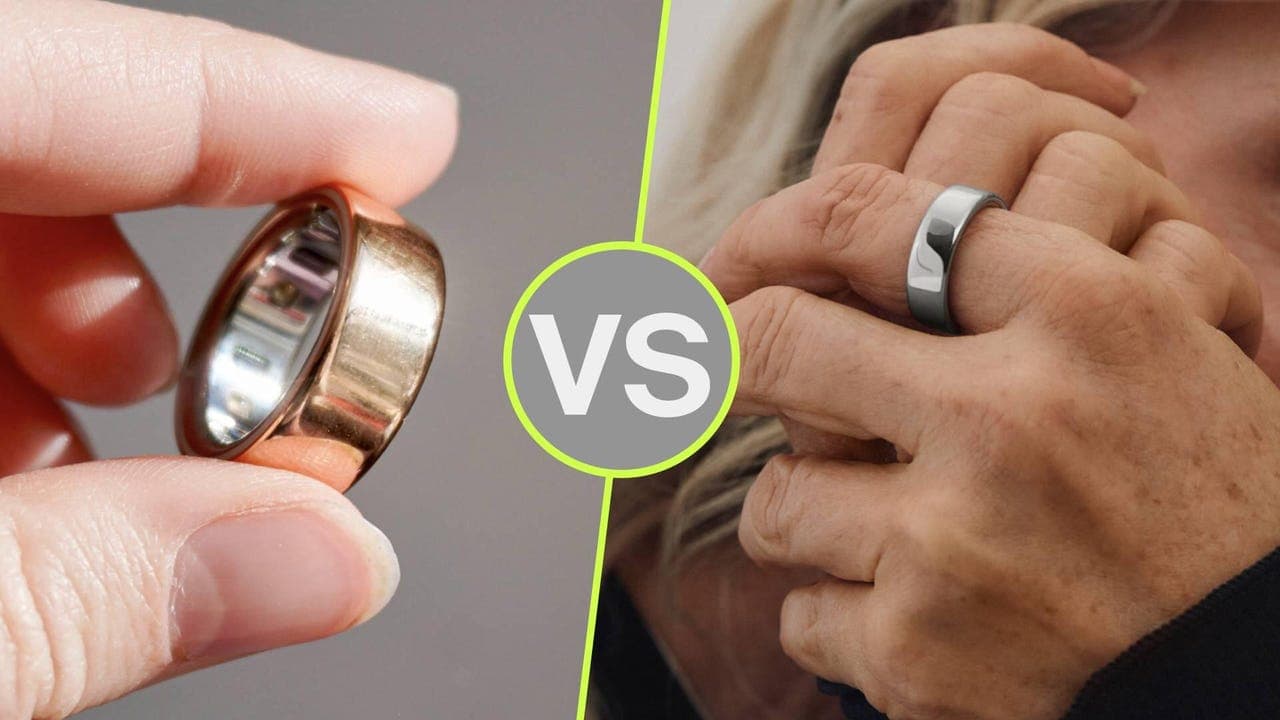
Here is the one clear hardware advantage: the Ring 5 is 40% smaller than the Ring 4. Thickness drops from 2.88 mm to 2.28 mm. Width from 7 mm to 6.09 mm. Weight goes from 3.3–5.2 g to 2.0–2.69 g. These numbers come from CNET’s initial review and are confirmed by Wirecutter and Runner’s World.
Why does size matter for recovery tracking? Because a ring that stays on your finger collects more data. If you take off the Ring 4 during deadlifts because it feels bulky or catches on the knurl, you lose HRV and recovery data from that entire session. The same happens if you remove it during sleep because you find it uncomfortable. The Ring 5’s thinner profile may eliminate those gaps. That is a direct improvement in data continuity — not in sensor quality, but in wearability.
The IP68 waterproof rating on the Ring 5 matters here too. The Ring 4 is water-resistant but not fully waterproof. With IP68 you can wear the ring in the shower or while swimming, which means fewer removal events. For recovery tracking, every removed hour is a missing data point. The combination of smaller size and IP68 makes the Ring 5 the better choice for people who found the Ring 4 too intrusive to wear 24/7.
For a detailed breakdown of how Oura performs across strength training, cardio, and other workouts, see our Oura Ring for Fitness Tracking: Workout-by-Workout Assessment.
Sensor Redesign: Not an Upgrade Yet
The Ring 5 uses 12 light pathways, down from 18 in the Ring 4, but with brighter LEDs. Oura claims this redesign achieves 99% heart rate accuracy compared to a medical ECG and 95% sleep-staging accuracy against clinical data. Those are manufacturer claims. They have not been independently replicated in a published study as of late June 2026. I’d wait for independent replication before treating that as fact.
What we do have is an independent peer-reviewed study of the Ring 4 published in Physiological Reports. It found the Ring 4 achieved a mean absolute percentage error (MAPE) of 5.96% for HRV (RMSSD) against ECG — the best among tested wearables, including WHOOP 4.0, Garmin Fenix 6, and Polar Grit X Pro. For resting heart rate, MAPE was 1.94%. That is excellent. The Ring 5 would need to beat those numbers to offer a real recovery-tracking improvement, and no evidence yet shows it does.
The sleep staging accuracy of the Ring 4 was also validated in a separate study funded by Oura but independently conducted at Brigham and Women’s Hospital. It showed 79% agreement with polysomnography for four-stage sleep classification, with the highest deep sleep detection sensitivity (79.5%) and wake detection (68.6%) among tested devices. Again, the Ring 4 is proven. The Ring 5’s redesigned sensors may be marginal, but the burden of proof is on the newer hardware.
For recovery tracking, the Ring 4 is already sufficient. The Ring 5’s sensor changes are a redesign, not an obvious upgrade. Unless independent tests show a significant accuracy gain, the decision should not hinge on sensor counts.
Battery and Cost: Modest Improvements, Real Savings
Battery: Ring 5 is rated 6–9 days, Ring 4 at 5–8 days. Real-world testing from CNET showed the Ring 5 lasting about a week and the Ring 4 about four days — but CNET’s Ring 4 test unit may have been running extra background features. In typical use, both should last close to a week. I would not treat the battery difference as a deciding factor.
Price differences are real. The Ring 5 starts at $399 for silver or black. The Ring 4 has been discounted $50–$100, bringing silver and black to $350 and gold/stealth to $400. Both require a $69.99/year subscription for full data access.
| Oura Ring 5 | Oura Ring 4 | |
|---|---|---|
| Starting price | $399 | $350–$400 |
| Subscription (annual) | $69.99 | $69.99 |
| Year 1 total | $468.99 | $419.99–$469.99 |
| Two-year total | $538.98 | $489.98–$539.98 |
For a deeper look at total ownership costs including membership fees, see The Real Cost of a Fitness Tracker. And for a broader discussion on subscription traps, read Fitness Tracker Ring Subscription Trap.
Verdict: Ring 4 for Value, Ring 5 for Comfort
For recovery tracking, the Ring 4 and Ring 5 deliver essentially the same data. The software features that could change recovery insights are coming to both. The sensor accuracy of the Ring 4 is independently validated and already class-leading. The only real advantages of the Ring 5 are a smaller, lighter form factor and IP68 waterproofing.
- Choose the Ring 4 if you want the same recovery features at a lower price and you found the Ring 4 comfortable enough to wear 24/7.
- Choose the Ring 5 if the Ring 4 felt too bulky for your fingers, or if you need waterproofing for swimming and shower wear.
Before buying, confirm that the software parity promise still holds. Oura’s update page is the authoritative source. If you are still unsure, our Screenless Fitness Tracker Buyer's Guide 2026 covers Whoop, Fitbit Air, and other screenless trackers for comparison.
Comments
Join the discussion with an anonymous comment.