
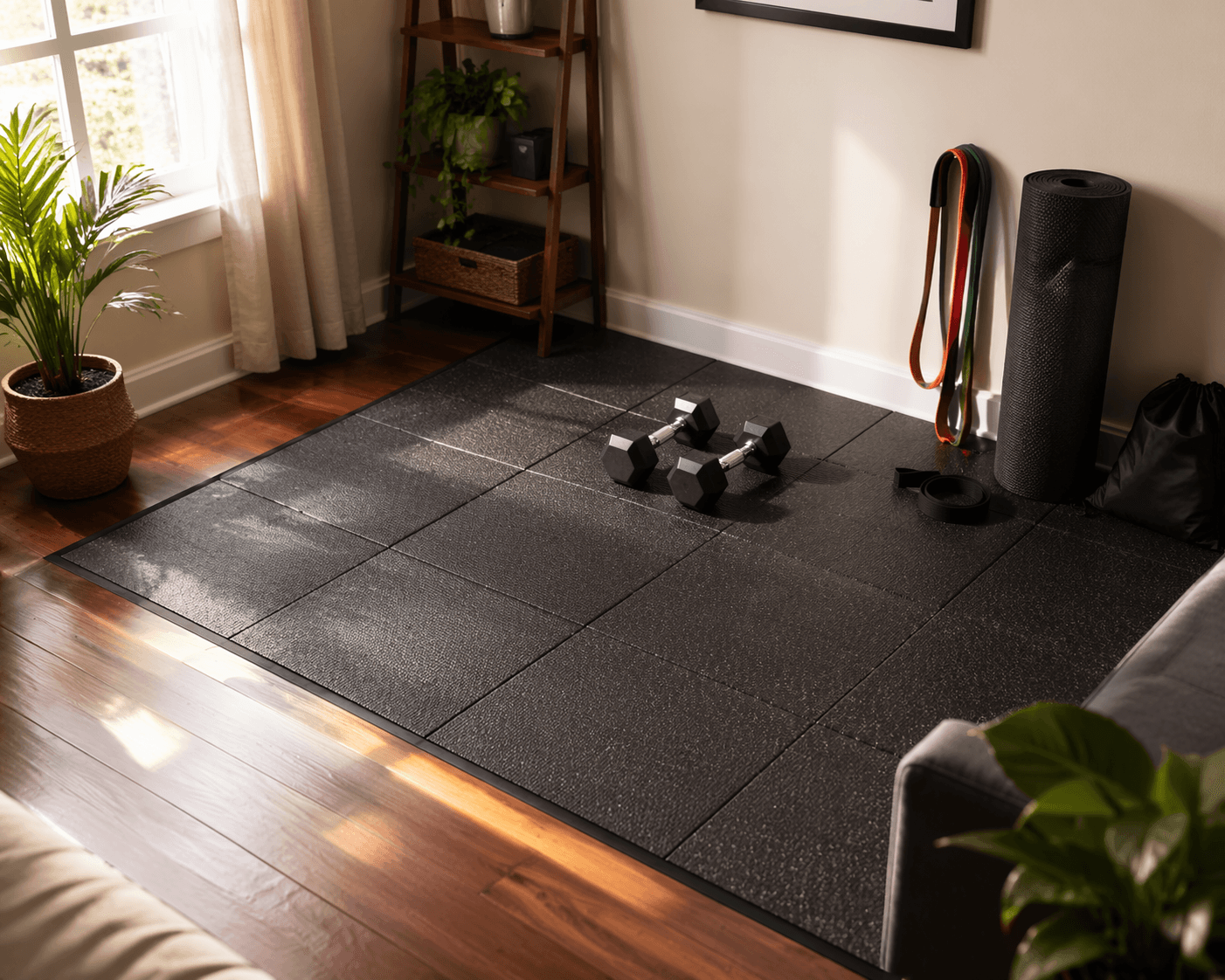
I have seen someone drop a perfectly good squat rack onto a set of foam puzzle mats and, within six months, peel back a corner to find permanent craters where each leg rested. The foam never bounced back. I have also watched a friend spend a weekend wrestling a 100-pound stall mat into their spare room, then complain about the rubber smell for two weeks. Flooring is not a one-purchase decision. The cheapest per-square-foot price often hides the highest long-term cost.
The right choice for your home gym flooring depends on three things: what workout you actually do, where you set up, and how much you are willing to spend. That is the framework this guide uses. If you are still deciding which equipment to buy alongside your flooring, the home gym equipment decision framework can help you align your entire setup.
What weight actually hits the floor
The assumption that “buy rubber and be done” works for everyone is wrong. I have seen it fail in three specific ways: foam that looked great in photos but compressed under a 50-pound plate tree, stall mats that smelled like a tire shop for weeks, and 8mm rubber that was simply too thin to protect a concrete slab from repeated barbell drops. Here is what the research actually says:EVA foam tiles develop permanent indentations under sustained loads above 50–60 pounds and last only 1–3 years in a home gym. Stall mats (3/4" thick) from Tractor Supply cost about $2.38 per square foot and can last close to a decade, but each 4'×6' mat weighs roughly 88–100 pounds and off-gasses a strong rubber odor for the first few weeks. And 8mm rubber — the most commonly recommended thickness — is fine for mixed cardio and strength training but not enough if you plan to drop barbells frequently. For that you need at least 1/2".No universal best. The three axes — workout type, space, budget — determine your actual best option.
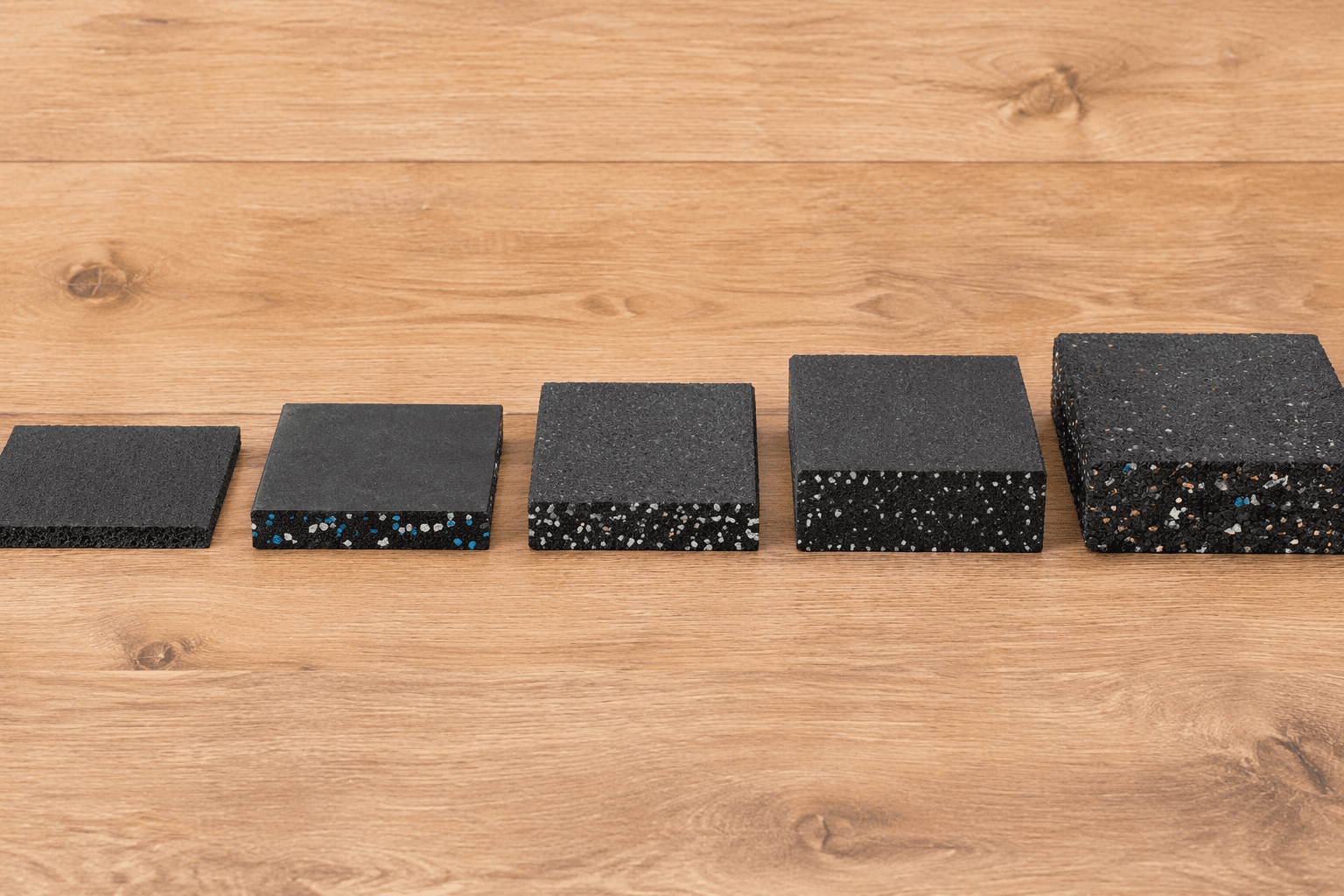
| Thickness | Best for | Notes | Approx. cost/sq ft |
|---|---|---|---|
| 6mm (1/4") | Yoga, bodyweight, cardio machines | No impact from dropped weights | $1–2 (foam) |
| 8mm (0.31") | Mixed cardio + strength training | Best all-around for most home gyms | $2.24 (rubber roll) |
| 3/8" (9.5–10mm) | Moderate strength with dumbbells, kettlebells | Adequate protection for occasional drops | $3–5 (rubber) |
| 1/2" (12.7mm) | Heavy Olympic lifting, CrossFit | Minimum for frequent barbell drops | $4–6 (rubber) |
| 3/4" (19mm) | Dedicated drop zone, stall mats | Maximum durability, heavy | $2.38 (stall mat) |
Rubber, foam, and the cost of being cheap
Material is the second axis. Here is what each option actually costs you over time:
- Rubber: Lasts decades under heavy equipment. $3–8 per square foot for tiles or rolls. Reduces impact noise by 65–75%. The standard choice for any real home gym.
- Foam (EVA): Cheap at $1–2 per square foot, comfortable underfoot, cuts noise by about 50%. But it compresses permanently under anything heavier than 50 pounds. I would not put it under a squat rack or a heavy dumbbell set. Lifespan is 1–3 years, after which you are buying again.
- PVC: Mid-range at $2–3 per square foot, modular, lighter than rubber. Suitable for moderate use but less durable long-term.
- Carpet tiles: Soft, good for cardio zones. About $3.33 per square foot. Not for weights. Collects dust and sweat.
The pitfall I see most often: someone buys cheap foam interlocking tiles because the price per square foot looks great, then discovers the tiles have flattened under their rack within a year. The $1.12 per square foot becomes $2.24 when you have to replace it, plus the hassle. Foam is fine for a yoga corner. Not for a home gym with weights.
| Material / Format | Cost per sq ft | Lifespan | Best use case |
|---|---|---|---|
| 8mm rubber roll | $2.24 | Decades | Mixed cardio + strength |
| 3/4" stall mat | $2.38 | ~10 years | Heavy lifting, drop zones |
| EVA foam tile | $1–2 | 1–3 years | Yoga, light bodyweight |
| Rubber tile (8–12mm) | $3–8 | Decades | Premium home gym |
| PVC tile | $2–3 | 5–8 years | Moderate use |
| Carpet tile | $3.33 | 3–5 years | Cardio zones |
The average gym flooring across all materials comes to about $2.93 per square foot with an average thickness of 11mm and a 5-year warranty. For a full breakdown of costs by material, see the dedicated home gym flooring cost guide.
Format: how your room and your back decide
Format is the third axis. The room shape and your willingness to install determine the best choice.
- Rubber rolls: Best for large rectangular rooms with minimal obstacles. Fewer seams means a cleaner look. But a 25-foot roll can weigh up to 200 pounds. You will need at least two people, a hand truck, and a clear path. Not a weekend solo project.
- Interlocking tiles: True DIY. Each 24"×24" tile weighs about 8 pounds. You can install them alone in an evening, cut them with a utility knife to fit around corners, and reconfigure later. They suit irregular layouts and shared spaces where you might move the gym someday.
- Stall mats: Best used as localized protection under a rack or a heavy bench. Covering an entire room with them takes serious work because of their weight and thickness. Use them strategically.
Installation methods vary: loose-lay works when the mats are heavy enough not to shift; tape-down is fine for smaller areas; glue-down is permanent and best for commercial-grade setups. If you plan to take the flooring with you when you move, choose interlocking tiles and skip the glue.
So what should you buy?
Here is how the three axes combine into concrete recommendations for common home gym profiles:
| Profile | Thickness | Material | Format | Cost/sq ft |
|---|---|---|---|---|
| Yoga, light bodyweight only | 6mm | Foam or thin rubber | Interlocking tiles | $1–2 |
| Bodyweight + light dumbbells (≤ 50 lbs) | 8mm | Rubber | Interlocking tiles | $2.24 |
| Heavy lifting, no drops | 8mm or 3/8" | Rubber | Roll or tiles | $2.24–5 |
| Heavy lifting, frequent drops | 1/2" or 3/4" | Rubber or stall mat | Stall mats under rack | $2.38–6 |
| Mixed cardio + strength (CrossFit style) | 8mm floor + 1/2" drop zone | Rubber | Rolls for main area, stall mat for drop zone | $2.24 + $2.38 |
| Garage gym with heavy power rack | 3/8" or 1/2" | Rubber | Rolls (large area) | $3–5 |
If you are still choosing equipment alongside flooring, the best home exercise equipment buying guide can help you pair your floor with the right gear.
The one thing that beats any recommendation
No single product works for everyone. If you only do yoga, foam is fine. If you drop barbells, you need 3/4" stall mats. The right choice starts with an honest inventory of your heaviest impact — not your Pinterest vision board.
Comments
Join the discussion with an anonymous comment.