
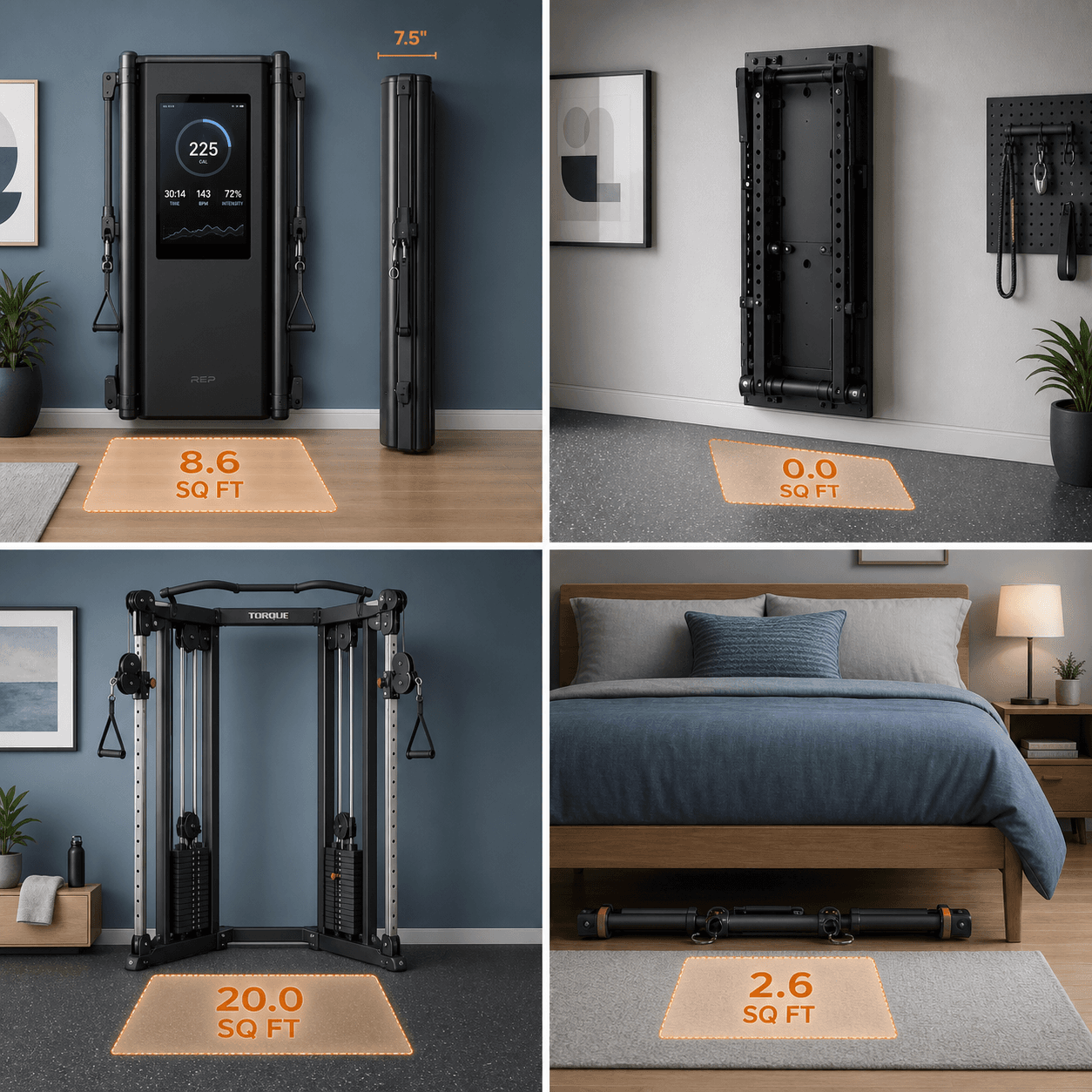
The Small-Space Reality: What You Need to Know Before Buying
If you live in an apartment, condo, or house under 500 square feet, the standard advice about home gym equipment doesn't apply to you. A full power rack with a barbell and weight plates requires roughly 30 to 40 square feet of dedicated floor space — and that's before you account for the 7-foot ceiling clearance needed for overhead pressing and pull-ups. Most apartment dwellers simply don't have that room to spare.
Beyond floor space, small-space buyers face three additional constraints that rarely appear in mainstream equipment reviews:
- Noise sensitivity: Dropping weights, kipping pull-ups, or even the thud of a treadmill can travel through floors and walls. Magnetic resistance systems — found in machines like Peloton, Speediance, and Tonal — are significantly quieter than air resistance rowers, fan bikes, or impact-based training.
- Multi-use rooms: Your workout area is also your living room, bedroom, or home office. Equipment that can fold, roll away, or mount flush to a wall is not a luxury — it's a necessity.
- Mounting limitations: Wall-mounted systems require drilling into studs, which may not be possible in rental units. Even if you own the space, you need a clear wall section at least 7 feet wide and 7 to 8 feet of ceiling height.
The good news is that the home fitness industry has responded to this exact problem. Over the last three years, a new generation of machines has been engineered specifically for small spaces — wall-mounted racks that fold to 9 inches deep, all-in-one smart gyms that collapse into a closet, and portable resistance bars that slide under a bed. The challenge is not finding a compact machine; it's choosing the right form factor for your specific constraints.
This guide is a decision framework, not a listicle. We rank machine categories by space efficiency, present the trade-offs transparently, and give you a decision table to match your personal constraints to the right form factor. For a broader look at tested compact equipment for apartments, see our Compact Home Gym Equipment Guide for Apartments.
Machine Categories Ranked by Space Efficiency
Not all compact machines are created equal. Some free up floor space by going vertical (wall-mounted), others by folding, and others by being small enough to store in a drawer. Here are the five categories ranked from most to least space-efficient, with the defining characteristic that makes each one work in a tight space.
1. Wall-Mounted Smart Gyms and Racks
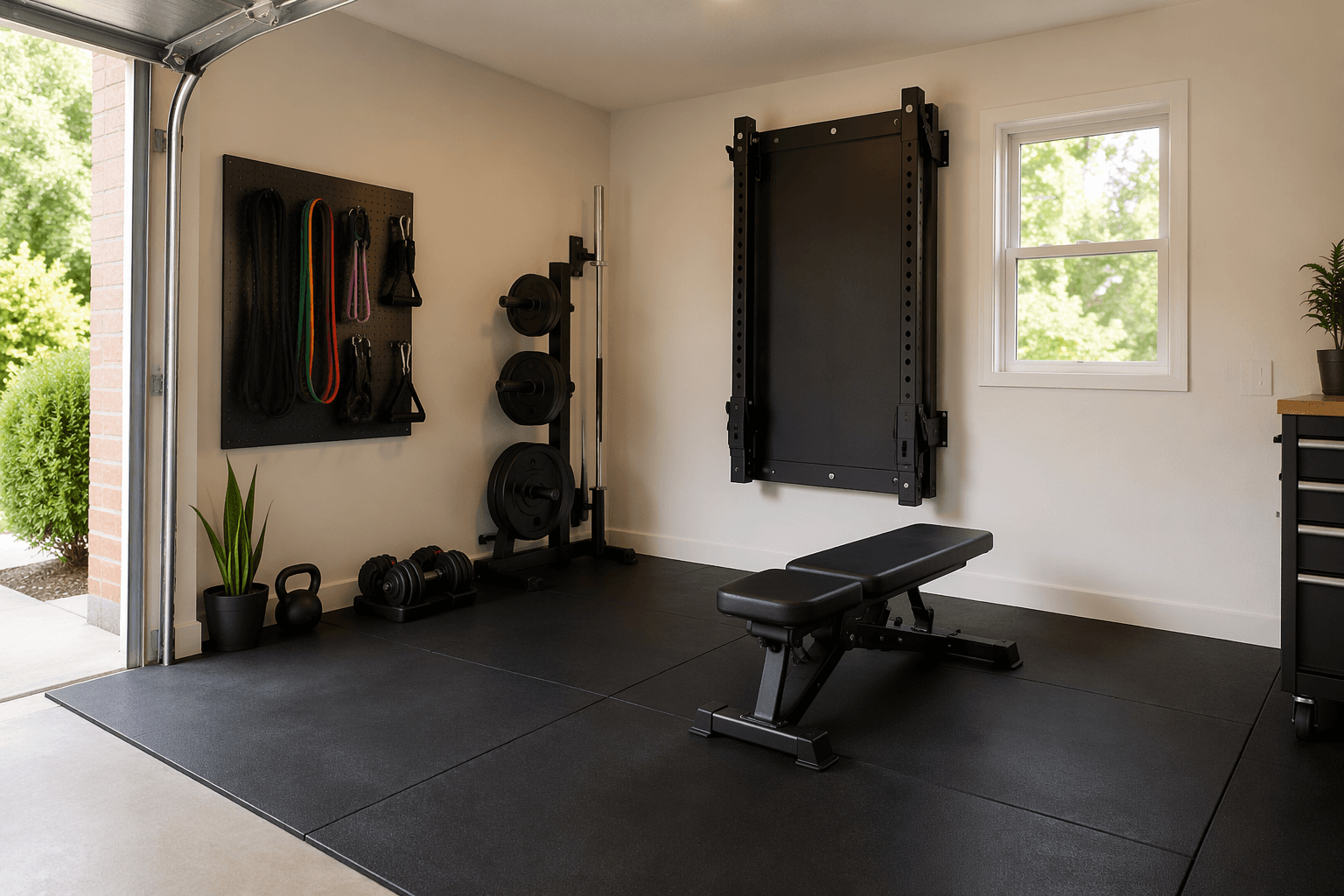
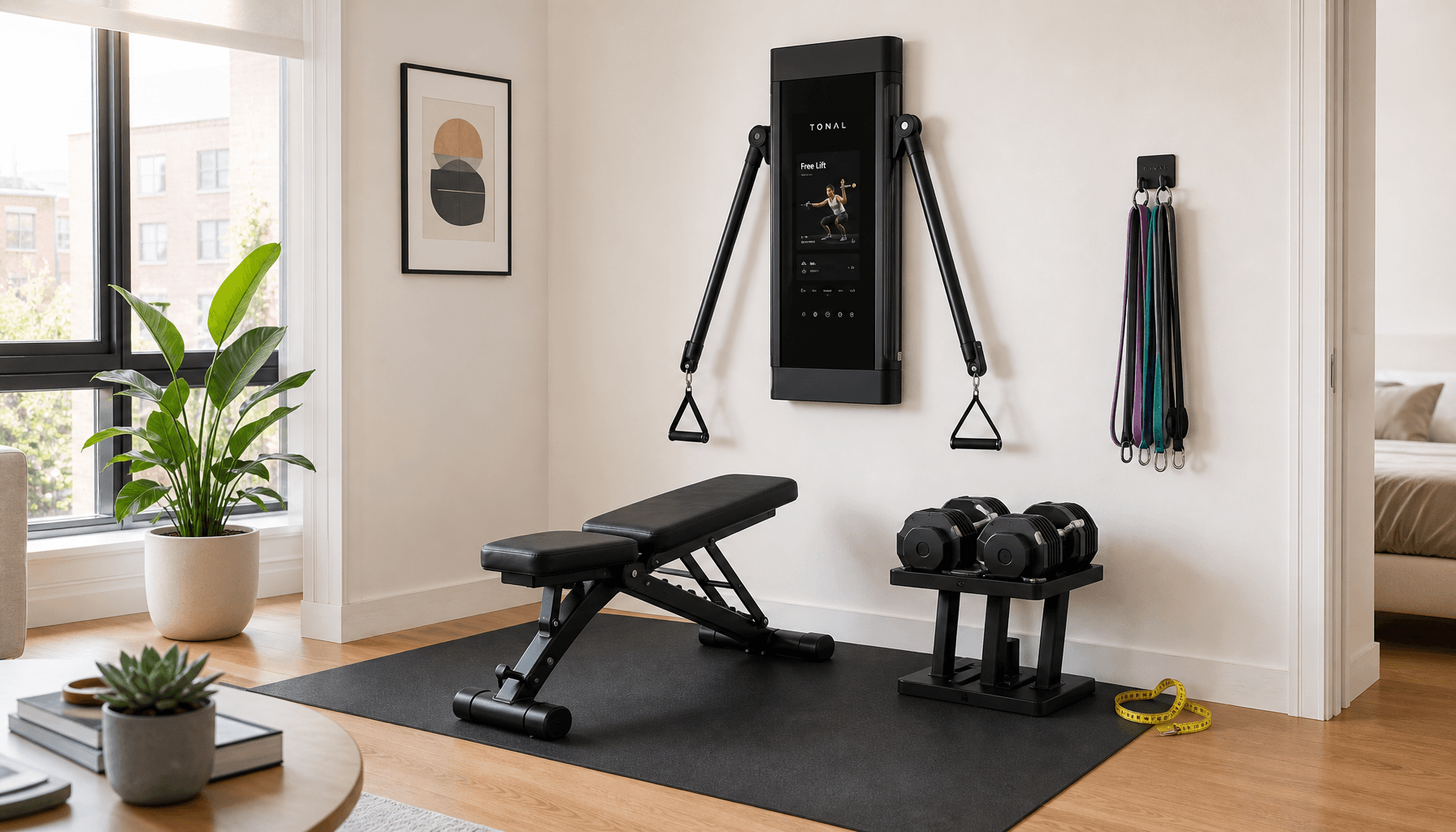
These systems attach directly to wall studs and occupy zero floor space when not in use. The PRx Profile PRO, for example, folds to just 9 inches of depth from the wall. Tonal 2 protrudes only 5.25 inches. The trade-off is that they require permanent mounting, professional installation, and a clear wall section. They are the gold standard for space efficiency if you own your home or have landlord permission to drill.
2. Foldable All-in-One Smart Gyms
The Speediance Gym Monster is the standout here: it measures 28 inches wide by 49 inches deep when unfolded, but folds to just 15 inches of depth — thin enough to fit in a closet or against a wall. It combines digital resistance, a touchscreen, and guided workouts in a single unit. The catch is that max resistance tops out at 220 pounds total (110 per arm), which may limit advanced lifters.
3. Compact Cable Towers and Functional Trainers
These are freestanding units with a relatively small footprint. The Bells of Steel Cable Tower measures just 2.5 feet wide and starts at $435. They offer cable-based resistance for a wide range of exercises but do not fold or store away — they occupy their footprint permanently. Best for users who can dedicate a corner of a room to a single piece of equipment.
4. Portable Resistance Bar Systems
The X3 Bar is the most compact strength option reviewed: its footprint is 10 inches by 19 inches, and it can be stored under a bed. It uses elastic band resistance to generate up to 300 pounds of load (600 with the Elite Band). No mounting, no subscription, no noise. The limitation is that band resistance feels different from free weights or cables, and progressive overload requires buying additional bands.
5. Bodyweight and Suspension Systems
TRX-style suspension trainers and gymnastics rings require only a door anchor or ceiling mount and store in a drawer. They are the most space-efficient option of all, but resistance is limited to bodyweight, making progressive overload challenging for intermediate and advanced users. These are best as a supplement or for beginners.
Side-by-Side Comparison: Footprint, Noise, Resistance, and Cost
The table below compares the five key machines that represent the best of each category. All specs are drawn from verified testing by Garage Gym Reviews (GGR), which tested over 50 home gym machines and helped more than 5,000 people find the right machine in 2025 alone.
| Machine | Category | Footprint (Unfolded) | Footprint (Stored) | Noise Level | Max Resistance | Subscription | Price | GGR Score |
|---|---|---|---|---|---|---|---|---|
| Tonal 2 | Wall-Mounted Smart Gym | 5.25"D x 21.5"W x 50.9"H | Same (wall-mounted) | Very Low (digital) | 250 lbs | $50/mo | $4,295 | 4.3/5 |
| PRx Profile PRO | Wall-Mounted Rack | 29.25"D x 53"W x 89"H | 9"D (folded) | Low (no moving parts) | 1,000 lbs capacity | None | $1,100 | 4.6/5 |
| Speediance Gym Monster | Foldable All-in-One | 49.21"D x 28.34"W x 72.83"H | 14.96"D (folded) | Low (digital resistance) | 220 lbs (110/arm) | None | ~$2,500 | 4.0/5 |
| Bells of Steel Cable Tower | Compact Cable Tower | 31"D x 28.5"W x 80.75"H | Same (freestanding) | Moderate (cable stack) | 250 lbs (weight stack) | None | $435+ | 4.3/5 |
| X3 Bar | Portable Bar System | 10"L x 19"W x 1"H | Under-bed storage | Very Low (bands) | 300 lbs (600 Elite) | None | $549 | 4.4/5 |
Specific Picks with Test Data
Each of the machines below has been tested and rated by independent reviewers. Here is what the data actually says about their performance in small spaces.
Speediance Gym Monster: The Closet-Friendly All-in-One
The Speediance Gym Monster earned a GGR score of 4.0 out of 5. Its defining feature for small spaces is the folding mechanism: at 28.34 inches wide and 49.21 inches deep when in use, it folds to just 14.96 inches of depth — thin enough to slide into a closet or push against a wall. It uses digital resistance with a max of 220 pounds total (110 per arm), which is sufficient for most beginners and intermediate users but may be limiting for advanced strength training. No subscription is required, which is a significant advantage over Tonal's $50/month fee. The digital resistance is also very quiet, making it suitable for apartment use.
PRx Profile PRO: The Wall-Mounted Powerhouse
The PRx Profile PRO is the highest-rated machine on this list with a GGR score of 4.6 out of 5. When folded, it protrudes only 9 inches from the wall — less than the depth of a bookshelf. Unfolded, it provides a full squat rack with a 1,000-pound weight capacity, making it suitable for serious lifters. At $1,100, it is significantly cheaper than Tonal or Speediance. The trade-offs are that it requires mounting into wall studs (not renter-friendly), needs 7.5 feet of ceiling height, and does not include any smart features or guided workouts. It is a rack, not a trainer.
X3 Bar: The Under-Bed Strength Solution
The X3 Bar earned a GGR score of 4.4 out of 5. Its footprint is just 10 inches by 19 inches, and it can be stored completely out of sight under a bed or in a closet. It uses elastic band resistance to generate up to 300 pounds of load (600 with the Elite Band). At $549, it is the most affordable strength option on this list and includes a 12-week workout program. The band-based resistance is silent, making it ideal for apartments with thin walls. The limitation is that band resistance is not identical to free-weight resistance — the load curve is different, and progressive overload requires purchasing additional bands.
Bells of Steel Cable Tower: The Budget-Friendly Functional Trainer
The Bells of Steel Cable Tower earned a GGR score of 4.3 out of 5. At just 2.5 feet wide (28.5 inches), it has one of the smallest footprints of any freestanding cable machine. The weight stack option goes up to 250 pounds, and the starting price of $435 makes it the most affordable way to get cable-based resistance in a small space. It does not fold or store away, so it requires a permanent corner of a room. It is best for users who can dedicate a small area to a single machine and want the versatility of cable exercises without the subscription cost of a smart gym.
Trade-Off Analysis: What You Sacrifice for Space
Every space-saving design comes with a compromise. Being honest about these trade-offs is the difference between a purchase you use for years and one that ends up on Craigslist in six months.
- Wall-mounted systems: Require drilling into studs and professional installation. Not an option for most renters. Even if you own, you need a clear wall section at least 7 feet wide and 7 to 8 feet of ceiling height. The PRx Profile PRO, for example, needs 89 inches of vertical clearance when unfolded.
- Foldable all-in-ones: Cap resistance at 200–250 pounds total. The Speediance Gym Monster maxes out at 220 lbs. If you are an experienced lifter who squats or deadlifts more than that, this machine will not support your training progression.
- Portable bar systems: Band resistance feels different from free weights or cables. The load curve is progressive (harder at the top of the movement), which can be beneficial for some exercises but unnatural for others. Progressive overload requires buying additional bands, adding cost over time.
- Compact cable towers: Do not fold or store away. The Bells of Steel Cable Tower occupies its 2.5-foot-wide footprint permanently. If you need to clear the room for other uses, this is not the right choice.
- Smart gyms with subscriptions: Tonal 2 costs $4,295 plus $50/month. Over five years, that is $7,295 total. The subscription covers guided workouts and AI coaching, but if you do not want to pay ongoing fees, the Speediance Gym Monster (no subscription) is a better fit.
For a deeper dive into the questions you should ask before buying any equipment, read our Compact Home Gym Buyer's Guide: 8 Questions to Answer Before Buying.
Decision Table: Match Your Constraints to the Right Machine
Use the table below to narrow your options. Identify your ceiling height, maximum weight capacity needs, budget, and available floor space, then read across to find the recommended machine category.
| Your Ceiling Height | Your Max Weight Need | Your Budget | Available Floor Space | Recommended Category | Example Machine |
|---|---|---|---|---|---|
| Under 7 ft | Under 220 lbs | Under $1,000 | Under 10 sq ft | Portable Bar System | X3 Bar ($549) |
| Under 7 ft | Under 220 lbs | $1,000–$3,000 | 10–20 sq ft | Foldable All-in-One | Speediance Gym Monster |
| 7 ft or more | Over 220 lbs | Under $1,500 | Under 5 sq ft (wall) | Wall-Mounted Rack | PRx Profile PRO ($1,100) |
| 7 ft or more | Up to 250 lbs | Over $4,000 | Under 5 sq ft (wall) | Wall-Mounted Smart Gym | Tonal 2 ($4,295 + sub) |
| 7 ft or more | Up to 250 lbs | Under $1,000 | 5–10 sq ft (corner) | Compact Cable Tower | Bells of Steel Cable Tower ($435+) |
| Any | Bodyweight only | Under $200 | Under 2 sq ft | Suspension System | TRX-style trainer |
Final Verdict: The Best Machine Depends on Your Specific Space
There is no single "best workout machine for home" that works for every small-space dweller. The right choice depends entirely on your ceiling height, your strength level, your budget, and — most importantly — how much floor space you can realistically dedicate to exercise.
If you can mount equipment to the wall and have the ceiling height, the PRx Profile PRO or Tonal 2 will give you the most workout per square inch. If you need to store your machine between sessions, the Speediance Gym Monster's 15-inch folded depth is unmatched. If you want the absolute smallest footprint and lowest cost, the X3 Bar delivers serious resistance from under your bed.
Use the decision table above to narrow your options. Then read the full reviews of your top candidates before buying. For a broader comparison of all-in-one machine types — including single stack, dual stack, and multi-stack systems — see our All-in-One Fitness Machine Types Compared guide.
Comments
Join the discussion with an anonymous comment.