
The Tonal home gym decision often stops before the first workout. Not at the coaching screen, not at the monthly membership, not at the resistance limit. It stops at the wall survey, when the buyer has to prove that a specific wall can accept a professionally installed, bolted-in machine.
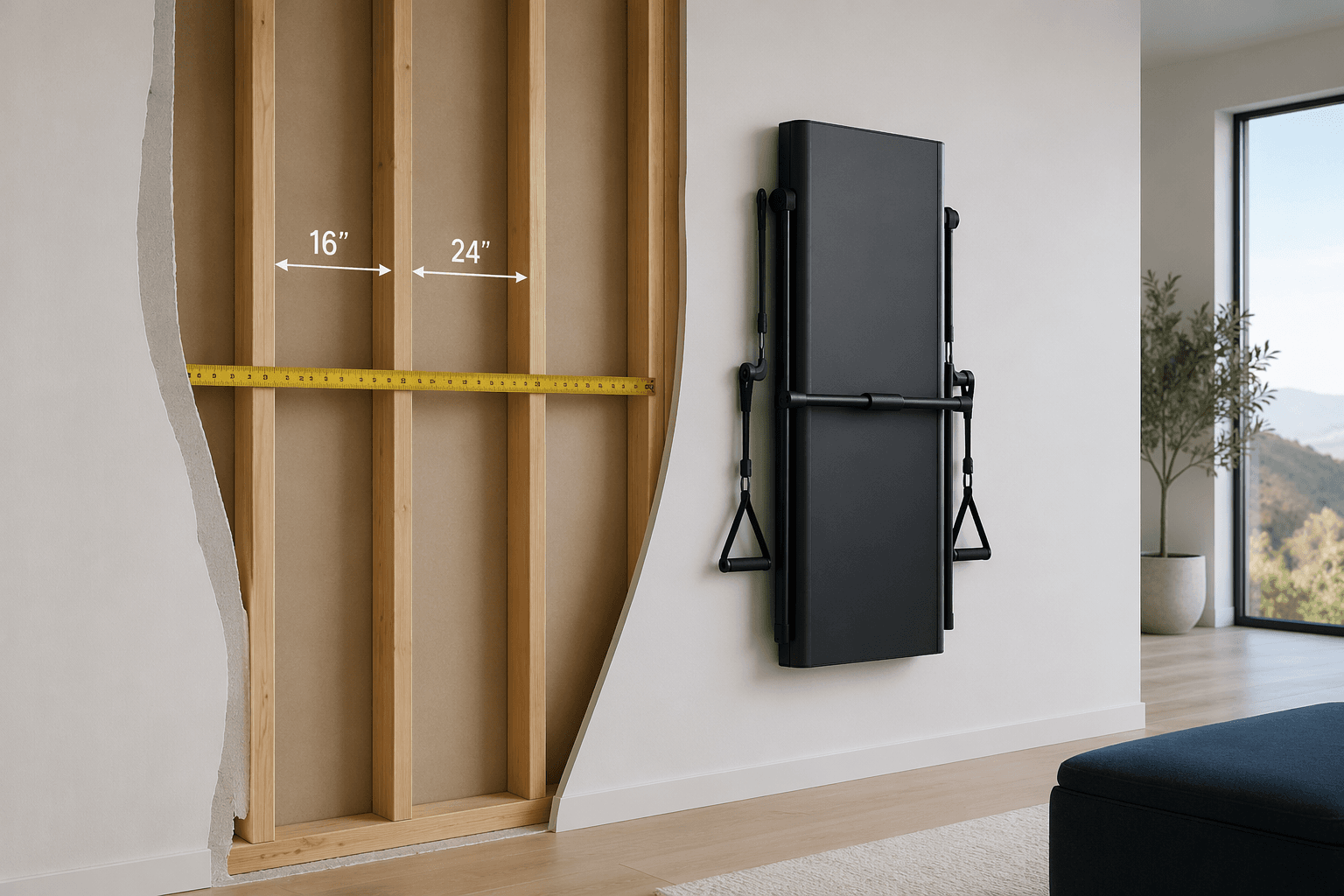
The short answer: Tonal can work beautifully in the right home, but it is not just a compact screen with arms. It needs wood or metal studs spaced 16 to 24 inches apart, a minimum recommended ceiling height of 7 feet 10 inches, a 7-by-7-foot workout area, and a grounded 3-prong outlet within 6 feet of the installation location.[1] Tonal also requires professional installation, with eight bolt holes placed into the wall; self-installation is not an option.[2] Installation is not included in the machine price and starts at $295, with the final amount varying by location.[3]
The Fast Compatibility Check
Before comparing Tonal to another smart gym, run the room through the boring checks. They are the checks that actually decide whether the purchase survives.
| Requirement | What Tonal Needs | What It Means in the Room |
|---|---|---|
| Wall structure | Wood or metal studs spaced 16–24 inches apart | Drywall alone is not the structure. The installer needs a mountable stud layout behind the wall. |
| Wall material limits | Concrete, plaster, or stucco only if 1.25 inches thick or less | Many older or masonry-heavy homes need extra scrutiny before assuming compatibility. |
| Ceiling height | Minimum recommended 7 feet 10 inches; works at 7 feet with reduced range of motion | A low ceiling may not block installation, but it can reduce how fully some movements can be performed. |
| Workout clearance | 7 feet by 7 feet of unobstructed floor space | The machine may fit on the wall while the workout still fails because furniture, doors, or traffic paths intrude. |
| Power | Grounded 3-prong outlet within 6 feet | The outlet has to be close enough without turning the workout area into an extension-cord problem. |
| Installation | Professional installation required | This is a scheduled home service, not a box you mount yourself on a free afternoon. |
If any one of those lines is uncertain, do not treat it as a small errand. It is the project. A Tonal home gym is more like a built-in appliance than a portable fitness product.
Start With the Wall, Because the Wall Gets a Vote
Tonal’s official requirement is specific: compatible wood or metal studs must be spaced between 16 and 24 inches apart.[1] That sounds ordinary until you start measuring real apartments, townhomes, basements, additions, converted garages, and older plaster walls. The visible wall surface tells you very little. What matters is what is behind it, how far apart the structural members are, and whether the installer can safely anchor the machine.
Drywall over standard studs is the clean version of the story. If the studs are where they should be, the wall is wide enough, and there are no hidden conflicts, the installation can be straightforward. Metal studs are also within Tonal’s stated compatibility window when they meet the spacing requirement.[1] That is the homeowner-friendly scenario: measure, confirm, schedule, install.
The harder cases are the ones product pages tend to compress into a line or two. Concrete, plaster, and stucco are not automatically disqualifying, but Tonal lists them as compatible only when the material is no more than 1.25 inches thick.[1] That is a narrow condition. In an older apartment or a home with heavy plaster, “there is a wall here” is not enough information. The installer is not judging whether the wall looks sturdy; they are judging whether the machine can be mounted according to Tonal’s limits.
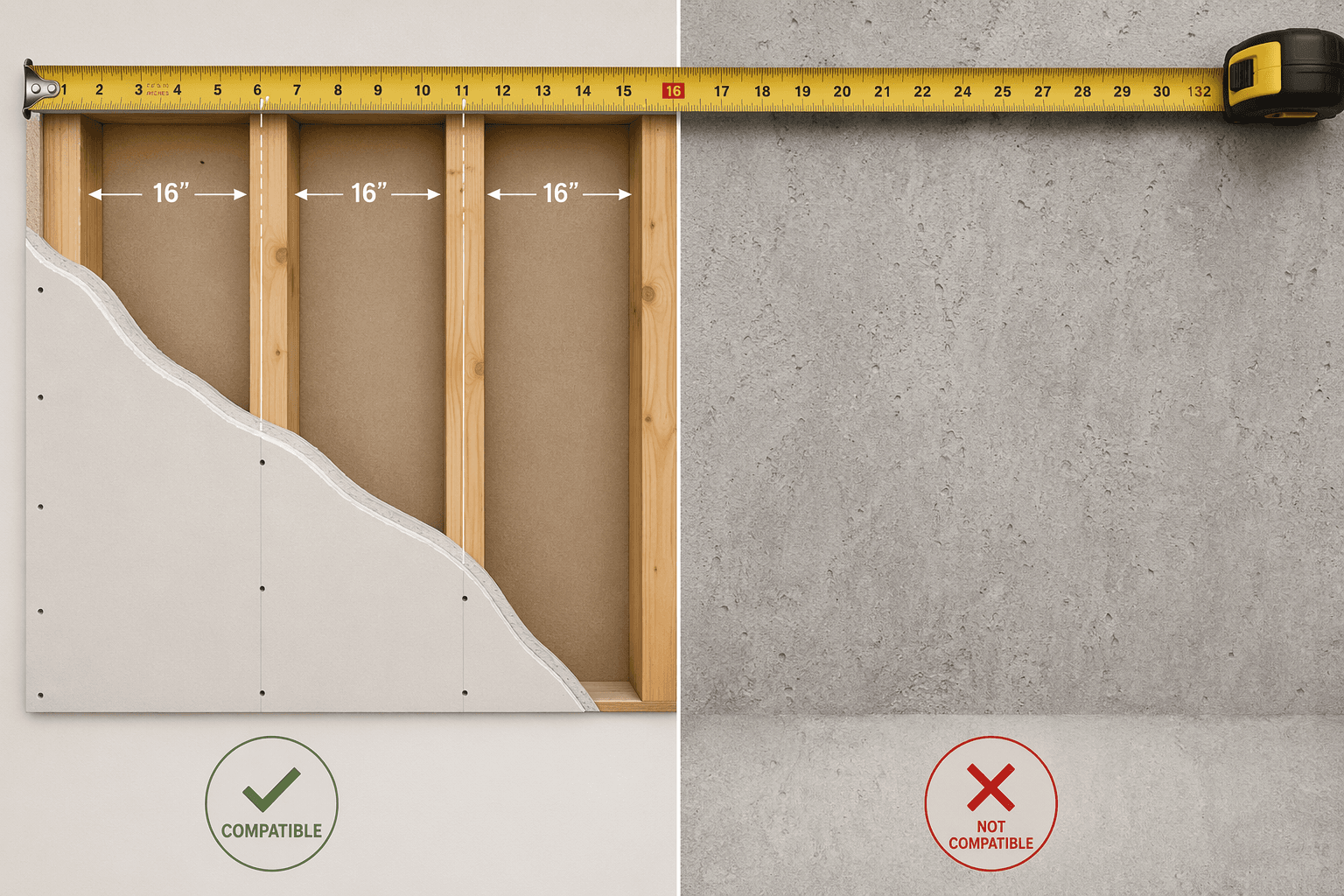
This is why the eight bolt holes matter. Eight holes are not cosmetic. They are the physical proof that Tonal is transferring workout forces into the wall structure, not merely hanging like a mirror.[2] For an owner, that means a real alteration. For a renter, it means written permission should come before optimism.
Anecdotally, wall incompatibility appears often enough in buyer communities that it deserves to be treated as a serious screening risk. A cautious estimate from community reports puts incompatible-wall outcomes around 30 to 40 percent of potential buyers, but that should not be read as a published Tonal statistic or an independently sampled study.[4] It is still useful for one reason: it matches the lived pattern of shoppers who do not abandon Tonal because they dislike the concept, but because the wall survey says the room is not ready.
A Stud Finder Is Helpful, but It Is Not a Final Approval
A stud finder can help you avoid wasting time on an obvious mismatch. It can show whether studs appear to exist where Tonal needs them, whether the spacing looks close to standard, and whether a proposed location is worth continuing. It cannot guarantee that the wall meets every installation requirement. Pipes, wiring, unusual framing, layered wall materials, and inaccurate readings can still turn an apparently simple wall into a failed installation site.
For renters, this distinction matters. “I found studs” is not the same as “my landlord approved eight structural mounting holes and future patching.” For homeowners, it matters because reinforcement work can change the cost and schedule enough that the original budget stops being the real budget.
Ceiling Height: 7 Feet May Work, but It Is Not the Same as Ideal
Tonal lists 7 feet 10 inches as the minimum recommended ceiling height, while also stating that the system can work with 7-foot ceilings at reduced range of motion.[1] That second part is important, but it should not be inflated into a promise that every exercise will feel normal in a low-ceiling room.
The practical question is not only whether the unit can be installed. It is whether the room lets you move the way the program expects. Tonal does not specify, in the cited installation requirements, exactly which movements are compromised at 7 feet or how severe the reduction is.[1] So the honest reading is narrow: 7 feet may not be an automatic no, but it is a warning label.
Basements, finished attics, and older apartments deserve extra care here. Measure the lowest point that affects the workout area, not the most generous point in the room. A beam, duct, ceiling fan, or sloped ceiling can be the difference between a technically plausible location and a space you slowly stop using.
The 7-by-7-Foot Space Is Not Just Footprint
Tonal’s wall-mounted form makes the machine look like a small-space cheat code, and in some homes it is. The unit itself does not take over a room the way a rack and plates can. But the workout zone still needs 7 feet by 7 feet of clear floor space.[1]
That clearance has to exist when you are training, not just when the room is staged for a photo. Coffee tables, beds, closet doors, radiator covers, bikes, litter boxes, and hallway traffic all count. If you are working with a small apartment, it is worth comparing that required zone against a broader compact home gym space plan before assuming the wall mount solves the room.
The small-space trap is easy to miss: the machine may fit exactly where you imagined it, while the body using the machine does not.
Power Access Is Simple Until the Outlet Is in the Wrong Place
Tonal needs a grounded 3-prong outlet within 6 feet of the installation location.[1] Compared with stud spacing, this sounds mercifully easy. Sometimes it is. Sometimes the only compatible wall has the outlet on the wrong side, behind furniture, controlled by a switch, or located where the cord path creates a trip hazard.
Do not solve this after delivery. The outlet location should be part of the first room sketch, along with stud spacing, ceiling height, and the workout zone. If the best structural wall has bad power access, the “best” wall may still be the wrong wall.
Professional Installation Changes the Budget and the Commitment
Tonal’s machine price and installation price are separate. As of June 2026, Tonal lists the machine at $3,436 to $4,295, while installation starts at $295 and varies by zip code.[3] That wording matters. “Starting at” is not the same as “your final installation bill will be $295.”
The larger issue is commitment. A treadmill can be annoying to move, but it is still a thing sitting on the floor. Tonal is attached to the home. CNET’s Tonal 2 review notes that moving a Tonal requires paid professional service rather than simply unplugging the machine and carrying it to the next room or next apartment.[5]
That does not make Tonal unreasonable. Built-ins can be excellent when they are installed in the right place. It does mean the purchase should be judged like a semi-permanent home decision. If you expect to move soon, if your lease is short, or if the best wall belongs to a room whose use may change, the installation burden belongs in the same conversation as the monthly subscription and the equipment price.
Renters Need Permission Before They Need Motivation
A renter can sometimes install wall-mounted equipment with landlord approval. But Tonal is the kind of request that should be made plainly: a professional installer will mount a connected strength machine into the wall using eight bolt holes.[2] If the wall later needs repair, that repair is part of the renter’s real cost, whether it appears on the Tonal checkout page or not.
Verbal approval is fragile. A lease addendum, email approval, or written maintenance authorization is safer than a hallway conversation. The request should mention the wall location, the mounting work, the future removal, and who is responsible for patching. If the landlord hesitates, that hesitation is information. It may be telling you to choose a freestanding smart gym before you spend more time trying to make a built-in product behave like a renter-friendly one.
What If Your Space Fails?
A failed Tonal check is frustrating because it usually comes after the buyer has already accepted the premium price. The better response is not to keep wishing the wall were different. It is to identify which requirement failed, because each failure points to a different next move.
| Failed Requirement | Most Practical Next Move | Who This Fits |
|---|---|---|
| Stud spacing or wall structure fails | Consider a contractor-built reinforcement only if you own the home and plan to stay | Homeowners who still want Tonal enough to treat it as a built-in project |
| Lease will not allow mounting | Choose a freestanding or floor-based smart gym | Renters and anyone avoiding wall damage |
| Ceiling is too low for comfortable movement | Test whether reduced range of motion is acceptable, or switch categories | Basement, attic, and older-apartment users |
| 7-by-7-foot workout area is not realistic | Reassess the whole layout, not just the machine | Small-space buyers with multi-use rooms |
| Outlet location is wrong | Price an electrical fix or pick another system | Owners may have options; renters often do not |
| You expect to move soon | Avoid wall-mounted systems unless you accept paid moving service | Short-term renters and relocation-prone households |
Option 1: Reinforce the Wall
For homeowners, a contractor-built stud build-out can sometimes turn an incompatible location into a mountable one. Based on the research materials, this commonly adds roughly $200 to $500 or more before the Tonal installation cost, depending on the work required. That estimate should be treated as a project allowance, not a guaranteed quote.
This route makes the most sense when three things are true: you own the wall, you like the chosen room enough to commit to it, and you would still want Tonal after the reinforcement, installation fee, and possible future moving service are added to the purchase. If any of those are false, reinforcement starts to look less like a setup step and more like a warning that the product does not fit the home.
Option 2: Choose a Freestanding Smart Gym
If the wall is the problem, the cleanest alternative is a system that does not need the wall. Trail & Kale’s 2026 alternatives guide identifies Speediance Gym Monster 2 as a freestanding option that folds for storage and requires no wall mounting.[6] Innerbody Research’s Tonal-vs-Speediance comparison lists Speediance at about $3,689 with free lifetime membership and no wall-mount requirement.[7]
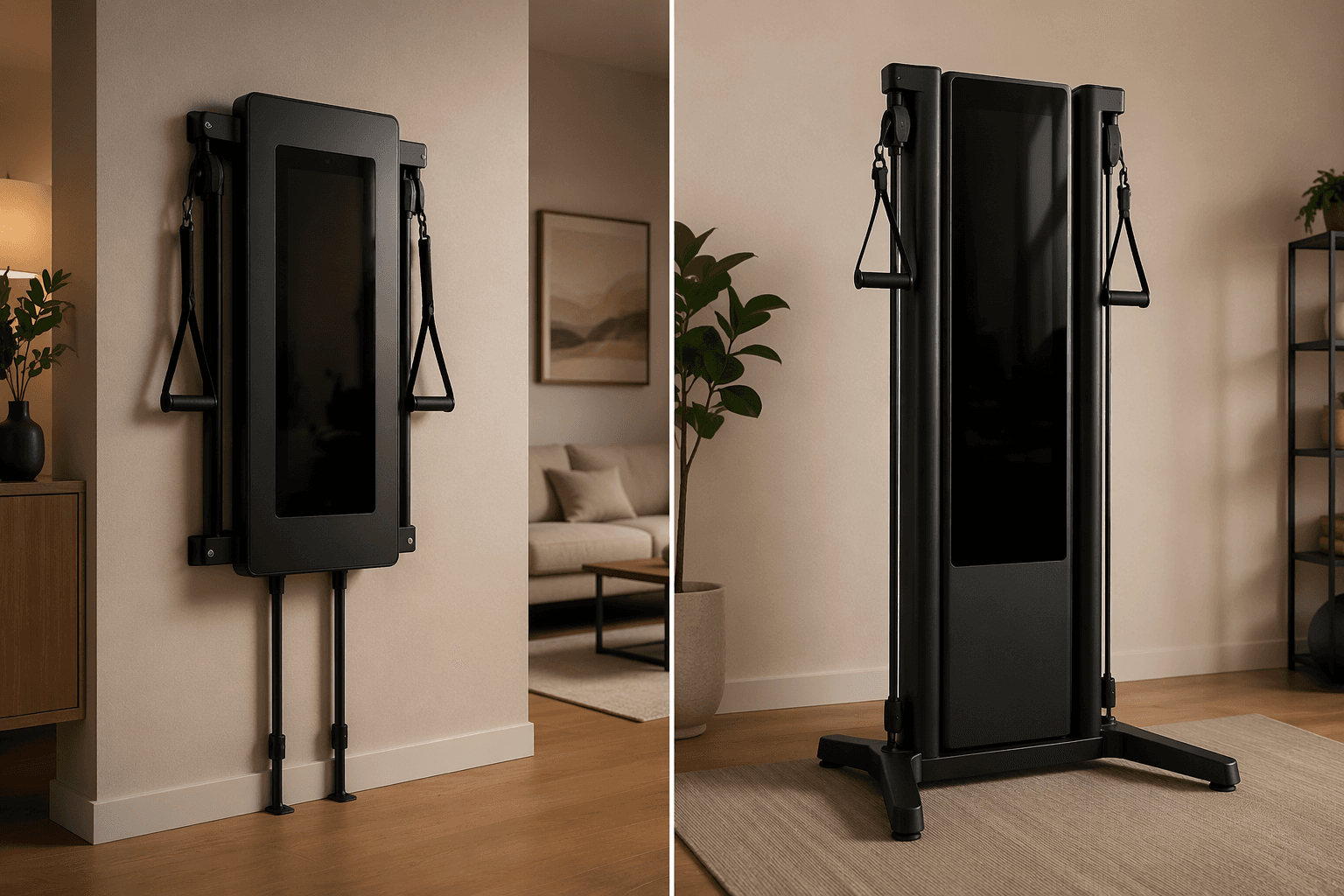
Vitruvian Trainer+ is another wall-free direction. Trail & Kale describes it as a compact platform-style system with under-bed storage and up to 440 pounds of resistance, while noting that it does not include a built-in screen or Tonal-style class content.[6] Tempo Move is the lighter-footprint path, using a phone or tablet rather than a dedicated wall-mounted display, and also avoids installation.[6]
Those alternatives are not identical Tonal replacements. That is the point. Once the wall fails, the comparison should move from “Which machine looks most like Tonal?” to “Which system can actually live here?” For apartment dwellers, a broader all-in-one home gym comparison for small spaces is usually more useful than trying to force a wall-mounted system into a hostile room.
Option 3: Reset the Category
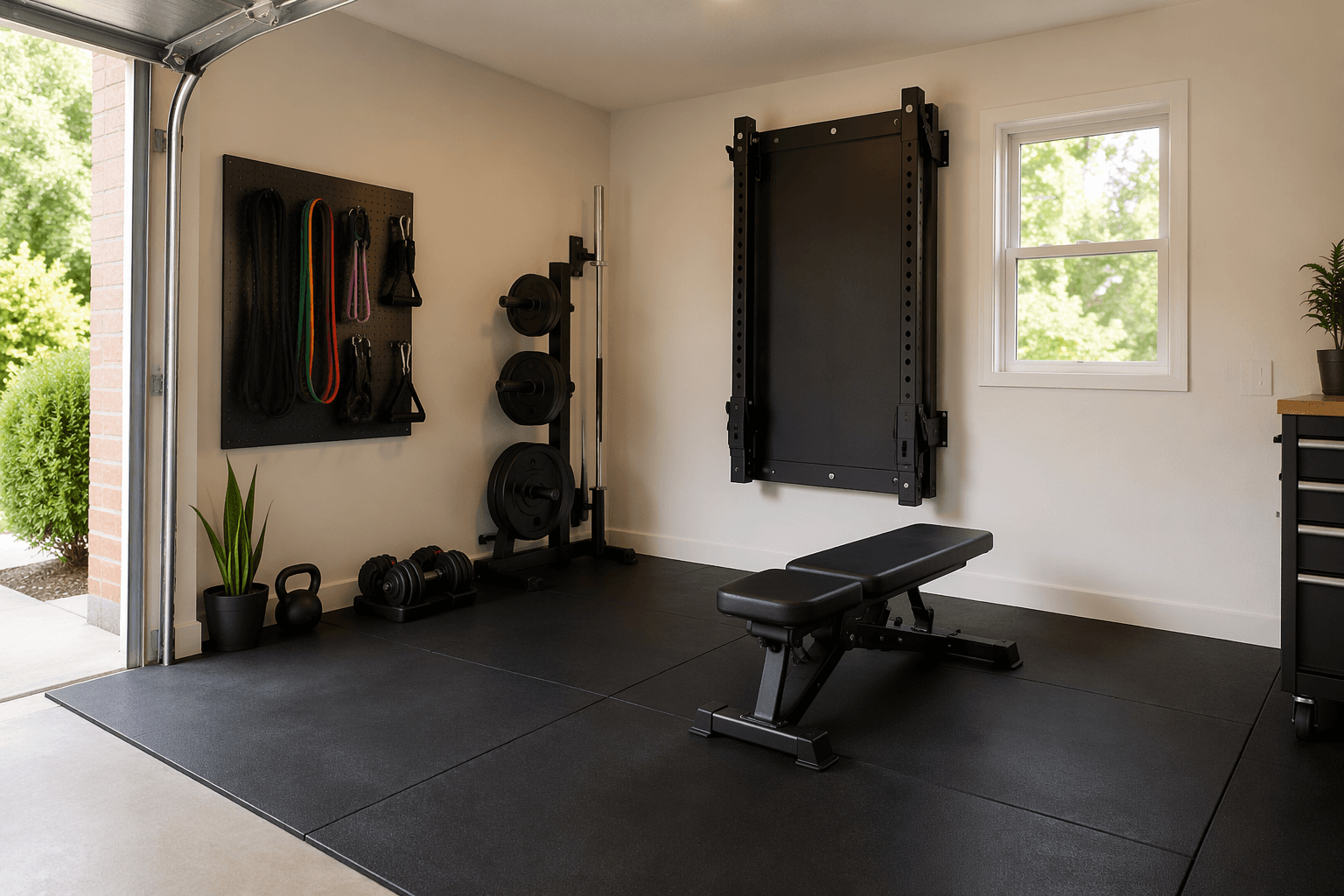
Some buyers reach Tonal because they want the cleanest possible strength setup, not because they specifically need a wall-mounted machine. If that is you, a failed installation check is a reason to step back and compare system types: smart gyms, cable systems, adjustable dumbbells, benches, racks, and modular setups all solve different problems.
That reset is especially worthwhile if Tonal’s required subscription, installation model, and moving limitations all collide with your living situation. A guide to weight-stack, smart, and modular home gym categories can be more clarifying than comparing one smart screen to another. If you are still deciding how much lock-in you are comfortable with, compare the subscription costs of smart home gyms before committing.
When Tonal Still Makes Sense
None of this means Tonal is a bad idea. It means Tonal is a specific idea. If you have compatible 16-to-24-inch wood or metal studs, enough wall and floor clearance, a workable outlet, a ceiling that preserves the movements you care about, and permission to alter the wall, the installation requirements may be acceptable.[1][2]
In that setting, the wall-mounted design is part of the appeal. It keeps equipment off the floor, reduces clutter, and gives a dedicated training station to someone who does not want a rack, bench, plates, and cable machine spread across a room. A homeowner with a stable layout may reasonably decide that a built-in smart gym is exactly the right trade.
The mistake is treating that best-case home as the default home. It is not. Tonal belongs in the category of products that should be approved by the room before they are approved by the buyer.
The Practical Verdict
Buy Tonal only after the installation site has passed the structural, space, power, lease, and moving tests. The machine’s sleekness does not erase the fact that it is professionally bolted into a wall, leaves eight mounting holes, and requires paid help if it has to be moved.[2][5]
For compatible homeowners, the Tonal home gym can still be a clean, premium strength solution. For renters, low-ceiling rooms, uncertain walls, short-term housing, or anyone unwilling to modify the wall, a freestanding smart gym is usually the more practical next step. If Tonal fails the room test, reset the search around the home you actually have, not the installation photo you wanted. A broader home gym decision framework is the better place to go next.
References
- Tonal Installation Requirements, Tonal, 2026.
- Tonal Home Gym Installation Requirements, Tonal Support.
- Tonal Product Page, Tonal, June 2026.
- Tonal community discussions, Reddit.
- Tonal 2 Review, CNET, January 2026.
- Best Tonal Alternatives, Trail & Kale, 2026.
- Tonal vs Speediance, Innerbody Research, 2025.

Comments
Join the discussion with an anonymous comment.