
Before opening twenty product tabs, sort the decision into three home gym system categories: traditional weight-stack multi-stations, smart digital-resistance trainers, and modular rack/functional-trainer combos. The best category is usually decided by the room and the long-term bill before it is decided by the brand badge.
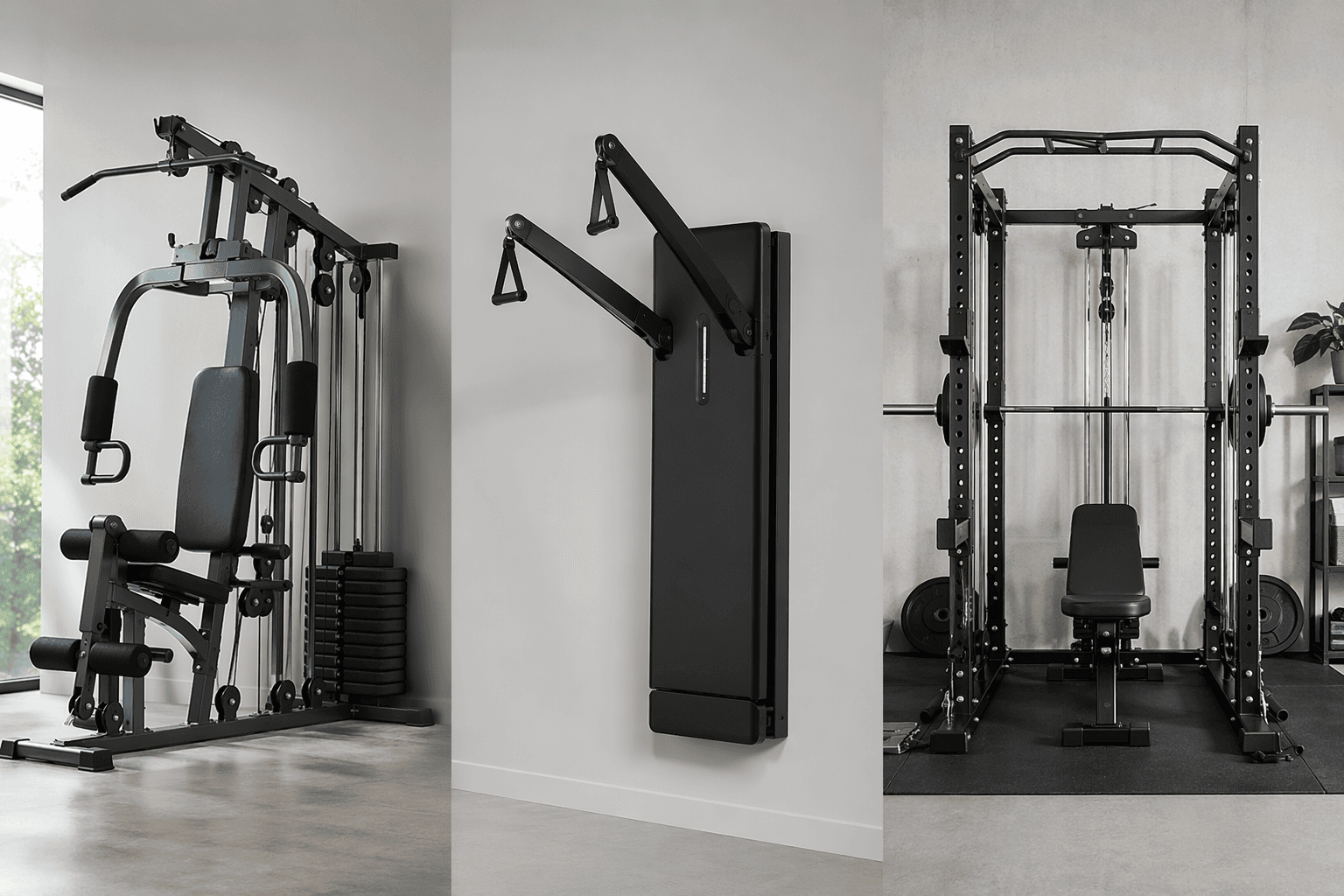
The June 2026 price spread is wide enough to make “home gym system” a slippery phrase. Garage Gym Reviews’ tested roundup puts the average system cost at $1,855, with examples ranging from a $434.99 plate-loaded cable tower to the $4,295 Tonal 2, before adding any required subscription fees.[1] That average is useful only if you immediately ask what kind of system you are averaging together.
| Category | Typical upfront price signal | Subscription | Space requirement | Resistance ceiling | Training style | Warranty expectation | Long-term cost character |
|---|---|---|---|---|---|---|---|
| Traditional weight-stack multi-station | Often mid-range; many buyer-relevant options sit around the no-subscription value tier | $0/year | Roughly 7' x 10' for many all-in-one stations[2] | Commonly 160–260 lbs; some designs are upgradable, such as Bowflex resistance up to 410 lbs[2] | Cable-guided strength training, presses, rows, pulldowns, leg work depending on station | Often 5–7 years on machines, with lifetime frame warranties on some models[2] | Predictable: mostly upfront cost, little software risk |
| Smart digital-resistance trainer | High upfront on premium wall-mounted systems; Tonal 2 listed at $4,295 in GGR’s 2026 benchmark[1] | Typically required, about $49–$60/month, or up to $600/year[3][4] | Tonal needs about 7' x 7' clearance and folds to 5.25" depth; Speediance Gym Monster is listed around 5' x 3' unfolded[3][4] | About 220–250 lbs total resistance[3][4] | Guided workouts, tracking, digital loading, coaching cues | Often shorter, around 1–2 years[4] | Highest recurring-cost exposure; total cost depends heavily on keeping the subscription |
| Modular rack + functional trainer | Highly variable; examples include Bells of Steel All-in-One around $1,299–$1,900 and a REP Ares 2.0 + PR-4000 bundle around $4,220[1] | $0/year | Permanent space; often 4'+ depth and 80"+ ceiling height[1] | Highest headroom because it can support functional-trainer work plus barbell training[1] | Barbell lifts, cable work, pull-ups, attachments, progressive expansion | Varies by rack, attachment, and brand | High upfront build, but no required software toll |
That table is the real comparison. A $1,500-ish traditional machine and a $4,295 smart trainer are not two versions of the same purchase. One is mostly a piece of hardware. The other is hardware plus an ongoing service relationship. A rack combo is a third thing again: less like a single appliance and more like claiming a corner of the house for strength training.
If you still need a broader map of all-in-one subtypes after this category pass, use All-in-One Home Gym Types: Which Category Matches Your Training Style, Space, and Budget. But do the category sorting first. It keeps you from comparing a wall-mounted coaching screen against a rack system as if both solve the same problem in the same room.
Start with the five-year bill, not the sticker price
The cleanest way to separate these categories is to count five years of ownership. A mid-range no-subscription multi-station bought for roughly $1,500 still looks like roughly a $1,500 machine after five years, leaving aside maintenance, delivery, accessories, and taxes. A smart system such as Tonal 2 starts at $4,295, and the required monthly subscription can push the five-year ownership figure far beyond the sticker price.
The research benchmark frames smart-system ownership around an approximately $6,440 five-year total-cost comparison under current subscription assumptions, against about $1,500 for a mid-range no-subscription multi-station.[4] The exact number moves with promotions, subscription tier, installation cost, and whether pricing changes after purchase. The important part does not move: the monthly fee is not a footnote if the product depends on it for its best experience.
This is where a lot of “cheaper than a gym” math gets sloppy. A $2,000 home gym system can save approximately $4,960 over ten years compared with an average $58/month gym membership, before accounting for gas or travel time, according to Garage Gym Reviews’ calculation using Statistic Brain membership data.[1] But that comparison looks very different if the home setup also carries $49–$60 every month in subscription fees.
For a deeper subscription-only breakdown, the next stop is Smart vs Traditional All-in-One Home Gyms: Is the Subscription Worth It Over 5 Years?. At this stage, you only need one decision rule: if a monthly fitness bill irritates you now, it will irritate you more after the new-equipment glow wears off.
Traditional weight-stack systems: the baseline for predictable ownership
A traditional weight-stack home gym system is the least glamorous category here, which is part of its appeal. The resistance is visible, the cable path is understandable, and the machine does not need a content platform to be useful. If the stack says you selected a weight, you selected a weight. Nobody needs to renew anything for the lat pulldown to work.
The trade-off is floor space. Many traditional all-in-one stations need roughly a 7' x 10' working area once you account for the machine body, seat travel, arm movement, and the space a person needs to get in and out without turning every set into furniture Tetris.[2] If that footprint blocks a laundry path or steals the only open part of a spare bedroom, the “simple” machine will become a household negotiation.
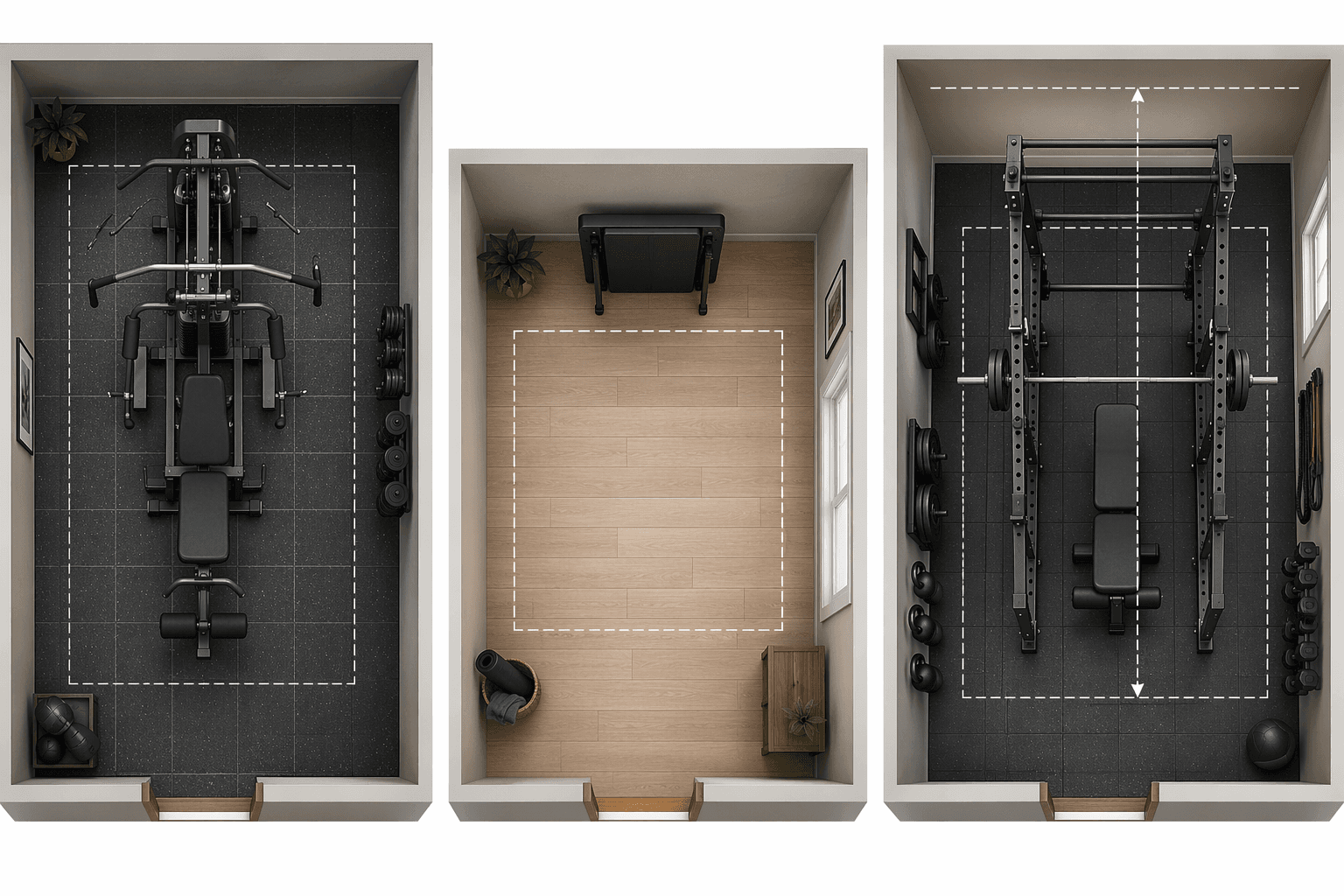
Resistance headroom is the second check. Many systems in this category sit in the 160–260 lb resistance range, with some models offering upgrade paths; Bowflex’s Xtreme 2 SE, for example, is listed with resistance upgradable to 410 lbs.[2] That can be plenty for beginner and intermediate cable work, general strength training, and households that want guided movement paths. It is less convincing if the main goal is heavy squatting, deadlifting, or pressing with a barbell.
Warranty is one reason this category deserves respect. FitnessFactory’s 2026 all-in-one overview lists traditional systems with machine warranties in the 5–7 year range and lifetime frame warranties on some models.[2] Compared with the shorter warranty windows common in smart systems, that warranty-to-price ratio matters for the person who wants the machine to become part of the room for years, not an experiment.
Assembly is not always the nightmare people imagine, though it varies by model. The Powerline BSG10X is a useful example because FitnessFactory says it ships 90% pre-assembled and can be ready in under 30 minutes.[2] That does not mean every weight-stack machine is easy to move through a hallway, but it does push back against the idea that traditional always means impossible to set up.
Seriously consider this category if you want full-body machine-based strength training, no subscription, stable pricing, and a machine other household members can understand without logging into an app. Rule it out early if you cannot spare the footprint or if your training ambitions already point toward heavy free-weight work.
Smart digital-resistance systems: compact, coached, and expensive over time
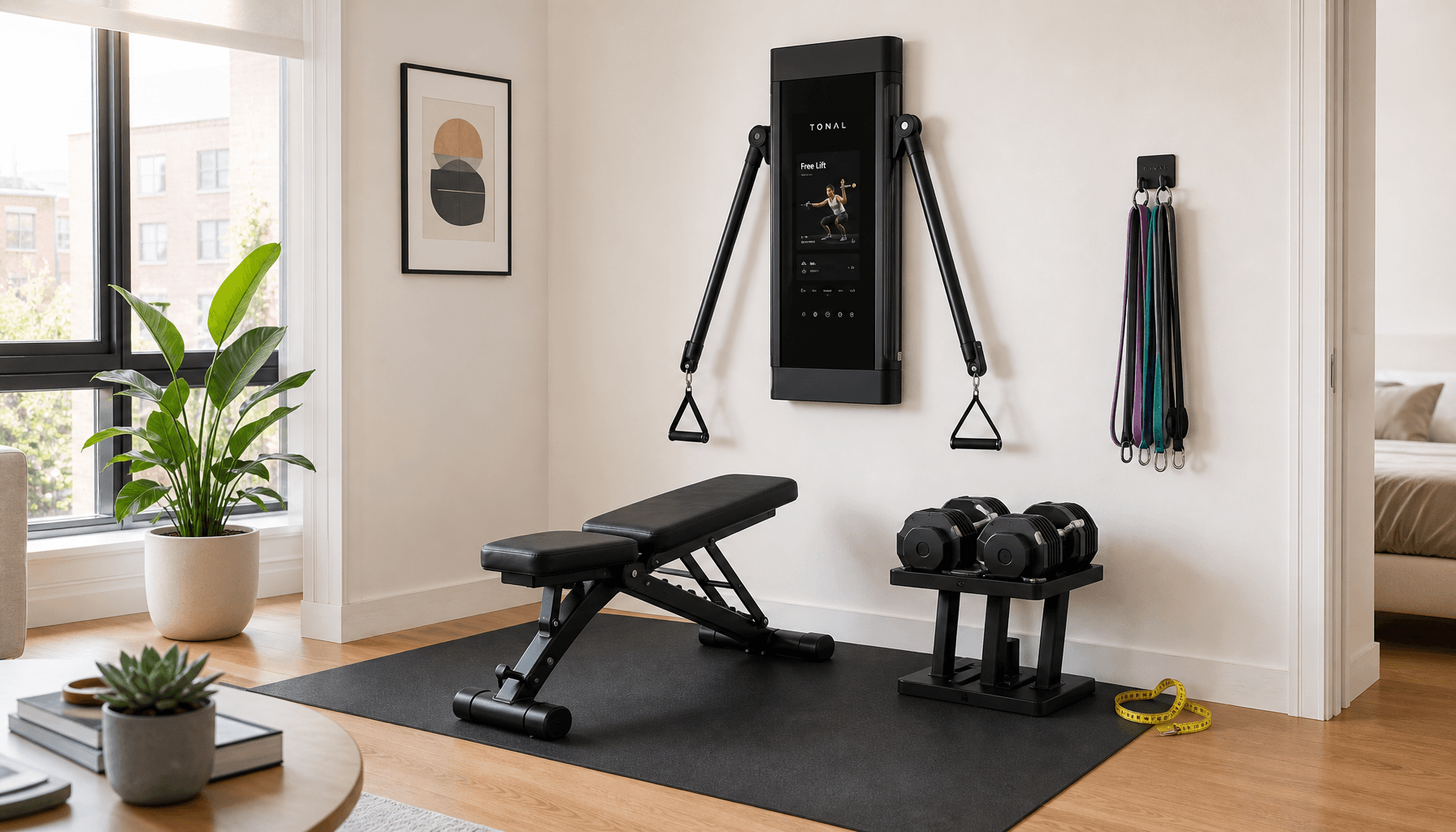
Smart digital-resistance systems make their strongest case in the rooms where a traditional machine simply will not fit. Tonal needs about 7' x 7' of clearance while training and folds to 5.25" deep against the wall; Speediance Gym Monster is listed around 5' x 3' unfolded.[3][4] For an apartment, office, or shared spare room, stored depth can matter more than the footprint during a workout.
They also lower the friction of starting. Digital loading, workout libraries, tracking, and coaching cues can help someone train more consistently than a silent stack in the corner. That is not a small thing. A machine that gets used three times a week beats a theoretically better machine buried behind boxes.
The recurring cost is the bill to stare at. CNET lists smart home gym subscription pricing in the $49–$60/month range, and Garage Gym Reviews’ smart gym guide places the subscription spread at up to $600/year.[3][4] If two people in the household want different programs, progress tracking, or coaching styles, the subscription may feel more valuable. If one person mostly wants cable rows and presses, it can feel like paying rent on a machine already paid for.
The resistance ceiling also needs a plain reading. Smart digital systems in the brief sit around 220–250 lbs total resistance.[3][4] Digital resistance can feel different from a weight stack, and smart systems may offer modes that change the training stimulus, but the total ceiling still matters. For general strength, hypertrophy work, and guided circuits, it may be enough. For stronger lifters who want years of heavy lower-body progression, it can become the category’s hard edge.
Warranty length is another ownership signal. The smart systems in the research brief are associated with 1–2 year warranties.[4] That does not make them bad products, but it changes the risk profile when the hardware cost is high and the best features depend on software access.
There is clearly demand for connected equipment. A Speediance-owned article cites Industry Research 2026 figures saying 63% of fitness device users prefer smart connected equipment and 48% use AI-based workout tracking; it also cites a Future Market Insights projection that the home fitness equipment market could grow from $12.4 billion in 2025 to $19.6 billion by 2035.[5] Treat that as directional market context, not independent proof that a smart system is the right buy for your room.
Seriously consider this category if compact storage and guided programming are the difference between training and not training. Rule it out early if the subscription will bother you, if you want the longest warranty-to-price ratio, or if your strength goals are already close to the resistance ceiling.
Modular rack and functional-trainer combos: the high-ceiling option that asks for a real commitment
A modular rack with a functional-trainer attachment is the category for buyers who want the home gym system to grow instead of stay fixed. It can handle cable work, pull-ups, barbell lifts, safeties, benches, landmine attachments, storage, and future upgrades depending on the rack ecosystem. That expandability is the point.
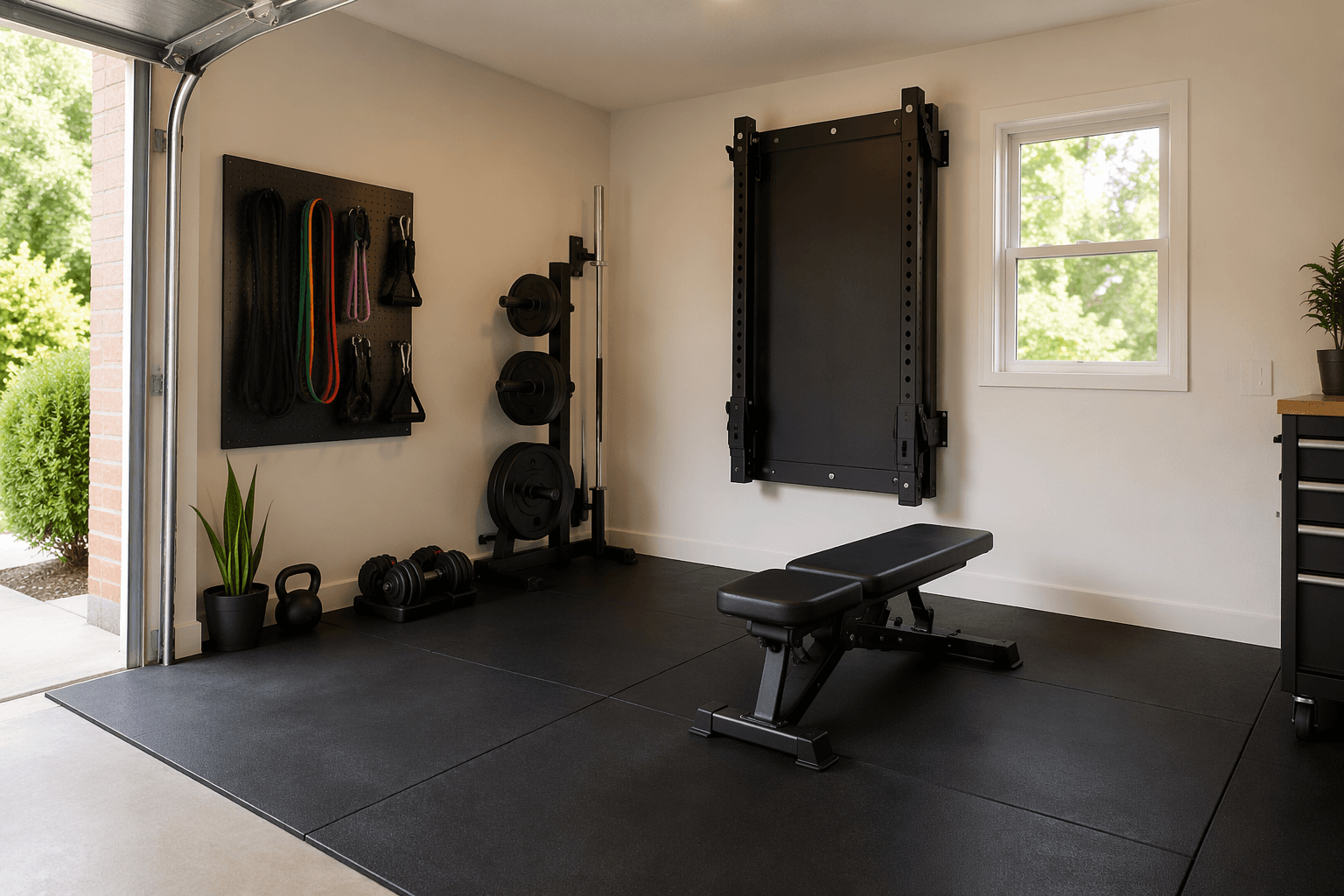
It is also why this category can be overkill. A rack combo wants permanent space, not just temporary clearance. The research brief flags 4'+ depth and 80"+ ceiling height as practical requirements.[1] That does not include the space you need to load a bar, walk around a bench, store plates, or keep the rack from becoming the thing everyone squeezes past sideways.
Pricing is less standardized than the other categories because the final build depends on rack height, uprights, cable attachment, weight stacks or plate loading, storage, safeties, bench choice, and accessories. Garage Gym Reviews lists a REP Ares 2.0 + PR-4000 bundle around $4,220, while Bells of Steel All-in-One examples sit around $1,299–$1,900.[1] Those are configuration signals, not universal category prices.
The payoff is training headroom. This is the category that makes the most sense if “full-body training” includes barbell squats, presses, pulls, loaded carries, progressive plate loading, and cable accessories rather than only machine-guided circuits. It does not need a subscription, and it is less likely to become a dead end for someone whose numbers keep climbing.
Cleveland Clinic’s general home-gym guidance recommends building slowly instead of trying to buy a complete setup all at once.[6] A modular rack fits that principle well when the buyer has the room and knows strength training will remain part of the routine. Start with the rack and the attachments you will actually use; leave the fantasy accessory wall for later.
Seriously consider this category if you have permanent space, want barbell-compatible expansion, and would rather build a system over time than replace a closed machine later. Rule it out early if you mainly want guided workouts in a spare bedroom or if the rack would turn a shared room into a storage argument.
The room decides more than the product page admits
Space claims get watered down in home gym marketing because “compact” can mean stored compact, workout compact, or shipping-box compact. Those are not the same. A smart wall unit may nearly disappear when folded, then still need a clear training zone when the arms are out. A rack may look shallow on paper, then require barbell sleeve clearance and plate storage. A weight-stack station may have a fixed footprint, but the seat, arms, and pulleys need a human-sized buffer.
| If your constraint is... | Lean toward... | Be careful with... |
|---|---|---|
| A shared room that must reset after workouts | Smart digital resistance | Rack combos and large multi-stations |
| A basement or garage corner you can permanently dedicate | Traditional weight-stack or modular rack combo | Wall-mounted systems if you dislike subscriptions |
| Low ceiling | Traditional machine or select compact smart systems | Tall racks that need 80"+ clearance[1] |
| Multiple household users with different training styles | Traditional stack for simplicity, or smart system if coaching profiles justify the fee | Single-purpose machines with limited adjustment |
| Long-term strength progression | Modular rack combo | Digital systems near their 220–250 lb total resistance ceiling[3][4] |
If the room is the main problem, compare footprint tiers before comparing brands. All-in-One Home Gym Machines for Small Spaces and Compact Home Gym Comparison: Find the Right Fit for Your Floor Space are better next clicks than another best-of list.
Resistance ceiling is where “full-body” stops being a useful phrase
Nearly every home gym system claims full-body training. The phrase hides the more useful question: full-body for whom, and for how long?
For a beginner doing presses, pulldowns, rows, curls, triceps work, leg extensions, and controlled circuits, a 160–260 lb traditional stack can be a practical range.[2] It keeps the loading simple and the movement paths repeatable. For a household where one person is starting from scratch and another already trains heavy, the same stack can be both useful and limiting.
Smart systems sit in a similar tension. Their coaching and tracking may be better than a traditional stack for consistency, but the 220–250 lb total resistance ceiling is still a ceiling.[3][4] That number matters most on strong bilateral lower-body movements and heavy pulls. It matters less for unilateral work, tempo work, upper-body accessory training, and general guided programming.
Modular racks change the question because the cable station is not the whole system. The rack can support barbell training and heavier loading, while the functional trainer covers cable patterns. If the goal is to keep adding plates for years, this category has the most room to grow.
When a single system is not the smartest system
Some shoppers are better off stepping back from the all-in-one idea. If you are still deciding whether to buy a system or build from separate pieces, read All-in-One Home Gym Equipment vs. Buying Separate Pieces. If you are earlier than that and unsure what should come first, start with Which Home Gym Equipment Should You Buy First? A Decision Framework.
That is not a retreat from buying a home gym system. It is a way to avoid buying the wrong kind of completeness. A machine can be complete on the product page and still incomplete for your ceiling height, your second user, your subscription tolerance, or your future training.
A practical category decision
Choose a traditional weight-stack home gym system if you want predictable strength training, no subscription, familiar resistance, and you can spare the footprint.
Choose a smart digital-resistance system if compact storage and guided coaching matter enough to justify the ongoing monthly cost and the lower resistance ceiling.
Choose a modular rack/functional-trainer combo if you have permanent space, want barbell-compatible expansion, and can handle the higher upfront build.
Once the category is clear, the next product-level comparison gets much easier. Price shoppers can move to Home Gym Cost Breakdown: What $500 to $5,000+ Actually Buys You in 2026 or What Smart Home Gym Systems Actually Cost Over 5 Years. If you are still validating the whole home-gym idea against a commercial membership, use Is a Home Gym Cheaper Than a Gym Membership?. After the equipment is chosen, Home Gym Workout Plan: 5 Complete Weekly Programs by Equipment Tier is the better problem to solve.
References
- Best Home Gyms (2026) Personally Tested — Garage Gym Reviews.
- Best All-In-One Home Gym Systems for 2026 — FitnessFactory.com.
- Best Smart Home Gyms for 2026 — CNET.
- Smart Home Gyms Guide 2026 — Garage Gym Reviews.
- 2026 Multi-Function Home Gym Comparison — Speediance.
- Strength Finder: How To Create a Home Gym You'll Use — Cleveland Clinic, May 2024.

Comments
Join the discussion with an anonymous comment.