The Apple Watch SE 3 is the right fitness tracker for a lot of iPhone users for a boring reason: it tracks the numbers most people actually use, starts workouts with very little fuss, and costs $249 instead of pushing you into the $399 Series 11 tier.[1] If your workouts are runs, walks, strength sessions, cycling, yoga, swimming, Fitness+ classes, or a mix of all of that around normal life, the SE 3 gives you most of the Apple Watch fitness experience without asking you to pay for sensors you may never open.
That does not make it a tiny Series 11 with no compromises. It is missing ECG, blood oxygen readings, hypertension notifications, dual-band GPS, and some advanced training data.[2] It also remains an iPhone-only watch, so Android users should stop here and look at Garmin, Fitbit, Samsung, or another cross-platform option instead. For iPhone users, though, the better question is narrower: are the missing pieces important enough to spend more, or is the SE 3 accurate enough to trust as an everyday fitness tracker?
The Short Verdict for iPhone Users
As a fitness tracker for iPhone users, the SE 3 lands in a useful middle place. It is much better as a daily object than most dedicated fitness bands, because it handles messages, calls, music, apps, Apple Pay, safety features, and workout tracking in one device. It is also much less specialized than a Garmin built for long endurance sessions, mapping, recovery analytics, and weeklong battery life.
The value case is simple but not shallow: the SE 3 shares several core fitness components with the current Apple Watch line, including the S10 chip, second-generation optical heart sensor, single-band L1 GPS, always-on altimeter, accelerometer, and gyroscope.[1][2] Those are the pieces that matter for distance, pace, heart rate, elevation, steps, and workout detection. The Series 11 adds more health and display hardware, but the SE 3 is not starting from bargain-bin tracking parts.
| If this describes you | Best fit |
|---|---|
| You own an iPhone and want reliable workout, step, sleep, and daily activity tracking | Apple Watch SE 3 |
| You want ECG, blood oxygen, hypertension notifications, a larger brighter display, or more advanced watch hardware | Apple Watch Series 11 |
| You run long events, train by advanced metrics, need dual-band GPS, or hate daily charging | Garmin or another dedicated fitness watch |
| You use Android | Not the Apple Watch SE 3 |
GPS: The SE 3 Passes the Test That Cheap Watches Often Fail
GPS distance is where a low-cost fitness watch can look fine on a spec sheet and then quietly ruin your training log. If a watch cuts corners on tree-lined roads or wobbles through turns, your pace, distance, and progress trend all become less useful. That is why Wareable’s SE 3 test is one of the more important data points available: over a 10.5-mile run, the SE 3 finished less than 50 meters different from a Garmin using dual-band GPS.[3]
That does not mean the SE 3 has dual-band GPS. It does not; Apple lists single-band L1 GPS for the SE 3.[2] Dual-band systems can be more resilient in difficult GPS environments, especially around tall buildings, dense tree cover, and complicated race routes. But for ordinary outdoor running, walking, and cycling, being within that kind of distance over a long run is good enough to make the workout record useful rather than decorative.
There is one useful caution. Older criticism of the original Apple Watch SE’s GPS behavior, including corner cutting, came from an earlier generation. The SE 3 has newer silicon and current firmware, and Wareable’s SE 3-specific result looks much stronger.[3] Still, a fresh round of independent testing across city routes, trails, and races would be welcome before treating it like a dedicated endurance watch.
Heart Rate: Strong for Steady Work, With a HIIT Caveat
Heart rate is the other number that decides whether a fitness tracker is useful or merely encouraging. For steady runs and general workouts, the SE line has tested well. TechGearLab reported an average difference of 1.8 bpm from a chest strap monitor in its Apple Watch SE testing, while Wareable found the SE 3’s session-averaged heart rates virtually identical to a Garmin HRM chest strap over 90-minute runs.[3][4]
The important detail is what those numbers measure. Averages can look excellent even when a wrist sensor misses a short spike during intervals, hill repeats, or burpees. Wareable notes that occasional spike-missing during HIIT remains a caveat, which is exactly the kind of issue that can bother someone training by intervals more than someone doing steady cardio or strength sessions.[3]
For most users, that means the SE 3 is credible for trend tracking, calorie estimates, zone awareness, and general workout review. If you are doing structured interval training where the exact timing of heart-rate peaks matters, a chest strap is still the cleaner tool. Wareable also found that pairing AirPods Pro 3 during workouts brought heart-rate accuracy to chest-strap level in its testing, but that is a separate accessory path rather than something every SE 3 buyer should assume.[3]
Steps, Rings, and the Everyday Tracking Layer
Step count is less glamorous than GPS and heart rate, but it is often the metric people see most. TechGearLab measured about 98.98% step-count accuracy in its Apple Watch SE testing, roughly 8 steps off in averaged testing, and found it outperformed more premium Apple Watch models by about 2% in that test set.[4] The caveat is that this data may come from a prior-generation SE rather than the SE 3, so it should be treated as evidence for the SE family’s tracking strength, not a final lab verdict on the current model.
In daily use, the SE 3’s fitness value is not just the step number. Activity Rings turn movement, exercise minutes, and standing into a visible daily target. That can feel simplistic if you already train with periodized plans, but it works well for the person who needs a nudge to take a walk after lunch, close a move goal, or notice that a busy day at a desk was not actually active.
Apple also includes sleep score, sleep apnea notifications based on breathing disturbances, the Vitals app, wrist temperature sensing, cycle tracking with ovulation estimates, and high and low heart-rate notifications on the SE 3.[1][5] Those features move the watch beyond a simple workout recorder, but they still belong in a different mental bucket from medical-style health sensors such as ECG or blood oxygen.
That distinction matters. Fitness tracking helps you decide whether to run easier tomorrow, whether your walks are adding up, or whether your sleep schedule is drifting. Health monitoring features can alert you to patterns worth discussing with a clinician. The SE 3 has some health-adjacent features, but if your buying decision is mainly about ECG, SpO2, or blood pressure-related notifications, you are no longer comparing simple fitness trackers. For a fuller framework, see Health Tracking vs Fitness Tracking: What to Look for in a 2026 Wearable.
Workout Coverage Is Broad Enough for Normal Training
The SE 3 is at its best when you want one watch to handle ordinary variety: a run on Tuesday, lifting on Wednesday, a long walk with a stroller, a swim, a yoga session, and a guided workout from an iPhone app. It is not asking you to live inside one sport mode or treat every session like a race file.
The Apple Watch advantage here is friction. You can start a workout quickly, see heart rate and time on the wrist, control music, receive a message without fishing out your phone, and have the session appear in Apple Fitness and Health afterward. That sounds ordinary until you compare it with a dedicated tracker that is accurate enough during exercise but annoying enough the rest of the day that it ends up in a drawer.
NBC Select included the SE 3 among its top fitness tracker picks, which is notable because the category is no longer limited to slim bands.[6] The practical market has shifted: many people do not want the smallest tracker; they want the wearable they will actually keep wearing. For iPhone users, the SE 3’s smartwatch side is not a distraction from fitness tracking. It is one reason the tracking keeps happening.
Battery Life Is the Real Daily Compromise
The SE 3’s biggest fitness-tracker weakness is not GPS, heart rate, or steps. It is charging. Apple rates the watch for 18 hours of battery life, while PCMag recorded 46 hours in real-world testing.[7] The second number is useful as evidence that the watch can stretch under lighter use, but it should not be treated as the normal expectation for someone tracking workouts, receiving notifications, and wearing it overnight.
Fast charging helps. Apple says the SE 3 can charge from 0% to 80% in about 45 minutes, and that 15 minutes of charging can provide up to 8 hours of use.[1] That changes the routine: charge while showering, while making coffee, or while sitting at a desk. It does not erase the routine.
This is where dedicated fitness trackers and many Garmin watches still win cleanly. If you want to wear a device for sleep, recovery, workouts, and travel without thinking about a charger for a week or more, the SE 3 will feel needy. If you already charge your phone, earbuds, and watch as part of a daily rhythm, it may be a small nuisance rather than a deal-breaker. The consequence is simple: missed charging means missed sleep data, and missed sleep data weakens recovery features.
What You Give Up Versus Series 11
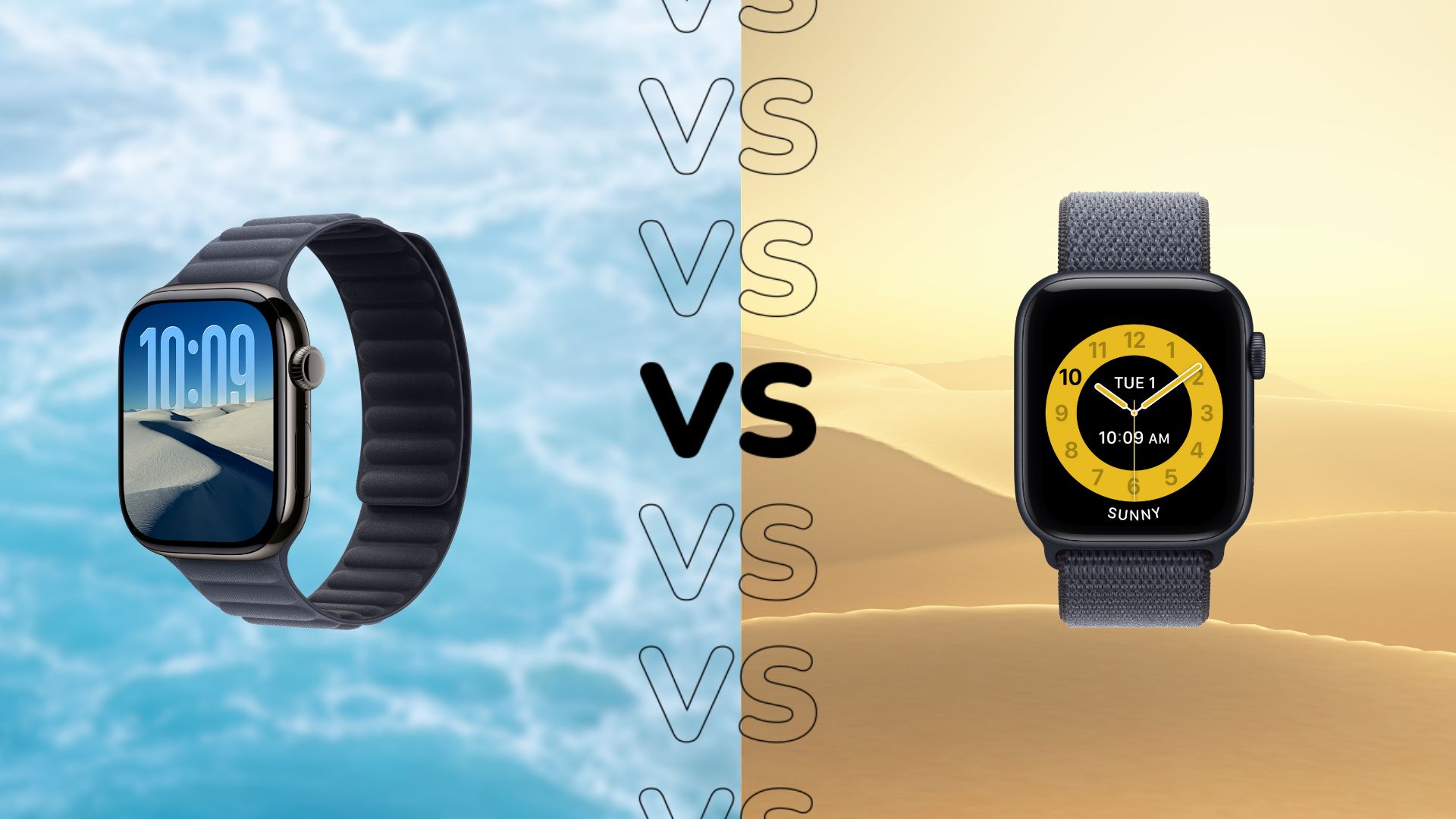
The Series 11 is the better Apple Watch. That is not the same as being the better fitness-tracker purchase. Apple’s comparison shows the SE 3 lacks ECG, blood oxygen, hypertension notifications, dual-band GPS, and some of the higher-end display and health hardware found above it.[2] Those omissions matter unevenly.
| Missing on SE 3 | Who should care |
|---|---|
| ECG | Users who specifically want on-wrist ECG readings as part of health monitoring |
| Blood oxygen | Users who already know they want SpO2 trends or are comparing health-monitoring watches |
| Hypertension notifications | Users buying primarily for Apple’s newest cardiovascular monitoring features |
| Dual-band GPS | Runners and cyclists who train in difficult GPS environments or want stronger race-file reliability |
| Running dynamics | Competitive or data-driven runners who use form and efficiency metrics in training |
| Larger, brighter display | Users who value screen readability and premium watch feel as much as tracking |
For a casual runner, a gym-goer, or someone building a home fitness habit, ECG and SpO2 are often less important than accurate heart rate during workouts, GPS distance, sleep consistency, and a watch that is comfortable enough to wear every day. For someone with a specific health-monitoring priority, those same omissions may be the whole decision. The SE 3 is a fitness-first value watch, not Apple’s most complete health watch.
SE 3 vs. Garmin, Fitbit, and Other Dedicated Trackers
Against a dedicated fitness tracker, the SE 3 wins on iPhone integration. Notifications are better, music controls are better, apps are richer, Apple Fitness and Health syncing are native, and the watch can be useful even when you are not exercising. That matters because a tracker only collects good long-term data if it stays on your wrist.
Garmin and Fitbit still have real advantages. Garmin is the safer direction if you care about long battery life, outdoor training depth, race preparation, and advanced running metrics. Fitbit may appeal if you want a simpler wellness band, lighter sleep tracking experience, or broader phone compatibility. Android users should not try to rationalize the SE 3, because Apple Watch setup and use require the iPhone ecosystem.
The fairest split is not smartwatch versus fitness tracker in the abstract. It is whether smartwatch convenience makes you more consistent, or whether battery life and sport depth matter more than daily integration. If you are still sorting that out, the broader comparison in Fitbit vs. Garmin vs. Apple Watch: Which Fitness Tracker Ecosystem Is Right for Your Home Fitness Practice? is the more useful next read.
Who Should Buy the Apple Watch SE 3
- Buy the SE 3 if you use an iPhone and want accurate everyday tracking for runs, walks, gym sessions, swims, home workouts, sleep, and daily movement.
- Buy the SE 3 if you want Apple Watch convenience but do not need ECG, SpO2, hypertension notifications, or dual-band GPS.
- Buy the SE 3 for a teenager, parent, or newer exerciser if the goal is a simple, motivating wearable rather than a training computer.
- Do not buy the SE 3 if daily charging will make you skip sleep tracking or leave the watch behind.
- Do not buy the SE 3 if you are an Android user; the Apple Watch path is not built for you.
Pay for the Series 11 if the missing health sensors are not extras to you. The upgrade also makes more sense if you want the more premium display experience or prefer buying the most complete Apple Watch rather than the best-value one. Choose Garmin or another dedicated fitness watch if you train long, race seriously, need stronger battery life, or want sport-first analytics more than phone-first convenience.
If you do choose the SE 3, setup matters more than most reviews admit. Workout views, heart-rate zones, sleep schedule, charging routine, and app permissions decide whether the watch becomes a useful fitness tool or just another notification screen. The practical next step is How to Set Up Your Apple Watch for Home Workouts. If you are choosing between Apple Fitness+, Strava, Nike Run Club, Gentler Streak, and other iPhone options, compare the app side in Apple Fitness+ vs. Third-Party Fitness Apps on iPhone.
Final Judgment
The Apple Watch SE 3 is not the most advanced Apple Watch and not the most durable training watch. It is, however, a very strong fitness tracker for iPhone users who want trustworthy GPS, heart rate, step tracking, sleep features, and daily activity coaching in a device they will actually wear. At $249, it delivers the part of the Apple Watch experience that matters most for ordinary fitness without making every buyer pay for high-end health sensors.
The deciding factor is not whether the SE 3 is technically complete. It is whether its omissions change your workouts or health-monitoring needs. For most iPhone users who exercise regularly but do not train like competitive athletes, the answer is no. Accept the charging routine, and the SE 3 is the sensible Apple Watch fitness tracker to buy.
Comments
Join the discussion with an anonymous comment.