
The easiest way to misbuy a screenless fitness tracker is to compare only the price printed beside the device. In June 2026 US pricing, a $399 Oura Ring 4 is not really a $399 purchase if you want the full app experience over time: add the subscription and it lands around $550 after two years and roughly $750 after five years. Whoop 5.0, at $239 per year, reaches $478 after two years and $1,195 after five years. Fitbit Air and Amazfit Helio Strap, both listed at $99 with no mandatory subscription for core tracking, stay much closer to the number on the receipt.[1][2]

That bill is why this guide exists. A screenless fitness tracker can be a clean, low-distraction way to monitor sleep, heart rate, activity, SpO2, and recovery-style trends. It can also be a small piece of hardware attached to a long rental agreement. The useful question is not whether subscriptions are always bad. It is whether the subscription is paying for something that will actually change your behavior.
For most everyday wellness tracking, the answer is increasingly no. The 2026 market now has credible screenless options that keep the basics usable without asking for another payment. For performance-oriented training, the answer gets tighter: Whoop’s Strain and Recovery loop, Oura’s Readiness framing, and Google’s AI coaching can matter if you genuinely make training decisions from those systems rather than simply checking last night’s sleep score.
The two-year and five-year bill
Here is the ownership math that should sit next to any feature comparison. These are US prices reported in the available June 2026 coverage; taxes, discounts, bundles, and regional pricing can change the final number.
| Device | Upfront or annual price | Mandatory subscription for core use? | Approx. 2-year cost | Approx. 5-year cost | What the subscription mainly buys |
|---|---|---|---|---|---|
| Fitbit Air | $99 device | No | $99 | $99 | Optional Gemini-powered AI Coach at $99/year, not core tracking |
| Amazfit Helio Strap | $99 device | No | $99 | $99 | No required subscription in cited coverage |
| Oura Ring 4 | $399 device plus subscription | Yes, for full app experience | About $550 | About $750 | Readiness-style interpretation and full platform experience |
| Whoop 5.0 | $239/year | Yes | $478 | $1,195 | Strain, Recovery, and coaching loop |
The table makes one thing hard to ignore: subscription-free devices do not need to beat Whoop or Oura at every possible interpretation layer to be the better purchase for many people. They need to preserve the measurements most people actually check and avoid turning ordinary health trends into an annual bill.
There is also some evidence that the irritation is not imaginary. JointCorp’s 2026 market survey reported that 52% of non-subscribers cited “paying twice” — upfront hardware plus an ongoing subscription — as their primary objection.[3] That source is useful as a market signal, not as the final word on consumer psychology; JointCorp is an ODM/OEM, so the concrete device arithmetic still matters more than the broad trend claim.
Fitbit Air is the screenless tracker that changes the subscription argument
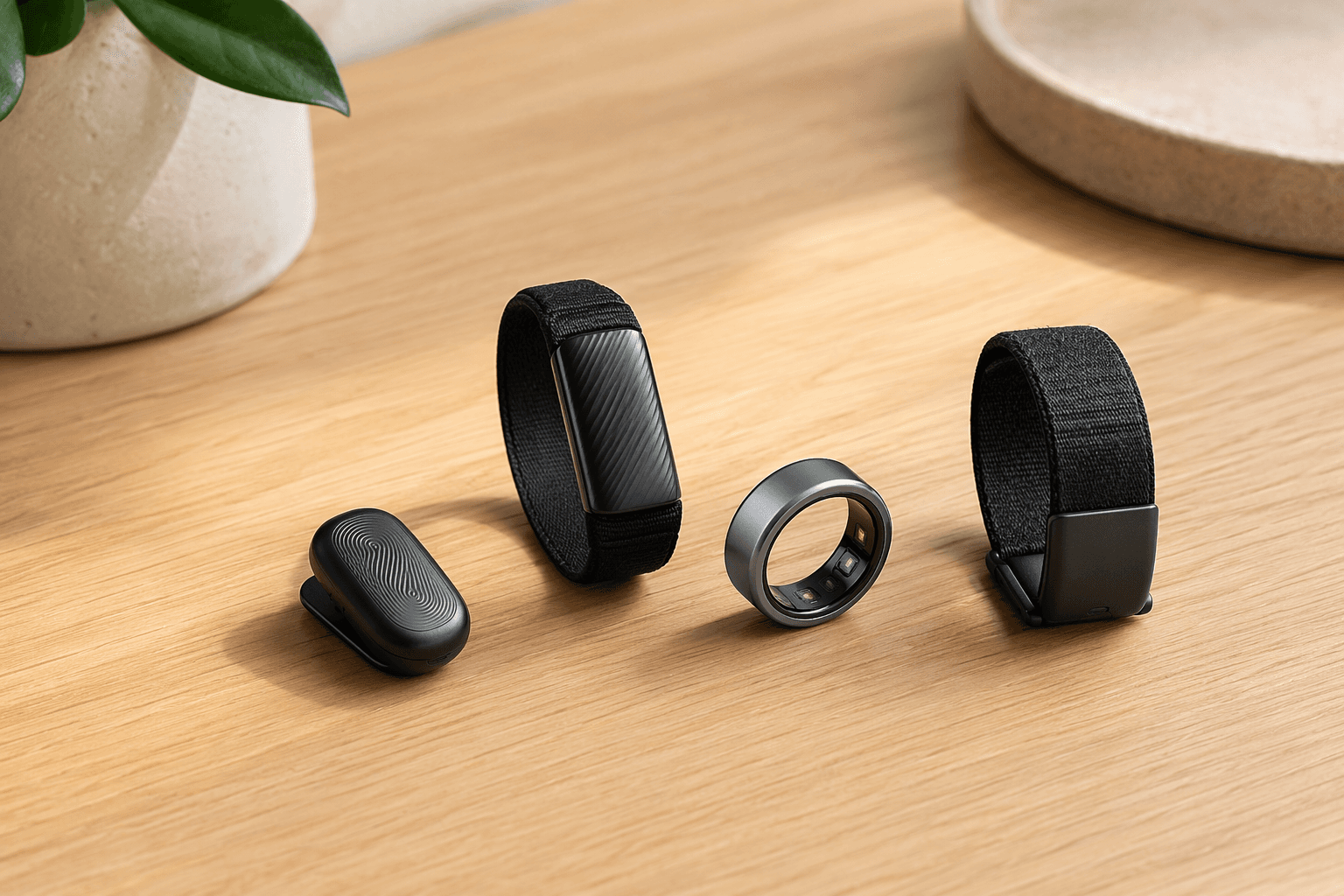
Fitbit Air matters because it attacks the old screenless-tracker compromise directly. It launched on May 26, 2026 at $99, and the core package does not require a subscription for heart rate, sleep, SpO2, readiness, and cardio load tracking.[2] The optional paid layer is Google’s Gemini-powered AI Coach at $99 per year, which means the paywall is positioned around coaching rather than access to basic health data.[2]
That distinction is not cosmetic. If you want a screenless fitness tracker because you dislike wearing a smartwatch to bed, do not want notifications on your wrist, or just want passive health data, Fitbit Air keeps the essential loop intact: wear it, sleep in it, train with it, and review trends later. You are not buying a device and then discovering that the sleep and recovery dashboard is effectively a locked room.
Tech Advisor called it “the screenless tracker to beat,” a strong claim for a first-generation device in a category that Whoop has shaped for years.[4] Tom’s Guide also reported that the screen-free experience made workouts feel “much more in the moment,” which gets at the practical appeal: the tracker records the session without turning the session into another screen interaction.[5]
The reason Fitbit Air belongs at the center of this comparison is not that it makes paid coaching worthless. It is that it separates the layers cleanly. Heart rate, sleep, SpO2, readiness, and cardio load are the things many people expect a tracker to track. AI coaching is an interpretation service. If that service helps you adjust training, it may be worth paying for; if it becomes another unused recommendation feed, the $99 device remains useful without it.
If your shortlist is already down to Google versus Whoop, the more direct head-to-head is here: Fitbit Air vs Whoop 5.0. The short version for this guide: Fitbit Air is the cleaner no-subscription buy; Whoop is the more coherent paid training system.
Amazfit Helio Strap is the value play, with one important habit attached
Amazfit Helio Strap makes a different case from Fitbit Air. It is also a $99, no-subscription device, but its strongest argument is accuracy value. Wareable’s testing found heart-rate readings within 1–2 BPM of a Garmin chest strap when the Helio Strap was worn on the bicep.[6]
That is a persuasive result, especially because bicep placement often suits optical heart-rate sensors better than loose wrist wear during certain workouts. It is still an individual test result, not a universal guarantee. Skin tone, arm shape, sensor pressure, movement pattern, and strap fit can all affect optical readings. But as a value signal, being that close to a Garmin chest strap in a real review is more useful than vague recovery language.
The caveat is operational rather than philosophical: Wareable found automatic workout detection unreliable unless workouts were started manually.[6] That means the Helio Strap is best for someone willing to press start before training. If you routinely forget, your workout history may be less complete than the hardware is capable of producing.
For home fitness, that tradeoff is often acceptable. If you lift, ride indoors, row, or follow structured sessions, manually starting a workout is not a major burden. If you want a tracker to quietly catch every walk, quick circuit, and spontaneous session without attention, Fitbit Air is the easier recommendation.
What “no subscription” should include
A no-subscription screenless fitness tracker is only meaningful if the free experience includes the health signals people bought the device to capture. At minimum, that means daily heart rate trends, sleep tracking, activity history, and enough recovery or readiness-style context to spot patterns. SpO2 and HRV-style signals add value when the device offers them clearly and consistently.
The line gets blurry when companies describe a feature as “insight,” “coaching,” or “guidance.” Some interpretation is fine as a paid service. The problem is when a tracker markets health awareness but leaves the useful version of that awareness behind a subscription. Fitbit Air looks better than older subscription-heavy models because its core data remains available, while the paid AI Coach is optional.[2]
- Reasonable free core: heart rate, sleep, SpO2 where supported, activity history, basic readiness or recovery trends, and cardio load or training-load style data.
- Reasonable paid add-on: personalized coaching, AI-generated recommendations, advanced training interpretation, long-form reports, or specialist programs.
- Bad sign: the device price is low, but sleep interpretation, recovery context, or meaningful health trends become weak without recurring payment.
Also be careful with clip-on and pendant-style trackers. If a device is not worn against the skin, it cannot produce the same continuous heart-rate, HRV, and sleep-stage data as a skin-contact wearable. That does not make clip-ons useless for steps or basic activity, but it disqualifies them from the same conversation as Whoop-style straps, bicep bands, and smart rings.
Smart rings without Oura’s recurring bill
If you want screenless tracking but dislike straps, the subscription-free ring alternatives are the obvious place to look. RingConn Gen 2 offers sleep apnea screening and up to 12 days of battery life with zero subscription, while Ultrahuman Ring Air provides readiness and sleep tracking without an ongoing fee.[1][6]
The comparison point is Oura Ring 4. Oura still has the strongest brand association with smart-ring recovery and readiness, but its subscription changes the ownership curve. A $399 ring becoming about $750 over five years is a different buying decision from a one-time purchase, especially for someone who mainly wants sleep trends, resting heart rate, and general wellness patterns.[1]
Rings also have their own accuracy constraints. They can be excellent for sleep and overnight trends, but workout heart-rate performance can vary by exercise type and fit. If ring accuracy is the deciding factor, use a dedicated ring comparison rather than assuming all finger-based trackers behave the same; this site’s smart-ring accuracy guide is the better next stop.
What you give up when you skip the subscription
The honest loss is not usually raw tracking. In 2026, the better no-subscription options can cover the basics well enough for a large share of users: sleep trends, resting heart rate, activity, workouts, and broad recovery signals. What you lose is the branded interpretation layer that turns those signals into a daily training system.
Whoop is the clearest example. Its value is not simply that it measures heart rate overnight. It packages strain, recovery, and behavior feedback into a loop that tells you when to push, when to back off, and how lifestyle choices may be affecting performance. If you follow that loop and it changes your training, the subscription can be a real tool rather than a nuisance.
Oura’s paid experience works similarly for people who like its Readiness framing. Google’s paid AI Coach belongs in the same category: not a requirement for Fitbit Air’s core metrics, but potentially useful if you want the app to translate those metrics into more explicit guidance.[2] The question is whether you will obey the guidance. Paying for recommendations you routinely ignore is just expensive decoration.
For a deeper look at the paid-recovery side of that argument, see Whoop for Recovery Tracking: Is the Subscription Worth It for Home Athletes?. If Oura’s math is the sticking point, the separate Oura Ring 4 total cost of ownership breakdown is the cleaner comparison.
Which screenless fitness tracker should you buy without a subscription?
For most people who want a screenless fitness tracker without recurring fees, Fitbit Air is the safest first look. It keeps the core health and fitness metrics outside the mandatory paywall, costs $99 upfront in the cited US coverage, and leaves AI coaching as an optional add-on rather than the key to the device.[2]
Choose Amazfit Helio Strap if heart-rate value during workouts matters more than app polish, and if you are willing to manually start sessions. The bicep-worn accuracy result from Wareable is strong enough to take seriously, but the automatic-detection caveat is the kind of daily friction that matters more after the return window closes.[6]
Choose RingConn Gen 2 or Ultrahuman Ring Air if you want a ring and do not want Oura’s subscription model. RingConn is especially interesting if sleep apnea screening and long battery life are high priorities; Ultrahuman Ring Air is the simpler Oura-style alternative for readiness and sleep without an ongoing fee.[1][6]
Choose Whoop or Oura only if the paid interpretation layer will change what you do. That means adjusting workout intensity, recovery days, bedtime, alcohol habits, or training load because the platform gives you a clear reason. If you only want durable health tracking without annual fees, subscription-free screenless trackers now cover most of what people actually check.
References
- 5 Fitness Trackers That Don't Lock Core Features Behind A Monthly Subscription — Engadget
- Fitbit Air In-Depth Review: A True Whoop Competitor for $99? — DC Rainmaker
- Fitness Tracker Market Trends 2026: What's Next in Wearable Health Technology — JointCorp
- Google Fitbit Air Review: The screenless tracker to beat — Tech Advisor
- I thought screen-free wearables were a gimmick, but this budget fitness tracker has converted me — Tom's Guide
- Best discreet, non-watch fitness trackers without a screen — Wareable
Comments
Join the discussion with an anonymous comment.