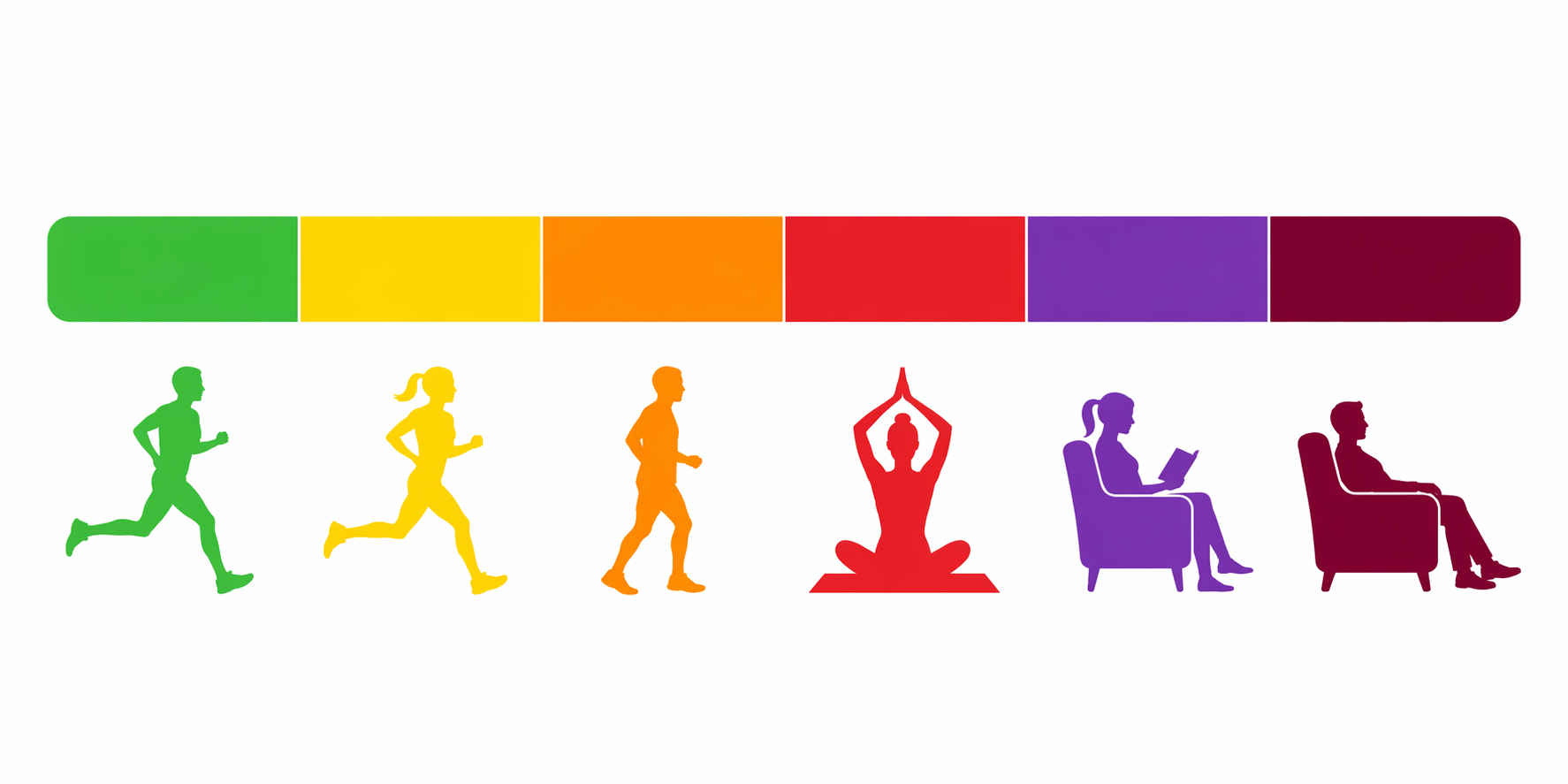
If wildfire smoke is in the forecast, check the Air Quality Index before you lace up. For most home exercisers, the decision can be simple: below 100, outdoor exercise is generally acceptable if you monitor symptoms; 101–150 means shorten and soften the workout or move it indoors; 151–200 means switch to indoor exercise; above 200 means rest or keep movement very gentle. That is the practical answer to the health risks of exercise in smoky air: the number should change the workout before willpower gets a vote.
| AQI | What it means for today’s workout | Best choice |
|---|---|---|
| 0–100 | Air quality is good to moderate for most people, though unusually sensitive people should still watch symptoms. | Outdoor exercise is usually OK; keep the session normal or slightly easier if smoke is visible. |
| 101–150 | Unhealthy for sensitive groups; smoke exposure starts to matter more during heavier breathing. | Reduce intensity and duration, avoid hard efforts, or move indoors. |
| 151–200 | Unhealthy; several medical and public-health sources advise avoiding prolonged or vigorous outdoor activity. | Move the workout indoors. |
| 201+ | Very unhealthy to hazardous conditions. | Rest, do mobility, or keep activity very light indoors. |
These cutoffs line up with public-health and sports-medicine guidance that treats higher AQI levels as a reason to reduce exertion, shorten exposure, or avoid outdoor activity altogether, especially for people with asthma, heart disease, respiratory conditions, pregnancy, older age, or unusual sensitivity to smoke [1][2][3].
What smoky air changes during exercise
Wildfire smoke is not just an unpleasant smell or a visibility problem. It contains a mixture of gases, irritants, and fine particles that can reach deep into the lungs. During exercise, breathing rate and depth increase, so the same smoky air can become a larger dose simply because you are moving harder.
That does not mean every smoky day requires lying on the couch. It means the workout has to match the exposure. A slow walk in light haze is not the same demand as hill repeats, a tempo run, a boot-camp class in the park, or a long ride while the AQI is climbing.
The symptoms that matter are plain ones: coughing, wheezing, chest tightness, throat or eye irritation, dizziness, headache, unusual fatigue, or shortness of breath that feels out of proportion to the effort. If any of those show up, the workout is over or moves inside, even if the AQI number looked acceptable earlier.
AQI 0–100: outdoor exercise is usually reasonable
When the AQI is below 100, most healthy adults can usually do their planned outdoor workout. The useful caveat is “most.” The yellow range can still bother people who are unusually sensitive, and smoke can vary by neighborhood, wind shift, and time of day.
Keep the normal session if the air looks clear, you feel normal, and the AQI is stable. If you can smell smoke or see haze, make the first 10 minutes easier than planned and check how your breathing feels before adding intensity. Beginners do not lose anything by making a smoky-day workout boring; consistency is built by staying well enough to train again tomorrow.
AQI 101–150: modify before symptoms force you to
Orange air is where many exercisers get stuck. The day may not look bad enough to cancel, but it is not a normal training environment. Public-health guidance commonly treats this range as unhealthy for sensitive groups and a reason to reduce prolonged or heavy outdoor exertion [1][3][4].
For a healthy adult who still chooses to go outside, make the session shorter and easier. A practical ceiling is about 20–30 minutes, and that should mean easy movement, not a compressed version of the hardest part of your workout. Skip intervals, hill repeats, sprints, race-pace work, and anything that makes you breathe hard for sustained periods.
- Turn a run into an easy walk-run or brisk walk.
- Cut a long ride to a short easy spin, preferably away from traffic.
- Move strength work indoors and save outdoor time for a short warm-up walk.
- Replace intervals with mobility, balance work, or an easy recovery session.
- Stop if coughing, chest tightness, dizziness, or unusual fatigue starts.
People in higher-risk groups should be more conservative in this range. That includes people with asthma, COPD, heart disease, other respiratory conditions, pregnancy, older adults, children and teens, and anyone who has reacted strongly to smoke before. For those exercisers, orange is often an indoor day, not a “just go lighter” day.
Also pay attention to trend, not only the current number. If the AQI is 120 and rising, the safer move is to train inside early instead of trying to squeeze in the outdoor plan before conditions worsen.
AQI 151–200: move the workout indoors
At red AQI levels, outdoor exercise is no longer a good trade for the general home exerciser. Some guidance draws the firmest line at avoiding outdoor exercise above 200, but medical and public-health sources commonly advise avoiding prolonged or vigorous outdoor activity once air quality reaches the unhealthy range [2][3][4]. This guide uses the more protective rule: at 151 and higher, train indoors.
That is not a failed workout. It is the same kind of adjustment as swapping a long run for a recovery session when your knee is irritated or changing a route because of ice. The training habit survives because you changed the environment, not because you forced the original plan.
Use the cleanest indoor space you have. Close windows and exterior doors, avoid frying or burning candles before exercise, and use a HEPA-filtered room if available. If your apartment setup is tight, a small clear floor zone can still handle mobility, light strength, step-ups, marching intervals, or low-impact cardio; the same space-planning logic in How to Build a Home Gym in Under 50 Square Feet applies well on smoky days.
- Low-impact cardio: easy stationary bike, walking pad, step-ups, marching, or gentle dance intervals.
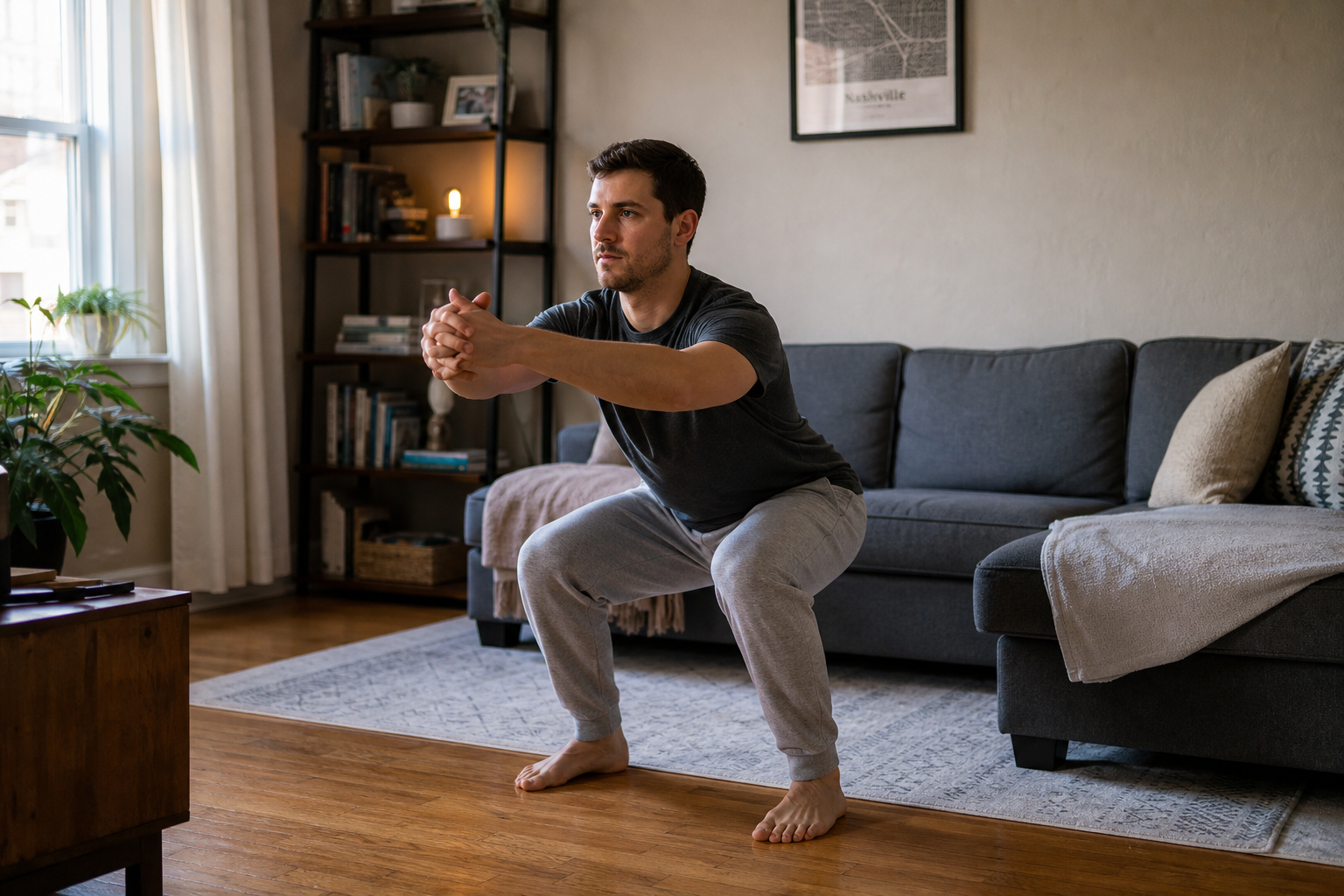
- Strength: bodyweight squats, hinges, wall push-ups, rows, carries, and controlled core work.
- Recovery: mobility, stretching, breathing-friendly yoga, or an easy range-of-motion session.
- Beginner option: 10–20 minutes of gentle movement instead of trying to replace the full outdoor workout.
For apartment dwellers who repeatedly lose outdoor cardio days to smoke, compact equipment can be a useful resilience tool rather than a luxury. A folding bike, walking pad, compact stepper, or jump-rope-free cardio option can keep training available when the air outside is not. If you are comparing options, start with constraint-based choices such as noise, ceiling height, storage, and joint comfort in this compact home exercise equipment guide or the small-space cardio equipment guide.
AQI above 200: rest is a training decision
When the AQI moves into very unhealthy or hazardous territory, the goal changes. This is not the day for a substitute hard workout in a leaky garage, a high-rep circuit next to an open window, or “just one quick run.” Rest, mobility, and very gentle indoor movement are the better choices.
A useful smoky-day minimum is simple: move enough to feel less stiff, then stop before breathing becomes the point of the session. Try a short mobility flow, light stretching, a few easy strength sets with long rests, or a relaxed walk inside if your indoor air is good. If indoor air is also poor or symptoms are present, rest.
Why the conservative cutoff makes sense
Different sources draw slightly different lines. Some outdoor-activity charts allow limited activity in red conditions while warning against prolonged or heavy exertion; others advise avoiding outdoor exercise once AQI passes 150. The disagreement is usually not about whether smoke is harmless. It is about how much exposure is acceptable for which person, for how long, and at what intensity.
For general home exercisers, the conservative line is easier to use and safer to repeat: orange means modify, red means go indoors. That rule prevents the common mistake of treating a planned workout as more important than the conditions around it.
A 2025 University of Montana controlled smoke-exposure study helps explain why this matters without turning one study into a scare headline. In the study, 20 healthy participants cycled for 2 hours at 50% of maximal effort while exposed to simulated wildfire smoke; measures of blood-vessel and nervous-system function declined immediately after exercise, then returned to baseline within 60 minutes in clean air, according to a summary in The Conversation [5].
That finding is reassuring in one narrow way: healthy bodies can recover after a controlled exposure. It is also limited. The participant count was small, the original paper was not directly reviewed, and a lab session does not cover every outdoor smoke mixture, medical history, or repeated-exposure pattern. The practical takeaway is not “panic” or “push through.” It is to minimize smoke exposure when exercise would make you inhale more of it.
A repeatable smoky-day routine
Check the AQI close to workout time, not only the night before. Use a local air-quality source when possible because smoke can change quickly by location. Local air-quality agencies often frame outdoor activity by both AQI and exertion level, which is exactly the combination exercisers need [6].
- Look up the current AQI for your actual location.
- Match the number to the tier: below 100 normal with monitoring, 101–150 modify, 151–200 indoors, above 200 rest or very gentle movement.
- Adjust intensity first. Hard breathing is the part that turns a smoky workout into a bigger exposure.
- Shorten outdoor time before you feel forced to stop.
- Move indoors immediately if symptoms appear, the AQI rises, or you are in a higher-risk group.
If you are new to home fitness and do not yet have an indoor fallback, keep the first version modest: one cleared floor space, one low-impact cardio option, and a simple strength routine. A phased setup can later add a HEPA purifier or compact cardio tool as the budget allows; the small apartment home gym budget guide is a sensible place to plan that without buying everything at once.
The workout choice does not have to be dramatic. Below 100, go if you feel well. From 101–150, make it shorter and easier or move inside. From 151–200, move inside. Above 200, rest or keep movement gentle. Protecting the habit sometimes means changing the room, not proving you can tolerate the air.
References
- Exercise and wildfire smoke, Colorado State University, https://chhs.source.colostate.edu
- Exercising Safely in Poor Air Quality, American College of Sports Medicine, https://www.acsm.org
- Wildfire Smoke and Lung Health, American Lung Association, https://www.lung.org
- Exercising during smoky conditions, UBC Faculty of Medicine, https://med.ubc.ca
- Is it safe to exercise outside when wildfire smoke is in the air?, The Conversation, https://theconversation.com/255812
- Outdoor Physical Activity Guidance, Yolo-Solano Air Quality Management District, https://www.ysaqmd.org

Comments
Join the discussion with an anonymous comment.