
How to Build a Compact Home Gym in 3 Phases: A Progressive Buying Plan for Small Spaces
A staged buying plan for apartment dwellers who want to build a compact home gym without overbuying. Each phase adds equipment that fits the same small footprint and builds on what you already own.
- Budget tier
- $300–$1,000
- Space type
- apartment
Items included: —
Why Buying Everything at Once Backfires in a Small Apartment
You see the photo: a neatly arranged power rack, a bench, a barbell, a set of plates, maybe a rower tucked into the corner. It looks achievable. So you order it all. Then it arrives, and you realize the rack alone needs 70 square feet of clear floor space — about the size of a parking space. The bench adds another 6 to 10. The barbell is seven feet long and needs room to load plates on both ends. Suddenly your living room corner is a storage unit, and half the gear never gets used.
This is not a rare mistake. According to Garage Gym Reviews, the average home gym costs between $1,500 and $2,500, but most first-time buyers overbuy and underuse the equipment they purchase. The average gym membership runs $65 per month, or $780 a year. A Phase 1 setup — the one I am about to describe — costs less than eight months of membership and is a sunk asset you keep. Yet most people skip the staged approach. They want the finished gym tomorrow. I have seen it: the rack becomes a clothes hanger, the rower becomes a dusty obstacle. The staged plan is the only honest path, provided you respect the limits of each stage.
That plan: Phase 1 under $500 (bodyweight, bands, adjustable dumbbells, all under 10 sq ft). Phase 2 adds a bench and compact cardio for another $500–$1,500, expanding to about 48 sq ft. Phase 3 is your anchor piece — a wall-mounted rack, all-in-one, or smart gym — for $1,500–$4,500, requiring at least 100 sq ft. Each phase unlocks a higher tier of training without wasting space or money. But the gaps between phases are real, and I will call them out as we go.
Phase 1: Under $500 for Bodyweight, Bands, and Adjustable Dumbbells
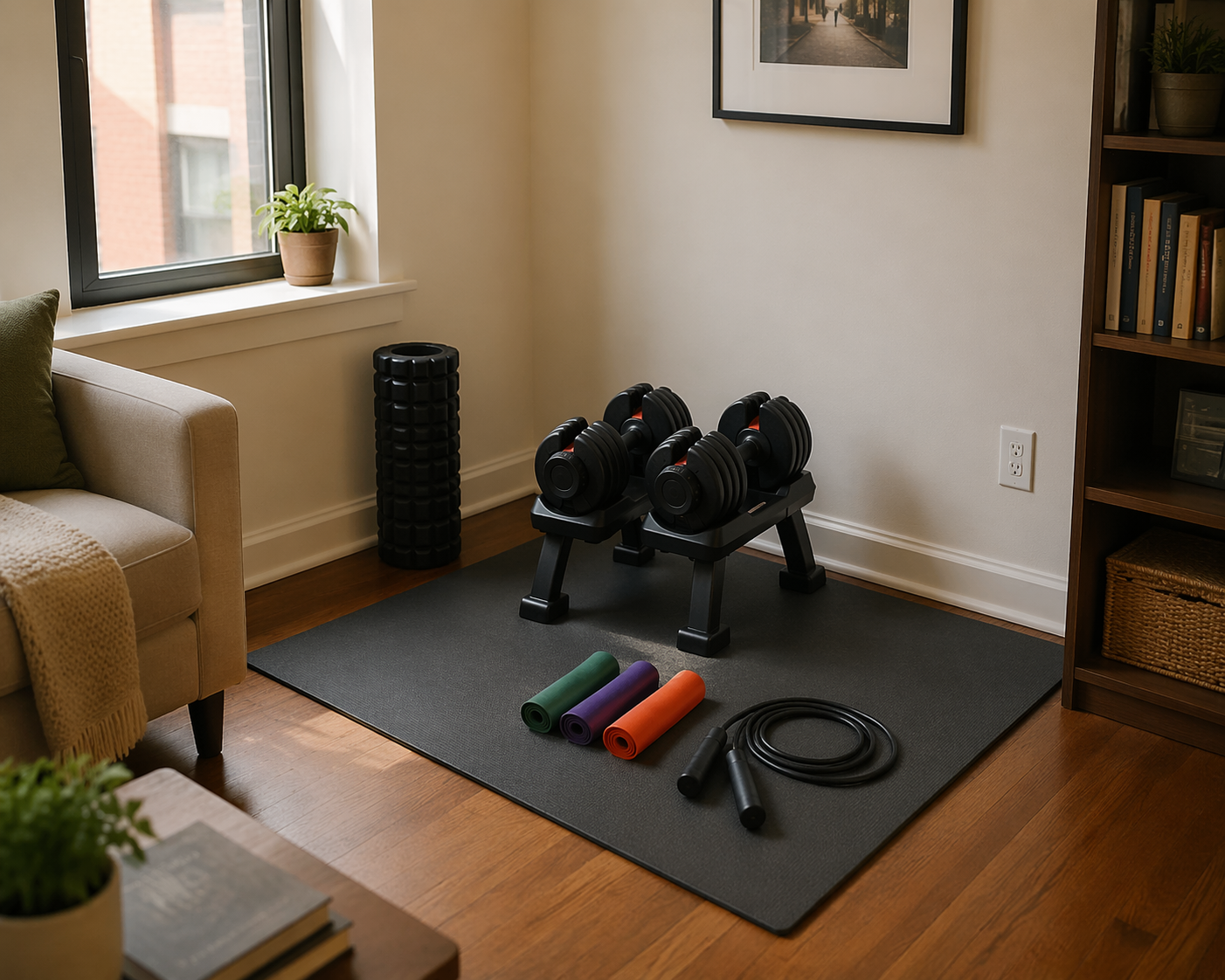
Phase 1 is not a compromise. It is a deliberate start that covers roughly 80% of beginner strength work — squats, presses, rows, curls, lunges — and leaves room to grow. Here is what you buy:
- Adjustable dumbbells: REP Fitness QuickDraw starts at $335.99 for the 5–60 lb pair, backed by a lifetime warranty including drops. It takes up less than a square foot of floor space on its stand.
- Resistance bands: Living.Fit complete set costs $128.94 and provides up to 250 lbs of total resistance with a lifetime warranty. Bands let you add progressive overload without buying heavier dumbbells.
- A workout mat: about $120 for a decent 6'x4' mat. Gives you a defined training zone and protects the floor.
Total: roughly $500. Space: under 10 square feet. What you can do: dumbbell bench press, overhead press, rows, goblet squats, lunges, band pull-aparts, band rows, band good mornings. What you cannot do: heavy leg press, cable rows, heavy deadlifts beyond 60 lbs per hand, lat pulldowns. The gap is real. A beginner can close most of it with bodyweight progressions — push-up variations, split squats, single-leg work — but that requires discipline. I have seen people buy this setup and stall because they could not motivate themselves without a class or a coach. That 80% claim? It assumes you actually do the bodywork. If you need external pressure, Phase 1 might not be enough.
For context: a gym membership ($65/month) includes classes, equipment variety, and social motivation that a Phase 1 setup cannot replicate. Phase 1 costs less than eight months of a typical membership, and you own the gear. But you also own the discipline problem. See our Home Gym vs. Gym Membership cost breakdown for a full comparison. The key point: the financial math favors Phase 1 only if you actually train.
Phase 2: Add a Bench and Compact Cardio ($500–$1,500)
Once you outgrow the dumbbells and bands — or you want a dedicated cardio option — Phase 2 adds two pieces that transform your capacity without wrecking your floor plan. But you need to measure carefully.
- Foldable bench: Ironmaster Super Bench Pro V2 costs $499, supports 1,000 lbs flat and 600 lbs incline, and measures 50.5" L x 21" W. It folds for storage and has optional attachments (dip station, leg hold-down) that expand your exercise library further.
- Compact cardio: Concept2 RowErg at $990 is the gold standard. It weighs 57 lbs, stores upright (95" L x 24" W x 14" H), and gives you full-body rowing cardio. The 95-inch length means your room must be at least that long when the rower is in use — not every apartment can accommodate that. Measure before you buy.
Total additional: about $1,489. Cumulative spend: ~$2,000. Space: approximately 6' x 8' (48 sq ft) per RitFit's guideline for a setup that includes adjustable dumbbells, a bench, and wall storage. That is a clearance guideline, not a hard product spec. The Concept2 alone needs 95 inches of length, which may dictate which wall you put it on and whether you can keep the bench set up at the same time.
What Phase 2 unlocks: incline and decline pressing (the bench adjusts), heavier dumbbell rows, dedicated chest work, and rowing-based cardio. You can now run a full-body strength + cardio routine without leaving your apartment. For more budget-tier options, see our best home exercise equipment by budget tier guide.
Phase 3: The Anchor Piece — Rack, All-in-One, or Smart Gym ($1,500–$4,500)
Phase 3 is the point where you either commit to a permanent anchor piece or decide you are fine with Phase 2. Do not skip to Phase 3 until you have consistently trained through Phase 2 for at least six months. The equipment here is expensive, space-hungry, and often comes with a subscription you will pay for even when you are not using it.
| Option | Price | Folded Depth / Footprint | Recurring Cost | Best For |
|---|---|---|---|---|
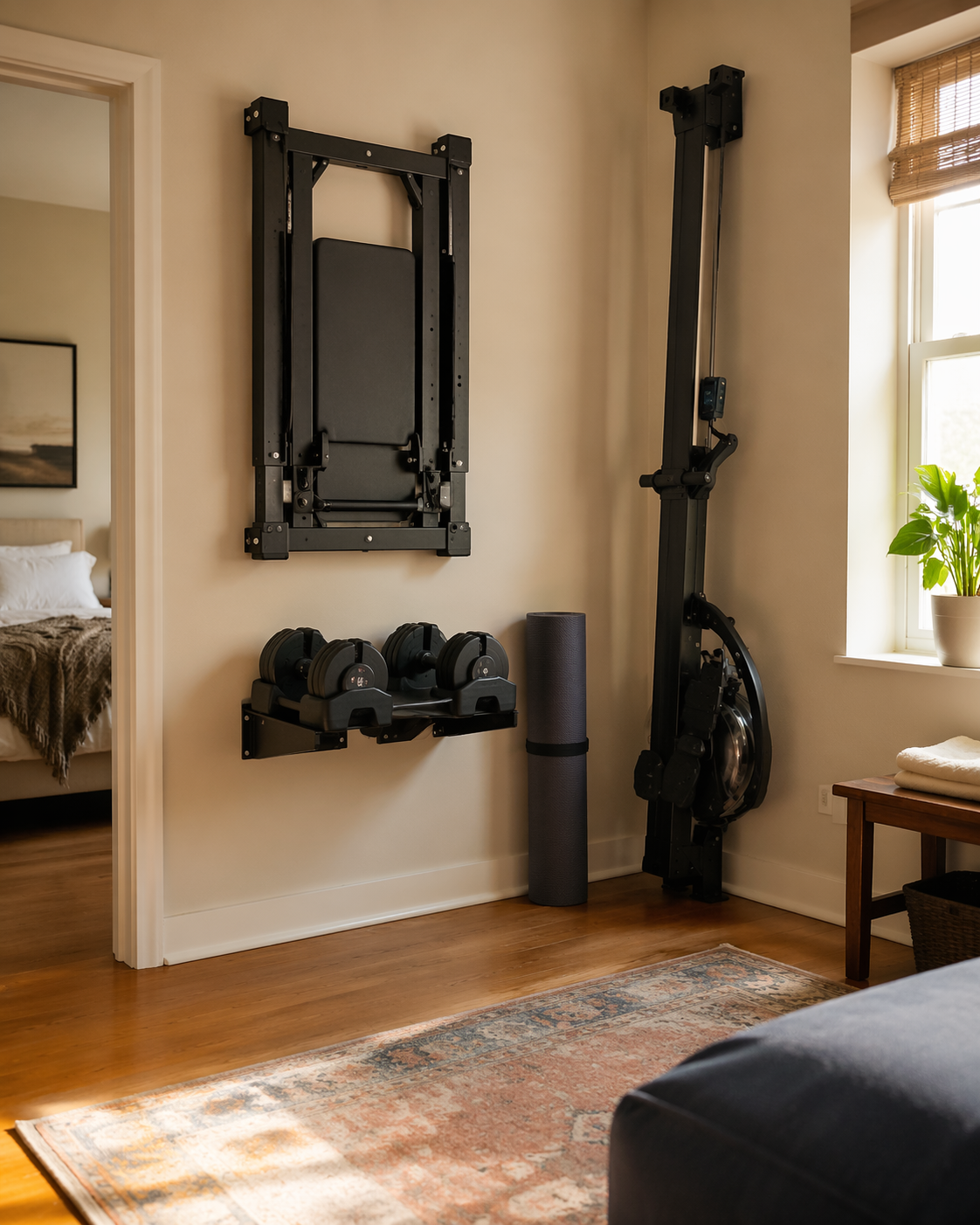
| PRx Profile PRO (wall-mounted rack) | $1,099 | Folds to 12" depth (see note) | None | Apartment corners, minimal footprint |
| Bells of Steel All-in-One | $1,299+ | 54.6" D x 59" W x 81" H | None | Full-body cable work, plate-loaded |
| Speediance Gym Monster | $3,199 | Folds to 14.96" deep | Optional subscription | Digital resistance, space-saving |
| Tonal 2 | $4,295 | 5.25" deep wall-mounted | $60/month | Digital resistance, guided workouts |
A note on the PRx folded depth: one GGR page lists it as 9 inches, another says 12 inches. I am using the more conservative 12-inch figure because actual clearance depends on your wall mounting, door swings, and whether you have baseboards. Measure your wall space carefully.
The subscription costs matter. Tonal charges $60/month — that is $720 per year on top of the $4,295 price tag. Speediance's subscription is optional, but the machine's digital resistance features are gated behind it. If you are budget-conscious, the PRx or Bells of Steel options have no recurring costs and are simpler to maintain. But note: the PRx requires drilling into walls — renters may need landlord approval. The Bells of Steel all-in-one has a 54.6" x 59" footprint — about 22 square feet on its own, but you need clearance around it for cable pulls and bench work.
Space requirement for Phase 3: at least 100 square feet for a rack-based setup, according to PowerliftingTechnique. Wall-mounted options (PRx, Tonal) need less floor space but require a sturdy wall installation. If you are leaning toward an all-in-one, read our All-in-One Home Gym Equipment guide before committing. The price floor for a viable all-in-one that does not feel like a toy is around $1,300.
How Much Room Do You Really Need?
Here is the short version of the space progression:
- Phase 1: under 10 sq ft — a corner of a bedroom or living room.
- Phase 2: about 48 sq ft (6' x 8') — a small spare room or a dedicated zone in a larger living room. Remember the Concept2 needs 95" of length.
- Phase 3: at least 100 sq ft for a rack — a full spare bedroom or a garage space.
These are general planning guidelines, not hard product specs. Actual clearance depends on the specific dimensions of the equipment you buy and your own height (overhead pressing needs ceiling clearance). If you are a renter, see our Compact Home Gym Apartment Renters Guide for specific advice on wall mounting and floor protection.
| Phase | Equipment Added | Cumulative Spend | Square Footage | Workout Types Unlocked | Recurring Costs |
|---|---|---|---|---|---|
| 1 | Dumbbells, bands, mat | ~$500 | <10 sq ft | Dumbbell lifts, band resistance, bodyweight | None |
| 2 | + Bench, rower | ~$2,000 | ~48 sq ft | Incline/decline press, heavier rows, rowing cardio | None |
| 3 (PRx) | + Wall-mounted rack | ~$3,100 | 100+ sq ft (rack zone) | Barbell lifts, pull-ups, plate-loaded exercises | None |
| 3 (Bells of Steel) | + All-in-one | ~$3,300 | 100+ sq ft | Cable exercises, lat pulldown, leg press | None |
| 3 (Speediance) | + Smart gym | ~$5,200 | ~100 sq ft | Digital resistance, guided programs | Optional subscription |
| 3 (Tonal 2) | + Smart gym | ~$6,300 | Wall-mounted, less floor space | Digital resistance, guided programs, 250 lbs max | $60/month |
What NOT to Buy at Each Phase (Common Mistakes)
The phased plan works only if you avoid buying the wrong thing at the wrong time. These are the mistakes I see most often:
- Phase 1: Do not buy a power rack or weight stack. A power rack needs at least 70 square feet and a 4'x4' footprint — it will dominate your apartment and you will not use it until you have enough plates to justify it. Stick to dumbbells and bands.
- Phase 2: Do not buy a treadmill that does not fold or store upright. A non-folding treadmill eats 20–30 square feet of permanent floor space, making it impossible to share the room for other uses. The Concept2 rower stores upright in about 2 square feet. If you must have a treadmill, buy a folding model that rolls against a wall.
- Phase 3: Do not buy a smart gym (Tonal, Speediance) unless you have worked out consistently for at least six months. The subscription cost will haunt you if you stop. Do not buy a wall-mounted rack if you are not comfortable drilling into your walls — renters may need landlord approval. And do not assume the 9-inch folded depth is what you will actually get; the more conservative 12-inch figure from the compact equipment page is safer.
The most expensive mistake is buying Phase 3 gear before you know your training preferences. Phase 2 is a proving ground. If you consistently train through Phase 2 and want to lift heavier or add cables, Phase 3 will make sense. If you stop after a month, Phase 3 will be a very expensive clothes rack. For a full list of beginner mistakes, see our Beginner Home Gym Mistakes guide.
Some links on this page are affiliate links — they may earn us a commission at no extra cost to you. Our tier and tests are decided before we ever check which links pay; see our full affiliate disclosure.
Spot something off?
Noise and floor-damage claims carry real deposit-risk consequences if we get them wrong — tell us if your experience with this build didn't match what's above.