
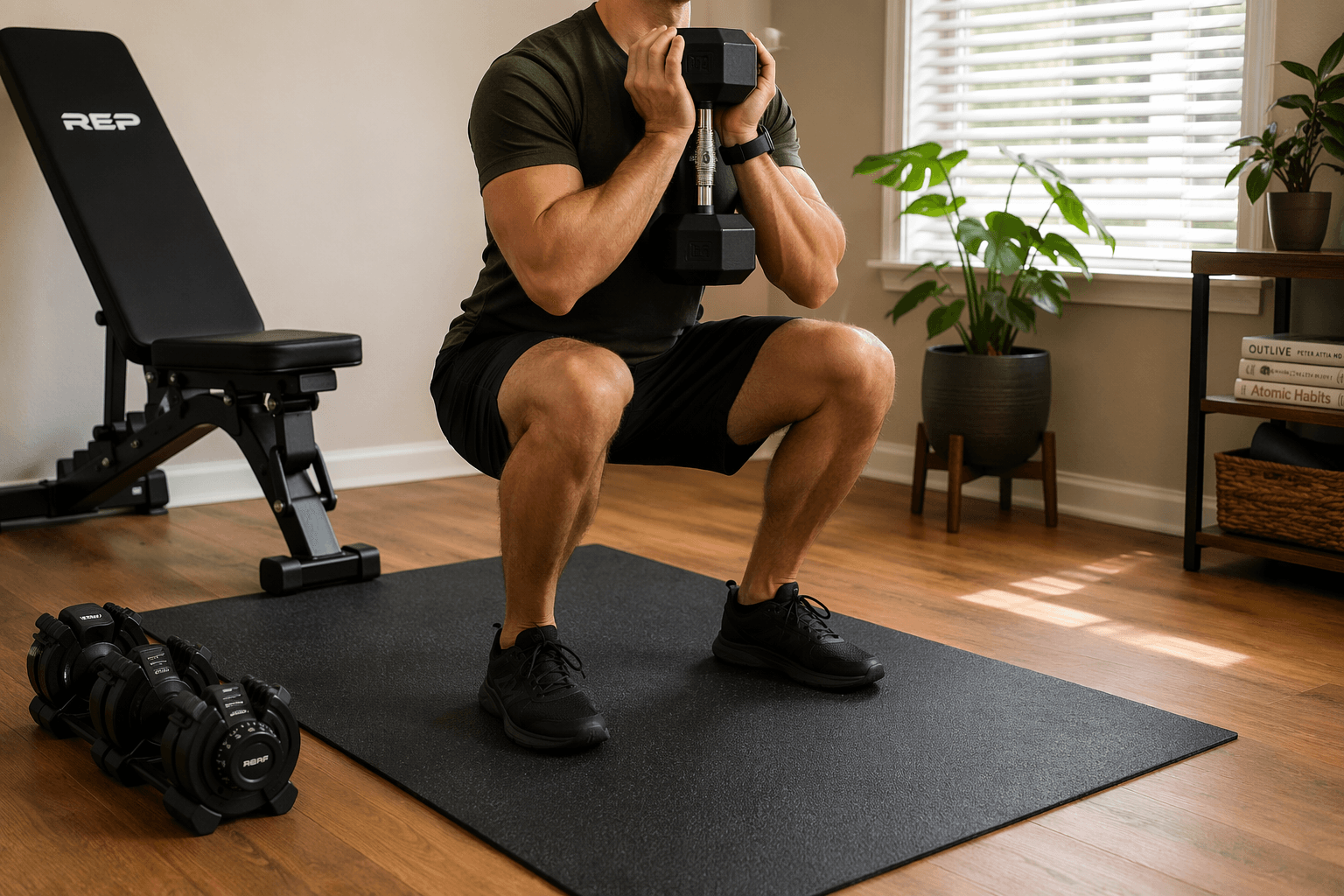
You finish a heavy leg day — Bulgarian split squats, lunges, RDLs — and the next morning your quads feel like concrete. You planned to take the dog for a long walk, maybe do some laundry, maybe stand at your desk instead of sitting. Instead you spend the day shifting from chair to couch because every stair is a reminder. Those calories you could have burned walking, fidgeting, puttering around the house? They never happened. That is the hidden cost of a split routine that leaves you wrecked for two days after each lower-body session.
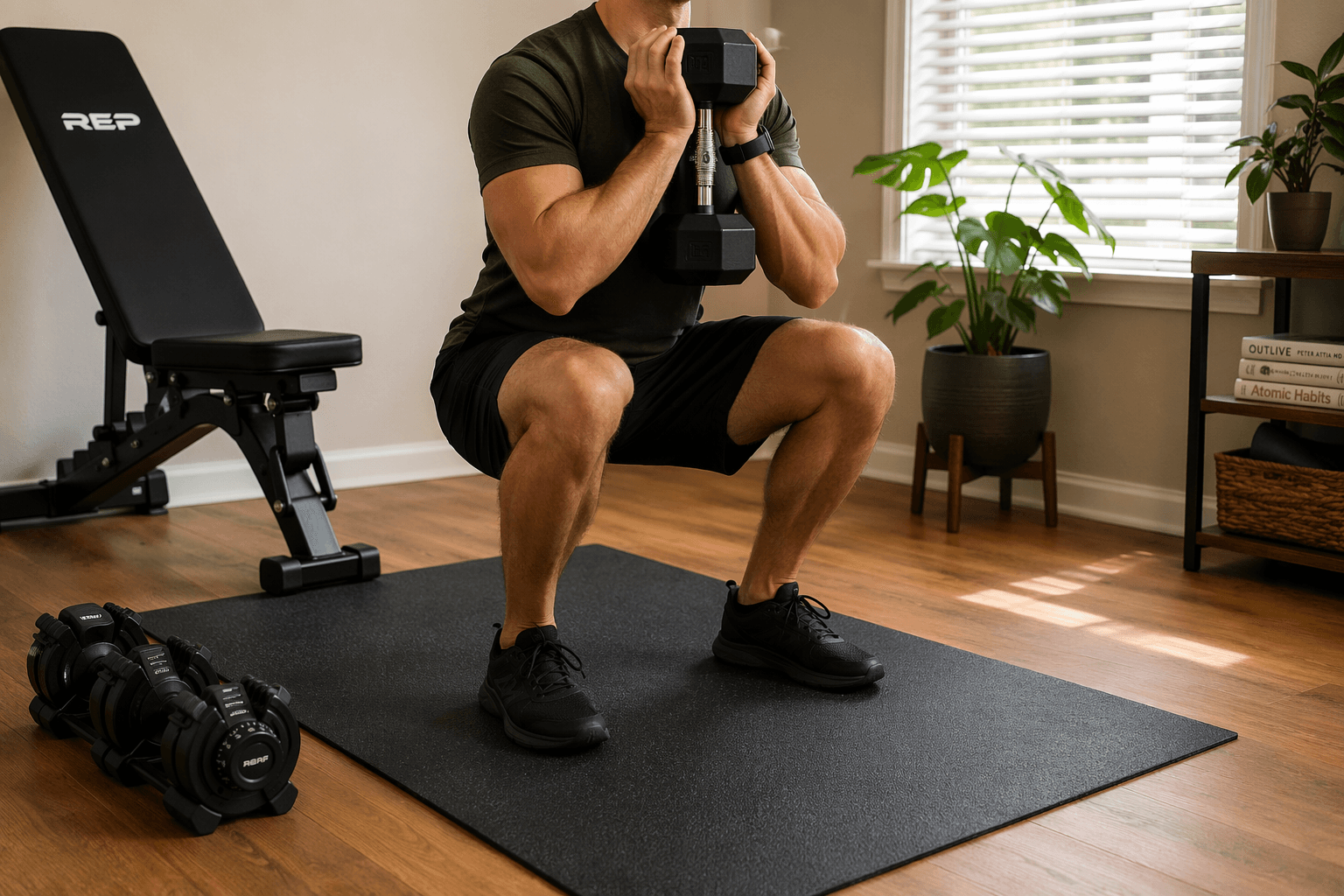
Non-exercise activity thermogenesis — NEAT — accounts for 15–30% of total daily energy expenditure for most people. That is a bigger slice than the workout itself. If your training routine suppresses your spontaneous movement for 48 hours afterward, you are not just sore; you are burning fewer calories than if you had trained in a way that lets you get up and move the next day.
What the studies actually show
A 2024 study put 23 experienced lifters through eight weeks of training. Volume was matched — 75 sets per week at 70–80% of 1RM — the only variable was whether they trained full body or a traditional split. Body composition was measured by DXA scans.
The full-body group lost significantly more whole-body fat and regional fat — arms, legs, hips, thighs. Lower-body DOMS was up to 7.5 times lower in that group. They could walk, squat to pick something up, and walk the dog without wincing. A 2016 study in Biology of Sport found the same pattern: full-body training reduced fat mass by 5.7% over four weeks in male rugby players; the split group dropped only 2.1%. Volume matched again.
Here is where I need to be honest about what the 2024 study actually measured. It measured DOMS, not daily energy expenditure. The NEAT argument is inferred from the recovery data. We know that lower DOMS correlates with higher spontaneous physical activity — that much is established in general physiology. But no one strapped an accelerometer to these lifters and counted their steps. So I am comfortable calling the NEAT link a strong, plausible mechanism, not a proven direct effect. If you are the kind of person who walks more when you are less sore, this mechanism works for you. Most people are.
One more limitation: all participants in both studies were male. Physiological responses may differ for women. The principle of lower DOMS and higher NEAT probably holds, but the evidence is not yet built on a mixed sample. This is a plausible mechanism, not a proven law.
Do dumbbells alone work?
You might be reading this thinking: those studies used barbells and gym equipment. I have a pair of adjustable dumbbells and a yoga mat at home. Fair question.
A 2022 review in Sports Medicine concluded that minimal-dose resistance training — lower loads, higher frequencies, minimal equipment — can improve strength, build muscle, and reduce cardiometabolic risk.
There is also a striking real-world illustration: a 150-day case study (Dayton, from Built With Science) in which a beginner male started at 32.5% body fat and used only dumbbells, a bench, and a pull-up bar. He gained 7 lbs of muscle, lost 26 lbs of fat, and saw a 70% drop in visceral fat. This is a single-subject, uncontrolled demonstration — I am showing it as motivation, not controlled evidence. Diet was also adjusted. But it shows that dumbbells are not a barrier; a mediocre program is.
The 4-day full body dumbbell fat loss program
This is a 4-day fat-loss-specific plan built around the recovery-NEAT advantage. Four sessions a week, full body each time, compound-dominant, rest intervals tuned for fat loss (60–90 seconds). It assumes you have only dumbbells and optionally a bench. If you do not have a bench, this no-bench workout page has alternatives for every movement below.
| Session | Exercises | Sets x Reps | Rest |
|---|---|---|---|
| Day 1 – Push Focus | Goblet Squat, Dumbbell Bench Press, Bent-Over Row, Dumbbell Shoulder Press, Plank | 3 x 8-10, 3 x 8-10, 3 x 10-12, 3 x 8-10, 3 x 30-45s | 60 sec |
| Day 2 – Pull Focus | Dumbbell Deadlift, Pull-Up, Dumbbell Row, Dumbbell Bicep Curl, Farmer's Walk | 3 x 6-8, 3 x 6-8, 3 x 10-12, 3 x 10-12, 3 x 30s | 90 sec |
| Day 3 – Leg Focus | Bulgarian Split Squat, Dumbbell Lunges, Romanian Deadlift, Calf Raise, Hanging Knee Raise | 3 x 8-10 per leg, 3 x 10-12, 3 x 8-10, 3 x 15-20, 3 x 10-15 | 90 sec |
| Day 4 – Metabolic Full Body | Dumbbell Swing, Dumbbell Thrusters, Renegade Row, Dumbbell Burpee, Russian Twist | 3 x 12-15, 3 x 10-12, 3 x 8-10 per side, 3 x 8-10, 3 x 20 total | 60 sec |
Progression: add weight when you can complete all sets and reps with good form. If your dumbbells max out, use tempo (3-second eccentric), unilateral work (single-arm rows, split squats), or pause reps. For leg progression ideas, see this leg workout progression guide.
When dumbbells feel light
At some point, your adjustable dumbbells will feel too light for certain exercises. Do not buy heavier ones yet — you can continue to challenge muscle growth with these strategies:
- Slow the eccentric phase to 3–4 seconds on every rep.
- Switch to unilateral versions (single-leg Romanian deadlift, single-arm overhead press) — the stabilizer demands increase load on the working muscle.
- Add a pause at the bottom of each rep (e.g., 2-second pause at the bottom of a goblet squat).
- Drop the rest interval to 45 seconds to increase metabolic stress.
For a full progression framework from beginner to advanced, this article covers the full spectrum.
Why nutrition still runs the show
No amount of smart programming will outrun a calorie surplus. The NEAT advantage and the afterburn effect help tilt the balance, but fat loss requires a consistent energy deficit. Prioritize protein (1.6–2.2 g per kg of body weight), keep fiber high, and let the program do the work of preserving muscle and boosting daily movement. I am not giving you a meal plan — that would be pretending nutrition is simple. Without the deficit, this program is a muscle-maintenance tool, not a fat-loss one.
The NEAT advantage means you can eat a little more than someone on a split routine and still lose fat — but only a little. The physics of energy balance still applies.
Should you switch?
If you are an intermediate home lifter training four days a week and your primary goal is fat loss, yes — switching to a full-body dumbbell program is likely to give you better results than a split routine. The evidence is consistent across two controlled studies, and the mechanism — lower DOMS, higher NEAT — is physiologically sound even if not directly measured in the latest trial.
But I want to be clear about what I am not claiming:
- The studies were small (23 and 24 participants) and exclusively male. The results are promising, not definitive.
- The NEAT inference is plausible, not proven. We need a study that actually measures daily step counts or accelerometer data alongside DOMS to seal the case.
- Dumbbells alone work, but the quality of your program — frequency, compound movements, progressive overload — matters more than the tool.
Take the program, run it for four weeks, and track how you feel between sessions. If you are walking more, moving more, and seeing the scale move — the full body dumbbell workout approach is working. If not, adjust calories or progression first before blaming the split.
Comments
Join the discussion with an anonymous comment.