
The average cable machine costs $2,265, according to Garage Gym Reviews – but they only tested eight machines. That's a sample, not the whole market, but it's a useful anchor. If you want a weight-stack cable station, you're paying well over two grand. The under‑$1,000 segment is a different world, with different trade‑offs, and most cable machine reviews don't bother to map it. This one does.
The Plate‑Loaded Tower: ~$587 – But You Need Plates
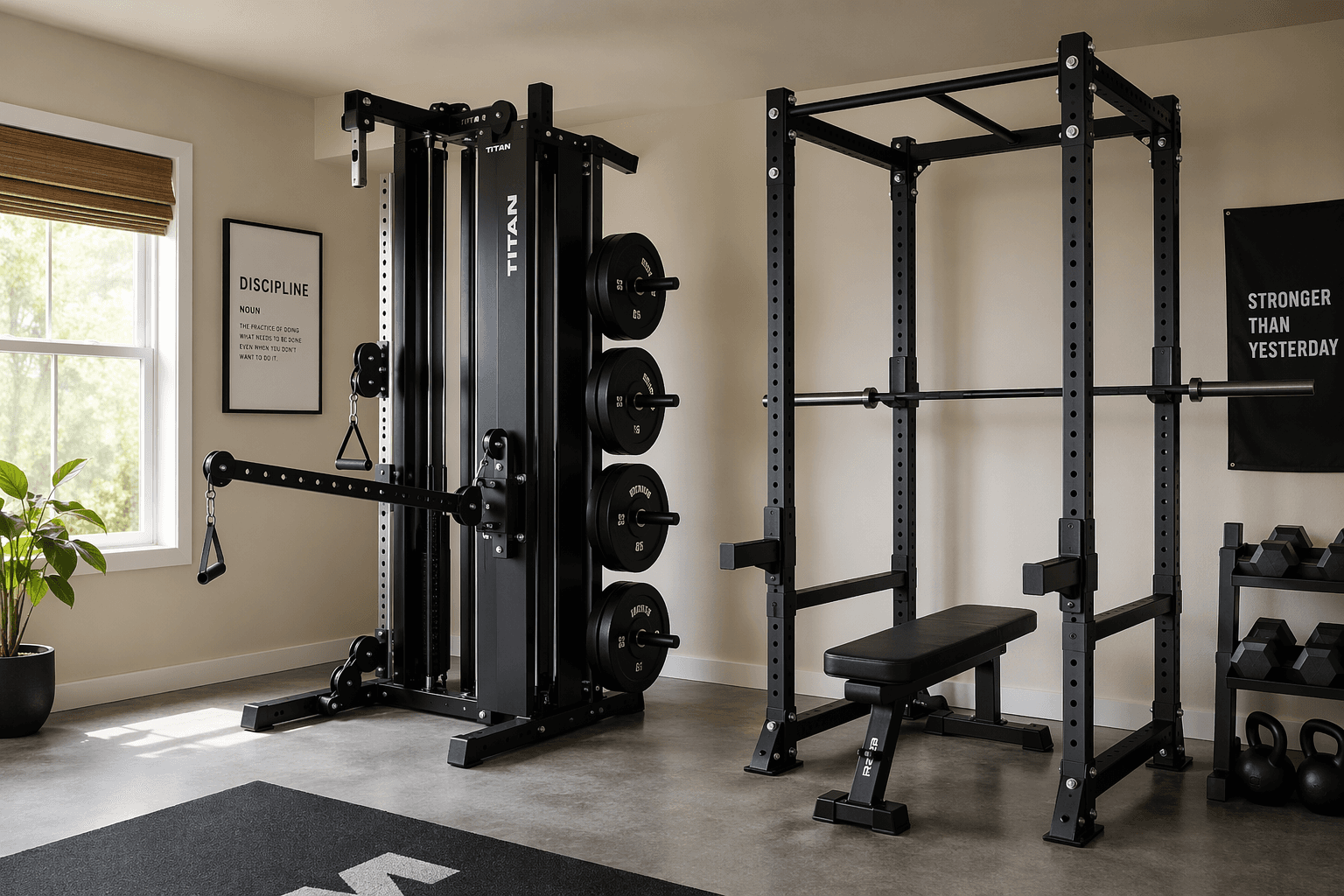
The Bells of Steel Cable Tower 2.0 is the strongest case I've seen that sub‑$1,000 can be taken seriously. According to StrongHomeGym's testing, it has a 6 sq ft footprint, 33 cable positions, and a 250 lb plate capacity. It earned a 96% value‑for‑money score in their weighted rating system — not an industry standard, but it's the best comparative data we have. The tower weighs 85 lbs and can stow in a corner.
Now, the price. The crawled data shows $587.99 for the Bells of Steel Cable Crossover Power Rack Attachment — a different product. The Cable Tower 2.0 is listed only as a '$' tier by StrongHomeGym, meaning affordable, but no exact figure is given. I'm using ~$587 as a reasonable estimate based on that attachment price and market positioning, but treat it as approximate. If you want to confirm, check directly with Bells of Steel. The point is: a plate‑loaded tower with good specs is available for a fraction of the $2,265 average.
But here's the catch: plate‑loaded machines require you to already own weight plates. If you're starting from scratch, add $200–$400 for a set of plates, plus a bar and bench. That pushes the effective cost from ~$587 to ~$800–$1,000. For someone who already has plates — the typical home gym builder upgrading from a rack and barbell — it's a deal. For a beginner, it's not. Manual loading also means no quick dropsets or circuit training. That's a trade‑off you should know before you buy. If you're looking for a broader roadmap for building a home gym on a budget, the phased equipment guide covers the order of purchases.
Rack‑Attached Options: $400–$500 – But You Need a Rack
If the standalone tower is too much or you already have a power rack, the Surplus Strength Universal Pulley System (UPS) is worth a look. It costs around $400–$500 for the base unit, with speed pins and low row attachments adding more. But it attaches to a rack. If you don't have a rack, you can't use it. That's a dealbreaker for many. Other options in this tier include Titan wall‑mount units, which are cheaper but require a wall stud and bolting into concrete.
Also worth noting: warranty data for Surplus Strength UPS is unavailable. That's a trust gap. Bells of Steel offers a limited lifetime warranty on the Cable Tower 2.0, which signals confidence. The middle tier lacks that signal.
DIY Under $100: Good for a Try, Not for Training
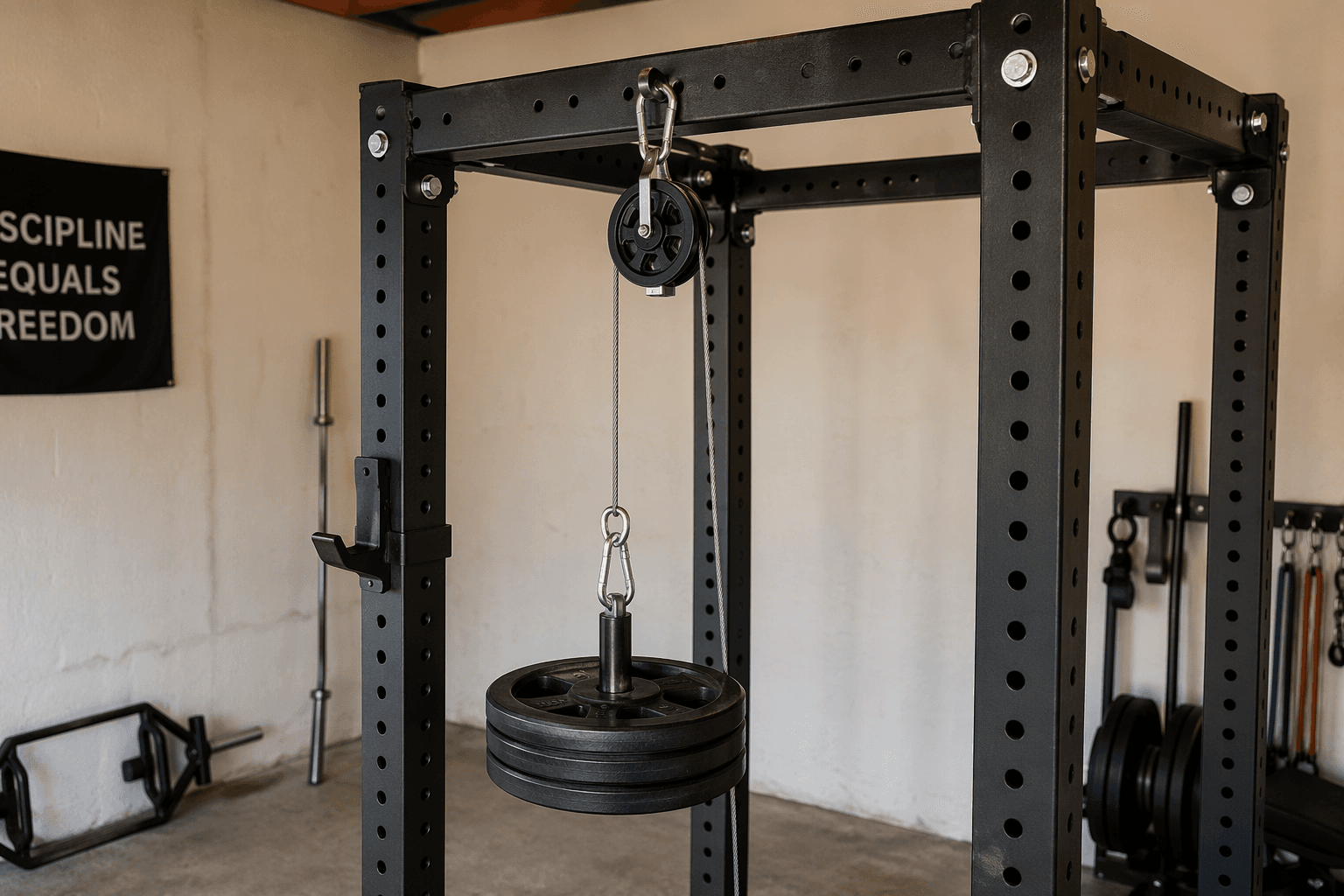
You can build a DIY cable pulley system for under $100. Gray Matter Lifting references a guide that puts it at that price point. The Spud Inc. pulley system, mentioned by Garage Gym Reviews, can handle up to 550 lbs of weight — but that's a simple pulley cable, not a full station. These systems sway, the cables fray, and there are no adjustable columns. The pulleys are usually nylon, which glazes by year 3 according to StrongHomeGym's analysis, while aluminum with brass bushings stays smooth through year 10.
I would not recommend a DIY system for anything beyond light, low‑volume training — maybe one movement per session, not a full cable routine. It's a way to try cables for almost nothing, but don't expect it to hold up for regular use.
What Really Wears Out: Pulley Material and Warranty
If you're comparing budget cable machines, pulley material is the single most important durability differentiator. Nylon pulleys glaze and lose smoothness by year three. Aluminum pulleys with brass bushings stay smooth through year ten. That's from StrongHomeGym's tear‑down observations — not a controlled study, but consistent with my experience. Budget machines almost always use nylon; premium weight‑stack machines use aluminum.
| Option | Pulley Material | Estimated Lifespan | Warranty |
|---|---|---|---|
| BoS Cable Tower 2.0 (Tier 1) | Aluminum (likely) | 8–10 years | Limited lifetime |
| Surplus Strength UPS (Tier 2) | Unknown (likely nylon) | 2–4 years if nylon | Not available |
| DIY pulley (Tier 3) | Nylon | 1–3 years | None |
Warranty length is another signal. Bells of Steel backs the Cable Tower with a limited lifetime warranty. Surplus Strength UPS and DIY systems offer no warranty data I could find. That's a risk you need to price in: if the pulley fails at year three on a $400 wall‑mounted unit, you're buying a new machine or replacing parts yourself.
For more on the long‑term cost of different home gym configurations, see the all‑in‑one vs modular comparison, which covers plate‑loaded vs selectorized cost over five years.
Who This Makes Sense For
- If you already own plates and train moderate volume, the BoS Cable Tower 2.0 is the clear recommendation. It's the most complete standalone option under $1,000, with a limited lifetime warranty and aluminum pulleys.
- If you have a power rack and need a cable system, the Surplus Strength UPS at $400–$500 makes sense — but only if you're comfortable with the warranty gap and likely nylon pulleys.
- If you want to try cables for the first time, a DIY system under $100 is fine for light work. Don't count on it for regular strength training.
- If you're a beginner with no plates, no rack, and no bench, the effective cost of a plate‑loaded tower plus plates pushes you past $1,000. You're better off looking at broader budget home gym setups — this guide covers the full picture.
The bottom line: budget cable machines deliver functional training at a fraction of the price, but you have to be willing to trade convenience and longevity for that savings. The $2,265 average isn't arbitrary — you get smooth pulleys, quick‑change weights, and a warranty that lasts. Under $1,000, you get the movement patterns, but you load the plates yourself, and you may be replacing pulleys before year five. For enough home gym builders, that trade is worth it. For others, it's not. Know which one you are.
If you're still deciding what equipment fits your space and goals, the home gym equipment decision framework can help you map out a plan that includes cables or skips them entirely.

Comments
Join the discussion with an anonymous comment.