
The easiest way to waste money at the beginning is to treat home fitness and a gym membership like a personality test. They are not. A mat in the living room can work. A commercial gym can work. The deciding factor is whether the setup removes enough friction for you to train repeatedly after the first week of enthusiasm is gone.
That is why the current fitness market is less contradictory than it looks. One industry summary reports that 54% of regular exercisers prefer working out at home, while commercial gym memberships reached an all-time high of 77 million Americans in 2024.[1] The home-preference number is self-reported and comes through an aggregator, so it should not be treated as a medical conclusion. Still, paired with record gym membership, it points to something useful: people are not simply abandoning gyms for living rooms. They are spreading exercise across more settings.
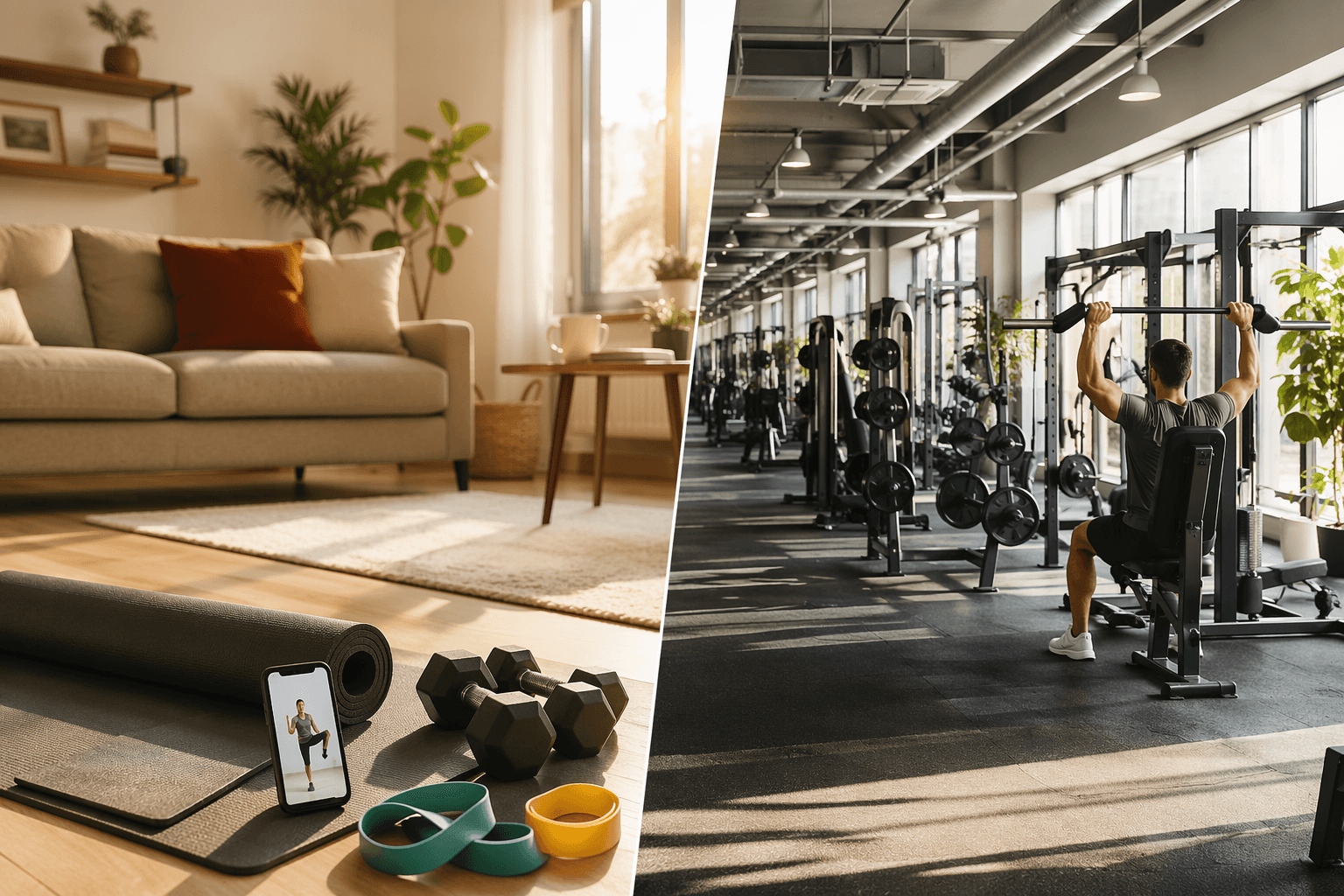
For a beginner, that is good news. You do not have to choose the “serious” option before you know your schedule, your budget, your tolerance for exercising around other people, or how much space you can realistically give up at home.
Start with the constraint, not the setting
Health outcomes do not come from the address where a workout happens. They come from repeated training. Health.com’s comparison of home and gym workouts makes the same practical point: both can be effective, and consistency matters more than location.[2]
So the first question is not “Which is better?” It is “Which one will still be available to me on an ordinary Tuesday?” For one person, that means a gym on the commute home, because going inside the house first ends the day. For another, it means dumbbells near the desk, because a 25-minute session is possible only if there is no drive, no locker room, and no waiting for equipment.
A beginner’s decision usually turns on four pressures:
- Training goal: general fitness, weight management, mobility, and functional strength have different equipment needs than heavy barbell strength progression.
- Schedule friction: the gym adds travel and transition time; home adds household distractions and the temptation to postpone.
- Space and storage: a home setup needs a real place to live, not just a fantasy version of a spare room.
- Motivation and accountability: some people need privacy to begin; others need a class time, a trainer, or the social pressure of being somewhere on purpose.
Strength goals change the answer faster than almost anything else
If your goal is to become generally stronger, move better, build a base of fitness, and feel less winded during daily life, home training can be enough for a long time. Bodyweight movements, resistance bands, adjustable or moderate dumbbells, a bench, and guided programming can support meaningful progress, especially when you are new and the main task is learning movement patterns and showing up consistently.
If your goal is heavy strength training—progressively loading squats, deadlifts, presses, rows, and machine-based accessory work—the gym has a clearer advantage. Health.com’s comparison notes that gyms offer more strength-building potential because they provide heavier weights and more equipment variety, while home training can still build functional, meaningful strength with bodyweight, bands, and moderate dumbbells.[2]
That distinction matters because many beginners blur “getting stronger” into one vague category. Someone who wants to do push-ups, carry groceries more easily, improve posture, and build a sustainable routine does not need the same setup as someone who wants to train barbell lifts seriously. Both goals are legitimate. They just point to different tools.
| If your near-term goal is… | Home may be enough when… | A gym is more useful when… |
|---|---|---|
| General fitness | You can follow a simple routine with bodyweight, bands, dumbbells, or cardio equipment. | You need classes, coaching, or a dedicated place to separate exercise from home life. |
| Functional strength | You can progress movements with bands, dumbbells, tempo, range of motion, and consistency. | You quickly outgrow your available weights or need machines to train around limitations. |
| Heavy strength progression | You have enough space, budget, and safety equipment for heavier loading. | You need barbells, racks, plates, cable stations, leg machines, or spotter support. |
| Mobility and low-impact conditioning | You have room for a mat and can follow sessions without interruption. | You prefer supervised classes, pools, specialized machines, or a scheduled group format. |
This is also where trends can be reassuring without deciding for you. ACSM’s 2026 fitness trends rank Traditional Strength Training at #7 and Exercise for Mental Health at #6.[3] Neither trend belongs exclusively to a gym or a home setup. A barbell room can support both. So can a quiet, repeatable home routine. The question is which environment makes the behavior easier to repeat.
Convenience is not just the missing commute
Home workouts win one obvious convenience point: there is no commute. That can turn a workout from a two-hour production into a short block between work and dinner. For a beginner with an irregular schedule, that difference can be the reason a plan survives.
But home convenience is often oversold. A living room is also where pets wander through, laundry waits, children need something, roommates pass by, and the couch is close enough to negotiate with you. If your home is full of interruptions, the gym may be more convenient in the only way that matters: once you arrive, the room tells you what you came to do.
A useful test is to map the actual workout, not the ideal one. Include changing clothes, setting up equipment, clearing space, warming up, doing the session, cleaning up, showering, and getting back to the next part of your day. A gym with a 10-minute drive may beat a home setup if the home session requires moving furniture, hunting for bands, and stopping three times. A home setup may beat a beautiful gym if the round trip quietly eats the evening.
Space decides more home fitness plans than motivation does
Before buying anything for home fitness, identify the footprint you can keep available. Not the space you can clear once. The space you can use repeatedly without turning every workout into a furniture-moving task.
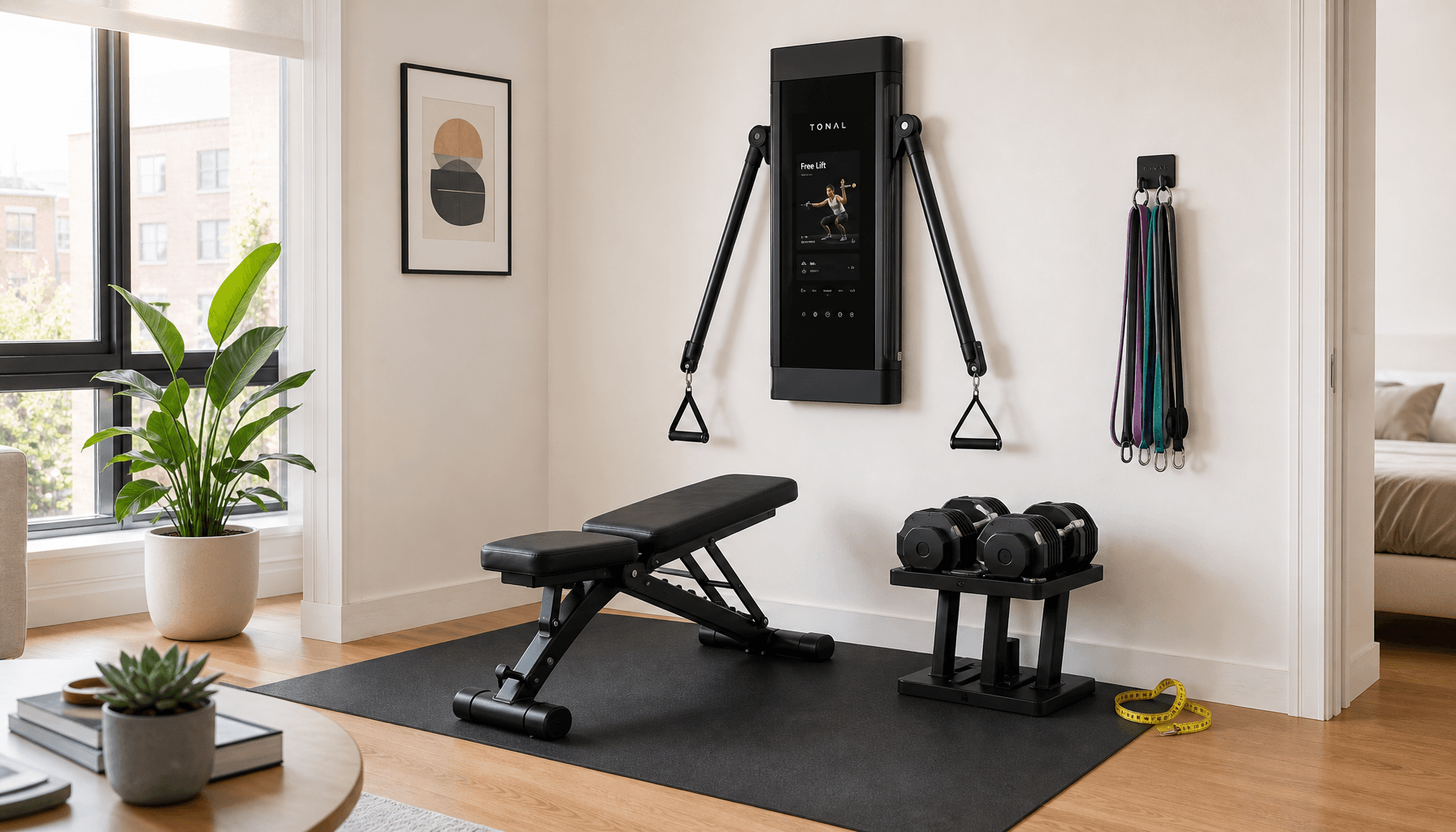
For many beginners, the first workable home setup is modest: a mat, a few bands, one or two pairs of dumbbells, and a place to do floor work without hitting a table. That can support mobility, bodyweight strength, beginner resistance training, and short conditioning sessions. If your space is tight, a small-footprint guide such as Best Home Gym for Small Spaces is a better next read than browsing large machines first.
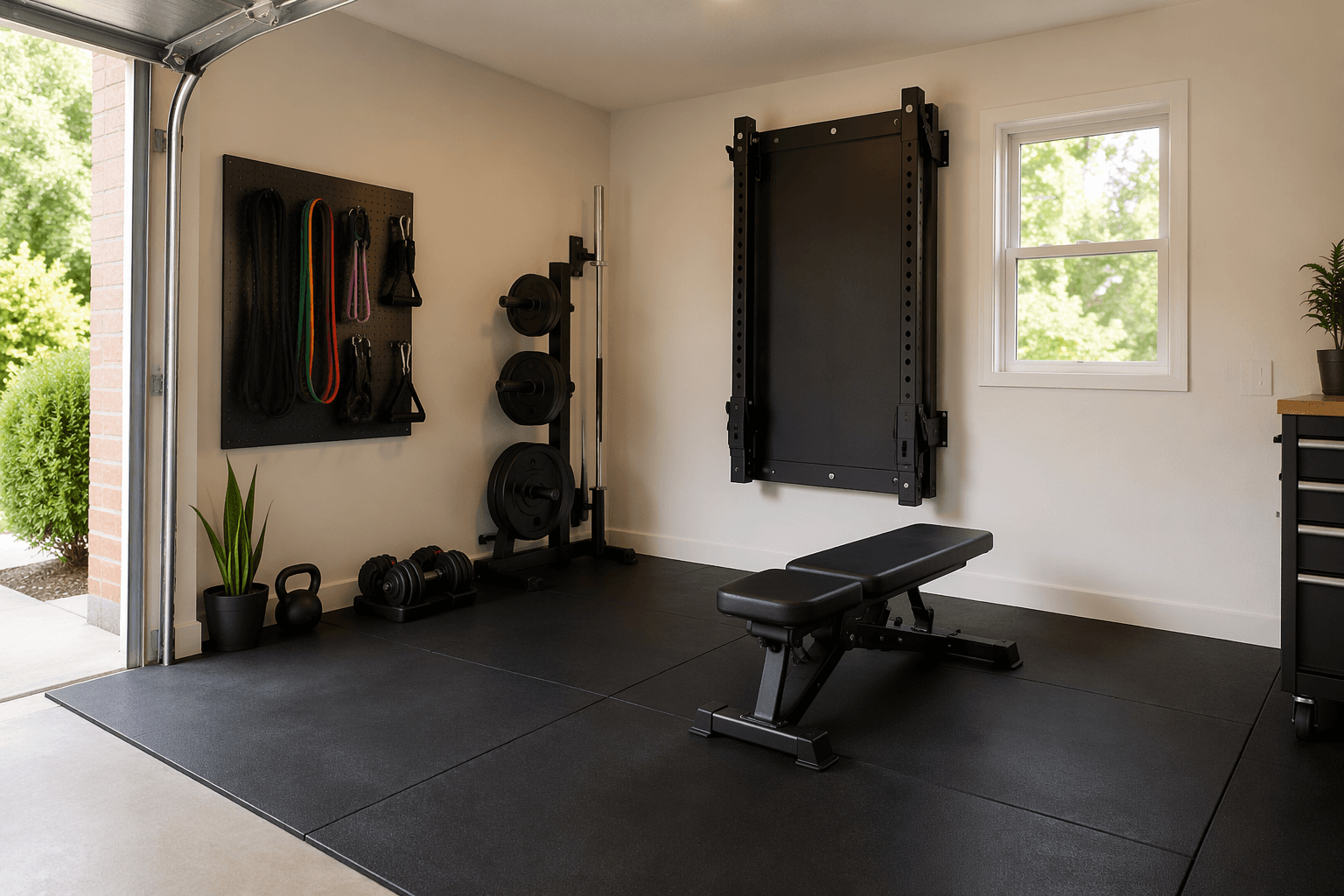
If you have a garage, basement corner, or spare room, the decision opens up. You can consider heavier dumbbells, a rack, a bench, storage, flooring, or compact cable options. That is still not permission to buy everything at once. It means the home path can support more progression if the space is stable. Readers with that middle-ground footprint may want to look at garage gym equipment for small spaces before committing to a layout.
Cost: recurring fees versus equipment you have to live with
Gym memberships feel smaller because they are paid monthly. Home gyms feel larger because the cost arrives upfront. That difference affects how beginners judge the decision, even when the long-term numbers are closer than they first appear.
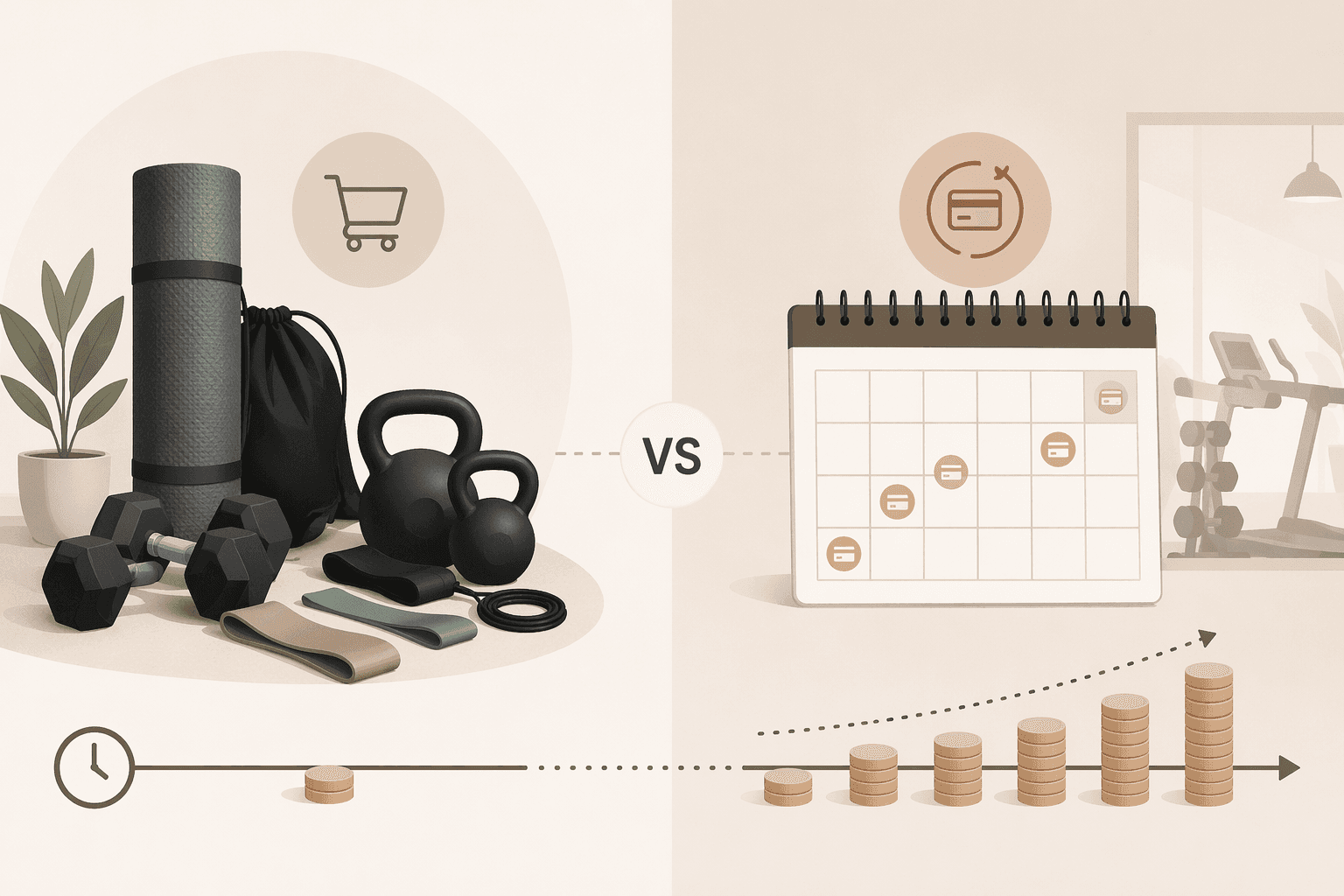
One industry cost comparison puts the average gym membership at $69 per month, or $828 per year, and estimates a $2,530 home setup breaking even in roughly 3.5 years for one user.[1] That kind of math is useful, especially if you are comparing a serious home setup with a full-service gym. It is not the whole decision.
A home setup only “saves money” if it gets used. A gym membership only “wastes money” if it becomes a monthly donation. The cheaper path on paper can be the expensive path in practice if it does not fit your behavior.
The cost comparison also changes by household. A home setup used by two adults reaches its practical break-even sooner than one used by one person. A gym membership may still make sense if it includes childcare, classes, showers, coaching, a pool, or equipment you could not afford or store at home. Those features are not extras if they are the reason you actually attend.
If budget is your main constraint, do not try to solve the full equation inside this decision guide. Start with the broader fit question here, then use Is a Home Gym Cheaper Than a Gym Membership? A Realistic Cost Comparison for the deeper break-even math.
Smart equipment deserves its own caution. Guided screens, digital resistance, and connected strength systems can make home training feel less lonely and less improvised, but they also shift the decision from “buy equipment once” to “own hardware, software, subscriptions, and possible accessories.” The category is no longer fringe: 22% of U.S. households already own at least one piece of smart home gym equipment, and the workout app and virtual fitness market is growing at a reported 26.72% CAGR.[4][5] If you are leaning that way, compare total ownership rather than the sticker price; What Smart Home Gym Systems Actually Cost Over 5 Years is the better next stop.
Motivation is a design problem, not a character flaw
Beginners often describe themselves as “not motivated enough,” but the more useful question is what kind of accountability they respond to. Some people need other people around. Some need privacy. Some need a paid class on the calendar. Some need the workout to be so easy to start that motivation barely enters the room.
Gyms can help because they create a boundary. You leave home, enter a training space, and have fewer competing cues. Classes, trainers, front-desk check-ins, familiar faces, and even the mild pressure of being seen can make exercise feel more official. For some beginners, that is not superficial. It is the structure that keeps the habit alive.
Home workouts help for almost the opposite reason. They reduce exposure. If you feel embarrassed learning basic movements, dislike crowded weight rooms, or are trying to restart after a long break, privacy can lower the emotional cost of beginning. A quiet home session may be the bridge that gets you strong and confident enough to later use a gym if you want one.
Guided home programming can also close part of the accountability gap. Apps, videos, virtual classes, and connected equipment can tell you what to do next instead of leaving you to assemble random exercises. If you choose home, tracking matters because progress is easier to abandon when no one else sees it. A compatible watch or tracker is not mandatory, but fitness tracker guidance for home gym workouts can help if you know you need visible feedback.
Who should start at home?
Home is the better starting point when the biggest threat to consistency is time, privacy, or decision fatigue. It works especially well if you can train with simple equipment, follow a clear beginner plan, and keep the setup visible enough that starting does not require a project.
- You have short workout windows and would lose too much time traveling to a gym.
- You feel more comfortable learning basic movements privately.
- Your first goals are mobility, general conditioning, bodyweight strength, or moderate resistance training.
- You have a stable space for at least a mat and a small amount of equipment.
- You are willing to follow a program rather than just collect exercises.
The last point matters. “Home fitness” is not the same as doing whatever exercise you remember when you happen to feel guilty. A routine is a repeated session structure. A program is a plan that progresses over time. Beginners do not need a complicated program, but they do need some way to know what comes next.
Who should join a gym?
A gym is the better starting point when the biggest threat to consistency is lack of structure, lack of equipment, or lack of external accountability. It also makes sense when your goals require load, variety, or coaching that would be expensive or impractical to recreate at home.
- You want to build heavier strength and need barbells, machines, racks, cables, or heavier dumbbells.
- You work better when exercise happens outside the house.
- Classes, trainers, or scheduled sessions make you more likely to show up.
- Your home is too crowded, distracting, or physically unsuitable for repeated workouts.
- You value amenities such as showers, childcare, pools, or specialized equipment enough to use them.
The common beginner mistake is joining the most impressive gym instead of the most usable one. A slightly less glamorous gym that sits on your normal route may beat a better-equipped facility across town. The equipment only helps after you arrive.
The hybrid path is often the most realistic answer
Hybrid training is not a failure to choose. For many beginners, it is the cleanest match between goals and real life: home for the workouts that benefit from convenience, the gym for the workouts that benefit from equipment and accountability.
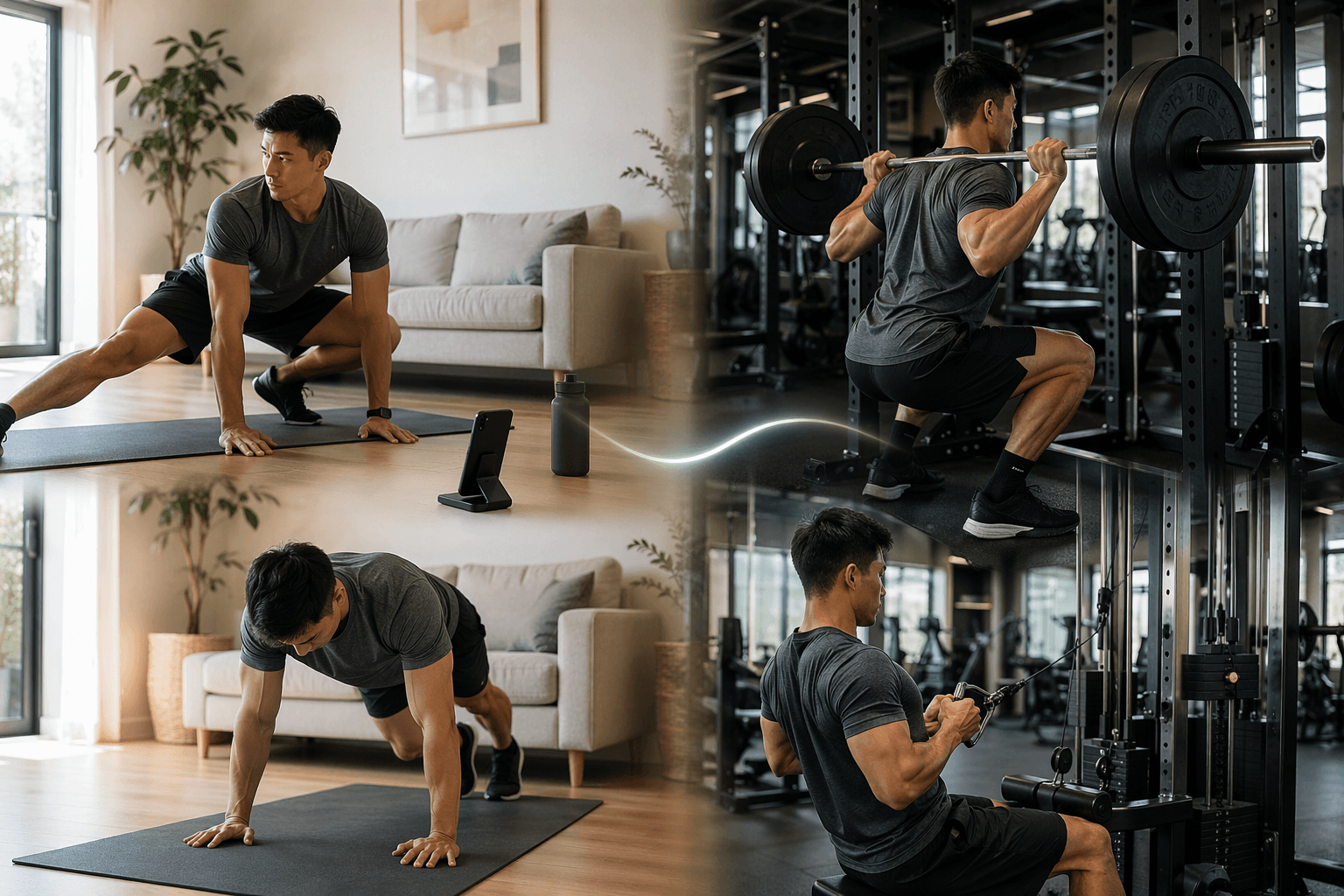
A practical hybrid week might use home for mobility, short cardio, core work, or guided app sessions, then use the gym for heavier lower-body training, machines, cable work, or a class. The split does not need to be even. It only needs to assign each setting the job it is best suited to do in your life.
Hybrid also lowers the pressure of the first purchase. You might begin with a mat and bands at home while using a basic gym membership for heavier work. Or you might keep a gym membership for classes and gradually build a home setup for the days when travel is not happening. This approach is especially helpful if you are still learning what kind of training you enjoy enough to repeat.
A simple way to choose your first three months
Do not decide for your ideal future self. Decide for the next three months. That time frame is long enough to expose friction and short enough to avoid turning the choice into a permanent identity.
| Your main constraint | Best starting path | What to check before spending more |
|---|---|---|
| Very limited time | Home or hybrid | Can you start within five minutes without rearranging your space? |
| Heavy strength goals | Gym or hybrid | Does the gym have the racks, weights, and machines you will actually use? |
| Tight space | Gym, or minimal home setup | Can your home equipment stay accessible without becoming clutter? |
| Low confidence in public | Home first, possibly hybrid later | Do you have a clear program so privacy does not turn into guesswork? |
| Poor self-direction | Gym or guided home system | Will classes, coaching, apps, or tracking tell you what to do next? |
| Budget uncertainty | Minimal home setup, trial gym, or short-term hybrid | Are you comparing actual use, not just monthly price or equipment dreams? |
If you are still split, choose the option with the lowest reversible cost. That might be a month-to-month gym membership instead of an annual contract. It might be a basic home kit instead of a full rack. It might be two home days and one gym day until your behavior gives you better evidence than your expectations can.
The right choice is the one your ordinary life can carry. If home lets you start quietly and repeat the work, start there. If the gym gives you structure, equipment, and a reason to show up, join one you can reach easily. If both solve different problems, use both.
References
- How Many People Have a Home Gym? 2026 Statistics, Fitness Avenue.
- Home Workouts vs. Gym Workouts: Which Is Better?, Health.com.
- ACSM Fitness Trends, ACSM.
- Smart home gym equipment ownership data, CivicScience.
- Workout app and virtual fitness market growth estimate, Fab Glass and Mirror.
Comments
Join the discussion with an anonymous comment.