
What the 7-Minute Workout Actually Is (The Original 2013 Protocol)
The 7-minute workout is not a generic marketing concept — it is a specific, science-backed protocol called High-Intensity Circuit Training (HICT), published in the May/June 2013 issue of ACSM's Health & Fitness Journal by exercise physiologists Brett Klika and Chris Jordan. It was designed to deliver the benefits of prolonged endurance training in a fraction of the time by combining resistance and aerobic stimuli into a single, tightly structured circuit.
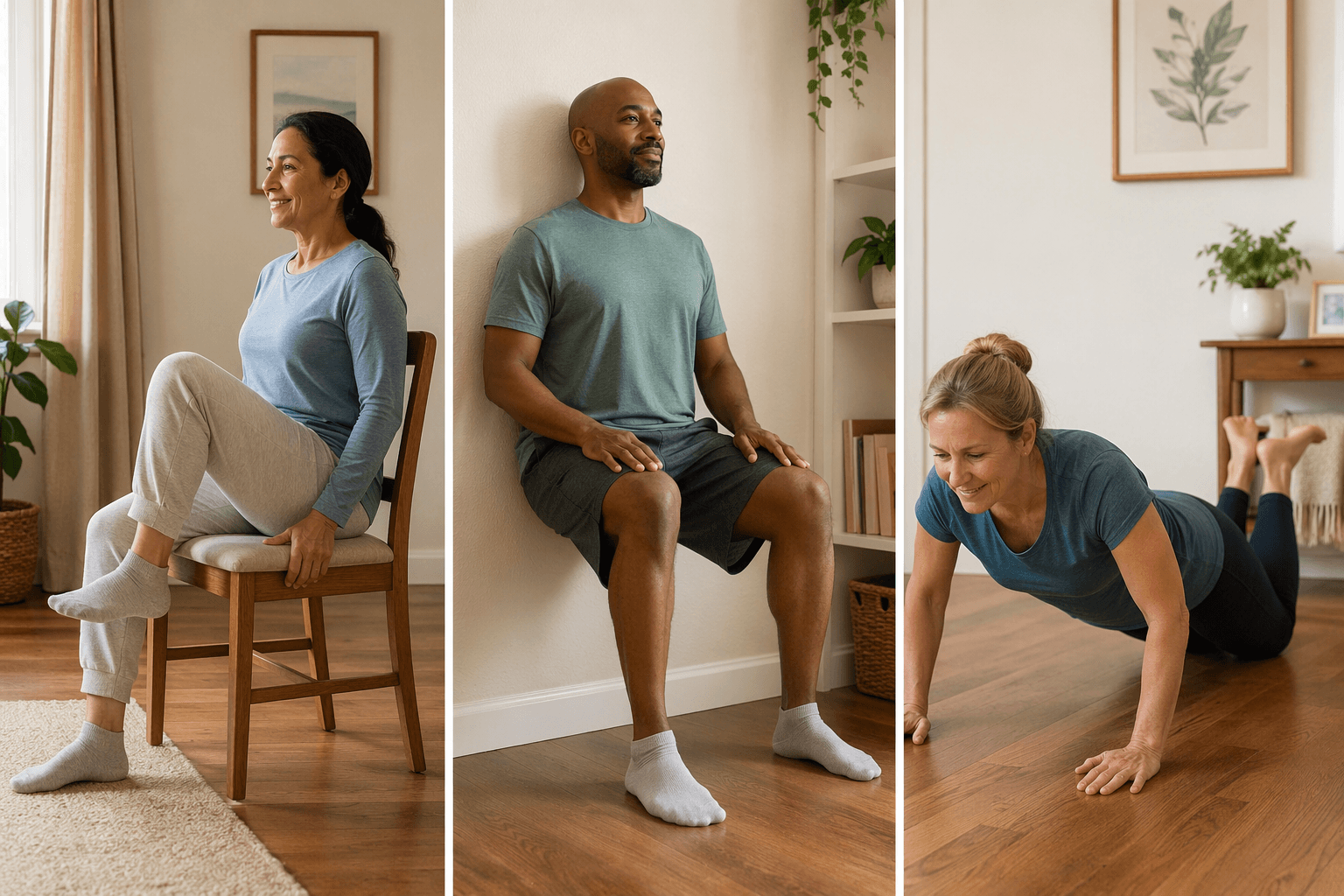
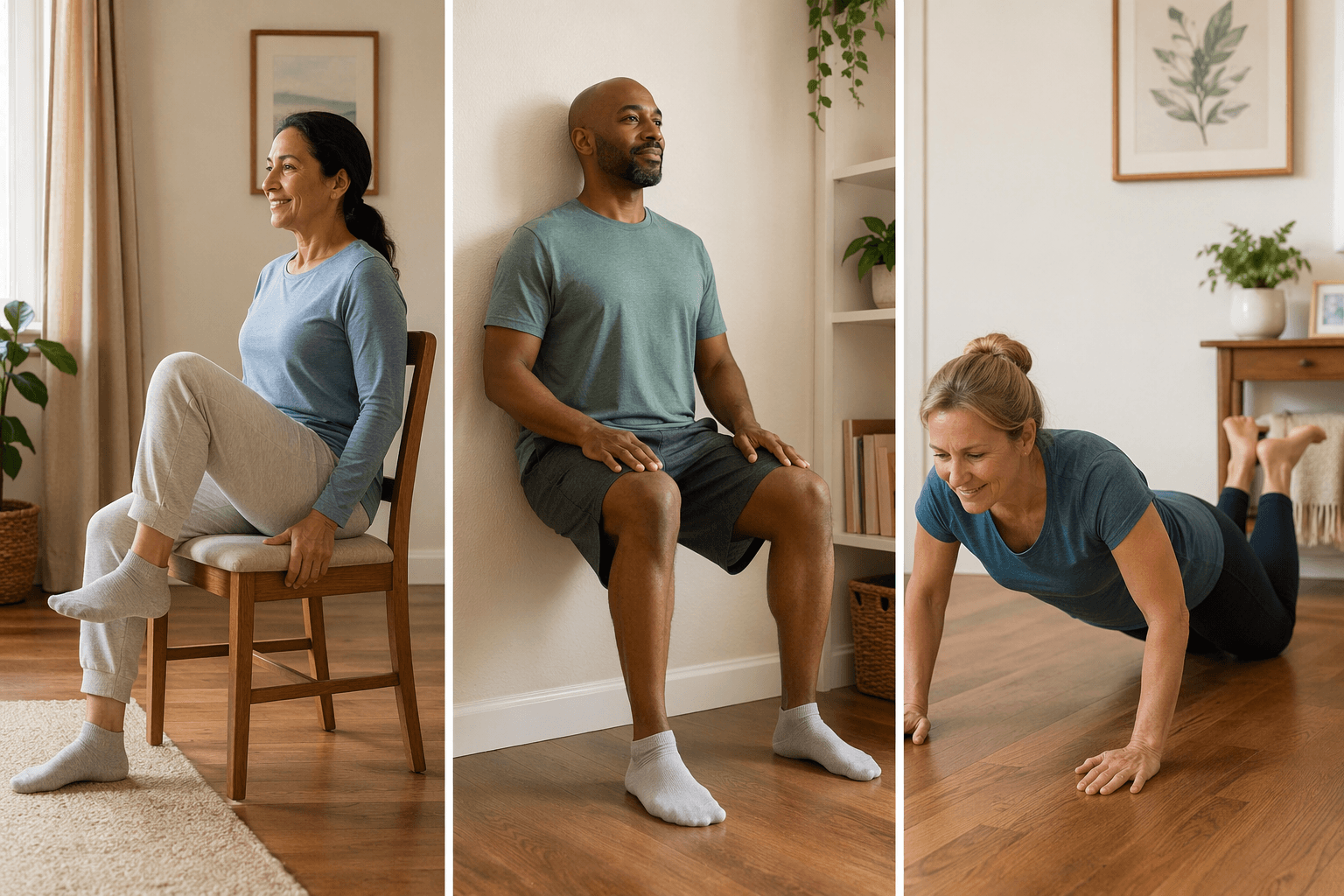
The protocol consists of exactly 12 bodyweight exercises performed in a fixed sequence:
- Jumping jacks
- Wall sit
- Push-up
- Abdominal crunch
- Step-up onto a chair
- Squat
- Triceps dip on a chair
- Plank
- High knees / running in place
- Lunge
- Push-up with rotation
- Side plank
Each exercise is performed for 30 seconds, followed by 10 seconds of rest to transition to the next station. The sequence alternates between upper-body and lower-body movements to allow one muscle group to recover while the other works — a design principle the authors called "active recovery." The only equipment required is a wall and a sturdy chair.
The Science Behind It: What Studies Actually Show
The 7-minute workout rests on a foundation of HIIT research, but not all claims about it are equally supported. Here is what the peer-reviewed evidence actually says — including the limitations that often get left out of promotional coverage.
The McMaster HIIT Foundation
The protocol draws on research from McMaster University showing that a few minutes of near-maximal intensity exercise produces molecular changes in muscle comparable to several hours of endurance training. This line of research established the principle that intensity, not duration, is the primary driver of certain aerobic adaptations. Chris Jordan, director of exercise physiology at the Human Performance Institute, told the New York Times that "there's very good evidence" that HIIT provides "many of the fitness benefits of prolonged endurance training but in much less time."
Key Clinical Studies on the 7-Minute Protocol
Several studies have tested the specific 12-exercise circuit or close variants. The table below summarizes the most relevant findings.
| Study | Year | Participants | Key Finding |
|---|---|---|---|
| Mattar et al. (PMID 28085122) | 2017 | Normal-weight adults, 6-week intervention | Decreased waist circumference after 6 weeks of the 7-minute workout protocol. |
| Armas et al. (PMC7039495) | 2020 | 12 healthy young adults (6M/6F), randomized crossover | Bodyweight circuit reduced post-exercise diastolic BP similarly to HIIT cycling; average HR during circuit was 145.2 bpm vs. 126.3 bpm for cycling. |
| Riegler et al. (PMID 28658082) | 2017 | Adults comparing 7-minute circuit to traditional HIIT cycling | The 7-minute workout did not increase heart rate, VO₂ max, RPE, or calorie expenditure as much as traditional HIIT cycling, but authors still recommended it as a suitable option. |
The Armas et al. study is particularly instructive. In a randomized crossover design, 12 participants completed both the 7-minute bodyweight circuit (using a 30:5 second work-to-rest ratio) and a 7-minute HIIT cycling protocol. The bodyweight circuit produced a significantly higher average heart rate (145.2 ± 16.9 bpm vs. 126.3 ± 12.1 bpm, p=0.005) and a significant reduction in diastolic blood pressure immediately after exercise (p=0.001, d=0.962). However, overall post-exercise heart rate was higher for the circuit, suggesting it may be more metabolically demanding in some respects.
What It Can Do: Measurable Benefits You Can Expect
When performed at the required intensity and with consistent frequency, the 7-minute workout can deliver several measurable outcomes. These are not theoretical — they are supported by the studies above and by the broader HIIT literature.
- Improved cardiovascular fitness: HIIT research consistently shows improvements in aerobic fitness markers within 6 to 8 weeks when training at 80 to 95 percent of max effort. The 7-minute protocol, when repeated for multiple rounds, falls within this effective stimulus range.
- Increased muscular endurance: The 30-second work intervals at high repetition cadence target slow-twitch and intermediate muscle fibers, improving your ability to sustain repeated contractions over time — particularly in the legs, chest, triceps, and core.
- Diastolic blood pressure reduction: The Armas et al. (2020) study found that the bodyweight circuit reduced post-exercise diastolic blood pressure similarly to HIIT cycling, with a statistically significant effect immediately after exercise (p=0.001).
- Weight maintenance support: The Mattar et al. (2017) study found decreased waist circumference after 6 weeks. While the calorie burn per session is modest (see below), consistent practice combined with a healthy diet can support body composition goals.
- Improved consistency: The single biggest predictor of long-term fitness results is adherence. A 7-minute time commitment removes the most common barrier to exercise — "I don't have time" — making it easier to build a lasting habit.
Katie Lawton, an exercise physiologist at Cleveland Clinic, sums it up: "When it comes to exercise, anything is better than doing nothing, even if it's just seven minutes." The key word is "anything" — the 7-minute workout is a starting point, not a destination.
What It Cannot Do: Honest Limitations
The 7-minute workout has real limits, and pretending otherwise does readers a disservice. Here is what the evidence does not support.
| Claim | Evidence Status | Why |
|---|---|---|
| Significant strength or muscle hypertrophy | Not supported | Bodyweight resistance at 30-second intervals provides insufficient mechanical tension and time under load for meaningful muscle growth, especially for intermediate or advanced trainees. |
| High calorie burn from a single round | Not supported for most people | A single hard round burns roughly 25-70 calories for most people, depending on body weight and effort. A 155 lb person burns approximately 35-63 calories per round. |
| Sport-specific performance gains | Not supported | The protocol is general conditioning, not sport-specific training. It will not improve running economy, cycling power, or sport-specific skill execution. |
| Replacement for longer strength or cardio sessions | Not supported for experienced exercisers | Cleveland Clinic notes that for experienced exercisers, the 7-minute workout is not a replacement for other routines. It is a supplement or a filler, not a complete program. |
The Riegler et al. (2017) study adds an important caveat: the 7-minute workout may not match traditional HIIT cycling in terms of heart rate, VO₂ max, RPE, or calorie expenditure for all individuals. The authors still recommended it as a suitable option, but the finding underscores that "high intensity" is relative — and the bodyweight circuit may not reach true HIIT thresholds for everyone.
The Intensity Requirement: Why 8/10 RPE Matters
The 7-minute workout only works if you work. The protocol was designed to be performed at an intensity of approximately 8 on a 10-point perceived exertion scale — meaning the final few repetitions of each 30-second interval should feel very difficult to complete. In heart rate terms, this corresponds to 80 to 95 percent of your maximum heart rate.
If you are going through the motions, resting too long between exercises, or choosing modifications that reduce intensity below this threshold, you are not doing the 7-minute workout as designed — you are doing a 7-minute warm-up. The difference matters.
The intensity requirement also explains why the protocol may feel easier for fitter individuals. If you can complete the 30-second intervals without approaching an 8/10 RPE, the stimulus is insufficient for further adaptation. At that point, you have outgrown the protocol as a standalone workout.
The 2–3 Round Caveat: What the Original Protocol Actually Says
This is the most commonly overlooked detail in coverage of the 7-minute workout. The original ACSM protocol was designed to be repeated 2 to 3 times, for a total of 14 to 21 minutes of work. The "7 minutes" refers to the duration of a single circuit — not the intended total session.
Multiple sources confirm this. Cleveland Clinic states "you're actually supposed to repeat it 2 to 3 times." Healthline notes the same. The original ACSM article itself recommends repeating the circuit 2-3 times for a total of approximately 7 minutes per circuit. Intermountain Health advises that to maximize effect, you should repeat the circuit 2-3 times.
The difference between one round and three rounds is not just arithmetic. A single 7-minute circuit at high intensity can elevate heart rate and provide a conditioning stimulus. Two rounds add a cumulative fatigue element that shifts the workout toward a more traditional HIIT stimulus. Three rounds approach the minimum effective dose for significant aerobic adaptation as defined by ACSM guidelines for high-intensity exercise of at least 20 minutes.
Who Benefits Most vs. Who Needs Something Else
The 7-minute workout is a tool, not a one-size-fits-all solution. Whether it is right for you depends on your current fitness level, your goals, and your constraints.
| Profile | Verdict | Why |
|---|---|---|
| Complete beginners building consistency | Good starting point | Low barrier to entry, builds habit, provides a foundation. Start with 1 round, progress to 2-3 rounds over 4-6 weeks. |
| Time-crunched exercisers (3-5 days/week available) | Excellent option | Fits into any schedule. Can be used as a standalone session or as a metabolic finisher after strength work. |
| Travelers without gym access | Ideal solution | Requires only a wall and a chair. Maintains conditioning during travel without equipment. |
| Intermediate exercisers seeking general fitness maintenance | Useful supplement | Works well as a filler workout or finisher, but should not replace structured strength or cardio sessions. |
| Experienced lifters seeking hypertrophy or strength gains | Not appropriate | Insufficient mechanical tension and progressive overload for muscle growth. Needs a structured resistance program. |
| Athletes with sport-specific performance goals | Not appropriate | General conditioning only. Does not address sport-specific energy systems, movement patterns, or skill work. |
| Individuals with joint or back problems | Proceed with caution | Some exercises (push-ups, lunges, planks) may aggravate existing conditions. Modified versions exist but consult a healthcare provider first. |
If you are a complete beginner who is unsure where to start, the Home Fitness Decision Guide provides a structured pathway for choosing the right first routine based on your goals, available time, and space.
Practical Guidance for Getting Started
If you have decided to give the 7-minute workout a fair trial, here is how to set yourself up for success — and avoid the most common mistakes that lead to underwhelming results.
How to Gauge Intensity
- Aim for an 8 out of 10 on the Borg Rating of Perceived Exertion (RPE) scale. You should be able to say a few words but not hold a conversation.
- If you cannot complete the 30-second interval at full effort, reduce the range of motion or slow the pace — do not stop early. Consistency of effort matters more than perfect form on every rep.
- Use a heart rate monitor or wearable if you have one. Target 80-95% of your estimated max heart rate (roughly 220 minus your age) during the work intervals.
Warm-Up and Cool-Down
A 3-5 minute warm-up is essential before jumping into high-intensity work. Do light marching in place, arm circles, leg swings, and a few bodyweight squats. After the workout, spend 2-3 minutes walking slowly and stretching the muscles you worked. For detailed recovery guidance, see our guide to recovery after a bodyweight workout.
How to Progress
- Week 1-2: 1 round, 3-4 days per week. Focus on learning the sequence and building the intensity habit.
- Week 3-4: 2 rounds, 4 days per week. Rest 1-2 minutes between rounds.
- Week 5+: 3 rounds, 3-5 days per week. This is the full intended dose of the protocol.
Tools and Apps
You do not need an app to do the 7-minute workout — a simple timer set for 30 seconds work / 10 seconds rest works perfectly. However, guided apps can help with pacing and motivation. If you prefer an app-based approach, our guide to workout apps for beginners compares free and paid options, and our curated list of best workout apps for home fitness includes tested recommendations for small spaces and no-equipment workouts.
For readers who want broader advice on building a home exercise habit from scratch, our guide on how to start working out at home covers the foundational principles of habit formation, goal setting, and program selection.
Comments
Join the discussion with an anonymous comment.