
Colby Covington beat Arman Tsarukyan 5-3 at RAF 11 on July 18, 2026, which is enough to make a training comparison timely, but not enough to turn one result into a sermon about endurance beating power.[1] The useful part for home training is the contrast: Tsarukyan gives you explosive positional wrestling strength, dense grappling exposure, and specific control work; Covington gives you repeatable output, incline conditioning, mixed-modal intervals, and a habit of showing up for volume.
So these Tsarukyan vs Covington training tips belong in a workout routine, not a fight biography. The goal is not to copy either fighter's workload. It is to borrow the shapes that make sense at home: front-headlock tension without cranking your neck, chest-wrap pulling strength without a live opponent, incline endurance without pretending your treadmill is a fight camp, and enough recovery that you can train again next week.

What Is Worth Borrowing
Ben Askren's RAF 11 technical breakdown pointed to Tsarukyan's front headlock and chest wrap as major wrestling strengths, while also noting Covington's two-time Pac-10 championship background at Oregon State.[2] That matters because it moves the conversation away from vague "MMA conditioning" and toward positions. A front headlock is not just an arm position. For training purposes, it asks for posture control, loaded hips, grip endurance, neck discipline, and the ability to keep pressure while breathing hard.
Tsarukyan also came into RAF 11 with unusual wrestling density: a DraftKings Network preview described 13 wrestling matches in 14 months, with 12 wins and one draw.[3] That does not mean a home trainee needs to wrestle daily. It means his strength is attached to repeated positional exposure, not just a heavy lift in isolation.
The Covington side is easier to misunderstand. Reported training profiles describe long cardio blocks, incline running, biking, explosive circuits, and a three-day strength split.[6][7] Those details are useful as themes, not as permission. If you have a job, stairs, neighbors, and knees you expect to use on Friday, the home version has to cut volume sharply.
The 7-Day Hybrid Program
This week is built for an intermediate home trainee who already tolerates dumbbell work, bodyweight circuits, and hard conditioning. If you are newer, cut every working set by one-third and keep the conditioning conversational for the first run-through. If you already train combat sports, resist the urge to add sparring on top of every day. The plan is already loaded.
| Day | Training Bias | Main Work | Intensity Rule |
|---|---|---|---|
| Day 1 | Tsarukyan-inspired positional strength | Front-headlock isometrics, sprawls, dumbbell pulling, core tension | Hard but crisp; stop before neck or grip mechanics get sloppy |
| Day 2 | Tsarukyan-inspired kickboxing conditioning | Footwork, shadowboxing rounds, rope-skipping substitute, rotational core | Breathing hard, still able to keep stance and guard |
| Day 3 | Tsarukyan-inspired compound strength | Squat, hinge, press, row, carry, short positional finisher | Heavy for home training, not a max-out day |
| Day 4 | Covington-inspired incline endurance | Incline walk/run or stair substitute, bike option, low-impact intervals | Sustainable output; no sprinting into joint pain |
| Day 5 | Covington-inspired explosive circuit | Sledgehammer substitutes, crawling, gorilla walks, burpee variations | Explosive reps with controlled landings |
| Day 6 | Covington-inspired strength split | Upper/lower strength blend with repeatable conditioning finish | Leave one to two reps in reserve on most sets |
| Day 7 | Recovery | Mobility, easy walk, breathing, soft-tissue work | You should finish feeling better than when you started |
Use a 10-minute warm-up before Days 1 through 6: joint circles, hip switches, light squats, scapular push-ups, and two easy minutes of shadowboxing or marching. Rest periods matter here. For strength sets, rest 60 to 120 seconds. For circuits, rest long enough to keep the next round technically honest. A fighter can afford ugly fatigue under supervision. Your living room floor is less forgiving.
Day 1: Front-Headlock Strength Without Neck Nonsense
Askren's front-headlock and chest-wrap note gives this day its spine.[2] The home version should create forward pressure and pulling tension without yanking on a partner or hanging your body weight off your own cervical spine.
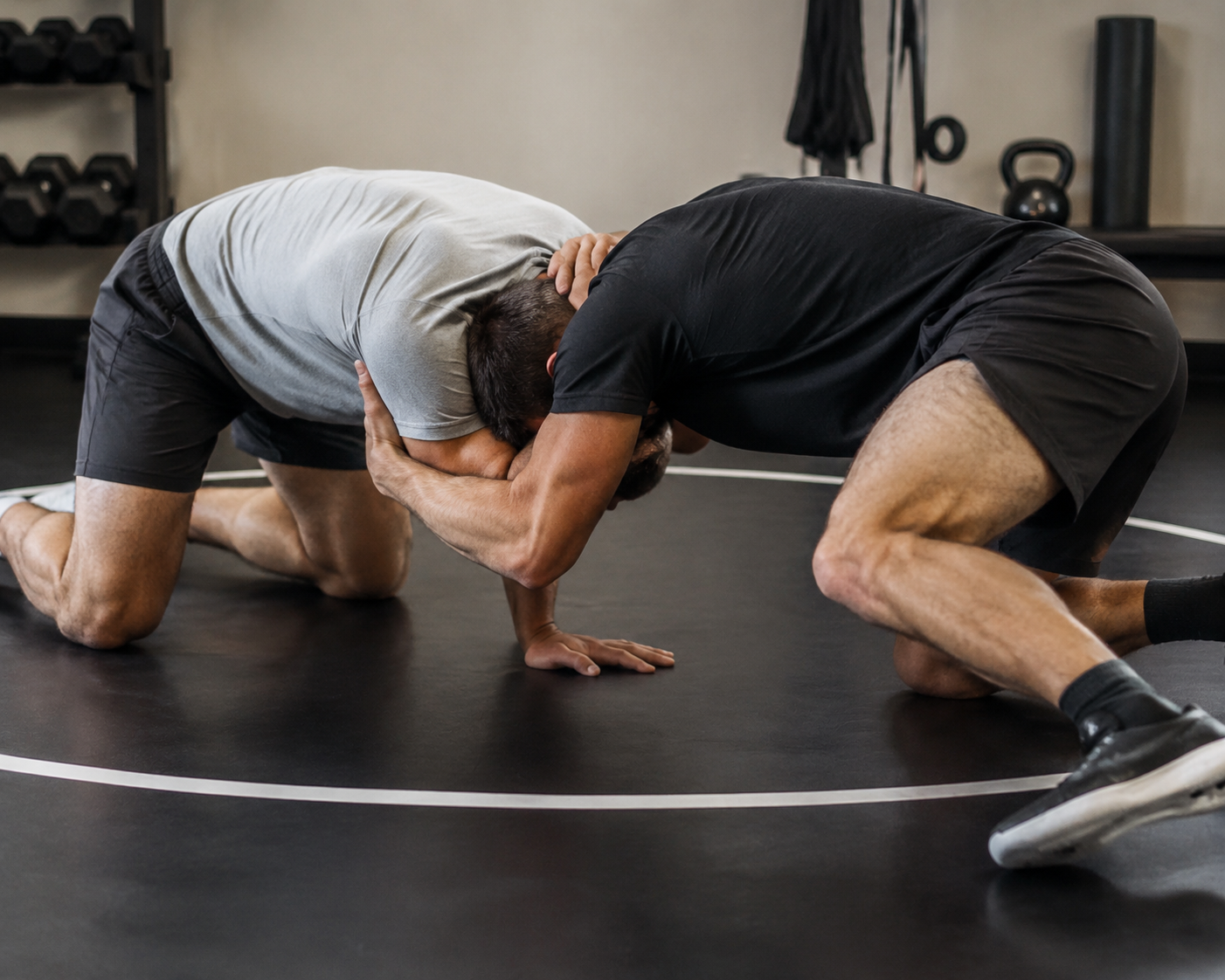
- Front-headlock frame hold: 4 sets of 20 to 30 seconds. Kneel over a heavy pillow, sandbag, or rolled mat. Wrap, pull elbows in, keep ribs down, and breathe through the hold.
- Sprawl to front-headlock position: 5 sets of 4 reps. Step or hop back, land softly, recover the frame, then stand. Apartment trainees can step back instead of jumping.
- Dumbbell gorilla row: 4 sets of 8 per side. Hips back, back flat, pull as if you are cinching control rather than just lifting iron.
- Chest-wrap squeeze row with band or towel: 3 sets of 12. Pull across the body and pause for one second at peak tension.
- Dead bug pullover: 3 sets of 8 per side. Keep the ribs from flaring while the arms move.
If the sprawls are too loud, use the quiet alternatives in this quiet strength plan. The point is not to impress the downstairs neighbor. It is to arrive in a strong, organized position repeatedly.
Day 2: Kickboxing-Style Conditioning With a Ceiling
Reported Tsarukyan training material includes running, elliptical bike work, rope skipping, core ring training, and three hours of daily kickboxing.[5] Three hours is not the home assignment. The useful translation is stance discipline under fatigue.
- Shadowboxing rounds: 5 rounds of 2 minutes, 45 seconds rest. Round 1 is footwork only; rounds 2 to 4 add punches and low kicks; round 5 is defense and exits.
- Rope-skipping substitute: 6 rounds of 45 seconds. Use an actual rope, pogo hops, fast step-ups, or low-impact marching.
- Rotational core circuit: 3 rounds of 10 Russian twists per side, 10 plank shoulder taps per side, and 20 seconds hollow hold.
- Cooldown: 5 minutes nasal breathing while walking, then hip flexor and calf mobility.
Keep the strikes at practice speed unless you have space, flooring, and joints that tolerate harder work. The bad version of this day is frantic punching, collapsed stance, and a calf strain from pretending rope skipping is a personality test.
Day 3: Compound Strength, Then a Short Wrestling Finish
Tsarukyan's reported mountain camp before a prior fight was described as 3.5 weeks of old-school training, with sessions running from 5am to 8pm.[4] That is a work-ethic data point, not a sensible template. For this plan, the third day concentrates the heavy work before the week turns toward Covington-style volume.
- Goblet squat or front-loaded split squat: 4 sets of 6 to 8.
- Dumbbell Romanian deadlift: 4 sets of 8.
- Push-up or dumbbell floor press: 4 sets of 8 to 12.
- One-arm dumbbell row: 4 sets of 10 per side.
- Suitcase carry: 5 trips of 30 to 45 seconds per side, or march in place if space is limited.
- Finisher: 4 minutes alternating 20 seconds front-headlock frame hold and 40 seconds easy movement.
If the positional work is what hooks you, extend it later with the 8-week wrestling strength program instead of piling extra rounds onto this week.
Day 4: Incline Endurance, Scaled Down
Covington training profiles describe 40- to 60-minute cardio sessions that include incline running at 5 to 7 kph and a 6 to 10 percent grade, along with biking.[6] The home version keeps the incline idea but lowers the ego. You want steady pressure, not a heroic limp.
| Option | Session |
|---|---|
| Treadmill | 30 to 40 minutes alternating 4 minutes incline walk or jog with 1 minute flat easy walk |
| Stairs | 20 to 30 minutes steady step-ups or stair walking, changing lead leg every minute |
| Bike | 35 to 45 minutes moderate ride with 6 short 20-second pickups |
| No equipment | 30 minutes brisk walk outdoors, adding hills if available |
Do not turn Day 4 into intervals just because you feel fresh after ten minutes. The Covington-inspired part is repeatable output. If your calves, Achilles, or knees start bargaining with you, switch to the bike or a flat walk.
Day 5: Explosive Circuit Without Turning the Room Into a Crime Scene
Covington-style circuit descriptions include sledgehammer work, rope climbs, gorilla walks, and explosive movements.[7] Most homes do not need a tire, a rope, or holes in the drywall. Use substitutes that preserve the pattern: hinge and strike, pull, crawl, pop up, reset.
- Dumbbell or medicine-ball chop: 8 reps per side.
- Towel row under a sturdy table or band row: 10 to 12 reps.
- Bear crawl or slow mountain climber: 20 to 30 seconds.
- Gorilla walk: 6 steps each direction.
- Burpee step-back or squat thrust: 6 to 8 reps.
Run 4 to 6 rounds. Rest 90 seconds between rounds for the first two rounds, then extend rest if landings get heavy or rows turn into shrugging. Explosive work is only useful while you can still organize it.
Day 6: Strength Split for Repeatable Output
Reported Covington templates include a three-day strength split built around compound explosive movements.[6] Since this is one hybrid week, Day 6 becomes a compressed full-body split with cleaner volume, not a second heavy max day.
- Dumbbell clean to front squat: 5 sets of 5, light enough to move fast.
- Reverse lunge: 3 sets of 8 per side.
- Pull-up, assisted pull-up, or band pulldown: 4 sets of 6 to 10.
- Dumbbell push press: 4 sets of 6.
- Farmer carry: 6 trips of 30 seconds, resting 30 to 60 seconds.
- Optional flush: 8 to 12 minutes easy bike, walk, or shadowboxing.
If your equipment is the limiting factor, do not solve that by making every set slower and uglier. A pair of adjustable dumbbells, a resistance band, and a pull-up option cover most of this plan; the broader home exercise equipment guide can help if you are building from scratch.
Day 7: Recovery Is Part of the Program
Day 7 is not a hidden challenge day. Take a 20- to 40-minute easy walk, then spend 10 to 15 minutes on hips, calves, thoracic rotation, and nasal breathing. If you want more structure, use a dedicated post-workout recovery routine at home rather than inventing another conditioning block.
The test is simple: after Day 7, your joints should feel calmer, your resting energy should be coming back, and you should want to train again. If the week leaves you flat, irritable, and sore in the same tendon every morning, the program did not make you tougher. It outspent your recovery budget.
How to Scale the Fighter Ideas
The safest way to use elite training material is to translate the demand, not the volume. Tsarukyan's reported camp hours, dense wrestling schedule, and cardio rotation point toward repeated technical exposure and a large aerobic base.[3][4][5] Covington's reported template points toward long repeatable cardio, mixed intervals, and strength that supports pace.[6][7] None of that requires two or three daily sessions at home.
| Elite Theme | Home-Safe Translation | What Not to Copy |
|---|---|---|
| Front-headlock and chest-wrap strength | Isometric holds, band pulls, rows, carries, controlled sprawls | Cranking the neck, using an unwilling partner, adding fatigue until posture collapses |
| Dense wrestling exposure | Short positional repeats across the week | Daily hard grappling volume without coaching or recovery |
| Mountain-camp workload | A planned week with one main session per day | 5am-to-8pm training windows or stacked sessions |
| Incline endurance | 30- to 45-minute incline, stair, bike, or hill sessions | Turning every cardio day into a maximal test |
| Explosive circuits | Low-equipment chops, crawls, rows, carries, and squat-thrust variations | Sledgehammer or rope-climb work without space, skill, or safe setup |
The biggest mistake is adding the two styles together as if they are separate full programs. Days 1 through 3 already load the trunk, grip, hips, and shoulders. Days 4 through 6 already ask for endurance and repeatable power. If you double the conditioning because RAF 11 got you fired up, Day 5 or Day 6 is where the bill usually arrives.
Use these volume rules on the first pass: cap hard sessions at 45 to 60 minutes, cap explosive circuits at 6 rounds, avoid max lifts, and keep at least one repetition in reserve on loaded strength work. If you finish the week fresh, add one set to two exercises next time. If you finish wrecked, remove one round from each circuit before blaming your toughness.
Where the Risk Actually Sits
The dangerous part is not that the exercises look exotic. It is that fighter-inspired training makes fatigue feel meaningful. A sloppy sprawl, a tired push press, or a late-round stair session can all feel like grit while quietly changing the stress from muscles to joints.
Watch three areas closely. First, the neck: front-headlock drills should load the arms, lats, trunk, and hips, not jam the cervical spine. Second, the lower legs: incline work and rope-skipping substitutes can stack calf and Achilles stress fast. Third, the wrists and shoulders: crawls, sprawls, rows, push presses, and frame holds all ask for bracing. If those joints complain early, change the variation before you change your attitude.
A reasonable pain rule: muscular burn is acceptable, sharp joint pain is not, and pain that changes your movement ends the exercise. This is not softness. It is how you keep a seven-day plan from becoming a one-day story.
When to Run This Week Again
Run the full week once, then take one easier day before repeating or moving into a longer block. If Days 1 and 3 felt best, you probably need more wrestling-strength structure. If Days 4 and 5 felt best, you may be built for the endurance side but still need to protect your joints from extra impact. If nothing felt good after Day 2, the program is too dense for your current base.
There is a useful parallel in other high-skill athletic adaptations: the home version works when it respects the original demand without pretending to be the original environment. The same standard applies whether you are adapting fighter training, gymnastics strength, or a weekly HIIT plan for limited air quality and limited space. For related examples, see Olympic gymnastics strength at home and this 7-day bodyweight plan.
Covington's RAF 11 win gives the endurance side a fresh reason to be examined.[1] Tsarukyan's positional details still give the home trainee the better technical handles to grip. The hybrid only works if those handles keep you trainable: strong enough to repeat positions, conditioned enough to recover between efforts, and sensible enough to leave the week with something left.
References
- RAF 11 official result: Covington def. Tsarukyan 5-3 - MMA Fighting and RAF official site - July 18, 2026 - link
- Ben Askren technical breakdown of Tsarukyan vs. Covington at RAF 11 - MMA Fighting - July 18, 2026 - link
- RAF 11 preview: Arman Tsarukyan wrestling match record - DraftKings Network - July 17, 2026 - link
- Arman Tsarukyan mountain camp details, citing MMA Junkie - GiveMeSport - January 2025 - link
- Arman Tsarukyan workout routine and diet plan - Health Yogi - link
- Colby Covington workout routine and diet plan - Health Yogi - link
- Colby Covington training template and circuit details - Essentially Sports - link
Comments
Join the discussion with an anonymous comment.