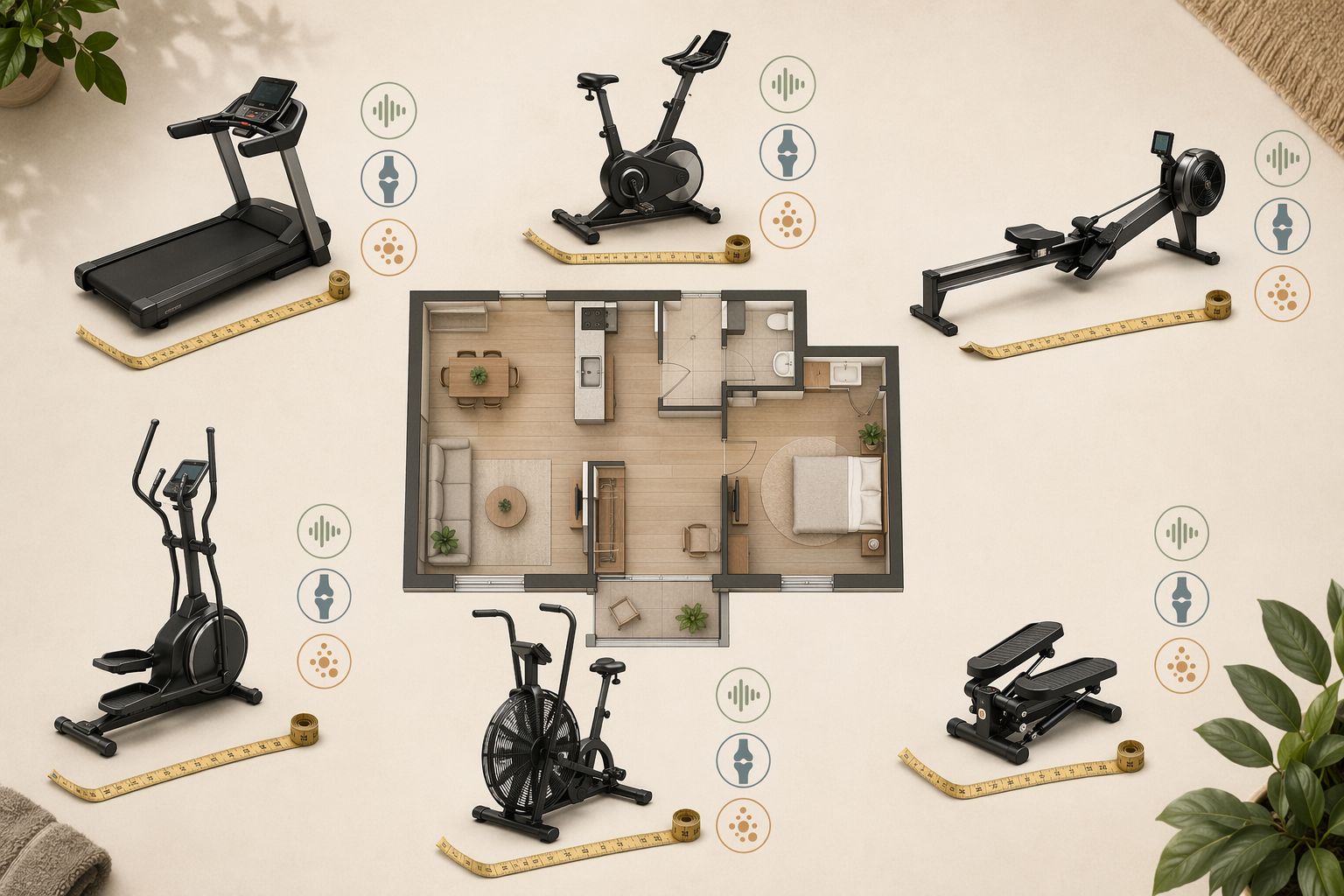
Choosing cardio equipment for home starts before model reviews. The category itself has to fit your room, your floor, your joints, your tolerance for noise, and your willingness to pay for software after the machine arrives. A treadmill that looks excellent in a garage gym can be a bad purchase in an upstairs apartment. A quiet bike with fewer features may be the better machine if it is the one you can use without rearranging furniture or apologizing to a neighbor.
Use the matrix first. It will not tell you which exact model to buy, but it should help you rule categories in or out before you start comparing screens, resistance levels, or leaderboard features.
Home Cardio Machine Decision Matrix
| Machine Type | Footprint And Storage | Noise Profile | Joint Impact | Subscription Exposure | Best Fit | Think Twice If |
|---|---|---|---|---|---|---|
| Treadmill | Usually the largest floor commitment; some models fold, but still need runway clearance. NordicTrack Commercial 1750 measures 77.3 in. x 37 in. and folds.[1] | Moderate to loud because of the motor, belt, footstrike, and incline movement; no source here provides systematic dB testing. | Moderate impact; cushioning varies by model.[2] | High on connected models, especially iFIT treadmills; iFIT family membership is listed at $39/month, or $1,968 over five years.[3] | Dedicated rooms, garages that meet warranty conditions, runners, walkers who want incline training. | You have downstairs neighbors, weak floors, very limited clearance, or a low tolerance for recurring fees. |
| Exercise bike | Among the easiest full-size machines to fit. NordicTrack X24 bike is listed at 8.5 sq. ft.; Schwinn IC4 measures 48.75 in. x 21.25 in.[1] | Usually one of the quieter choices when magnetic resistance is used. | Low impact.[2] | Varies widely. Peloton All-Access membership is listed at $49.99/month; many non-screen bikes can be used without a subscription.[3] | Apartments, shared homes, joint-sensitive users, people who want hard cardio without footstrike. | You dislike seated training, need weight-bearing running practice, or are buying mainly for classes but resent monthly fees. |
| Rower | Long during use. Concept2 RowErg stores vertically, weighs 57 lb., and needs about 8 ft. of horizontal clearance while rowing.[1][4] | Magnetic rowers are generally quieter; air rowers make fan noise. The Concept2 is subscription-free but not silent. | Low impact, but form matters, especially for backs.[2][4] | Can be low. Concept2 RowErg is listed at $990 with no required subscription; Hydrow Wave is listed at $1,995 plus $44/month membership.[3] | People who want full-body cardio and have length clearance during workouts. | You cannot spare the in-use length, have back concerns you cannot coach around, or need the quietest possible machine. |
| Elliptical | Usually larger than a bike and less tidy than folding claims suggest; compact hybrids exist, including Bowflex Max Trainer M6 at 46 in. x 26 in., under 9 sq. ft.[1][5] | Typically quieter than treadmills when resistance is magnetic, though moving linkages can still be noticeable. | Low impact.[2] | Moderate to high on connected models; Bowflex JRNY is listed at $20/month.[3] | Joint-sensitive users who want a standing, low-impact motion. | You need the smallest possible machine, have low ceilings, or expect it to disappear between sessions. |
| Air bike | Often shorter than a treadmill but not small in use because arms and fan clearance matter. | Usually the loudest home cardio category because the fan creates resistance and noise.[1][5] | Low to moderate impact because there is no running footstrike, but intensity can spike fast. | Often low. Assault AirBike is cited as a subscription-free option.[1] | Garage gyms, basements, interval training, buyers who want simple hardware without a screen plan. | You share walls, train early or late, or need a calm machine for a quiet apartment. |
| Stepper or compact climber | Can be one of the smallest categories; some hybrid steppers stay under the footprint of many ellipticals. | Usually quieter than treadmills and air bikes if resistance is magnetic, but model build quality matters. | Low impact in footstrike terms, but knees and hips may feel the climbing angle. | Varies by brand; many compact units avoid mandatory memberships. | Small rooms, quick cardio blocks, buyers who want intensity in a short footprint. | You have knee irritation with climbing motions or need a long, natural stride. |
Start With The Constraint That Can Ruin The Purchase
Most shoppers compare cardio machines as if they will all live in the same perfect room. They will not. A machine can be effective and still be wrong because it blocks a closet, wakes someone downstairs, or turns every workout into a negotiation over space.
Footprint is the first filter because it is the least forgiving. A bike can be genuinely apartment-friendly: the Schwinn IC4’s listed 48.75 in. x 21.25 in. footprint is the kind of shape many people can work around, and the NordicTrack X24 bike is listed at 8.5 sq. ft.[1] A treadmill is a different object. Even a folding treadmill still needs a long, clear belt when in use, and the NordicTrack Commercial 1750’s 77.3 in. x 37 in. footprint is not made small just because the deck folds.[1]
Storage claims deserve a second look. The WalkingPad P1 is listed at 56.4 in. x 21.5 in. unfolded and folds in half, which changes where it can live between workouts.[5] The Concept2 RowErg has a different bargain: it stores vertically, but during use it still needs about 8 ft. of horizontal clearance.[1][4] That is a good trade for some homes and a dealbreaker for others.
Noise Is Not Just A Spec
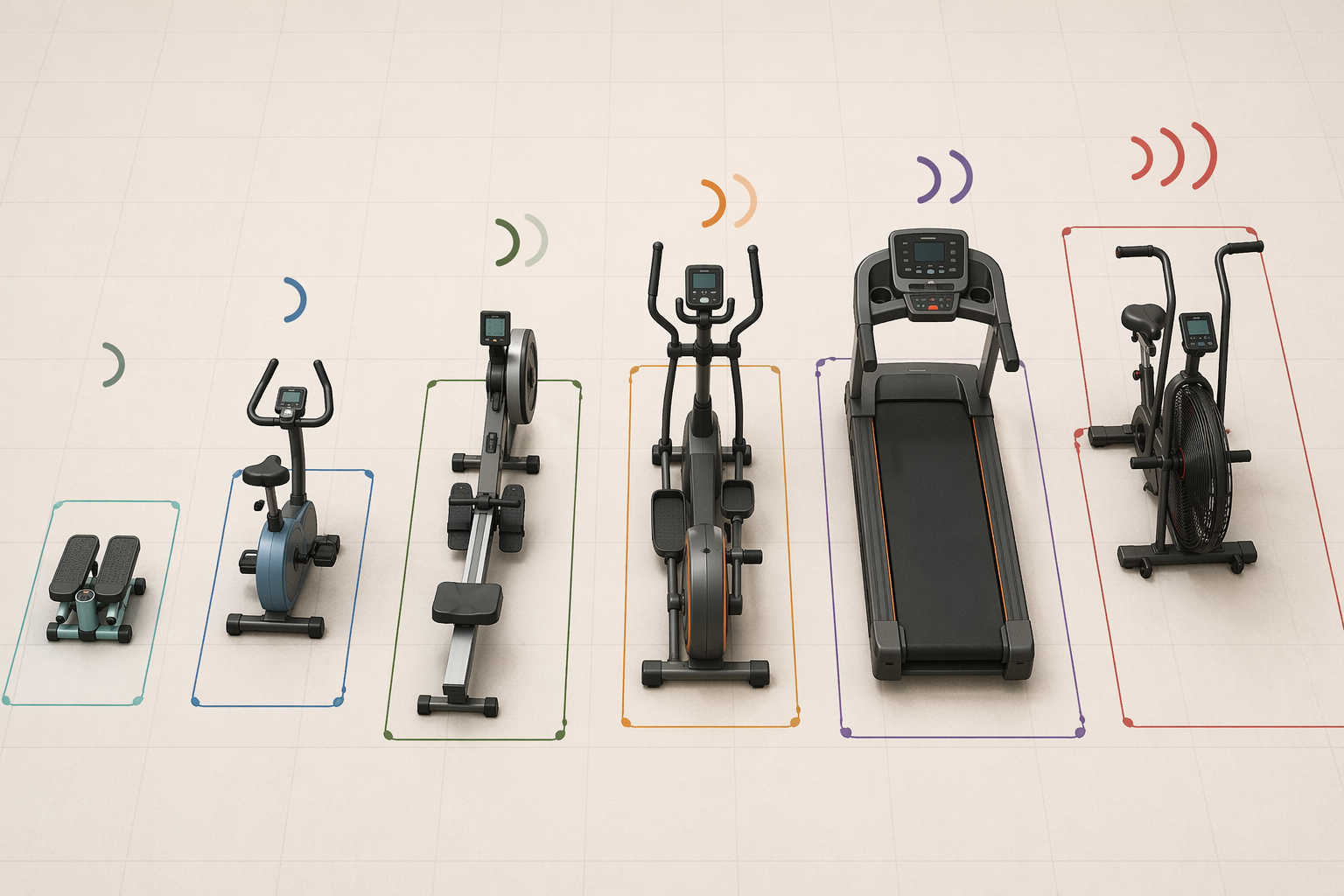
None of the available sources provide systematic laboratory decibel testing across these categories, so it would be false precision to say one machine is exactly a certain number of decibels quieter than another. The useful guidance is mechanical: magnetic resistance bikes and rowers are generally safer choices for quiet homes, motorized treadmills add belt and footstrike noise, and air bikes are usually the loudest because the fan is the resistance system.[1][5]
This matters most in apartments and shared houses. A treadmill sends both machine noise and impact through the floor. An air bike can bother people in the same room even when the floor is solid. A magnetic bike may still make some drivetrain noise, but the basic motion is easier to contain with a mat, closed door, and reasonable workout hours.
Joint Impact Narrows The Field Quickly
If knees, hips, ankles, or impact tolerance are part of the decision, bikes and ellipticals move to the front. Both are described as low-impact categories, while treadmills are moderate-impact because walking and running still involve repeated footstrike even when deck cushioning varies by model.[2]
Rowers are also low-impact, but they are not automatically gentle for everyone. The hinge, pull, and recovery need decent form; sources specifically flag back-friendly technique as part of using a rower well.[2][4] That does not make rowing a bad choice. It makes it a machine to buy with enough space, setup patience, and willingness to learn the stroke.
Subscriptions Change The Real Price
Connected cardio can be worth paying for if classes are the reason you will actually train. The problem is pretending the machine price is the whole price. As of the cited 2026 pricing, iFIT family membership is listed at $39/month, or $1,968 over five years; Peloton All-Access is listed at $49.99/month; Hydrow membership is listed at $44/month, which adds $1,584 over three years on top of the $1,995 Hydrow Wave; Bowflex JRNY is listed at $20/month.[3]
Those numbers change, so they should be checked again before purchase. The decision point is stable: if a screen, instructor library, and training plan are central to your use, budget for the membership from the start. If a recurring fee will annoy you every month, start with categories and models that work well without one, such as the Concept2 RowErg or Assault AirBike examples cited in the source material.[1][3]
Which Machine Type Fits Your Home?
Treadmill: When The Room Can Absorb It
A treadmill is the most direct choice for runners, incline walkers, and anyone training for walking or running outside. It is also the category most likely to punish wishful thinking. You need belt length, side clearance, ceiling clearance if incline is involved, a floor that can handle impact, and a household that can tolerate the sound.
If you are leaning this way, move next to the Home Treadmill Buyer’s Guide. Runners should also compare machines by training style in the Best Home Treadmills for Runners guide, while apartment shoppers should start with the Small-Space Treadmill Buyer’s Guide.
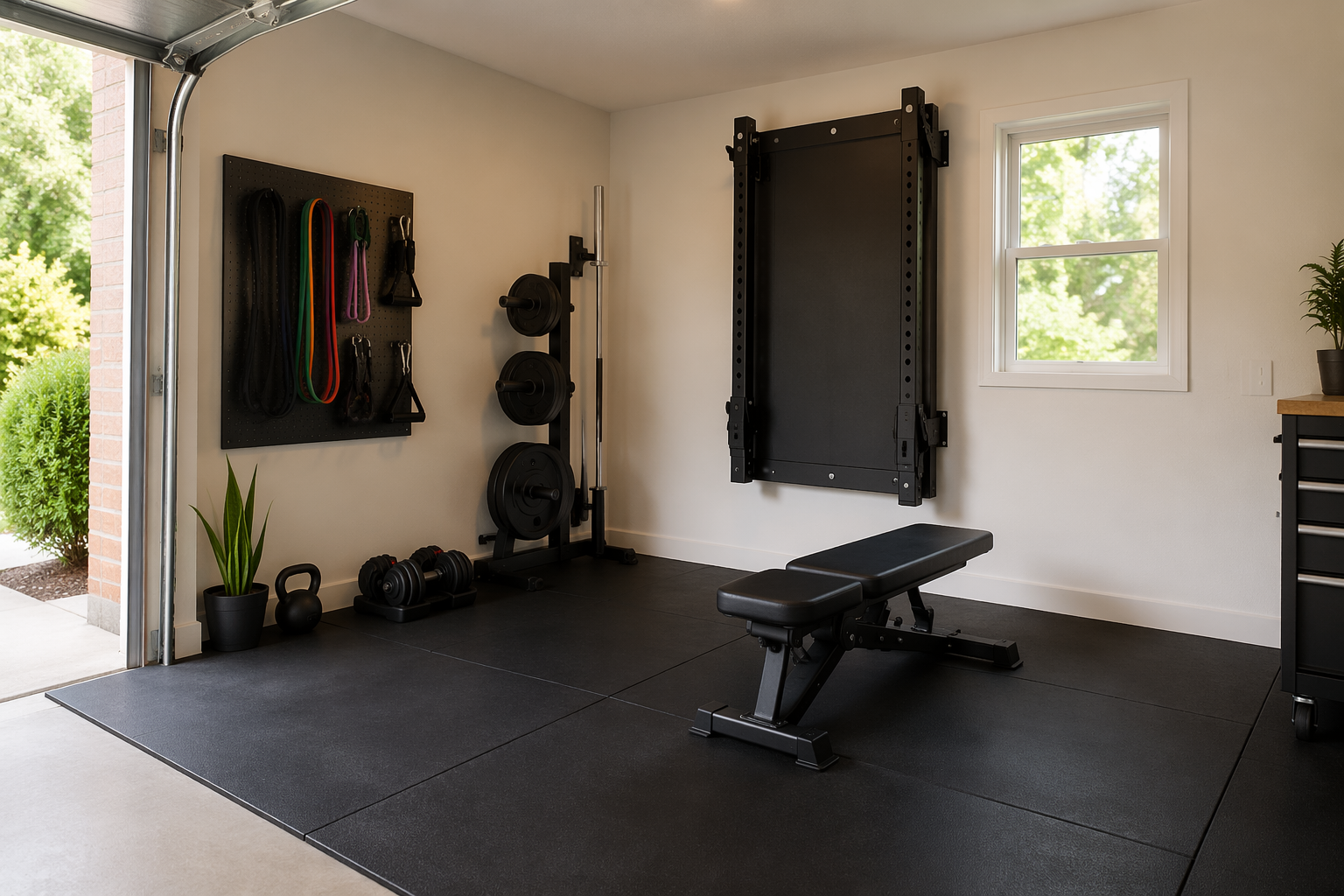
One garage-specific warning needs current verification: Garage Gym Reviews notes that NordicTrack may void warranty coverage if equipment is stored or used in non-climate-controlled garages.[1] Treat that as a prompt to read the current warranty terms for the exact model and storage location, not as a universal rule for every treadmill brand.
Exercise Bike: Quiet, Low-Impact Consistency
Exercise bikes are often the safest first recommendation for people with limited space, shared walls, or joint concerns. They are compact compared with treadmills, usually easier to move around, and quieter when they use magnetic resistance. They also tolerate short workouts well; you do not need to change shoes, clear a runway, or worry much about ceiling height.
The split inside the category is subscription appetite. A connected bike can make sense if live or on-demand classes are the product you actually want. If not, a simpler bike may be the more durable choice. Readers who have narrowed to this category can compare options in Best Exercise Bikes for Home by Budget, Space, and Fitness Level.
Rower: Make Sure You Have Length, Not Just Storage Space
Rowers are attractive because they train legs, hips, trunk, and pulling muscles in one cardio movement. They also create one of the better space-to-storage bargains: the Concept2 RowErg can be stood upright after use, and its 57 lb. weight keeps it manageable for many owners.[1][4]
Do not confuse storage height with workout clearance. During use, that same rower needs about 8 ft. of horizontal room.[4] A hallway, bedroom corner, or office can look plausible until the rail is extended and the handle path begins. Magnetic rowers are the better direction for quiet spaces; air rowers are more proven in some training settings but bring fan noise with them.
Elliptical: Standing Low-Impact Without Footstrike
An elliptical fits the buyer who wants a standing, low-impact pattern and does not want to sit on a bike. It can be a good compromise for people who want more body movement than cycling without the repeated footstrike of a treadmill.
The catch is bulk. Traditional ellipticals can be awkward in small rooms, especially if stride path, moving handles, and step-up height are ignored. Compact hybrids can improve the equation; the Bowflex Max Trainer M6 is listed at 46 in. x 26 in., which keeps it under 9 sq. ft.[5] That kind of footprint is meaningful, but it still needs comfortable mounting space and enough ceiling clearance for the tallest user.
Air Bike: Simple, Loud, Subscription-Free Work
An air bike is brutally straightforward: the harder you push and pull, the more resistance the fan gives back. That simplicity is useful for intervals, garage gyms, and buyers who do not want a class platform. Assault AirBike is cited as a subscription-free option, which makes total ownership cleaner than many connected machines.[1]
The fan is also the reason this is rarely the best choice for a quiet apartment. Air bikes are generally the loudest category in the source comparisons because the resistance mechanism itself moves a lot of air.[1][5] If your training time is early morning, late night, or next to a sleeping room, choose carefully.
Stepper: Only If The Motion Agrees With You
Compact steppers and climbers can deliver a lot of effort in little floor space. That makes them tempting when a treadmill or rower is impossible. They are best treated as a fit-specific choice, not a universal small-space solution, because the climbing pattern can feel very different from cycling or walking.
If your knees dislike stairs, do not assume a stepper will be friendlier just because it is low impact in the no-footstrike sense. Try the pattern if you can, or buy from a retailer with a return policy you are willing to use.
Budget Machines: Cheap Is Not The Same As Low-Risk
A lower price can be the right choice when the machine is simple, repairable, and honestly matched to lighter use. The risk is buying a machine that is cheap because the frame, belt, electronics, or support system cannot survive normal ownership.
Gray Matter Lifting documents failures involving FEIER Star, Yosuda, and Balancefrom treadmills, including cracked parts and non-functional units within months.[4] Those are single-source anecdotes, not a systematic survey of all budget treadmills. Still, they are useful reminders that the cheapest motorized machine in the category may carry more risk than a simpler bike, rower, jump rope, or phased starter setup.
If budget is the hard ceiling, compare the machine against what else the same money can buy. The Complete Budget Home Gym Starter Kits guide is a better next stop than stretching for a fragile treadmill you already suspect will be annoying to own.
If Space And Budget Are Nearly Impossible
There is one honest answer that rarely appears in cardio machine shopping: sometimes the right first purchase is not a machine. A brand-owned Aeromats article cites research equating 10 minutes of jump rope with 30 minutes of jogging.[6] Treat that as a cautious, lower-rigor reference, not as a reason to copy its product recommendations or assume every person will get the same training effect.
A rope, mat, step platform, or walking plan can keep you training while you save for the machine that actually fits. That is better than buying a bulky compromise that becomes furniture.
Where To Go After You Narrow The Category
- Choose a bike if your priorities are quiet operation, low impact, and small footprint; compare models in Best Exercise Bikes for Home by Budget, Space, and Fitness Level.
- Choose a treadmill if running or incline walking matters enough to justify the footprint, impact, and noise; start with the Home Treadmill Buyer’s Guide.
- Choose a small treadmill only after checking folded size, belt length, motor expectations, and neighbor tolerance; use the Small-Space Treadmill Buyer’s Guide.
- Choose a broader setup path if cardio is only one part of the room; compare strength and cardio priorities in Best Home Exercise Equipment: A Decision Guide.
- Choose a phased buying plan if money is tight; the Best Home Exercise Equipment: A Phased Purchase-Sequence Guide can help decide what comes first.
If your home can absorb the impact, noise, footprint, and recurring cost, a feature-rich machine may be worth it. If it cannot, the better choice is the quieter, smaller, lower-impact, or subscription-free machine you will still be willing to use after delivery day.
References
- Tested and Reviewed: The 10 Best Cardio Machines for 2026, Garage Gym Reviews
- The 11 Best Cardio Machines in 2026, Men’s Health
- The Best Home Gym Equipment We’ve Tested for 2026, PCMag
- Gray Matter Lifting cardio machine reviews and budget-equipment failure reports, Gray Matter Lifting
- The 11 Best Cardio Machines in 2026, Men’s Health
- Aeromats jump rope fitness article, Aeromats
Comments
Join the discussion with an anonymous comment.