
If you are buying a Whoop fitness tracker in 2026, the clean answer is this: most people should choose Whoop Peak at $239/year with the Whoop 5.0 hardware. Budget buyers can consider Whoop One at $149/year only if they are comfortable getting refurbished 4.0 hardware and living with the older battery and feature limits. Whoop Life at $359/year makes sense only if you have a specific reason to pay for ECG-oriented features and the expanded Health Monitor package.[1]
That recommendation is not about chasing the most expensive band. It is about avoiding the oddest trap in Whoop’s current lineup: the cheapest membership may also put you on older hardware, while the top tier asks fitness-focused users to pay extra for medical-adjacent features many of them will rarely use.
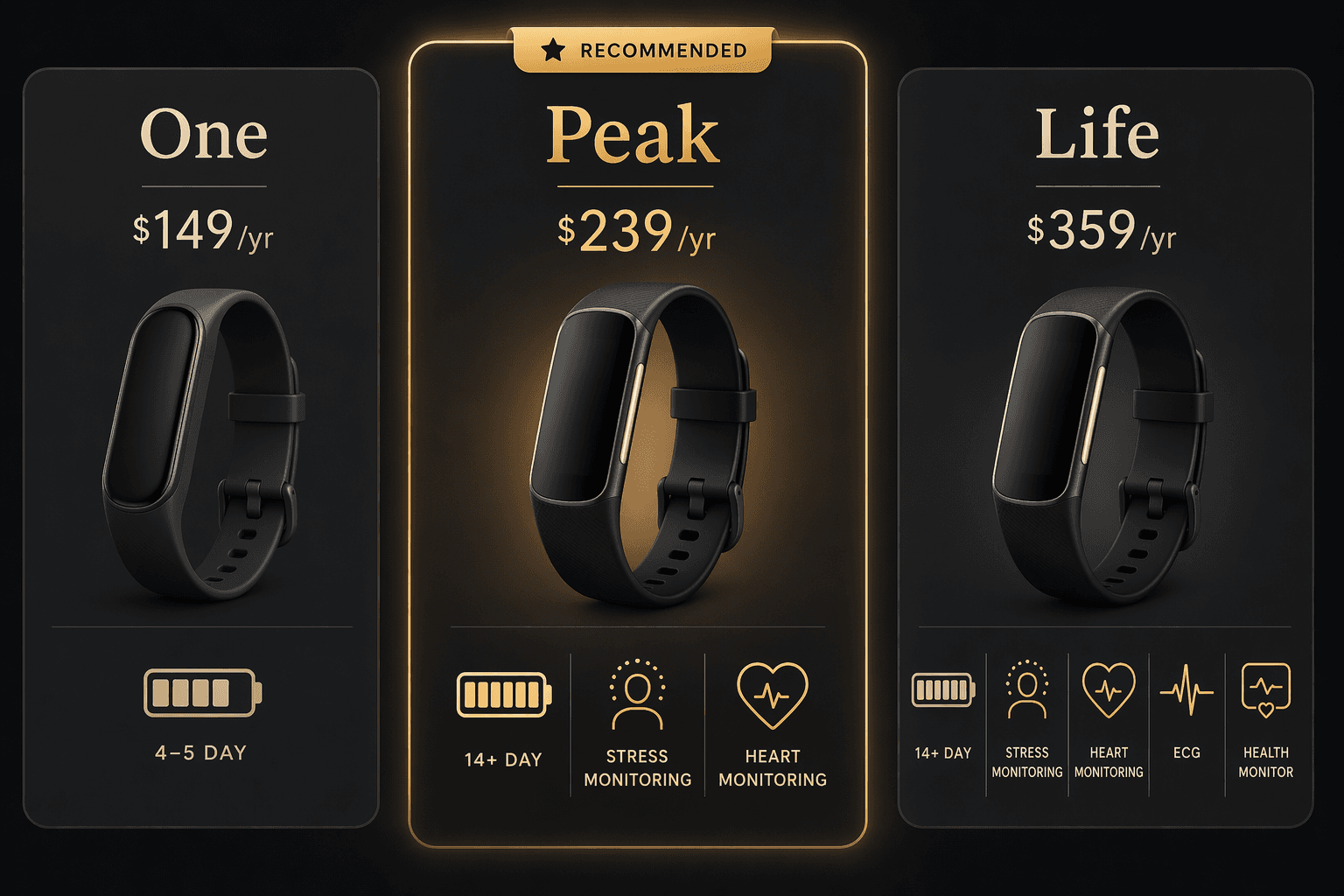
The 2026 Whoop tiers, without the fog
| Membership | Typical annual price | Hardware in the main offer | Battery expectation | What you are really buying | Best fit |
|---|---|---|---|---|---|
| Whoop One | $149/year on Whoop’s site; $199/year with 5.0 hardware has been listed on Amazon[1] | Refurbished Whoop 4.0 in the main $149/year offer[1] | About 4–5 days for 4.0 hardware, based on the 4.0-to-5.0 comparison in current reviews[2][3][4] | The cheapest way into Whoop’s recovery and strain system, with older hardware and fewer advanced features | Someone who wants the lowest annual price and accepts the compromises |
| Whoop Peak | $239/year[1] | Whoop 5.0[1] | 14+ days in CNET and Wareable testing; PCMag measured 16.5 days[2][3][4] | The main recovery, strain, stress, and Healthspan experience without the Life-tier ECG package | Most lifters, runners, hybrid athletes, and current 4.0 users upgrading |
| Whoop Life | $359/year[1] | Whoop MG / 5.0-family hardware, with Life adding ECG, Health Monitor, and advanced skin temperature sensing[1] | Same broad 5.0-family battery advantage over 4.0, depending on hardware and use[2][3][4] | Peak plus medical-adjacent features, especially ECG and expanded health monitoring | Someone who specifically wants those health-monitoring tools and accepts the premium |
The awkward part is that “One,” “Peak,” and “Life” sound like simple software tiers, but they are also tied to hardware differences. Whoop One’s headline $149/year price is attractive because it uses refurbished 4.0 hardware in the main offer, while Peak moves you to Whoop 5.0, and Life moves you into the MG/5.0-family package with extra health features.[1]
That hardware split matters more than the names suggest. Wareable’s hardware comparison notes that the 4.0 has shorter battery life, older sensors, and no wireless charging, while the 5.0/MG generation uses a redesigned clasp that also makes older 4.0 bands incompatible.[5] For a new buyer, that is mostly a value question. For a current Whoop 4.0 owner with a drawer full of bands, it is an accessory-cost question too.
Why Peak is the default pick
Peak is the tier where the 2026 Whoop pitch finally lines up with the product. You get the newer Whoop 5.0 hardware, the long battery life, stress monitoring, and the Healthspan feature set, without paying for Life’s ECG-oriented extras.[1] For most training uses, that is the useful middle: enough data to guide recovery and habit changes, not so much premium health packaging that the subscription starts feeling inflated.
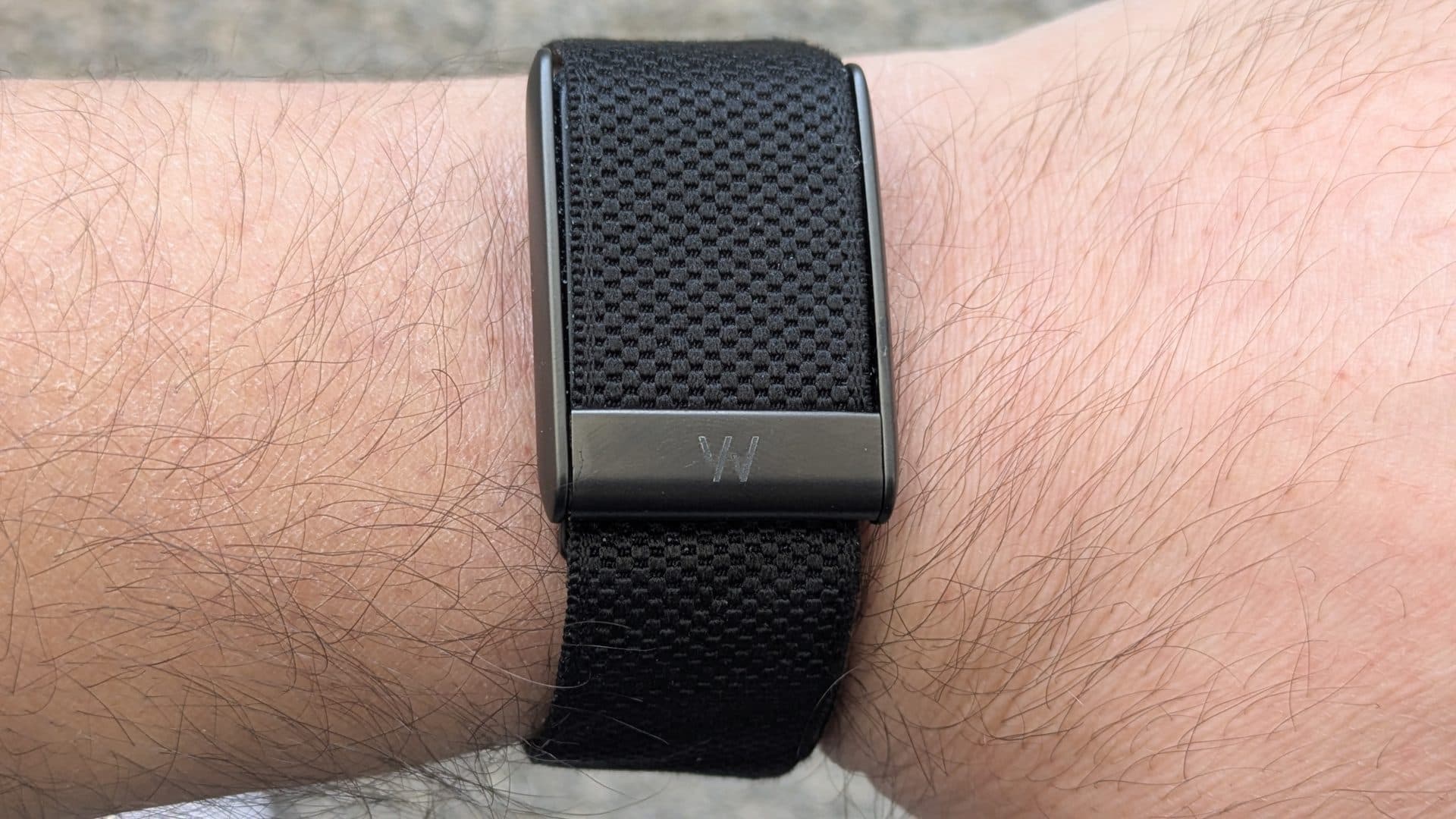
The battery upgrade is the least abstract reason to choose Peak. PCMag measured the Whoop 5.0 at 16.5 days of battery life, while CNET and Wareable both reported 14+ days in their testing.[2][3][4] That changes how the device behaves in real life. A tracker that goes two weeks between charges is easier to leave on through sleep, lifting sessions, runs, and recovery days. A tracker that lasts 4–5 days asks for attention every week, usually right when you are trying to make it disappear.
That matters because Whoop’s best use case is continuous context. It is not a screen for checking notifications between sets. It is a quiet recovery tracker that gets more useful when you wear it consistently. The battery does not make the recovery score automatically smarter, but it does remove one of the easiest ways users create gaps in their own data.
Peak is also the tier I would point most current Whoop 4.0 subscribers toward if they already like the app. The move to 5.0 brings the battery jump and newer hardware, but it does come with a practical annoyance: 4.0 bands are not compatible with 5.0/MG because of the redesigned clasp.[5] If you own one plain band, that is tolerable. If you bought multiple bands for gym, sleep, and daily wear, include replacement accessories in your upgrade math.
When Whoop One is worth buying
Whoop One exists for the buyer who looks at $239/year and pauses. At $149/year through Whoop’s main offer, it is meaningfully cheaper than Peak.[1] If your main goal is to try Whoop’s recovery, strain, and sleep approach at the lowest annual price, One can make sense.
The cost is not hidden, but it is easy to underestimate. The main $149/year One offer uses refurbished Whoop 4.0 hardware, not the 5.0 hardware that makes Peak appealing.[1] Compared with the 5.0 generation, that means roughly 4–5 days of battery life instead of the 14+ day results reviewers are seeing on Whoop 5.0, plus no wireless charging and older sensors.[2][3][4][5]
For some users, that is fine. If you are testing whether you like wearing a screenless tracker at all, or you only care about the broad recovery habit loop, One is the least expensive way to find out. It is a harder sell for anyone who already knows they want Whoop as a daily training companion. Saving $90/year against Peak is real, but so is charging three or four times as often.
Budget buyers should also check the screenless-tracker market before assuming One is the obvious cheap pick. The cheaper the Whoop tier, the more it has to compete with devices that may cost less upfront or avoid an annual subscription entirely. If you are choosing mainly on price, compare One against alternatives in Whoop 5.0 vs Fitbit Air before committing to Whoop’s subscription model.
When Life is actually the right upgrade
Whoop Life is not a bad tier. It is just a specialized one. At $359/year, it costs $120/year more than Peak and adds ECG, Health Monitor, and advanced skin temperature sensing.[1] Those are the features to focus on, not the general feeling that “top tier” must mean “best for athletes.”
Life makes the most sense if you know you want ECG access and a broader health-monitoring dashboard from your wearable. That may matter to someone who is deliberately tracking wellness signals beyond training load and recovery trends. It is less compelling for the home-gym lifter who wants to know whether last night’s sleep supports heavy squats, or the runner deciding whether to push intervals after a rough week.
It is worth keeping the language grounded here. ECG and health-monitoring features can be useful wellness tools, but they do not turn a fitness subscription into medical care. If you have symptoms, a diagnosis, or a medical question, that belongs with a clinician, not a membership upsell.
For most fitness buyers, the problem with Life is simple: Peak already solves the big Whoop problems. It gets you onto current hardware, gives you the long battery life, and includes the features most people associate with Whoop’s recovery-first value. Life is easier to justify when you can name the extra feature you will use before you see the checkout page.
The battery difference is bigger than a spec-sheet win
A lot of fitness tracker comparisons treat battery life as one row in a table. With Whoop’s 2026 lineup, it deserves more weight because it separates the cheaper 4.0-based offer from the 5.0/MG experience. PCMag’s 16.5-day result and the 14+ day findings from CNET and Wareable put the 5.0 generation in a different daily-use category than the 4.0’s 4–5 day expectation.[2][3][4]
The practical difference shows up in boring places, which is exactly why it matters. You do not have to remember to charge before a weekend trip. You are less likely to miss a night of sleep data. You are less likely to take it off after a workout and forget it on a counter. For a device that has no screen and asks to be judged by long-term patterns, fewer interruptions are part of the product value.
This is also why the refurbished 4.0 version of One feels like a budget tier in more than name. If the subscription were only missing a few advanced software panels, the tradeoff would be easier. But when the lower price also changes how often you have to manage the device, it affects the experience every week.
What current Whoop 4.0 owners should check before upgrading
If you already use Whoop 4.0 and like the app, Peak is the most logical upgrade path. The 5.0 battery improvement is large enough to change the maintenance rhythm, and Peak avoids the $359/year Life price unless you specifically want ECG and the expanded health-monitoring package.[1][2][3][4]
Before upgrading, check three things:
- Band replacement cost: 4.0 bands do not work with 5.0/MG hardware because of the redesigned clasp.[5]
- Your actual use of advanced features: if you mostly look at sleep, recovery, strain, and trends, Peak is likely enough.
- Your tolerance for subscription changes: pricing and bundles have already shown some variation across Whoop’s site and Amazon listings, so verify the exact hardware and membership terms before buying.[1]
The upgrade is easiest to justify if charging friction is your main complaint with 4.0. If your complaint is that Whoop’s recovery guidance does not fit how you train, new hardware may not fix that. For a deeper look at whether the platform itself is worth using, read the recovery-focused Whoop fitness tracker review before renewing around a new device.
The two-year cost: Whoop Peak vs Oura and Apple Watch
Once Peak looks like the right Whoop tier, the next question is whether Whoop’s annual subscription still makes sense against other wearables. Over two years, Whoop Peak costs $478 at $239/year. That is roughly similar to an Oura Ring 4 at $349 plus a $70/year membership, or about $489 across two years. The shape of the payment is different: Whoop spreads the cost through annual membership, while Oura asks for more money upfront.[6]
The Apple Watch Series 10 comparison is more uncomfortable for Whoop. At $399 with no required subscription, it becomes cheaper than Whoop Peak after two years if basic recovery tracking is enough for you.[6] Of course, it is a different kind of device: screen, apps, notifications, charging habits, and a broader smartwatch role. Some people want that. Some people are buying Whoop specifically to avoid it.
This is where buyer intent matters more than brand preference. If you want a screenless recovery band that fades into sleep and training, Peak can still justify its cost. If you want one device that handles workouts, messages, music, payments, and general health tracking, Whoop is probably too narrow for the money. For a wider cost breakdown across wearables, use the fitness tracker total cost of ownership guide.
The accuracy checkpoint before you choose any tier
There is one reason to step away from the tier debate entirely: workout heart-rate precision. Wareable’s testing against a Garmin HRM-Pro Plus chest strap found Whoop wrist heart-rate readings during exercise could be off by 5–15 BPM depending on activity type.[4] That may be acceptable for broad strain and recovery trends. It is not ideal if your training depends on tight heart-rate-zone execution.
That caveat applies to the buying decision more than the tier decision. Paying for Life does not turn a wrist-worn tracker into a chest strap for precise interval work. If your main use case is zone training, compare Whoop against other options in the broader fitness tracker decision guide or the Whoop vs Oura vs Garmin recovery tracker guide before choosing a membership.
Buying verdict
Buy Whoop Peak with Whoop 5.0 if you want the version of Whoop that makes the most sense in 2026. It gets the long battery life, the current hardware, and the core recovery and Healthspan feature set at $239/year, without forcing you into the $359/year Life tier.[1][2][3][4]
Choose Whoop One only if the lower $149/year price matters more than battery life, newer hardware, wireless charging, and broader feature access.[1][5] It is a valid entry point, not the best long-term version of the product.
Choose Whoop Life only if you already know why you want ECG, Health Monitor, and advanced skin temperature features enough to pay the extra $120/year over Peak.[1] If you cannot name that reason, Peak is the cleaner buy.
And if you need precise workout heart-rate zones or you simply do not want an annual subscription, reconsider Whoop before choosing among One, Peak, and Life. A screenless tracker can be excellent for recovery habits, but only if its business model and measurement tradeoffs match the way you actually train.
If you do buy Peak and want to make the subscription useful after the first week of curiosity, start with these ways to improve your Whoop recovery score instead of treating the score as a daily verdict.
References
- Whoop Has a New, Cheaper Subscription Using Its Old 4.0 Hardware — Lifehacker
- Whoop 5.0 - Review 2026 — PCMag
- Whoop 5.0 Review: A Fitness Tracker Focused on Performance and Longevity — CNET
- Whoop 5.0 review: A bold leap into longevity with familiar drawbacks — Wareable
- Whoop 5.0 vs. Whoop MG: Key differences explained and what we recommend — Wareable
- WHOOP vs Oura vs Apple Watch: Which Should You Buy in 2026? — AskVora

Comments
Join the discussion with an anonymous comment.