
The best Beats headphones for working out at home are not the same pair for every living room workout. If your session includes squat jumps, burpees, mountain climbers, or plyometrics, choose Powerbeats Pro 2. If you mostly lift, ride a stationary bike, jog or walk on a treadmill, or follow mixed cardio classes, Powerbeats Fit is the more sensible default. If your workouts are yoga, stretching, mobility, or other low-movement sessions, Studio Buds Plus can work, but they are not the Beats model to buy for hard training.
That split matters because home workouts punish different headphone weaknesses than outdoor runs or commercial gyms. You may not need maximum noise cancellation if you can turn down a fan or close a door. You may care a lot about hearing a coach on a tablet, a doorbell, a kid in the next room, or a phone call. And if a bud pops loose during jump lunges beside a coffee table, the problem is not theoretical.
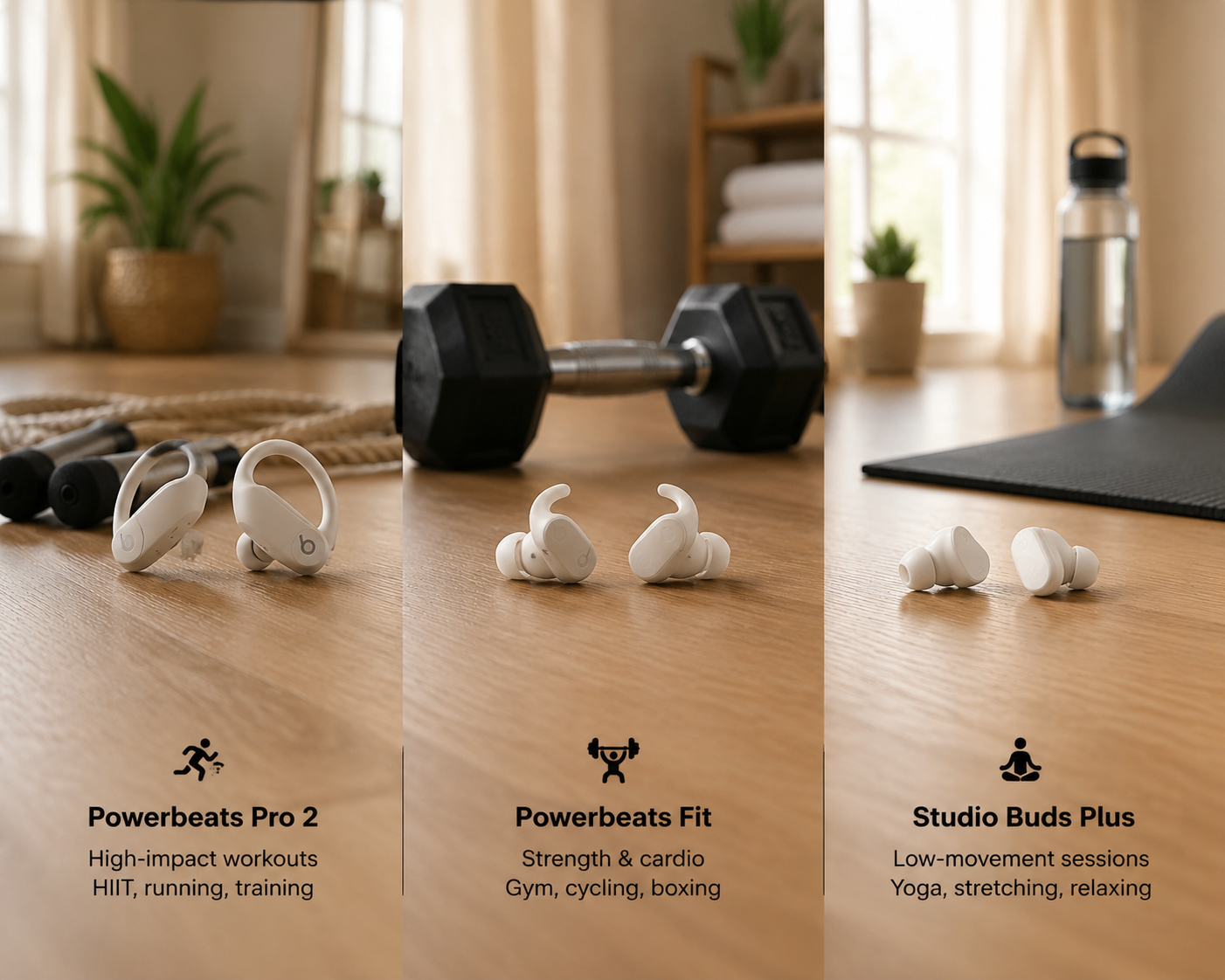
| Home workout type | Best Beats choice | Why it fits the job |
|---|---|---|
| HIIT, burpees, jump squats, plyometrics | Powerbeats Pro 2 | Ear hooks give the most secure physical hold |
| Strength training, treadmill, stationary bike, mixed cardio | Powerbeats Fit | Wingtip fit is secure enough for most home movement with a smaller case |
| Yoga, stretching, mobility, low-movement floor work | Studio Buds Plus | Compact and comfortable, but no stabilizer for vigorous movement |
Start With How Much Your Head Moves
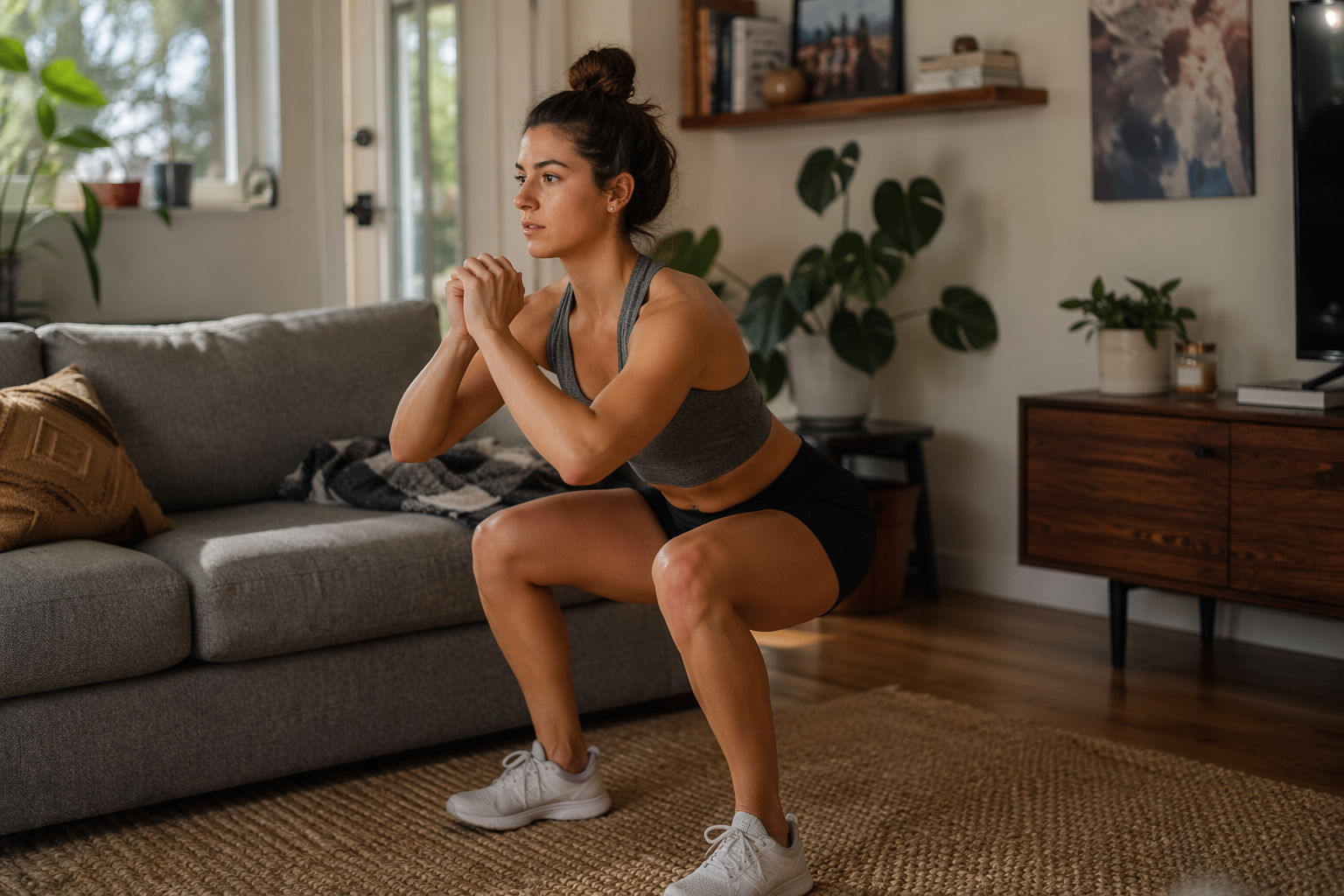
Workout-earbud advice often flattens “gym,” “running,” and “home workout” into the same buying problem. Those use cases are not the same. A home session can be a quiet 30-minute yoga flow, a dumbbell circuit under a ceiling fan, a treadmill walk while watching a tablet, or a no-jump apartment cardio routine from a quiet cardio plan. The earbud has to match the movement first.
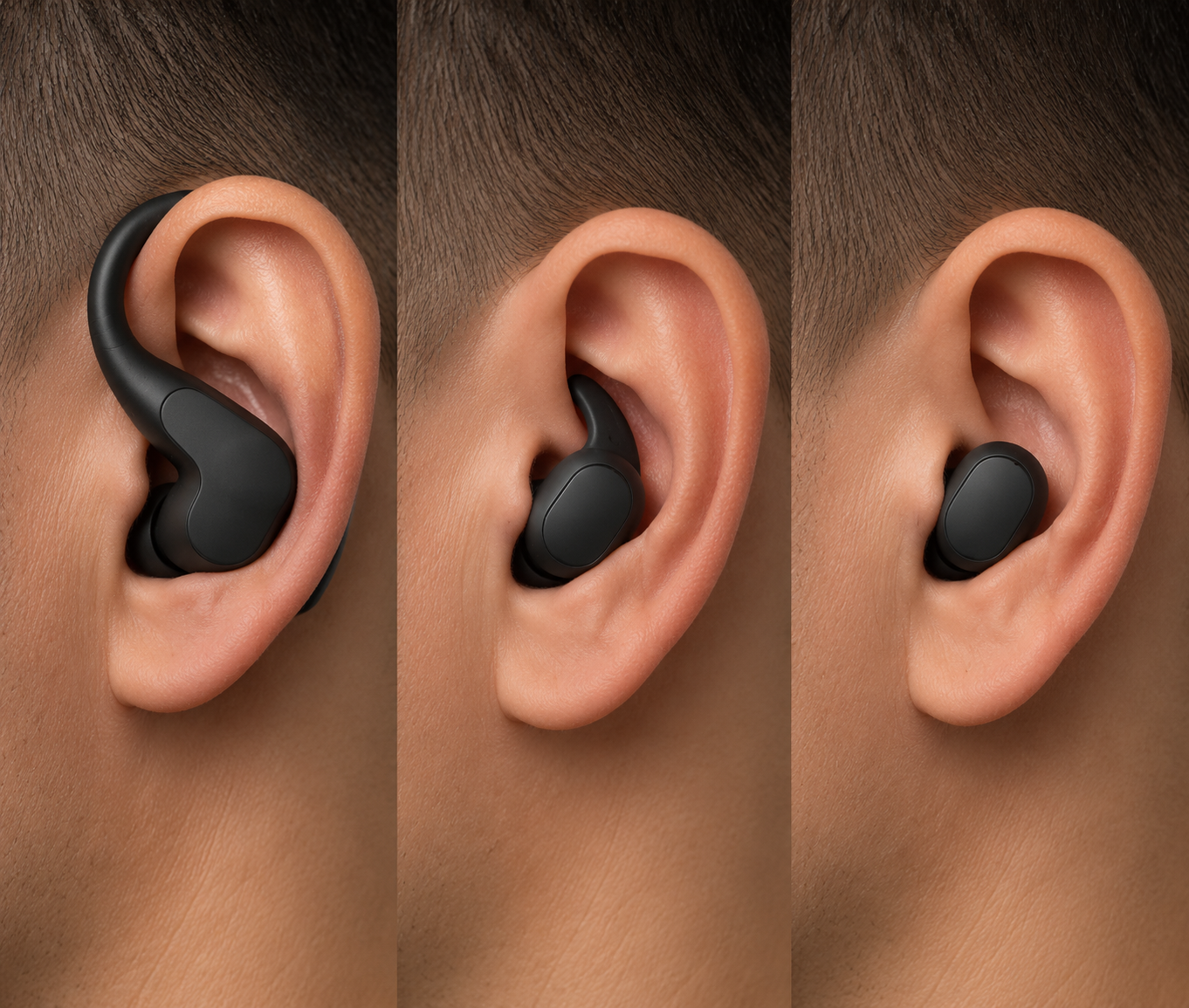
The clearest dividing line is whether your workout repeatedly shakes, snaps, or inverts your head. Burpees, plank jacks, jump rope, skaters, and squat jumps ask more from an earbud than biceps curls or a steady bike ride. For those high-impact sessions, the Powerbeats Pro 2 ear hook is the safest Beats answer.
Powerbeats Pro 2 uses nickel-titanium alloy ear hooks that are 50% smaller than the previous generation, with each bud weighing 8.7 grams. Reviewers repeatedly converge on the same practical point: Men’s Journal called the fit “one of the most secure fits available,” while Wirecutter wrote that “these hook-over-the-ear buds aren’t going anywhere.” CNET, NBC Select, and Men’s Journal also rated Powerbeats Pro 2 as the top workout Beats option in their respective coverage.[1][2][3][4]
For a living-room HIIT class, that is the kind of evidence that matters. An ear hook does not depend only on the seal inside your ear canal. It adds an external anchor, so when you land from a jump or drop from standing into a plank, the bud has somewhere else to resist movement. It is more hardware than many people need, but it is the right kind of hardware when the alternative is pausing a workout to reseat an earbud with sweaty fingers.
Why Powerbeats Fit Is the Better Default for Most Home Workouts
Most home workouts do not look like a full plyometric test. A lot of people lift dumbbells, do bodyweight strength sets, walk or jog on a treadmill, ride a stationary bike, or follow cardio videos with some lateral movement but not constant jumping. For that broad middle, Powerbeats Fit makes more sense than buying the bulkiest, most locked-down option just in case.
Powerbeats Fit uses a flexible silicone wingtip that tucks under the antihelix of the ear, and each bud weighs 5.6 grams. NBC Select called the design “supremely comfortable, secure, and easy to use,” and CNET scored it 8.8 out of 10. CNET also notes that the Powerbeats Fit case is 17% smaller than the Fit Pro predecessor, which matters more than it sounds when headphones live on an entry table, in a work bag, or beside a yoga mat instead of in a gym locker.[1][4][5]
The naming can be a little messy because Powerbeats Fit follows the Beats Fit Pro lineage, and some sources still discuss the older Fit Pro name when comparing the design. For the buyer, the important continuity is the stabilizing wing: it is lighter and less visually committed than an ear hook, but far more reliable for exercise than a plain bud with no stabilizer.
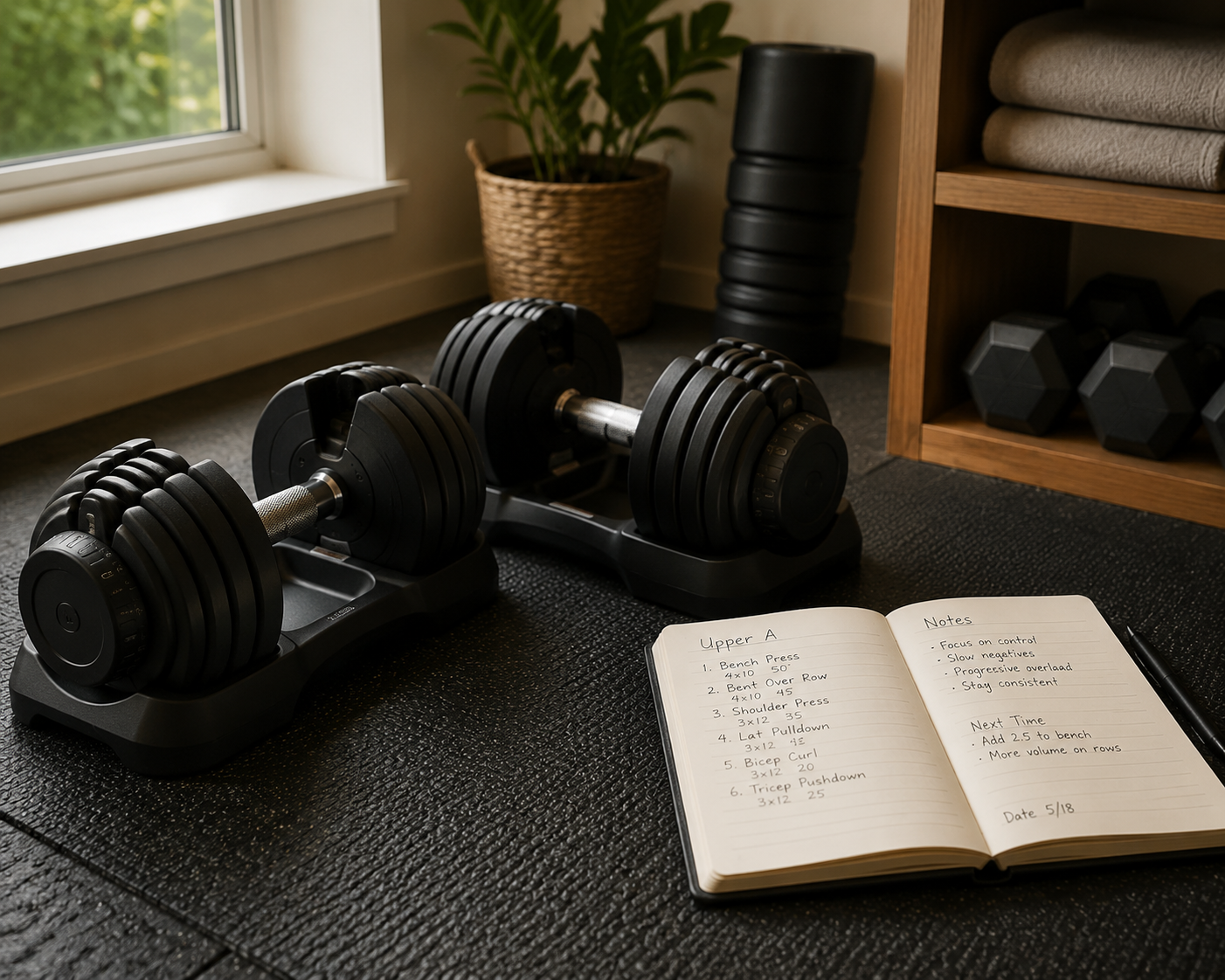
During strength training, the wingtip is usually enough. Bench work, rows, presses, squats, deadlifts, lunges, and floor core exercises involve position changes, but not always the repeated jolt that makes a hook necessary. On a stationary bike, the head is comparatively still. On a treadmill, a jog adds bounce, but many home treadmill sessions are walks, intervals, or moderate runs where the Powerbeats Fit’s lighter design is a better balance.
If headphones are one purchase inside a larger small-space setup, that balance becomes even more useful. A compact home gym under $500 or a room carved into under 50 square feet rewards gear that disappears when you are done. Powerbeats Fit is easier to live with there than the larger Powerbeats Pro 2 case, while still giving enough fit security for the workouts most people actually repeat.
Where Studio Buds Plus Actually Belong
Studio Buds Plus are legitimate earbuds. They are just not the pair to buy if “working out” mostly means sweat-heavy circuits or fast movement. Each bud weighs about 5 grams and has no wingtip or ear hook. CNET scores them 8.2 out of 10, but CNET, SoundGuys, TechRadar, and Runner’s World all note the same limitation in different ways: they can dislodge during vigorous movement and are not the best dedicated workout headphones.[1][6][7]
That still leaves them a useful home lane. For yoga, stretching, mobility, breath work, light mat Pilates, and stationary sessions where your head is not snapping around, Studio Buds Plus can be the most pleasant Beats option simply because they are compact. The case is the smallest of the three, and the standard-bud shape is easier to wear casually before or after a session.
The mistake is treating that everyday convenience as workout security. A standard-fit earbud can feel fine while you stand in the kitchen and still loosen once sweat, jaw movement, floor transitions, and repeated impact enter the session. If your yoga flow rarely leaves the mat, fine. If your “yoga plus cardio” class turns into plank hops and squat pulses, buy the more stable design.
ANC Matters Less at Home Than Awareness
Active noise cancellation tends to dominate headphone comparisons because it is easy to rank and dramatic to describe. At home, it is usually not the first feature to solve. You can turn off a fan, move away from a washing machine, shut a door, lower a treadmill speed, or change the room. You also may not want to be sealed off while exercising in a shared apartment or house.
Transparency mode is often the more useful feature for home workouts. It lets you hear a coach’s cues from a tablet, a doorbell, a timer, a phone call, or someone else in the room without removing a bud. SoundGuys and Wirecutter rated the Powerbeats Pro 2 transparency mode as very natural, which is exactly the kind of feature that feels minor in a spec table and major when your hands are wrapped around dumbbells.[2][5]
ANC is not irrelevant. SoundGuys measured Powerbeats Pro 2 as reducing noise by 83% on average, and that can help with treadmill drone, equipment clank, or a loud HVAC unit.[5] If your home cardio machine is the main noise source, ANC earns its place. If your problem is awareness, coaching, or household interruptions, transparency mode deserves more weight.
For people still choosing the machine itself, headphone priorities can also follow the equipment. A treadmill or rower may push noise control higher. A stationary bike or compact stepper may make fit and comfort more important than cancellation. That is the same constraint-based logic behind choosing compact home exercise equipment or comparing home cardio machines: start with the annoyance you will actually face, not the feature that sounds most premium.
Battery, Cases, and the Small Annoyances That Decide Daily Use
Battery life is the rare spec where all three models are good enough for normal home training. Powerbeats Pro 2 is rated for 10 hours from the buds and 45 hours total with the case. Powerbeats Fit is rated for 6 hours from the buds and 24 hours total. Studio Buds Plus is also around 6 hours from the buds and 24 hours total.[1][5][7] For a 45- to 90-minute home session, even the shorter bud battery is not the limiting factor.
The case is more likely to bother you. Wirecutter notes that the Powerbeats Pro 2 case is too big to keep in the small pockets of gym shorts or leggings.[2] That may sound like a gym complaint, but it applies at home too. A big case is another object on the counter, another thing to move before dinner, and another reason the buds may end up loose on a shelf instead of charging.
Powerbeats Fit has the better day-to-day compromise: secure enough for most exercise, smaller than the old Fit Pro case, and easier to toss into a pocket or equipment basket.[1] Studio Buds Plus wins on compactness, but that compactness is valuable only if your workout does not need a stabilizer.
Bluetooth switching is the other living-room nuisance. SoundGuys and CNET confirm that Powerbeats Pro 2, Powerbeats Fit, and Studio Buds Plus all lack Bluetooth Multipoint.[1][5][7] If your music is on your phone and your workout class is on a tablet, you should expect some manual switching rather than seamless dual-device juggling. That is not a deal-breaker, but it is exactly the kind of pre-workout friction that gets old when you only have 35 minutes before the next household task.
Sweat Resistance Is a Care Routine, Not a Free Pass
Powerbeats Pro 2, Powerbeats Fit, and Studio Buds Plus all carry an IPX4 rating. Apple Support also makes the practical boundary clear: they are not waterproof or sweatproof, and they should be dried before being placed back in the charging case.[8] For home workouts, that usually means keeping a small towel nearby and not treating the case like a wet-storage container.
This is especially relevant for mat workouts. Earbuds often come out right after floor work, when the mat, hands, and hairline are all damp. Drying the buds before charging is a small step, but it is one of those small steps that separates workout earbuds you keep using from earbuds that become another thing you have to rescue from your own routine.
The over-ear Beats models are easier to dismiss for sweat-producing exercise. Beats Studio Pro and Solo 4 lack IP ratings according to Apple Support, so they should not be the recommendation for workouts that make you sweat.[8] They may be comfortable for desk listening or walking around the house, but they do not belong in the same decision set as the three workout-capable earbuds.
The Heart Rate Feature Is Not the Reason to Buy Powerbeats Pro 2
Powerbeats Pro 2 adds heart rate tracking, but it should be treated as a secondary feature for home workouts rather than the main reason to pay more. DC Rainmaker’s February 2025 testing documented iOS pairing issues, heart-rate dropouts during movement, and an Apple-confirmed limitation: users could not listen to music via iPhone while broadcasting heart rate to gym equipment at the same time.[9]
Firmware updates may have changed some of that behavior since the test period, so the narrow takeaway is not that the feature is useless. The better takeaway is simpler: buy Powerbeats Pro 2 because you need the ear hooks for high-impact movement. Treat heart rate as a bonus only if it fits your current device setup.
The Buying Map
Choose Powerbeats Pro 2 if your home workouts include jumping, burpees, HIIT intervals, plyometrics, or anything where a loose earbud would interrupt the set. The case is oversized, and the price only makes sense if you actually need the ear-hook security. If you do, nothing else in this Beats group is as reassuring.
Choose Powerbeats Fit if you mostly lift, ride, walk, jog on a treadmill, or do general cardio at home. It is the best default for the middle of the home-workout map because the wingtip gives real stability without the bulk of the ear-hook case. For someone building a home setup in phases, especially with a budget-conscious apartment gym plan, that is the most sensible place to land.
Choose Studio Buds Plus if your exercise is low-movement and you also want compact everyday earbuds. They make sense for yoga, stretching, mobility, and stationary sessions. They do not make sense as a dedicated workout buy for vigorous movement because there is no stabilizer to fall back on.
For home workouts, the best Beats model is not the one with the longest feature list. It is the one whose fit and awareness mode match how you actually move in your own space.
References
- Best Beats Headphones and Earbuds for 2026, CNET.
- The 3 Best Workout Earbuds of 2026, Wirecutter.
- Beats Powerbeats Pro 2 Review, Men’s Journal.
- Best Workout Headphones 2026, NBC Select.
- Powerbeats Pro 2 vs Beats Fit Pro, SoundGuys.
- Best Beats Headphones, TechRadar.
- Powerbeats Pro 2 vs Studio Buds Plus, SoundGuys.
- About Beats sweat and water resistance, Apple Support.
- Beats Powerbeats Pro 2 In-Depth Review: Heart Rate Tested, DC Rainmaker, February 2025.
Comments
Join the discussion with an anonymous comment.