
The best fitness tracker for women who lift weights is not automatically the one with the best GPS, the most running modes, or the highest step-count motivation. For strength training, the more useful question is narrower: which device helps you understand recovery well enough to plan hard sessions, deloads, and sleep, without getting in the way of your grip, wrist wraps, or bar path?
For most lifters, that points first toward HRV trends, sleep quality, and recovery readiness. A watch can still be the right choice if you want live workout data on your wrist. But if the tracker needs to stay on through sleep, stress, soreness, and heavy training blocks, a band or ring may be more useful precisely because it disappears better.
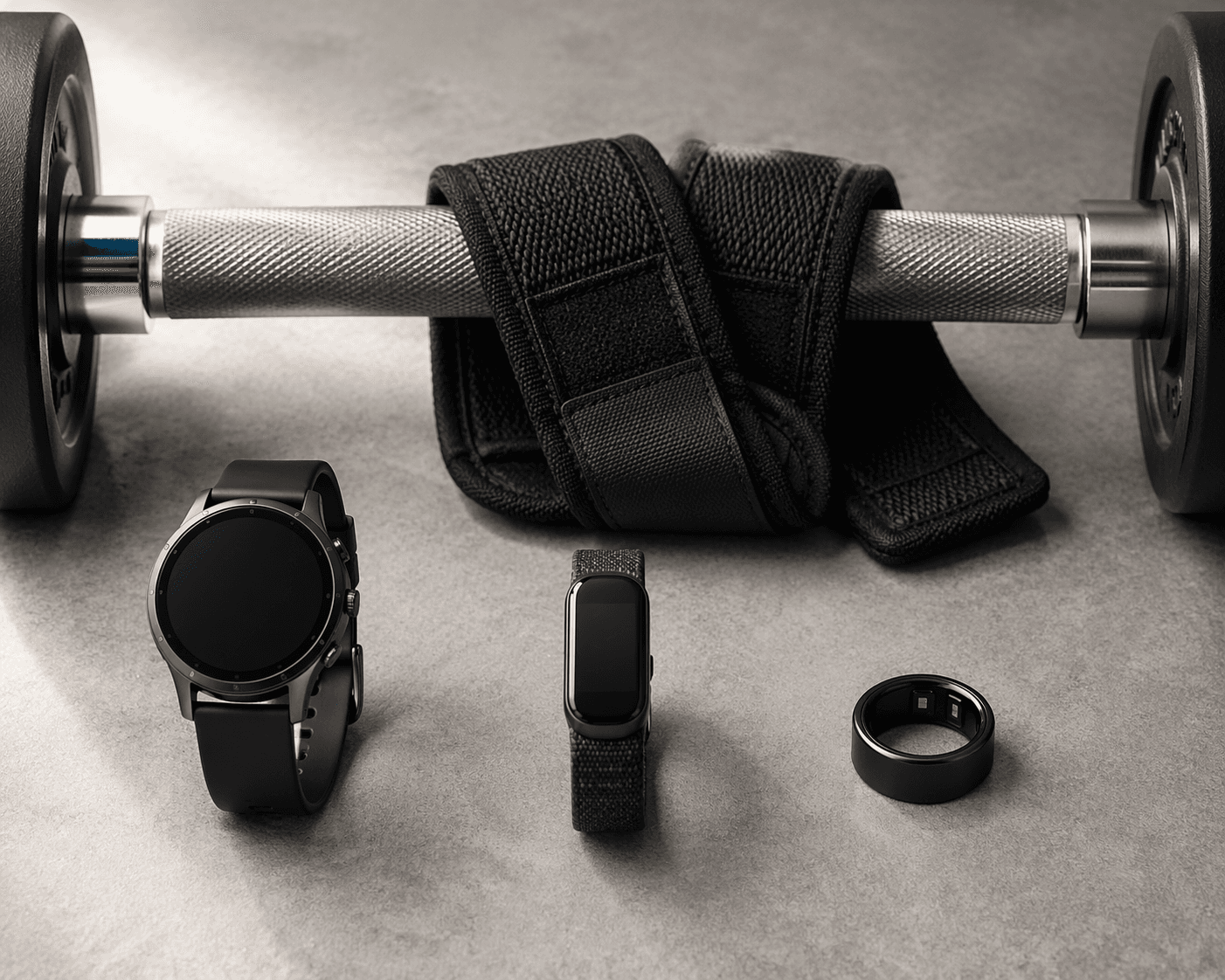
What Actually Matters When Your Main Workout Is Lifting
Strength training creates a different tracking problem from running. A long run produces a clean endurance signal: distance, pace, heart rate, route, and time. A lifting session is messier. Heart rate rises and falls quickly. Sets are interrupted by rest. The important work may happen in five hard reps, not forty minutes of continuous movement.
That is why recovery data deserves more weight than daily movement data for women lifting three or more days per week. HRV, sleep timing, sleep consistency, resting heart rate, and readiness trends do not tell you whether your squat form is good. They also do not prove you are recovered. But they can show whether your body is trending toward better or worse recovery across a training block, which is more relevant than whether a tracker gave you credit for every rep.
If you want a deeper metric-by-metric buying guide, the recovery side is covered separately in this fitness tracker recovery guide. For lifting specifically, the practical standard is simpler: the tracker should collect reliable overnight recovery data, stay comfortable enough to wear consistently, and either support your training log or stay out of the way while another app does.
Best Overall Direction: Recovery-First Wearables Over Cardio-First Watches
For women who lift, the strongest default recommendation is a recovery-first wearable: Whoop 5.0, Hume Band, or Oura Ring 4, depending on how much coaching, screenless wear, and subscription cost you are willing to accept. These devices are not better at every task. They are better aligned with the hours that matter most for strength progress: sleep, recovery, and the non-workout stress that affects training readiness.
Long-term testing by Cheryl McColgan, NASM-CPT, at HealNourishGrow singled out non-watch form factors such as Whoop, Hume, and Oura as more comfortable for 24/7 wear during strength cycles because they do not interfere with wrist wraps or barbell placement in the same way a watch can.[1]
That comfort is not a cosmetic issue. A recovery tracker only works if it is on your body overnight and during enough normal life to establish a pattern. If a bulky watch comes off every time you bench, clean, front squat, or put on wrist wraps, its data becomes less complete in the exact training weeks when you most want useful context.
Where Garmin Venu 3 Still Wins
The Garmin Venu 3 is the better choice if you want a real workout display and structured strength sessions on the device itself. In Forbes Vetted testing by a personal trainer, the Venu 3 produced the most accurate strength-training heart rate readings against a Polar H10 chest strap during rapid heart rate changes, including drops from 160 BPM to 120 BPM within 30 to 60 seconds.[2]
That matters because lifting heart rate is not steady-state cardio. A device that lags during fast changes can make a set look easier or harder than it was. Even then, heart rate during lifting is only one piece of context. It does not measure mechanical tension, proximity to failure, or whether you added load over time.
Garmin also has a practical advantage for lifters who like structured sessions: custom workouts with sets, reps, and exercises can be built in Garmin Connect and loaded to the watch.[2][3] That is closer to what strength athletes need than another generic “women’s wellness” tracker that counts steps well but treats lifting as an afterthought. If you already use a dedicated lifting app, compare Garmin’s workout tools with this strength training app decision framework before paying for overlapping features.
The trade-off is physical. A watch face on the wrist can be annoying under wrist wraps and awkward during some barbell positions. For some lifters that is minor. For others, it is the reason the watch ends up in a gym bag.
Whoop, Hume, Oura, Garmin: The Choice Comes Down to What You Want During the Workout
| Tracker | Best fit for women who lift | Main trade-off |
|---|---|---|
| Whoop 5.0 | Structured recovery and strain coaching without a watch face | Requires a $199/year subscription; daily recovery percentages can feel mentally heavy during high-stress seasons or hormonal fluctuations.[4] |
| Hume Band | Calm recovery trend data without required subscription pressure | Newer brand with less long-term reliability data than more established options.[1] |
| Oura Ring 4 | Comfortable overnight recovery tracking and readiness trends | Not designed for real-time workout tracking; rings can scratch during heavy barbell work.[2][5] |
| Garmin Venu 3 | Live workout display, custom strength workouts, and no required subscription | Watch form factor can conflict with wrist wraps and some lifts.[2][3] |
This is the cleanest split: choose Garmin Venu 3 if you want to see and manage the workout while it is happening. Choose Whoop, Hume, or Oura if you mainly want the tracker to collect recovery data quietly around the workout.
The screenless category has become more relevant to lifters because it removes a common friction point: the wrist. That does not make screenless trackers automatically more accurate, and it does not make watches obsolete. It just changes the buying question from “Which device has the most features?” to “Which device will I actually keep wearing?” The broader screenless trend is covered in this guide to screenless fitness trackers.
Whoop 5.0: Best If You Want Coaching Around Recovery
Whoop is the most coaching-oriented option here. Its strain and recovery framework gives structure to the question many lifters are already asking: should today be heavy, moderate, or easier? That structure can be useful during a strength cycle, especially if you are balancing lifting with work stress, poor sleep, or inconsistent recovery.
The same feature can also become the problem. A daily recovery percentage is easy to overread. During high-stress periods or hormonal fluctuations, some women find the constant scoring mentally heavy rather than clarifying.[4] If you already know you tend to negotiate with numbers before training, read more on Whoop recovery score accuracy and the full Whoop 5.0 subscription review before treating the score as a training command.
Hume Band: Best Emerging No-Subscription Recovery Option
Hume Band is interesting because it pushes recovery trends without requiring a subscription. HealNourishGrow’s long-term testing describes it as a calmer option for trend data, without the same daily score pressure some users feel from more coaching-heavy platforms.[1]
The boundary is important: Hume is a newer brand with less long-term reliability data. That does not disqualify it, especially for someone who wants lower ongoing cost. It does mean it belongs in the “promising” category rather than the “most proven” category.
Oura Ring 4: Best If You Want Recovery First and Workout Tracking Second
Oura Ring 4 is best understood as a retroactive recovery tool, not a live strength-training coach. It tracks readiness on a 1-to-100 scale and activity scores, but it is not designed to show real-time workout data during sets.[2][5]
That distinction saves frustration. If you want to glance at heart rate zones between supersets, Oura is the wrong primary device. If you want something comfortable overnight that helps you notice sleep and readiness patterns, it fits the job better. For a workout-by-workout look at those limitations, see this Oura Ring fitness tracking breakdown or the Oura recovery tracking comparison.
The ring format also has a lifting-specific drawback: scratching. During deadlifts and heavy barbell work, an Oura ring may need to come off or be covered with silicone. Either choice can interrupt continuous skin contact for heart rate tracking. That is not a small detail if your goal is to collect clean workout data.

The Cost Difference Looks Different Over Two Years
Upfront price can be misleading because recovery trackers often move cost into subscriptions. Over two years, Whoop’s $199/year subscription totals $398, while Oura’s $5.99/month membership is about $72/year, or about $144 over two years.[4][5] Garmin Venu 3 has a higher upfront cost of about $450 but no required subscription.[2] Fitbit Charge 6 is cheaper upfront at about $85, but Fitbit Premium adds about $80/year if you want the paid layer.[4]
| Device | Approximate upfront cost | Required or common subscription | Approximate 2-year subscription cost | Approximate 2-year total |
|---|---|---|---|---|
| Whoop 5.0 | Included with membership model | $199/year | $398 | $398 |
| Oura Ring 4 | Varies by ring model | $5.99/month | About $144 | Ring price plus about $144 |
| Garmin Venu 3 | About $450 | No required subscription | $0 | About $450 |
| Fitbit Charge 6 | About $85 | Fitbit Premium about $80/year | About $160 | About $245 with Premium |
Fitbit Charge 6 is included here because it is the obvious budget comparison, not because it is the strongest lifting pick. If price is the dominant constraint, it can be a rational compromise. If strength training and recovery are the dominant use case, the cheaper device is not automatically the better value. The Whoop-versus-Fitbit subscription question is explored more directly in this Fitbit Air vs Whoop comparison.
How Much Should You Trust the Data?
The evidence here is useful but not definitive. Forbes Vetted testing and HealNourishGrow’s long-term use are practitioner-level sources, not peer-reviewed trials. No academic studies comparing tracker accuracy during strength training specifically for women were identified.
That means the safest conclusion is narrow. Garmin Venu 3 has the strongest cited strength-workout heart rate performance among the devices discussed here, based on personal trainer testing against a Polar H10 chest strap.[2] Non-watch form factors appear more comfortable for many lifters who wear wrist wraps or train with barbells, based on long-term practitioner testing.[1] Recovery metrics are useful as trends, not as absolute permission slips.
The trend point matters most. HRV can move with sleep, stress, illness, alcohol, training load, and menstrual cycle changes. A single readiness score should not decide whether you lift. A pattern over several days can tell you when your recovery environment is getting better or worse. For more on where wearable recovery metrics help and where they overclaim, read this science-backed look at wearable recovery metrics.
The Practical Pick
Choose Garmin Venu 3 if you want live workout display, custom strength sessions, and the strongest cited heart rate performance during lifting. It is the most complete watch option here, especially if you want the tracker involved during the session itself.
Choose Whoop 5.0 if you want structured recovery coaching and are comfortable paying a subscription. It is best for someone who wants interpretation, not just raw trends, and who will not feel overly managed by daily recovery percentages.
Choose Hume Band if you want a quieter recovery-first band with no required subscription and you accept that it has less long-term reliability evidence than more established devices.
Choose Oura Ring 4 if overnight comfort and recovery trends matter more than live workout tracking. It is a poor fit if you want to keep jewelry on for heavy pulling or need real-time feedback during sets.
For women who lift, the best tracker is the one that supports the training decision you actually need to make. If that decision happens before the workout, recovery-first bands and rings make sense. If it happens during the workout, Garmin Venu 3 is the more useful tool.
References
- Best Fitness Watch for Women (2026), HealNourishGrow
- Best Fitness Trackers 2026, Forbes Vetted
- Garmin Connect custom workouts, Garmin
- Whoop 5.0 reviews and subscription information, Various reviews
- Oura Ring 4 readiness and activity tracking reviews, Women's Health
Comments
Join the discussion with an anonymous comment.